














 >
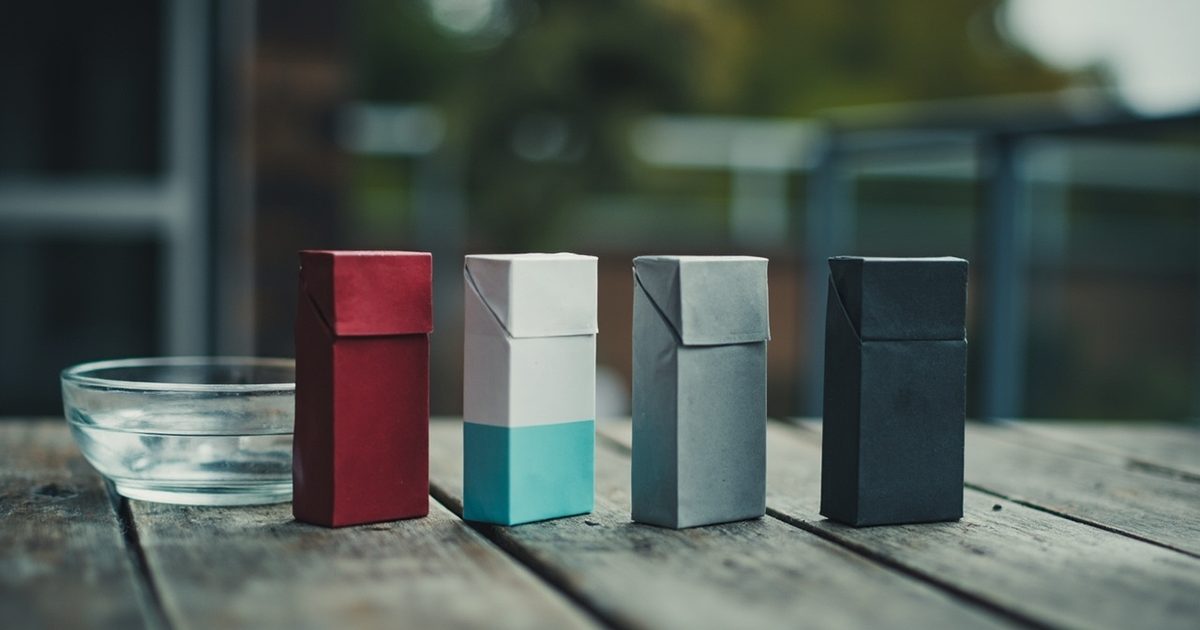
Most Canadian smokers do at least part of their smoking outside — on a balcony, on the porch, in the garage, in the car, or on a walk. That changes what you need beside the pack. Wind takes the ash, cold air dries the paper, and odour transfers onto whatever you were wearing. This guide covers the five outdoor setups people actually use, what each one needs, how to keep smoke smell off your hands, clothes and car, and what to buy so the routine does not run dry.
Everything here is practical. No lectures, no rules about where you can and cannot smoke — that depends on your own space and your own situation. This is about making the routine work: fewer crushed packs, less ash in the wrong place, and a jacket that does not announce itself in a meeting the next morning.
The Short Version: What an Outdoor Setup Actually Needs
Five things, in this order of importance:
- A wind plan. Ash and embers travel. A sheltered corner, a deeper ashtray, or a windbreak matters more than anything else on the list.
- An ash plan. One container, used every time, emptied before it fills. Ash sitting in a tray is the single biggest source of lingering smell.
- A pack plan. Where the pack lives when you are not smoking it. An opened pack left outside dries faster than one kept indoors.
- A layer plan. One outer layer that absorbs the smell so the rest of your clothes do not.
- A wash-up plan. Hands first, then face, then breath. In that order, because hands touch everything.
Why Outside Smoking Has Its Own Gear List
Smoke odour is not just vapour. It is a mix of ash particles and tobacco residue that settles on surfaces and soaks into fabric fibres. Outdoors, that residue behaves differently than it does in a room: wind spreads it, moisture carries it, and cold changes how the paper of the cigarette burns.
Three practical consequences follow.
- An opened pack dries out faster outside. Moving air pulls moisture from the paper and the tobacco. A pack that sits on a balcony rail for two days tastes noticeably sharper than one kept in a drawer. Our guide to 储存香烟以保持新鲜 covers the humidity and temperature side in detail.
- Your hands carry more of the smell than your clothes do. The fingers holding the cigarette pick up residue directly. Fabric gets the smoke plume; skin gets the tar.
- Enclosed outdoor spaces behave like small rooms. A garage is not outdoors in any practical sense — it traps air, holds temperature swings, and keeps odour against the walls. Treat it as its own setup, not as a cheaper balcony.
Setup 1: The Balcony
Balconies are the most common outdoor smoking space in Canadian apartments and condos, and they are the hardest to keep clean because everything is exposed. Wind comes from one direction, ash blows back against the door, and the pack sits in the worst possible place — outside, in the open air.
Wind and ash control
Put the ashtray on the sheltered side of the balcony, not the open rail. A heavier tray with a lid, or one with a deep well, stops ash lifting on a gust. Empty it after every session rather than at the end of the week — a full tray is a smell source that no amount of airing out will fix.
Where the pack lives
Keep the carton indoors and carry out one pack at a time. That single habit solves two problems at once: the reserve stays fresh, and there is never an opened pack slowly drying on a table for days. If you smoke several times a day, a 加拿大全香烟 pack on the counter by the door works better than one on the balcony rail, because you are only outside for the length of the cigarette.
Door discipline
Close the door behind you, and do not prop it open while you smoke. Leaving it open is what pulls the plume back into the room and onto curtains. If you are coming straight back inside to a shared space, wash your hands before you touch a handle or a rail — that is the contact point that transfers smell onto shared surfaces.
Setup 2: The Porch, Deck or Backyard
Ground-level outdoor space gives you room to work with, and the trade-off is distance: you are further from the door, further from the carton, and more likely to leave things outside.
Seating and surface
Smoke on the edge of a chair or a bench, not sunk into a padded cushion. Fabric outdoor cushions hold odour for weeks. A hard surface plus one dedicated ashtray is the whole setup.
Ash discipline
On a deck, ash between the boards is impossible to clean properly. Use a tray with a rim and keep it in one place. In the backyard, a metal lidded container near the seating area is easier to manage than scattering ash across the lawn.
Keeping the reserve inside
This is the setup where it is easiest to leave a carton outside “just for convenience.” Do not. Outdoor temperature swings — especially the freeze-thaw cycle from October through March — are exactly what damages paper and dries tobacco. See our 冬季购买指南 for how cold weather changes the way a pack burns and draws.
Setup 3: The Garage
A garage feels like a compromise between indoors and outdoors, and for smell purposes it behaves more like indoors. Concrete, drywall, cardboard and stored fabric all hold residue. If the garage is also where you keep the carton, it is the worst place in the house for it.
Ventilation first
Leave the overhead door open a foot or the side door open while you smoke, and give the space ten minutes to clear afterwards. A box fan pointed at the open doorway moves more air than a ceiling fan ever will. Without airflow, the smell settles into whatever is stored there.
Why garages hold odour longer
Two reasons. First, cool concrete and metal surfaces are slightly damp, and moisture holds odour compounds. Second, garages are full of porous objects — cardboard boxes, bags of soil, canvas, work clothes — that absorb smoke and release it slowly for days. A garage that smells faintly of smoke after a winter of smoking in it is usually the stored objects, not the air.
Do not store the carton there
A garage is the second-worst place for cigarettes after the freezer. It cycles through temperature and humidity every single day, which is precisely what stale packs need to happen. Keep the carton in a cool, dark, dry cupboard inside and bring out one pack at a time. Our 储存指南 explains the humidity target and why the fridge and freezer are both wrong.
Setup 4: The Car
Cars trap smoke more aggressively than any other space on this list, because the volume is small and the surfaces are almost all fabric or plastic. The good news is that a consistent routine makes a large difference.
The window and airflow routine
Open one window a few inches on the side away from you, keep the fan on fresh air rather than recirculate, and do not crack the window nearest your face. The goal is a cross-flow that pulls smoke out, not a swirl that pushes it around the cabin. Recirculate setting is the single biggest mistake — it recycles the smoke through the vents and into the headliner.
The ashtray rule
Use one container and empty it every time you get out. A cup holder full of butts will smell worse than the smoking itself, and it will do it for months. If the car has a built-in ashtray, line it or clean it weekly.
Fabric, mats and the cabin filter
Cloth seats and floor mats hold residue. A rubber mat is far easier to wash than carpet, and a quick vacuum of the seats every couple of weeks keeps the smell from settling in permanently. The cabin air filter is worth replacing on schedule — a filter loaded with smoke particles keeps pushing that smell back into the cabin every time the fan runs. A charcoal-based air freshener helps between cleanings; a perfume-based one mostly layers a second smell on top of the first.
Setup 5: On Foot, at Work, and Out for the Evening
Walking is the cleanest setup of the five — open air, no surfaces, no trapped volume. The only thing you have to manage is what is in your pocket.
Pocket carry
A soft pack in a front jacket pocket survives better than one in a trouser pocket, where keys, coins and body heat do the damage. Our guide to 日常携带香烟 breaks down the three things that actually crush a pack and how much to bring for a full day out.
What fits a shirt pocket
If you are smoking at a workplace where you would rather not carry a full pack, slim formats and pouch tins are the practical answer. A ZYN留兰香纤细型 tin sits flat in a shirt pocket and leaves no smoke smell on fabric at all — which makes it the option people reach for when the smell is the actual problem rather than the nicotine. The trade-offs between the two formats are covered in 香烟与尼古丁袋对比.
Keeping the Smell Off You
This is the part most people get backwards. They spray something on their clothes and assume the problem is solved. The order that actually works is hands, then face, then breath, then clothes.
Hands
Wash with soap and warm water for a full twenty seconds, and wash the fingers individually rather than rubbing palms together. Residue sits between the index and middle finger and on the thumb. If you cannot wash, a damp cloth does more than hand sanitizer — alcohol evaporates and leaves the residue behind.
Face and breath
Rinse your mouth with water, then brush if you can. Chewing gum and mints mask breath for a few minutes but do nothing for the residue on your lips and around your mouth. A quick face wash with cool water does more than any spray. If you smoke outdoors in winter, cold air already dries your skin, so a rinse rather than a scrub is easier on it.
A smoking layer
One jacket or overshirt that you wear outside and take off at the door solves most of the clothing problem in a single move. Hang it away from the rest of your wardrobe, and wash it weekly. Cotton and wool hold smoke more than a smooth synthetic shell does, so if you are choosing, pick the smoother outer layer for smoking and keep the wool coat for everything else.
What not to do
- Do not spray perfume or cologne over smoke. It does not neutralise anything; it adds a second layer that is more noticeable than the first.
- Do not spray fabric freshener on a jacket you are wearing. It settles on the surface and fades in an hour, leaving the smoke underneath.
- Do not leave the smoking jacket in the car. It will transfer onto the seats overnight.
- Do not rely on air freshener in a room you smoked in. Ventilation first, then time. Odour-absorbing products work only after the air has been exchanged.
The Pack Itself Smells: Opened vs Sealed
An opened pack is a smell source in its own right. Foil does most of the work while the pack is sealed; once it is open, the tobacco is exposed to air and gives off aroma continuously. That is also why an opened pack goes stale faster than a sealed one.
The carton is the indoor reserve
Keep the carton closed and indoors. A carton is ten packs of twenty, so it is a two-week supply for a pack-a-day smoker and longer for anyone who smokes outside only part of the day. Keeping it sealed means the last pack is as fresh as the first, and it means the only thing in your pocket or on the balcony is one opened pack.
Rotate the oldest pack first
If you buy two brands, or buy in bulk, work through the opened packs before opening a new one. It sounds obvious, but the common failure is three opened packs on a shelf, all slowly drying, none of them finished. A single opened pack at a time is the simplest freshness rule there is — see how to store cigarettes for the tests that tell you when a pack has gone past its best.
Weather: Winter, Summer and Rain
Winter
Cold air dries paper and makes a pack stiff. A pack carried in an outside pocket at minus fifteen will smoke hotter and faster than the same pack indoors, and the paper can crack at the seam if it is handled roughly. Keep the pack in an inside pocket close to your body, and let a cold pack come back to room temperature sealed rather than opening it the moment you walk in. Our winter cigarette guide goes through the cold-weather routine in detail.
Summer
Humidity is the summer problem. A pack left on a balcony in July picks up moisture, which makes it burn unevenly and pull harder. Do not leave a pack in direct sun or in a hot car — the heat dries the tobacco unevenly and the humidity cycle does the rest. Our summer guide covers warm-weather storage and pacing.
Rain
A soft pack is not waterproof. A zip-top bag in a jacket pocket is the cheapest fix, and it also keeps the pack from being crushed against keys. If a pack does get damp, do not dry it on a radiator — let it air out at room temperature and accept that the next few cigarettes will draw harder.
What to Buy for an Outdoor Routine
包或条
Packs are listed at $5.00, and cartons run from $29.00 to $38.99 depending on the SKU. If you smoke outside consistently, the carton is almost always the better buy — it is roughly a 40% saving per stick, and it means the reserve stays sealed indoors while one pack travels. Our 箱装价格指南 以及 月度纸盒计算指南 show how to size the order to your actual rate.
Formats that travel well
King size at 84–85mm is the standard format across the catalogue and fits a jacket pocket without much fuss. Slim formats and pouch tins fit a shirt pocket. If the smell is the reason you are outside in the first place, the pouch tins are worth a look: ZYN西瓜纤细型 和 ZYN桃子贝里尼纤细型9毫克 are $15.99 for 20 pouches, and they leave no smoke residue on fabric. Our ZYN指南 covers flavours and how long each pouch lasts.
Brand Notes for an Outdoor Rotation
There is no “best” brand for smoking outside, but there is a sensible way to build a rotation: one full-flavour for the after-meal smoke, one lighter for the daytime breaks, and one menthol or cooling option if you like a change of pace. Here is how the catalogue maps out.
Canadian 和 Canadian Classics
"(《世界人权宣言》) 加拿大香烟 family runs four variants — Full, 淡型, Ultra Lights 和 薄荷味。 加拿大经典 line mirrors it with 原味, 银, Ultra Blue 和 薄荷味. A full-flavour pack kept for the end of the day and a lighter one for daytime breaks is the classic two-pack rotation.
Playfare, Classics and BB
Playfare 涵盖 浓郁口味, 淡味, 超淡味 和 薄荷味. — 原味、银色、薄荷、超蓝。一个可靠的日常系列。 adds an Extra Lights tier alongside 浓味, 淡型 和 薄荷味. BB keeps it to three: 浓味, 淡味 和 薄荷味.
Discount, Time and Rolled Gold
折扣 is the budget-friendly three-variant lineup: 浓味, 淡型 和 薄荷味. Time pairs Full 与 蓝色, which the catalogue lists as a smooth light blend rather than a cooling one. Rolled Gold 运行 浓味, 淡味 和 薄荷味 — that menthol pack is the one SKU priced at $6.00 rather than $5.00.
The two-variant families and the single-SKU options
If you want a simple rotation, the two-variant families are easy to shop: 推杆 (浓味, 淡味), Nexus (浓味, 淡味), dM (原味, 柔和型), DK 的 (Full, 淡味) 和 加拿大保费 (原味, 特制). Canadian Goose is the single-SKU full-flavour option.
Building the Order So the Routine Never Runs Dry
Outside smoking usually means fewer cigarettes per day than indoor smoking, and that changes the order size. Someone smoking six cigarettes a day outside goes through a pack in about three days and a carton in about a month. Someone at three a day gets roughly six weeks from a carton. Work out your own rate first — our guide to 香烟持续时间 explains why the same stick runs four minutes for one person and twelve for another.
On the ordering side, a few standing facts are worth knowing before checkout. Packs are $5.00 and cartons $29.00–$38.99. Expedited shipping is $15 and Xpresspost is $20; shipping is free on orders over $99 before discounts, or over $149 after discounts. Orders placed before 9 AM PST on a business day go out the same day. Payment can be made by credit card, Interac e-Transfer, or cryptocurrency — there is no cash on delivery. Details on each method are in 如何在线支付香烟, and the full rate card is in 香烟配送选项.
If you are building a two-brand rotation, the spend tiers are worth planning around: $80 in the cart earns a free pack, $240 earns a free carton, and $480 earns two free cartons. Our 捆绑销售指南 covers how the tiers stack with the free-shipping threshold, and topping up an order covers how to bridge a gap if you run short before the next carton.
常见问题
Does an opened pack go stale faster outside?
Yes. Moving air outdoors pulls moisture from the paper and tobacco, so a pack left on a balcony dries faster than the same pack in a drawer. Keep the opened pack inside between cigarettes and the pack will last as long as it would indoors.
How do you get smoke smell out of a jacket?
Air it outside for a few hours first, then wash it. Hanging it in a closet while it still smells is what transfers the odour to everything else in there. For a dry-clean-only coat, airing plus a charcoal sachet in the closet does more than any spray.
Does an air freshener fix a smoky car?
No. Ventilation plus a vacuum plus a fresh cabin filter is what actually reduces it. Air freshener adds a scent on top of the residue, and in a small cabin that combination is usually worse than the smoke alone.
Can you keep a carton in the garage?
You can, but you should not. A garage cycles through temperature and humidity daily, which is the exact condition that makes cigarettes stale. A cool, dark, dry cupboard indoors is the better home for the reserve.
Do nicotine pouches leave a smell on clothes?
No. There is no combustion and no smoke, so a pouch tin does not transfer residue onto fabric. That is the main practical difference between the two formats, covered in 香烟与尼古丁袋对比.
How many packs do I need for a month of outside smoking?
At six cigarettes a day, about ten packs — one carton. At three a day, about five packs. Round up rather than down, because the reserve is the whole point of keeping a carton indoors.
Get the Reserve Sorted
An outdoor routine works when there is one opened pack in play and a sealed carton inside. Browse the full 香烟目录 或 商店 to put a carton of your usual together, and if you want to try something new before committing, the 神秘香烟包 is the low-risk way to do it. Delivery is tracked, and you can follow it from 订单跟踪页面 once it ships.