














 >
📋 Table of Contents
- 1. Introduction: Understanding the Debate
- 2. Does Cigarettes Cause More Harm Than Vaping? Health Risks Comparison
- 3. Does Cigarettes Cause More Harm Than Vaping? Chemical Composition Analysis
- 4. Does Cigarettes Cause More Harm Than Vaping? Respiratory Impact
- 5. Does Cigarettes Cause More Harm Than Vaping? Cardiovascular Effects
- 6. Does Cigarettes Cause More Harm Than Vaping? Cancer Risk Analysis
- 7. Addiction Potential and Nicotine Delivery
- 8. Does Cigarettes Cause More Harm Than Vaping? Cost Comparison in Canada
- 9. Does Cigarettes Cause More Harm Than Vaping? Long-Term Effects
- 10. Secondhand Exposure Risks
- 11. Quitting Success Rates
- 12. Canadian Regulations and Perspective
- 13. Current Scientific Evidence (2025)
- 14. Conclusion: The Definitive Answer
1. Introduction: Understanding the Debate
Does cigarettes cause more harm than vaping? This critical question has become one of the most debated topics in public health circles, medical communities, and among millions of smokers worldwide. The answer to “does cigarettes cause more harm than vaping” is unequivocally yes – extensive scientific research confirms that cigarettes are dramatically more harmful than vaping across virtually every health metric. As vaping continues to gain popularity as an alternative to traditional smoking, understanding the comparative risks between these two nicotine delivery methods is crucial for making informed decisions about your health and wellbeing.
The answer to “does cigarettes cause more harm than vaping” is backed by extensive scientific research and data from leading health organizations globally. In this comprehensive guide, we’ll examine the scientific evidence, health impacts, chemical compositions, and real-world data to provide you with a clear, unbiased comparison between cigarettes and vaping.
Whether you’re a current smoker considering alternatives, a vaper wondering about your choice, someone concerned about a loved one’s smoking habits, or simply seeking factual information about tobacco harm reduction, this article will help you understand the key differences and make evidence-based decisions.
🔍 Quick Answer to “Does Cigarettes Cause More Harm Than Vaping?”
Yes, cigarettes cause significantly more harm than vaping. According to Public Health England, the Royal College of Physicians, and numerous peer-reviewed scientific studies, vaping is estimated to be at least 95% less harmful than smoking traditional cigarettes. However, this doesn’t mean vaping is completely safe – it simply means it poses substantially fewer risks than combustible tobacco products.
The dramatic difference in harm comes primarily from combustion. When you burn tobacco in traditional cigarettes, you create thousands of toxic chemicals and carcinogens. Vaping, on the other hand, heats liquid without combustion, eliminating most of these harmful byproducts.
2. Does Cigarettes Cause More Harm Than Vaping? Health Risks Comparison
When examining whether cigarettes cause more harm than vaping, understanding the comprehensive health risks of both options requires examining multiple factors across different body systems and health dimensions. The scientific consensus is clear: cigarettes pose dramatically higher health risks than vaping across virtually every measurable health outcome.
Traditional cigarette smoking is the leading preventable cause of death worldwide, responsible for more than 8 million deaths annually according to the World Health Organization. In Canada alone, smoking kills approximately 48,000 people each year – more than car accidents, alcohol, and illegal drugs combined. These deaths result from a wide range of smoking-related diseases including lung cancer, heart disease, stroke, and chronic obstructive pulmonary disease (COPD).
Vaping, while not without risks, presents a dramatically different health profile. The key difference lies in the absence of combustion – the burning process that creates the vast majority of harmful chemicals in cigarette smoke. When you smoke cigarettes, you’re inhaling the products of tobacco combustion at temperatures exceeding 900°C, which generates thousands of toxic chemicals.
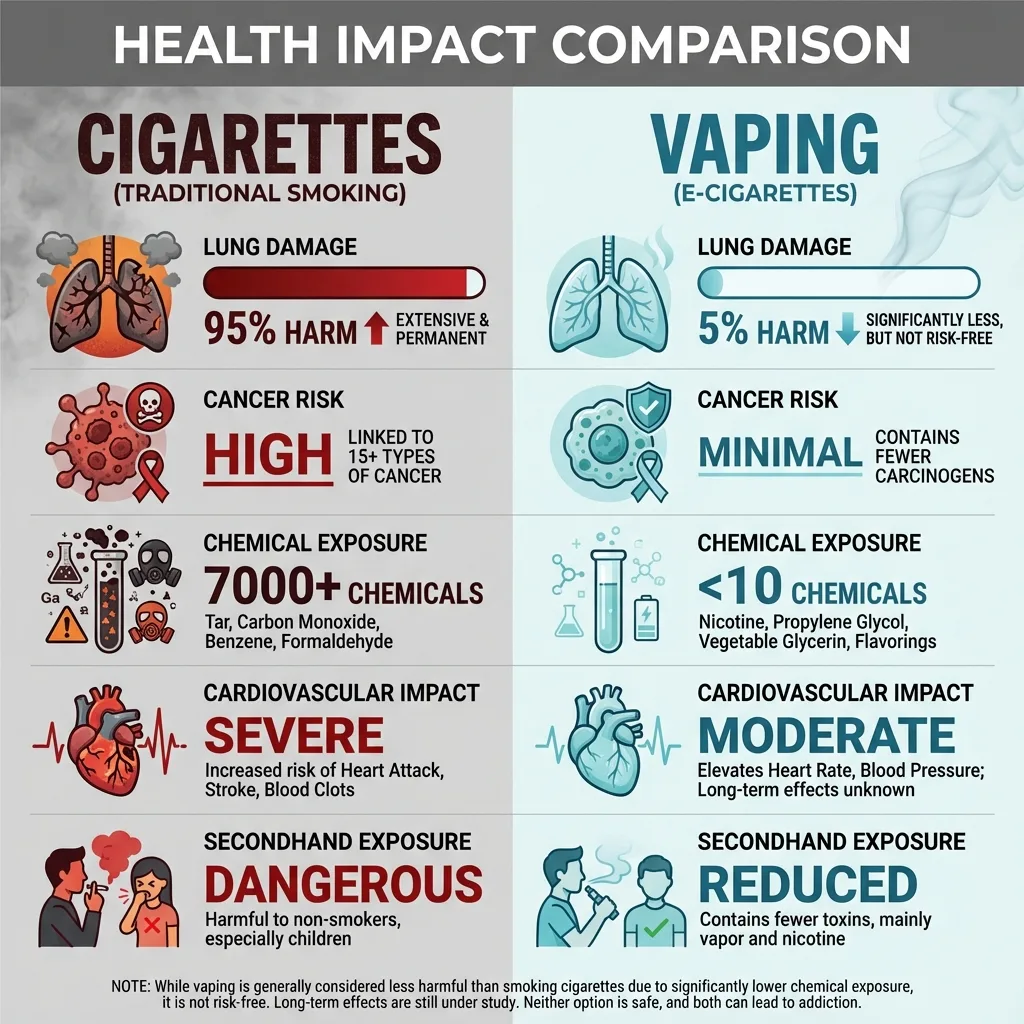
Comprehensive health impact comparison showing relative harm levels between cigarettes and vaping
Overall Health Impact Comparison
The question “does cigarettes cause more harm than vaping” becomes crystal clear when we examine specific health outcomes side by side. Research from multiple countries and health institutions consistently shows that switching from smoking to vaping results in measurable health improvements within weeks to months.
| Health Factor | Cigarettes | Vaping |
|---|---|---|
| Overall Harm Level | Extremely High (100% baseline) | Significantly Lower (5-10% of smoking harm) |
| Lung Damage | Severe – COPD, emphysema, chronic bronchitis guaranteed with long-term use | Minimal – Some irritation possible, no evidence of COPD development |
| Cancer Risk | High – 15+ types of cancer directly linked | Minimal – No combustion carcinogens present |
| Heart Disease Risk | 2-4x increased risk of heart attack and stroke | Lower but not zero – nicotine effects only |
| Stroke Risk | 2-4x increased risk compared to non-smokers | Substantially reduced compared to smoking |
| Respiratory Function | Severely impaired over time, irreversible damage | Minimal long-term impact, often improvement for switchers |
| Life Expectancy Impact | Average 10-year reduction in lifespan | Minimal impact based on current evidence |
💡 Key Insight on Why Cigarettes Cause More Harm
The primary difference in harm between cigarettes and vaping comes from combustion. When you burn tobacco in products like menthol cigarettes or full flavor cigarettes, you create thousands of toxic chemicals through the combustion process. These include tar, carbon monoxide, formaldehyde, benzene, and dozens of known carcinogens.
Vaping heats liquid (e-liquid) to create an aerosol without combustion, eliminating the vast majority of these harmful byproducts. This fundamental difference in the mechanism of nicotine delivery is why vaping is substantially less harmful than smoking.
3. Does Cigarettes Cause More Harm Than Vaping? Chemical Composition Analysis
To truly understand whether cigarettes cause more harm than vaping, we need to examine exactly what enters your body with each inhalation. The stark difference in chemical composition between cigarette smoke and vape aerosol is one of the most compelling pieces of evidence explaining why cigarettes are so much more harmful.
When you light a cigarette – whether it’s light cigarettes, ultra-light varieties, or full-flavor options – you initiate a complex combustion process that creates an incredibly toxic chemical cocktail. This isn’t just tobacco smoke; it’s a mixture of over 7,000 different chemicals, many of which are poisonous and at least 70 of which are confirmed carcinogens.
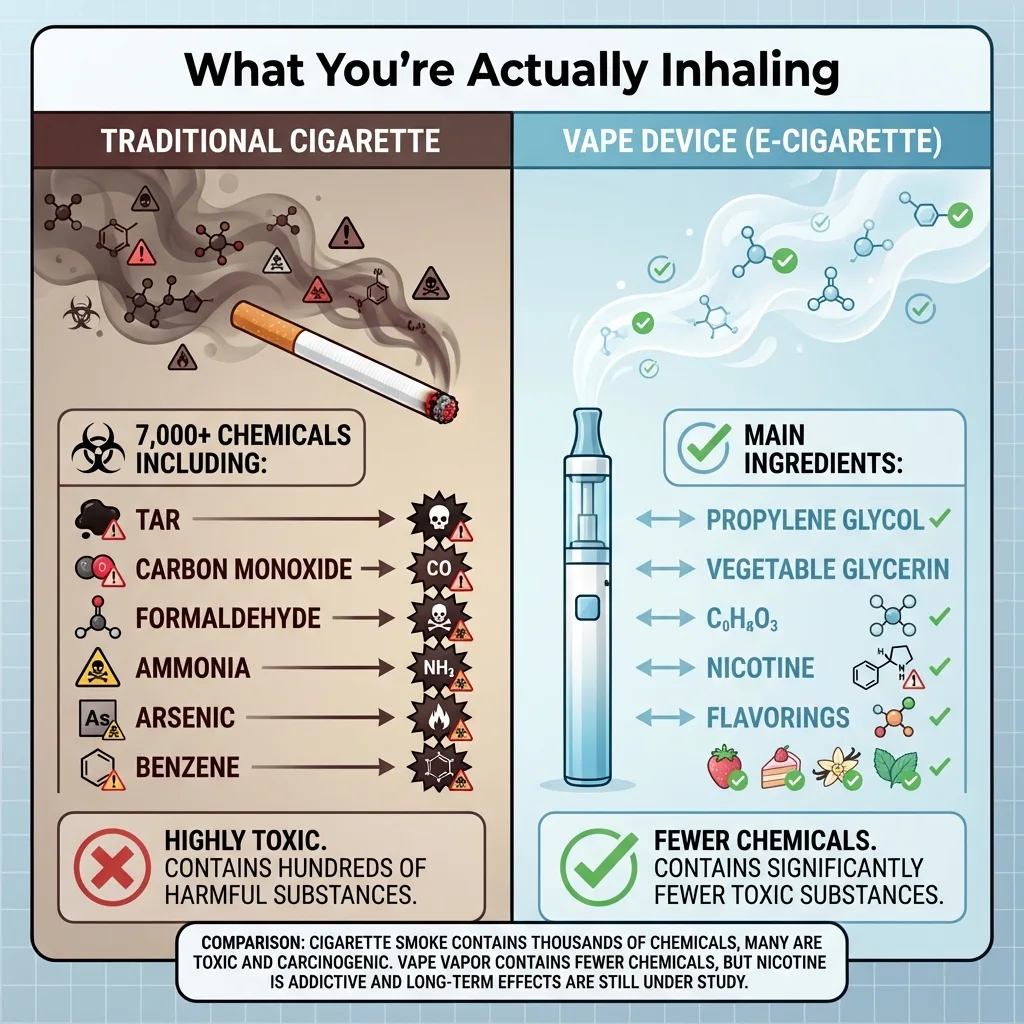
Visual breakdown of chemicals in cigarette smoke versus vape aerosol
Cigarette Smoke Chemical Composition
The chemical complexity of cigarette smoke is staggering and provides clear evidence for why cigarettes cause more harm than vaping. Every puff of a cigarette delivers a toxic mixture that affects virtually every organ in your body. Here’s what you’re actually inhaling when you smoke:
- 7,000+ total chemicals – An enormous mixture including at least 70 known carcinogens and hundreds of toxic substances
- Tar – A sticky, brown residue that coats your lungs and airways, containing most of the carcinogenic compounds in cigarette smoke
- Carbon Monoxide – A toxic gas that binds to hemoglobin in your blood, reducing oxygen delivery to vital organs and tissues
- Formaldehyde – A known carcinogen commonly used in embalming fluid, linked to nasopharyngeal cancer
- Ammonia – A chemical that manufacturers add to increase nicotine absorption and enhance addiction potential
- Arsenic – A highly toxic heavy metal that damages DNA and is linked to multiple cancers
- Benzene – A carcinogen found in gasoline that’s strongly linked to leukemia and other blood cancers
- Cadmium – A toxic metal that damages kidneys, bones, and the cardiovascular system
- Hydrogen Cyanide – A deadly poison that damages the cilia in your lungs, making it harder to clear mucus and debris
- Lead – A neurotoxic heavy metal that accumulates in the body and damages the nervous system
- Polonium-210 – A radioactive element that accumulates in lung tissue
- Nitrosamines – Powerful carcinogens formed during tobacco curing and combustion
This is just a partial list of the harmful chemicals in cigarette smoke. Whether you’re smoking BB Full Flavor, Rolled Gold Light, or any other brand, the combustion process creates this toxic mixture. Even “light” or “ultra-light” cigarettes contain these same harmful chemicals – the only difference is slightly reduced tar and nicotine levels, which doesn’t significantly reduce health risks.
Vape Aerosol Chemical Composition
In stark contrast to the thousands of chemicals in cigarette smoke, vape aerosol contains a much simpler chemical profile. This fundamental difference is central to understanding why cigarettes cause more harm than vaping:
- Propylene Glycol (PG) – An FDA-approved food additive commonly used in food products, cosmetics, and pharmaceutical preparations. It creates the “throat hit” sensation.
- Vegetable Glycerin (VG) – A natural compound derived from vegetable oils, commonly used in food and cosmetics. It produces the visible vapor.
- Nicotine – The addictive component, but importantly NOT the primary cause of smoking-related diseases. Available in various concentrations, allowing users to control intake.
- Flavorings – Food-grade flavor compounds that provide taste. While some flavorings require more research, they’re generally recognized as safe for ingestion.
- Trace chemicals – Some potentially harmful chemicals can form when e-liquid is heated, but at levels dramatically lower than in cigarette smoke (typically 1-2% of the levels found in cigarettes).
The simplicity of vape aerosol composition compared to cigarette smoke is striking. While vaping isn’t completely harmless, the absence of combustion eliminates the creation of tar, carbon monoxide, and the vast majority of carcinogens found in cigarette smoke.
⚠️ Important Nuance
While vaping contains far fewer chemicals than cigarettes like dM Original or Canadian Goose, it’s not completely harmless. Some flavorings and heating byproducts may pose risks that require ongoing research. However, these potential risks are minimal compared to the well-documented, severe harms of combustible tobacco. The question “does cigarettes cause more harm than vaping” has a clear answer: yes, by a very wide margin.
4. Does Cigarettes Cause More Harm Than Vaping? Respiratory Impact
The respiratory system – your lungs, airways, and breathing apparatus – bears the brunt of smoking-related damage. When evaluating whether cigarettes cause more harm than vaping, the impact on respiratory health provides some of the clearest and most dramatic evidence of the difference between these two nicotine delivery methods.
Your lungs are designed to breathe clean air. When you repeatedly expose them to cigarette smoke from products like BB Light Cigarettes or dM Smooth, you’re subjecting delicate lung tissue to a toxic assault that causes progressive, often irreversible damage. This damage accumulates over time, leading to serious respiratory diseases that dramatically impact quality of life and longevity.
How Cigarettes Devastate Your Respiratory System
Cigarette smoking causes severe, progressive damage to your respiratory system through multiple mechanisms. The hot smoke, toxic chemicals, and particulate matter combine to create a perfect storm of respiratory harm:
- Chronic Obstructive Pulmonary Disease (COPD) – A progressive, irreversible lung disease that makes breathing increasingly difficult. COPD is almost exclusively caused by smoking and affects millions of people worldwide. It’s the third leading cause of death globally.
- Emphysema – Permanent destruction of the air sacs (alveoli) in your lungs, reducing your lungs’ ability to absorb oxygen. Once destroyed, these air sacs cannot regenerate.
- Chronic Bronchitis – Long-term inflammation of the airways causing persistent cough, mucus production, and breathing difficulties. Smokers often experience this “smoker’s cough” daily.
- Reduced Lung Function – Progressive decrease in lung capacity and efficiency over time. Smokers lose lung function at an accelerated rate compared to non-smokers.
- Increased Respiratory Infections – Smoking damages the cilia (tiny hair-like structures) that clear mucus and debris from airways, leading to more frequent and severe pneumonia, bronchitis, and other infections.
- Asthma Exacerbation – Smoking worsens existing asthma and can trigger asthma attacks. It also reduces the effectiveness of asthma medications.
- Lung Cancer – The leading cause of cancer deaths worldwide, with 85-90% of lung cancer cases caused by smoking.
- Interstitial Lung Disease – Scarring of lung tissue that impairs breathing and oxygen exchange.
These aren’t theoretical risks – they’re near-certainties for long-term smokers. If you smoke a pack a day of menthol cigarettes or any other type for 20-30 years, you will almost certainly develop significant respiratory impairment. Research on nicotine and tobacco consistently demonstrates these severe health consequences.
Vaping’s Impact on Respiratory Health
When examining whether cigarettes cause more harm than vaping, the respiratory impact comparison is particularly striking. While vaping is not completely without respiratory effects, the difference in severity is dramatic:
- Mild Irritation – Some users report temporary throat or airway irritation, particularly when first switching from smoking. This typically subsides as the body adjusts.
- Temporary Cough – Some new vapers experience a cough that usually resolves within a few weeks as the lungs begin to clear accumulated tar and debris from previous smoking.
- No COPD Association – Current evidence shows no link between vaping and COPD development. This is a crucial distinction from smoking.
- Improved Function for Switchers – Ex-smokers who switch to vaping often report improved breathing, reduced coughing, better exercise tolerance, and enhanced lung function within weeks to months.
- Minimal Long-term Damage – Current evidence spanning over 15 years of vaping shows significantly less harm to respiratory function compared to smoking.
- No Tar Accumulation – Vaping produces no tar, eliminating one of the primary causes of lung damage in smokers.
🎯 Key Takeaway on Respiratory Health
Smokers who switch from traditional cigarettes to vaping often experience dramatic improvements in breathing, reduced coughing, better sleep (less nighttime coughing), and improved physical endurance within just weeks to months. This is one of the most immediate and noticeable health benefits of switching, providing clear evidence that cigarettes cause more harm than vaping.
Many ex-smokers report being able to climb stairs without getting winded, participating in physical activities they’d given up, and no longer waking up coughing. These quality-of-life improvements are significant and measurable.
If you’re concerned about respiratory health and currently smoke cigarettes from any brand, the evidence strongly suggests that switching to vaping would substantially reduce your risk of developing serious, life-threatening lung diseases.
5. Does Cigarettes Cause More Harm Than Vaping? Cardiovascular Effects
Heart disease and stroke are the leading causes of death among smokers, accounting for more smoking-related deaths than lung cancer. Understanding how cigarettes and vaping differently affect your cardiovascular system is essential when evaluating whether cigarettes cause more harm than vaping.
Your cardiovascular system – your heart, blood vessels, and circulatory system – is profoundly affected by smoking. Every cigarette you smoke, whether it’s BB Menthol or any other brand, triggers immediate cardiovascular changes and contributes to long-term damage that dramatically increases your risk of heart attack and stroke.
How Cigarettes Damage Your Cardiovascular System
Cigarette smoking attacks your cardiovascular system through multiple mechanisms, creating a cascade of harmful effects that compound over time:
- Atherosclerosis – Smoking accelerates the buildup of plaque (fatty deposits) in your arteries, narrowing them and restricting blood flow. This process begins early and worsens with continued smoking.
- Chronic Blood Pressure Elevation – Smoking causes both immediate and long-term increases in blood pressure, forcing your heart to work harder and damaging blood vessel walls.
- Increased Blood Clot Formation – Smoking makes your blood “stickier” and more prone to clotting, dramatically increasing the risk of heart attack and stroke.
- Reduced Oxygen Delivery – Carbon monoxide from cigarette smoke binds to hemoglobin in your blood, reducing oxygen delivery to your heart, brain, and other vital organs.
- Blood Vessel Damage – Smoking causes inflammation and damage to the endothelium (inner lining) of blood vessels, impairing their ability to dilate and regulate blood flow.
- Heart Attack Risk – Smokers have 2-4 times higher risk of heart attack compared to non-smokers, with risk increasing with the number of cigarettes smoked daily.
- Stroke Risk – Smoking doubles to quadruples your risk of stroke, with both ischemic (clot-caused) and hemorrhagic (bleeding) strokes more common in smokers.
- Peripheral Artery Disease – Reduced blood flow to extremities, potentially leading to pain, tissue damage, and in severe cases, amputation.
- Aortic Aneurysm – Weakening and bulging of the aorta (main artery), which can rupture with fatal consequences.
These cardiovascular effects occur regardless of which type of cigarettes you smoke. Whether you choose premium brands or budget options, the cardiovascular damage is similar.
Vaping and Cardiovascular Health
The cardiovascular impact of vaping is substantially lower than smoking, though not zero. This difference is central to understanding why cigarettes cause more harm than vaping:
- Nicotine Effects Only – Vaping delivers nicotine, which causes temporary increases in heart rate and blood pressure, but without the thousands of other cardiovascular toxins found in cigarette smoke.
- No Carbon Monoxide – Vaping produces no carbon monoxide, eliminating this major cardiovascular toxin that reduces oxygen delivery and damages blood vessels.
- Reduced Inflammation – Studies show that switchers from smoking to vaping have lower inflammatory markers, indicating reduced cardiovascular stress.
- Improved Circulation – Ex-smokers who switch to vaping often show improved blood flow and vascular function within weeks.
- Lower Clotting Risk – Vaping doesn’t increase blood clotting to the same degree as smoking.
- Significantly Reduced Overall Risk – While not risk-free, vaping poses dramatically lower cardiovascular risk compared to smoking cigarettes.
💡 Research Finding on Cardiovascular Health
A 2019 study published in the Journal of the American College of Cardiology found that smokers who switched completely to vaping showed significant improvements in vascular function within just one month. Blood vessel flexibility improved, inflammatory markers decreased, and overall cardiovascular stress was reduced. This provides strong evidence that cigarettes cause more harm than vaping to your cardiovascular system.
6. Does Cigarettes Cause More Harm Than Vaping? Cancer Risk Analysis
Cancer is one of the most feared consequences of smoking, and for good reason. When asking “does cigarettes cause more harm than vaping,” the cancer risk comparison provides some of the most compelling evidence. Cigarettes are directly and conclusively linked to at least 15 different types of cancer, making smoking the leading preventable cause of cancer worldwide.
The cancer-causing potential of cigarettes comes primarily from the combustion process. When you burn tobacco – whether in Canadian Classics or any other brand – you create dozens of known carcinogens (cancer-causing substances) that damage DNA, trigger mutations, and promote tumor growth throughout your body. Studies on menthol cigarettes in Canada and tobacco harm research provide extensive evidence of these carcinogenic effects.
Cigarette-Related Cancers: A Comprehensive List
Smoking doesn’t just cause lung cancer – it’s linked to cancers throughout your entire body. The carcinogens in cigarette smoke enter your bloodstream and affect organs far from your lungs:
- Lung cancer – The leading cause of cancer death worldwide, with 85-90% of cases caused by smoking
- Throat and larynx cancer – Direct exposure to smoke causes high rates of these cancers in smokers
- Mouth and lip cancer – Oral cancers are dramatically more common in smokers
- Esophageal cancer – Smoking increases risk 2-4 times
- Bladder cancer – Carcinogens filtered through kidneys concentrate in urine
- Kidney cancer – 30-40% higher risk in smokers
- Pancreatic cancer – One of the deadliest cancers, strongly linked to smoking
- Stomach cancer – Increased risk even with moderate smoking
- Liver cancer – Smoking compounds other liver cancer risk factors
- Cervical cancer – Smoking increases risk in women with HPV
- Colorectal cancer – Long-term smoking significantly increases risk
- Acute myeloid leukemia – Blood cancer linked to smoking
- Nasal cavity and sinus cancer – Rare but strongly associated with smoking
- Ovarian cancer – Increased risk in female smokers
- Breast cancer – Emerging evidence suggests increased risk
This extensive list demonstrates that smoking affects cancer risk throughout your entire body, not just your lungs. The carcinogens in smoke from any cigarette brand cause systemic damage.
Vaping and Cancer Risk: What the Evidence Shows
The cancer risk from vaping is dramatically lower than smoking, providing clear evidence that cigarettes cause more harm than vaping. Here’s why:
- No Combustion – Vaping eliminates the combustion process that creates tar and most carcinogens in cigarette smoke
- No Tobacco Burning – Without burning tobacco, vaping avoids creating the cancer-causing compounds formed at high temperatures
- Minimal Carcinogens – While some trace carcinogens may be present in vape aerosol, they’re at levels 1-2% of those found in cigarette smoke
- No Tar – Tar contains most of the carcinogenic compounds in cigarette smoke; vaping produces no tar
- Long-term Data – Over 15 years of vaping data shows no evidence of cancer clusters among vapers
- Biomarker Studies – Research shows dramatically reduced exposure to carcinogens in vapers compared to smokers
⚠️ Important Context on Long-term Cancer Risk
While vaping appears to have minimal cancer risk compared to smoking, it hasn’t been around long enough for 30-40 year longitudinal cancer studies. However, based on the chemical composition analysis, absence of combustion, and current epidemiological data, the cancer risk from vaping is expected to remain far lower than from cigarettes.
For those looking to reduce cancer risk while still using nicotine, switching from any cigarette brand to vaping represents a significant harm reduction strategy backed by current scientific evidence.
7. Addiction Potential and Nicotine Delivery
Understanding addiction potential is crucial when comparing whether cigarettes cause more harm than vaping. Both cigarettes and vaping devices deliver nicotine, which is an addictive substance, but the delivery mechanisms, absorption rates, and overall addiction profiles differ significantly between the two.
Nicotine itself, while addictive, is not the primary cause of smoking-related diseases. The harm from cigarettes comes predominantly from the thousands of toxic chemicals created through combustion, not from nicotine alone. This distinction is important when evaluating the comparative harm of cigarettes versus vaping.
Nicotine Delivery in Cigarettes
Cigarettes deliver nicotine rapidly and efficiently through combustion:
- Rapid absorption – Nicotine from cigarette smoke reaches the brain within 10-20 seconds, creating an immediate “hit” that reinforces addiction
- Additional addictive compounds – Cigarettes contain MAO inhibitors and other chemicals that enhance nicotine’s addictive properties
- Behavioral reinforcement – The ritual of smoking, combined with rapid nicotine delivery, creates strong behavioral patterns
- Engineered addiction – Tobacco companies have historically manipulated nicotine levels and added ammonia compounds to increase addiction potential
Nicotine Delivery in Vaping
Vaping delivers nicotine differently than cigarettes:
- Adjustable nicotine levels – Vapers can choose their nicotine concentration, from high levels (similar to cigarettes) down to zero nicotine
- Slower absorption – Nicotine from vaping is generally absorbed more slowly than from cigarettes, though newer devices have improved delivery
- No additional addictive enhancers – Vaping lacks the MAO inhibitors and other compounds found in cigarettes that enhance addiction
- Gradual reduction possible – Many ex-smokers use vaping to gradually reduce nicotine intake over time
While both cigarettes and vaping can be addictive due to nicotine, the question “does cigarettes cause more harm than vaping” extends beyond addiction to overall health impact. The addiction to nicotine is separate from the harm caused by toxic chemicals in cigarette smoke.
8. Does Cigarettes Cause More Harm Than Vaping? Cost Comparison in Canada
Beyond the critical health considerations when evaluating whether cigarettes cause more harm than vaping, the financial impact is substantial and worth examining. In Canada, where tobacco taxes are among the highest in the world, the cost difference between smoking and vaping can amount to thousands of dollars annually – money that could be used for savings, debt reduction, family needs, or quality of life improvements.
The high cost of cigarettes in Canada is intentional – it’s a public health measure designed to discourage smoking and offset healthcare costs associated with smoking-related diseases. While this makes cigarettes expensive, it also makes the financial case for switching to vaping even more compelling.
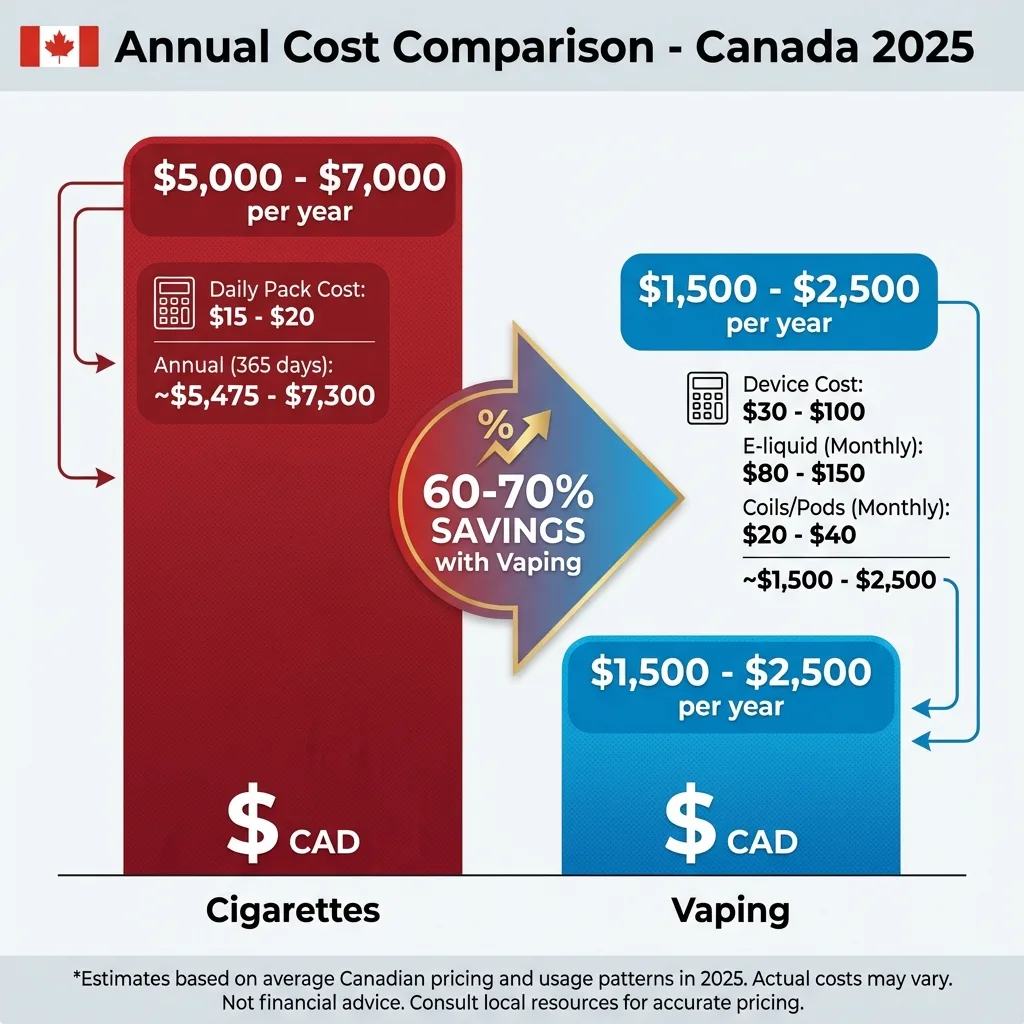
Financial comparison showing potential savings from switching to vaping in Canada
Annual Cost of Smoking Cigarettes in Canada (2025)
The cost of smoking in Canada varies by province due to different tax rates, but it’s expensive everywhere. Here’s what smokers can expect to spend annually:
- Pack-a-day smoker – $5,000 to $7,000 per year (based on $14-20 per pack)
- Half-pack daily smoker – $2,500 to $3,500 per year
- Two packs daily smoker – $10,000 to $14,000 per year
- Occasional smoker (5 packs/week) – $3,500 to $5,000 per year
These costs apply whether you’re buying Classics Full Flavor, Nexus, or any other brand. Even when you buy cigarettes online at bulk discounts, the annual costs remain substantial.
Annual Cost of Vaping in Canada (2025)
Vaping has a different cost structure with higher upfront costs but lower ongoing expenses:
- Initial device cost – $50 to $150 (one-time investment, though devices may need replacement every 1-2 years)
- E-liquid for regular user – $1,200 to $2,000 per year (depending on usage and whether you buy premium or budget brands)
- Replacement coils/pods – $300 to $500 per year (varies by device type)
- Battery replacements – $20 to $50 per year (if needed)
- Total annual cost – $1,500 to $2,500 per year after initial setup
💰 Potential Annual Savings
A pack-a-day smoker switching to vaping could save $3,000 to $5,000 annually! Over five years, that’s $15,000 to $25,000 in savings – enough for a down payment on a car, significant debt reduction, a family vacation fund, or substantial retirement savings.
Even half-pack-a-day smokers can save $1,000 to $2,000 per year by switching. These aren’t trivial amounts – they represent real financial relief that can improve quality of life and financial security.
While cost shouldn’t be the primary factor in health decisions, the financial benefits of switching are undeniable and provide additional motivation beyond the health improvements. When you combine the fact that cigarettes cause more harm than vaping with the significant cost savings, the case for switching becomes even more compelling.
9. Does Cigarettes Cause More Harm Than Vaping? Long-Term Effects
Understanding the long-term trajectory of health impacts is crucial when comparing whether cigarettes cause more harm than vaping. The progression of smoking-related diseases follows a predictable pattern, with damage accumulating over years and decades. In contrast, vaping shows a dramatically different long-term health profile.
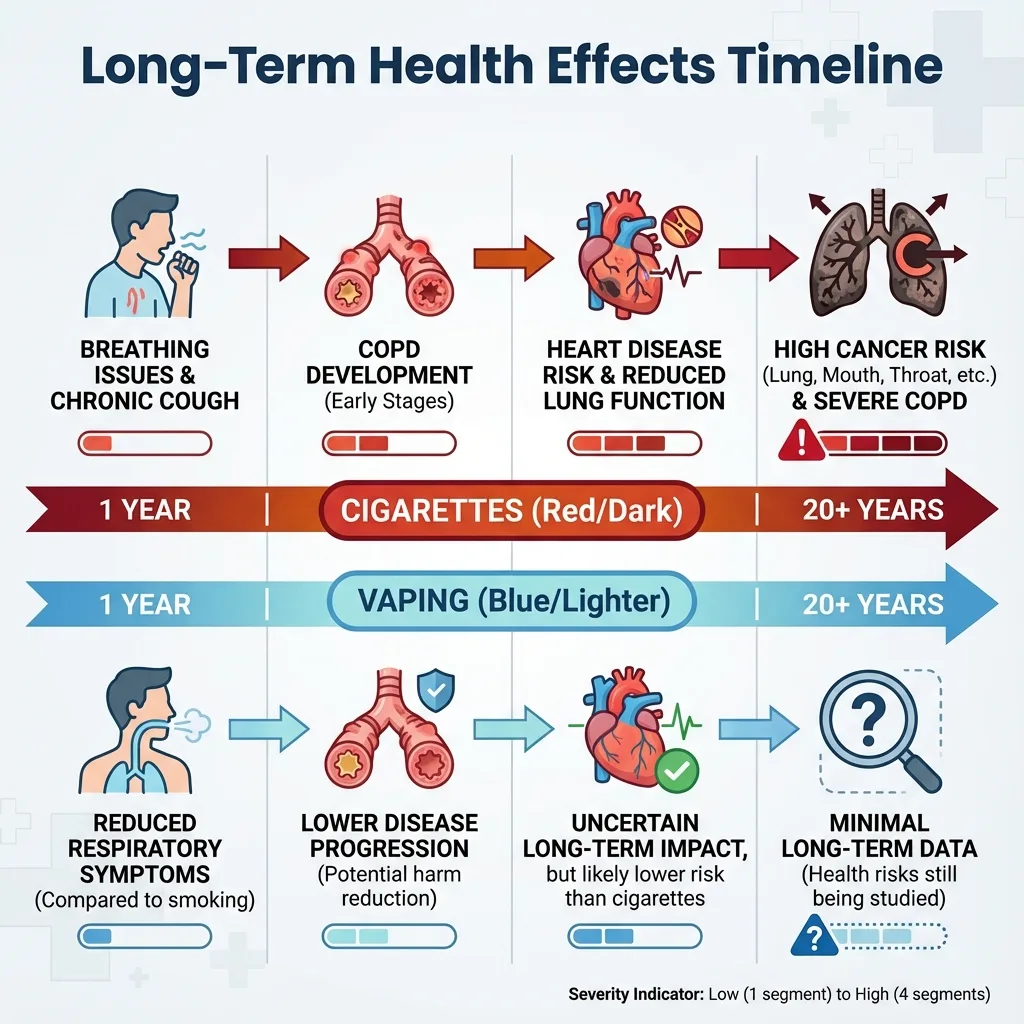
Comparative timeline of health effects over years of use
Long-term Cigarette Smoking Effects: A Progressive Decline
Smoking causes cumulative damage that worsens over time. Whether you smoke light cigarettes or full-flavor varieties, the long-term health trajectory is similar, though heavy smokers experience faster progression:
After 1 Year of Smoking:
- Persistent cough and increased phlegm production, especially in the morning
- Reduced lung capacity and exercise tolerance
- Increased susceptibility to colds, flu, and respiratory infections
- Elevated blood pressure and heart rate
- Reduced sense of taste and smell
- Premature skin aging begins
- Teeth yellowing and gum problems
After 5 Years of Smoking:
- Significant measurable decline in lung function
- Early signs of COPD may be detectable
- Increased cardiovascular disease risk markers
- Premature skin aging becomes noticeable
- Chronic cough becomes persistent
- Reduced physical endurance and stamina
- Increased frequency of respiratory infections
After 10 Years of Smoking:
- COPD diagnosis becomes common
- Substantially increased cancer risk across multiple organ systems
- Heart disease development likely
- Reduced life expectancy becomes statistically significant
- Chronic health problems affect daily quality of life
- Lung function may be reduced by 25-30%
- Cardiovascular system shows significant damage
After 20+ Years of Smoking:
- Severe COPD often requiring supplemental oxygen therapy
- High incidence of cancer diagnoses
- Multiple cardiovascular events (heart attacks, strokes) common
- Average 10-year reduction in lifespan
- Severely compromised quality of life
- Multiple chronic diseases requiring ongoing medical care
- Significant disability and reduced independence
This progression occurs regardless of which cigarettes you smoke. The brand doesn’t matter – the combustion process and resulting toxins cause similar damage whether you smoke premium or budget cigarettes.
Long-term Vaping Effects: Current Evidence
Vaping hasn’t been around as long as cigarettes, so we don’t have 40-50 year longitudinal data. However, the evidence we do have spanning 15+ years shows a dramatically different health profile, supporting the conclusion that cigarettes cause more harm than vaping:
Current Evidence (up to 15 years of vaping):
- No evidence of COPD development in vapers who never smoked
- No cancer clusters identified in vaping populations
- Minimal respiratory symptoms compared to smokers
- Improved health markers for ex-smokers who switched to vaping
- No significant increase in cardiovascular disease
- No evidence of the progressive lung function decline seen in smokers
- Biomarker studies show dramatically reduced exposure to toxins
- Population studies show no increase in serious disease rates
💡 Research Limitation and Projection
Vaping has only been widely used for about 15 years, so we don’t have 30-40 year longitudinal data like we do for cigarettes. However, based on chemical analysis, absence of combustion, current epidemiological evidence, and biomarker studies, the long-term risks of vaping appear to be minimal compared to smoking.
The fundamental difference – no combustion – means vaping avoids creating the thousands of toxic chemicals that cause the progressive diseases seen in smokers. This provides strong scientific basis for expecting that long-term vaping will remain substantially less harmful than smoking.
10. Secondhand Exposure Risks
When evaluating whether cigarettes cause more harm than vaping, the impact on bystanders and family members is an important consideration. Secondhand smoke from cigarettes is a well-documented health hazard, while secondhand vapor exposure presents a dramatically different risk profile.
Secondhand Cigarette Smoke Dangers
Secondhand cigarette smoke is classified as a Group 1 carcinogen by the WHO and contains over 7,000 chemicals:
- Cancer risk – Secondhand smoke causes lung cancer in non-smokers, with no safe level of exposure
- Cardiovascular disease – Increases heart disease risk in non-smokers by 25-30%
- Respiratory problems – Triggers asthma attacks and causes respiratory infections, especially in children
- Childhood impacts – Linked to SIDS, ear infections, and developmental issues in children
Secondhand Vapor Exposure
Secondhand vapor from e-cigarettes contains far fewer harmful chemicals:
- Minimal chemical exposure – Contains primarily propylene glycol, vegetable glycerin, and nicotine traces
- No combustion products – Lacks the tar, carbon monoxide, and carcinogens found in cigarette smoke
- Rapid dissipation – Vapor particles dissipate quickly and don’t linger like cigarette smoke
- Lower risk profile – Current evidence suggests minimal health risk to bystanders
The question “does cigarettes cause more harm than vaping” extends to those around you. Switching from cigarettes to vaping dramatically reduces exposure risks for family members, coworkers, and others in your environment.
11. Quitting Success Rates
Understanding cessation success rates helps answer whether cigarettes cause more harm than vaping from a practical harm reduction perspective. If vaping helps smokers quit combustible tobacco, it serves as an effective harm reduction tool.
Traditional Quitting Methods Success Rates
- Cold turkey – 3-5% success rate after one year
- Nicotine patches – 8-10% success rate
- Nicotine gum – 6-8% success rate
- Prescription medications – 10-15% success rate
Vaping as a Cessation Tool
Recent studies show vaping may be more effective for smoking cessation:
- Higher success rates – Studies show 15-20% success rates for complete smoking cessation
- Behavioral similarity – Mimics the hand-to-mouth action and ritual of smoking
- Gradual nicotine reduction – Allows users to step down nicotine levels over time
- Immediate harm reduction – Even if not quitting nicotine entirely, switching eliminates most smoking-related harm
While the ideal outcome is quitting all nicotine use, vaping provides a less harmful alternative for those who cannot or will not quit entirely, clearly demonstrating that cigarettes cause more harm than vaping.
12. Canadian Regulations and Perspective
Canada’s regulatory approach to cigarettes and vaping reflects the understanding that cigarettes cause more harm than vaping, while still maintaining appropriate controls on both products.
Canadian Cigarette Regulations
- Heavy taxation – High taxes designed to discourage smoking and offset healthcare costs
- Plain packaging – Standardized packaging with graphic health warnings covering 75% of package surface
- Sales restrictions – Minimum age of 18-19 (varies by province), no sales in pharmacies
- Advertising bans – Comprehensive restrictions on tobacco advertising and promotion
Canadian Vaping Regulations
- Regulated under Tobacco and Vaping Products Act – Framework balancing access for adult smokers with youth protection
- Age restrictions – Minimum age 18-19 depending on province
- Nicotine limits – Maximum 20mg/mL nicotine concentration
- Health warnings required – Products must carry health warnings about nicotine addiction
- Flavor restrictions – Some provinces have restricted flavored vaping products
Health Canada’s position acknowledges that while vaping is not without risks, it is significantly less harmful than smoking cigarettes, supporting harm reduction approaches for current smokers.
13. Current Scientific Evidence (2025)
The scientific consensus on whether cigarettes cause more harm than vaping is clear and supported by extensive research from leading health organizations worldwide.
Major Health Organization Positions
- Public Health England – States vaping is 95% less harmful than smoking
- Royal College of Physicians (UK) – Supports vaping as a harm reduction tool for smokers
- Health Canada – Acknowledges vaping is less harmful than smoking while not risk-free
- American Cancer Society – Recognizes vaping as less harmful than combustible tobacco
Key Research Findings (2020-2025)
- Biomarker studies – Show 90-95% reduction in exposure to harmful chemicals when switching from smoking to vaping
- Cardiovascular research – Demonstrates improved vascular function in switchers within weeks
- Respiratory studies – Show no evidence of COPD development in long-term vapers
- Population studies – No increase in serious disease rates among vaping populations
- Cessation research – Indicates vaping may be more effective than traditional NRT for smoking cessation
The overwhelming scientific evidence confirms that cigarettes cause more harm than vaping across every measurable health outcome, making vaping a viable harm reduction option for smokers unable or unwilling to quit nicotine entirely.
14. Conclusion: The Definitive Answer
After examining comprehensive evidence across health impacts, chemical composition, long-term effects, cardiovascular risks, cancer potential, respiratory damage, and scientific research from leading health organizations worldwide, we can definitively answer the question: Does cigarettes cause more harm than vaping? Yes, absolutely and unequivocally.
Cigarettes are far more harmful than vaping by virtually every measurable health metric. The evidence is overwhelming, consistent, and comes from multiple independent sources including Public Health England, the Royal College of Physicians, Health Canada, and numerous peer-reviewed scientific studies.
Key Conclusions on Cigarettes vs Vaping Harm
🎯 The Bottom Line: Does Cigarettes Cause More Harm Than Vaping?
- Cigarettes are far more harmful – Causing millions of deaths annually through cancer, heart disease, COPD, and other smoking-related illnesses
- Vaping is significantly less harmful – Estimated 95% less harmful than smoking according to Public Health England
- Switching saves lives – Smokers who completely switch to vaping experience substantial, measurable health improvements within weeks to months
- Neither is completely safe – The best choice for health is to use neither cigarettes nor vaping, but vaping is clearly the lesser harm for those who use nicotine
- Harm reduction works – For those unable or unwilling to quit nicotine entirely, vaping offers a much safer alternative to smoking
- The difference is combustion – Burning tobacco creates thousands of toxic chemicals; vaping’s lack of combustion eliminates most of these harms
Who Should Consider Switching from Cigarettes to Vaping?
Based on the clear evidence that cigarettes cause more harm than vaping, these groups should seriously consider switching:
- Current smokers of any brand – whether Classics Extra Lights, BB Full Flavor, or any other cigarette – looking to reduce health risks
- Those who have tried and failed to quit smoking with other methods like nicotine patches, gum, or cold turkey
- Smokers concerned about family exposure to dangerous secondhand smoke
- People looking to save significant money (thousands annually) while reducing harm
- Anyone wanting to improve respiratory function, cardiovascular health, and overall wellbeing
- Smokers experiencing early symptoms of smoking-related disease who want to prevent further damage
- Parents who smoke and want to reduce health risks to themselves and secondhand exposure to their children
Who Should Avoid Both Cigarettes and Vaping?
- Non-smokers and people who don’t currently use nicotine – don’t start either
- Pregnant women – nicotine can affect fetal development
- Youth and adolescents – developing brains are more susceptible to nicotine addiction
- People with certain heart conditions – consult your doctor before using any nicotine product
- Those with severe respiratory conditions – discuss with healthcare provider
⚠️ Important Reminder
This article answers “does cigarettes cause more harm than vaping” for informational and harm reduction education purposes. The healthiest choice is to avoid both cigarettes and vaping entirely. If you don’t currently smoke or vape, don’t start either one.
However, if you do smoke cigarettes – whether Canadian Classics Menthol, Rolled Gold, or any other brand – the scientific evidence clearly shows that switching to vaping can significantly reduce your health risks. Quitting all nicotine use entirely remains the ideal goal.
Making Your Decision: Does Cigarettes Cause More Harm Than Vaping?
If you’re a current smoker, the evidence overwhelmingly supports switching to vaping as a harm reduction strategy. While vaping isn’t without risks, those risks are minimal compared to the well-documented, severe, and often fatal harms caused by cigarette smoking.
Consider your priorities when deciding:
- Health – Vaping dramatically reduces disease risk across cancer, heart disease, COPD, and other smoking-related illnesses
- Cost – Vaping saves thousands of dollars annually compared to smoking cigarettes in Canada
- Family – Vaping eliminates dangerous secondhand smoke exposure to loved ones
- Quality of life – Improved breathing, restored sense of taste and smell, better physical endurance, and increased energy
- Longevity – Reduced risk of premature death and increased healthy years of life
For more information about cigarette products, storage, and related topics, explore our other comprehensive guides including cigarette expiration and freshness and buying cigarettes online in Canada.
Ready to Make an Informed Choice?
Now that you understand that cigarettes cause more harm than vaping, you can make evidence-based decisions about your health. Whether you’re looking for information about traditional cigarettes or considering harm reduction alternatives, we’re here to provide factual information.
📚 Related Articles on Cigarettes and Harm Reduction
- Is Smoking Cigarettes Better Than Vaping? 2025 Comparison – Additional perspectives on the cigarettes vs vaping debate
- Do Cigarettes Expire? Complete Guide to Cigarette Freshness – Learn about cigarette storage and shelf life
- How to Buy Cigarettes Online Canada: Complete Guide 2025 – Comprehensive guide to online cigarette purchasing in Canada
Final Answer: Does cigarettes cause more harm than vaping? Yes, the scientific evidence is clear and overwhelming. Cigarettes cause dramatically more harm than vaping across every health metric examined. While the healthiest choice is to avoid both, for current smokers, switching to vaping represents a significant harm reduction opportunity backed by extensive scientific research.