














 >
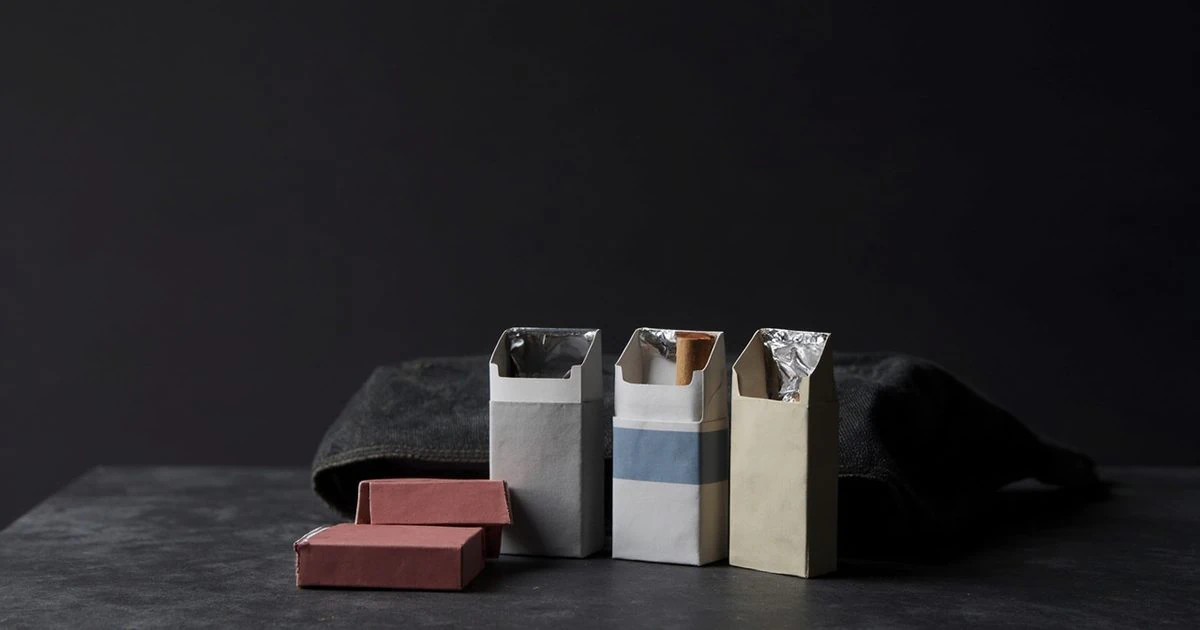
Carrying cigarettes day to day is a small logistics problem with a few real consequences. A pack that lives loose in a pocket gets crushed. A pack that sits in a glovebox through a hot afternoon dries out. A pack that was supposed to last until Thursday runs out on Wednesday because nobody counted how many sticks a day actually go missing. This guide covers how to carry a pack properly, where not to store one, how many packs to bring for a shift or a week, and how to line your carry rate up with the size of order you place.
Everything below is written for the normal case: you have a brand you already smoke, you buy it by the pack or the carton, and you want the pack in your pocket to reach you in the same condition it left the carton. If you are still choosing a brand, start with the cigarette category or the full shop page, then come back here for the carry side.
The Short Answer: What to Carry and How to Protect It
Carrying cigarettes day to day comes down to five habits, and none of them take more than a minute to set up.
- Carry one open pack plus one sealed spare. That covers a normal day and a long day without turning your pocket into a carton.
- Leave the carton at home. A carton is ten packs of twenty cigarettes. It is a supply unit, not a carry unit.
- Keep the open pack in a pocket or bag where nothing rigid presses on it. Keys, coins, tools, and a phone with a hard case are the usual culprits.
- Do not treat the car as storage. A glovebox in direct sun is the fastest way to dry out a pack you planned to finish next week.
- Count your sticks per day before you buy. Two packs a day and half a pack a day are different orders, different carton math, and different carry plans.
Why an Opened Pack Behaves Differently Once It Leaves the Carton
A sealed pack is a closed paper envelope with a foil liner inside. The paper wrap and the foil do most of the work of holding the tobacco at a stable moisture level, and the folded top flap is part of that seal. The moment you tear the flap, the pack starts exchanging moisture with whatever air surrounds it. In a dry room that means the tobacco slowly dries. In a humid room it means the paper and tobacco take on moisture and the draw tightens up. Nothing dramatic happens in an hour. The change shows up over days.
That is also why the standard advice for a carton at home and the standard advice for a pack in your pocket are not the same advice. Cartons want a cool, dark, dry cupboard where the seal stays intact for weeks, which is covered in detail in how to store cigarettes so they stay fresh. A pack you are actively smoking through wants the opposite treatment: it wants to be carried flat, kept out of heat, and finished in a reasonable number of days rather than nursed for a month. If any of the packaging vocabulary in this guide is unfamiliar, the cigarette terms glossary defines pack, carton, soft pack, and the rest in plain English.
Match the Carry Format to the Pack You Buy
King size packs
Most of the catalog is king size, and king size is what most people picture when they think about carrying a pack. A king size pack is roughly the size of a deck of cards, so it fits a front pocket, a jacket pocket, or the small pocket of a work bag. The trade-off is that a full pack is stiff enough to bend if something heavy sits on it. Full-flavor brands in the catalog like Canadian Full, Canadian Classics Original, and Classics Full Flavor all come in the same king size pack format, so the carry problem is identical across brands. What changes between brands is the tobacco inside, not the box around it.
Slim formats and nicotine pouch tins
If pocket space is the limiting factor, slim formats and tins solve it. The ZYN Spearmint, ZYN Watermelon, and ZYN Peach Bellini cans hold twenty slim portions each and are built to be carried — the catalog copy describes the slim profile as pocket-ready. A can is a different object than a pack: it is rigid, it does not crush, and it does not care about humidity. If you carry both formats, the tin goes in the pocket that gets sat on and the pack goes somewhere flatter. The comparison between the two formats is covered in cigarettes vs nicotine pouches if you are deciding between them rather than carrying both.
Cartons are not a carry format
A carton is ten packs wrapped together, two hundred cigarettes. Nobody carries a carton in a pocket, but people do carry one in a backpack or leave one in a vehicle as a “supply”, and that is where the freshness problem starts. If you want a bulk supply, buy the carton, break it down at home, and carry packs out of it. The buying by the carton guide covers when the carton actually makes sense, and carton prices in Canada covers the price side.
Pocket Carry: The Three Things That Actually Damage a Pack
Pressure and bend
A pack that gets bent in the middle cracks the tobacco column inside. The sticks do not break in half, but the fill loosens, the wrapper can crease, and the draw becomes uneven between sticks. This is the single most common carry failure and it is almost always caused by where the pack sits, not by how carefully you handled it. A front trouser pocket with a phone is the worst arrangement, because the phone is rigid, warm, and presses constantly. A jacket chest pocket, an inside coat pocket, or a bag’s flat front compartment all do better.
Lint, keys and coins
Once the top flap is open, the pack is a container with a gap in it. Coins, keys, and pocket lint work their way in, and lint in particular gets into the exposed ends. A pack shared with a keyring also gets scuffed, and the scuffing wears the paper at the corners until the pack starts to split. If you have to carry keys in the same pocket, put the pack in a soft sleeve or use the inside pocket instead.
Body heat and sweat
A pack pressed against the body sits at close to skin temperature all day. Warm, slightly damp conditions are exactly what you want to avoid if the goal is a stable pack, and a pack carried in a sweaty pocket through a summer shift will be noticeably softer and drier by the end of the week than the same pack kept in a bag. This is a slow effect, not an overnight one, but it is the reason a pack that has ridden in a pocket for a week tastes different from the first pack out of the same carton.
Bag Carry: Day Bags, Work Bags and Backpacks
A bag is the better default for anyone who carries more than one pack or works away from a fixed spot. Three rules cover most of it.
- Keep the pack flat and upright. A pack on its narrow edge in a loose bag slides around and lands on its corner. A flat pocket or the bag’s document sleeve keeps it stable.
- Do not put the pack under anything rigid. The classic mistake is a pack at the bottom of a backpack under a laptop. Even a short commute is enough to flatten a soft pack.
- Keep the sealed spare in a separate compartment. The spare stays sealed and fresh, and you are not opening two packs at once. The Playfare Ultra Light listing makes the same point in its own wording: cartons for extended travel, slim packs when space matters.
For travel and multi-day trips, the format question matters more than the brand. The road trip pack planning guide covers how to spread packs across a vehicle and a bag so that one bag is not carrying everything, and cigarette pack sizes explains what actually changes in physical size between king size, 100s, and slims.
Car Carry: Glovebox, Cup Holder and Direct Sun
The car is the most common place a pack quietly goes bad. Two things make it bad: heat and light. A glovebox in direct sun gets very hot very quickly, and a pack left there through an afternoon is being slowly baked. The cup holder is a slightly better spot for a pack you are actively smoking, because it is shaded and easy to reach, but it is a bad spot for a spare because the pack sits on its corner and picks up vibration. If you keep a supply in the vehicle at all, put it in a closed compartment out of sunlight and treat it as a short-term supply rather than a month’s worth.
The related problem is winter. A pack left in a cold vehicle and then brought into a warm room collects condensation on the wrapper and on the paper, and opening it wet accelerates the change. Let a cold pack come up to room temperature before you break the seal. The winter cigarettes guide covers the cold-weather side in more depth, including why a frozen pack is not damaged but a thawed-and-reopened one is compromised.
How Much to Bring: The Week Math
Most carry problems are actually counting problems. The fix is to work in sticks, convert to packs, and only then think about cartons. A pack is twenty cigarettes. A carton is ten packs, so two hundred cigarettes.
Start with sticks per day
Count actual sticks for three normal days rather than guessing. Most people are surprised: the number that matters is not the number you smoke on a day off, it is the average across the days you are out of the house. If you land on fifteen, you are at seven packs a week. If you land on eight, you are at three packs a week with a few sticks left over. The burn time and consumption guide explains why that count matters even more if you smoke slowly and leave sticks burning.
Convert to packs, then to cartons
  Sticks/day  |  Packs/week  |  Cartons/month  |  Carry per day
-------------+--------------+-----------------+----------------
      5       |     1.8      |      0.8        | 1 pack (spare sealed)
     10       |     3.5      |      1.5        | 1 pack + spare
     15       |     5.3      |      2.3        | 1 pack + spare
     20       |     7.0      |      3.0        | 2 packs
     30       |    10.5      |      4.6        | 2 packs + spare
     40       |    14.0      |      6.1        | 2 packs + spare
The numbers above are planning figures, not rules. The useful part is the middle column: it tells you how long one carton actually lasts, which is the number you need to decide between packs and cartons. cigarette math for monthly carton needs walks through the full calculation with a two-person household variant, and the monthly supply guide covers how to set up a supply that does not need re-planning every week.
What to Leave at Home: The Carton Is the Reserve
The clean division of labour is: the carton is the reserve, the packs are the working stock, and one open pack is what you actually carry. Break the carton down when it arrives, keep the sealed packs in a cool dry cupboard, and take out a pack only when the previous one is empty. Doing it this way means a carried pack is always recently opened, and the reserve never travels with you.
That said, if the reserve is running low, the restock schedule guide and the top-up order guide both cover how to bridge the gap without buying a full carton you do not need yet.
Carrying for a Group: Nights Out, Camping and Events
Group carrying is where the count usually goes wrong. The rule is the same as the household rule: work out what the group will actually use, add one pack as margin, and let one person carry the supply rather than four people each carrying a partial pack.
- A night out is a single-evening count. Two packs between three people is usually enough. The night out guide covers the timing side as well.
- A campsite is a multi-day count with no top-up option, which means margin matters. See cigarettes for camping for a realistic per-person number.
- A tailgate, concert, or festival has a supply problem at the gate rather than a carry problem at home. The outdoor events guide covers what to bring and what to leave in the vehicle.
If the group wants variety rather than one brand, the mystery cigarette pack and mystery carton are the low-commitment route, and sampler packs explains how to use them without ending up with a lot of one brand nobody wants.
Brand-by-Brand Format Notes for Carrying
Pack format is consistent enough that carrying advice transfers across brands, but the lineup does differ in how many variants each family offers, which matters if you carry two packs of different strengths. Here is the catalog as it actually stands.
Canadian Cigarettes
Four variants: Canadian Full, Canadian Lights, Canadian Ultra Lights, and Canadian Menthol. A common carry pattern is a full-flavor pack for the day and a lighter pack for evening, which is two packs in the bag rather than two packs in a pocket. All four are in the Canadian Cigarettes brand archive.
Canadian Classics
Four variants: Original, Silver, Ultra Blue, and Menthol. Note the naming: Silver and Ultra Blue are the lighter tiers, while Original is the full-flavor pack. Carrying two of these together is where people mix up which is which, so check the written name on the pack rather than relying on the colour. Full lineup: Canadian Classics brand archive.
Classics
Four variants: Classics Full Flavor, Classics Lights, Classics Extra Lights, and Classics Menthol. Classics and Canadian Classics are two separate brands with similar names, which is a real source of ordering mistakes — see Canadian vs Canadian Classics if you have ever bought the wrong one. Archive: Classics brand archive.
Playfare
Four variants: Full Flavor, Light, Ultra Light, and Menthol. Playfare Ultra Light is one of the five cartons that sits in the lower price band, which makes it a practical brand to keep as a carry pack and a reserve carton at the same time. Archive: Playfare brand archive.
BB
Three variants: Full Flavor, Light, and Menthol. A three-variant family is easy to carry across because there are only three packs to tell apart. Archive: BB brand archive.
Discount
Three variants: Discount Full Flavor, Discount Lights, and Discount Menthol. Two of the three cartons sit in the lower price band, so this is the family that makes the “carry cheap, keep a carton” plan easiest to run. Archive: Discount brand archive.
Time
Two variants: Time Full and Time Blue. Worth flagging for carry purposes: Time Blue is catalogued as the lighter, smoother blend in the family, so it is the one people reach for as a second pack. Archive: Time brand archive.
Rolled Gold
Three variants: Full Flavor, Light, and Menthol. Rolled Gold Menthol is the one pack in the catalog priced at $6.00 rather than $5.00, so if you carry it as a second pack the carry cost is slightly higher than the rest of the lineup. Archive: Rolled Gold brand archive.
Putters, Nexus, dM and DK’s
These are two-variant families, which makes them simple to carry: you either have the full-flavor pack or the lighter pack. Putters Full Flavor and Putters Light (the full flavor carton is in the lower price band), Nexus Full Flavor and Nexus Light, dM Original and dM Smooth, and DK’s Full and DK’s Light. Archives: Putters, Nexus, dM, DK’s.
Canadian Premium and Canadian Goose
Canadian Premium Original and Canadian Premium Special are two variants where the second is a special formulation rather than a stated strength tier, so read the pack name rather than assuming it is a lighter version. Canadian Goose is a single king size full-flavor SKU, which makes it the easiest family in the catalog to carry — there is only one pack to identify. Archives: Canadian Premium, Canadian Goose.
ZYN nicotine pouches
Three tins: Spearmint, Watermelon, and Peach Bellini. Each can holds twenty portions, and the catalog describes each portion as lasting up to thirty minutes. Tins are the one format in the catalog that genuinely does not care about pocket pressure, which is why they are the natural carry format for anyone who splits time between cigarettes and pouches. The ZYN guide covers the lineup, and nicotine pouch cost per day covers the money side if you carry a tin every day.
When a Pack Gets Crushed, Damp or Frozen
Three things happen to carried packs, and each has a different outcome.
- Crushed or bent: the pack still smokes, but the fill is looser and the draw is uneven from stick to stick. Move the pack to a flat pocket and finish it before opening the next one.
- Damp: paper that has taken on moisture dries back out, but slowly and unevenly. Do not put a damp pack somewhere hot to speed it up. Keep it out of sunlight and let it dry at room temperature.
- Frozen: cold itself does not damage the tobacco. The problem is condensation when the pack comes back inside, which is why you let it reach room temperature before opening. A pack frozen and thawed while still sealed is fine; one opened while cold and wet is not.
If the damage happened before the pack reached you — a carton that arrived crushed, or a delivery that sat somewhere it should not have — that is a different problem. The cigarette ordering mistakes guide covers the ordering side, and support handles the arrival side: damaged or incorrect orders should be reported within two business days with the order number and photos.
Matching Your Carry Rate to Your Order Size
Packs first
Every cigarette SKU in the catalog is sold as a pack at $5.00, with Rolled Gold Menthol at $6.00. If you smoke a pack every two or three days, packs are the correct unit and a carton is over-buying. Packs are also the way to test a brand before committing, which is the whole point of comparing brand lineups.
Cartons when the math works
Cartons run $29.00 to $38.99 depending on the SKU, and the band is per product, not per brand. Five cartons sit at $29.00: Discount Full Flavor, Discount Lights, Playfare Ultra Light, Putters Full Flavor, and Time Blue. Everything else is $38.99, including the remaining variants in those same families. That detail matters when you are buying a carton as a reserve: the cheapest way to hold a reserve is not always the cheapest brand you like, it is the specific SKU in that family that sits in the lower band.
Spend tiers and free shipping
Two order-level thresholds interact with carry planning, and both are based on cart total rather than on how much you carry in a day.
- Shipping: Expedited is $15 and Xpresspost is $20. Xpresspost is free over $99, free shipping also kicks in over $149, and Priority is $45 for next business day. Guaranteed Delivery with signature is available at $99 and up.
- Spend tiers: the Buy More Get More tiers add a free item at $80 (free pack), $240 (free carton), and $480 (two free cartons).
The planning implication is simple: if you are going to buy a reserve anyway, buying it in one order that crosses $99 gets the shipping for free, and crossing a spend tier adds a free item on top. Planning a $99 order and cigarette bundle deals both cover the arithmetic in detail, and shipping options covers the service levels. Dispatch is same-day for orders paid before 9 AM PST, and Canada Post delivers Monday to Friday with most Canadian addresses landing in two to five business days.
A Short Carry Checklist
- One open pack, one sealed spare. Not three open packs.
- Flat pocket or bag compartment, never under anything rigid.
- No keys or coins in the same pocket as an open pack.
- Nothing stored in the glovebox long-term.
- Carton broken down and stored at home, sealed packs untouched.
- Cold pack allowed to reach room temperature before opening.
- Sticks-per-day count refreshed whenever your routine changes.
- Next order placed before the reserve drops below one carton, not after.
Frequently Asked Questions
Is it better to carry one pack or two?
Two: one open, one sealed. The sealed pack is your buffer against a long day and it stays fresh because it is untouched. Carrying cigarettes in two open packs at once is the arrangement that produces stale packs, because each one sits half-used for longer.
Do slims carry better than king size?
For pocket space, yes. Slim formats and pouch tins take up less room and sit flatter. For a full day of cigarettes in one pack, king size is the more practical carry because a king size pack holds twenty standard sticks. The trade-off is covered in pack sizes.
Should you keep a carton in the car?
No. Heat and light are the two things that age a pack fastest, and a vehicle has both. Carry what you need for the day and leave the rest at home.
How long does an opened pack stay fresh in a pocket?
It depends on how fast you finish it. A pack finished in two or three days in reasonable conditions is not going to be noticeably different from the pack it came out of the same carton with. A pack that sits half-open in a warm pocket for two weeks will be. The practical answer is to finish an open pack before opening the next one.
Can you carry a mystery pack instead of a carton?
Yes, and it is a reasonable way to carry variety without committing to a carton of one brand. The mystery cigarette pack is $6.00 and the mystery carton is $50.00. Note that the free items in the Buy More Get More tiers and the Puffs Points rewards catalogue are cigarette-based, so they work alongside a mystery pack rather than replacing one.
Order Ahead So the Carry Supply Never Runs Out
Carrying cigarettes day to day only works if the reserve behind the carried pack is real. Order before the cupboard is empty, not after: place the order when you still have a carton in hand, so the two-to-five-day delivery window does not leave you buying single packs at the last minute. Orders paid before 9 AM PST go out the same day, and every order over $99 ships free on Xpresspost.
Start with the full cigarette catalog or the shop page, check your reserve against the table above, and build the order around the SKU you actually carry. If you are new to ordering, the first-time buyer guide and the online ordering questions cover the checkout side, and track your order once it ships. Delivery requires an adult signature and government-issued photo ID, so plan for someone to be there — the receiving an order guide explains what happens if nobody is home.
Discreet packaging and airtight packing are standard on every order, which is also why a carton arrives in good condition and stays that way if you store it properly. Questions about a specific brand, strength, or order go to support through the customer help page, or through live chat Monday to Friday, 10am to 6pm EST.