














 >
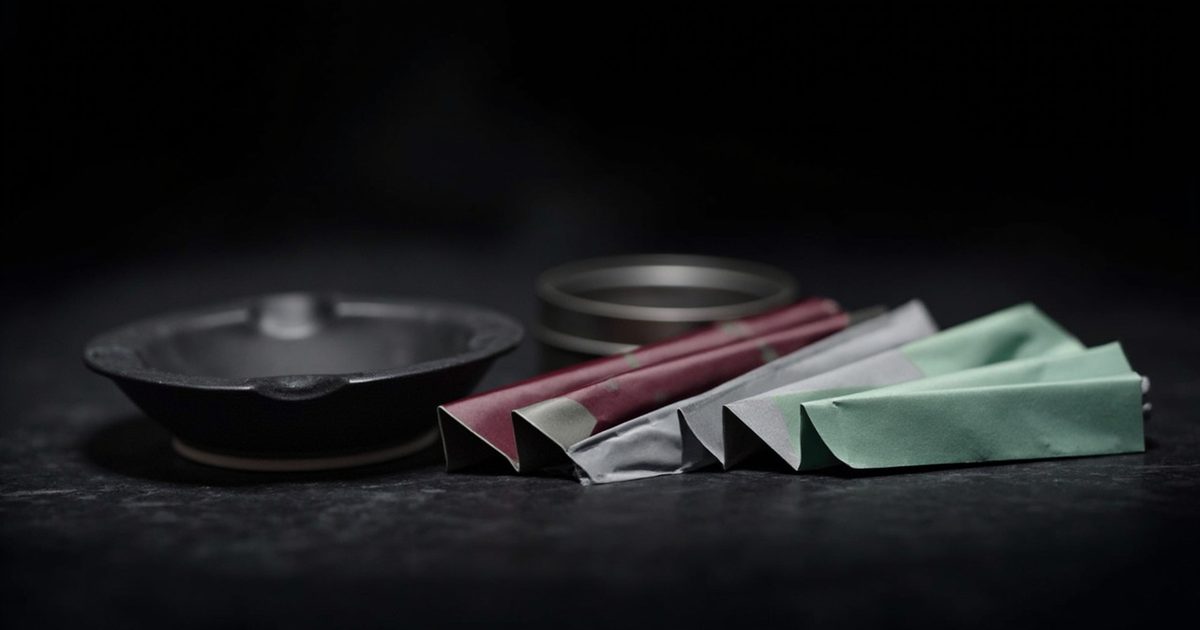
Putting a cigarette out is the part of the routine nobody explains. You get taught how to light one, how to hold it, how to ash it — and then the moment arrives when you want to stop halfway, and you either grind it into an ashtray, flick it somewhere you should not, or burn your fingers on the last centimetre because you did not want to waste it. This guide covers how to put out a cigarette properly, how to save a half-smoked stick without ruining it, and how to deal with the butt at home, on a balcony, in a car, at work or outdoors in Canada. It also covers the part that actually costs money: what stubbing out half of everything you smoke adds up to over a month.
The quick answer
- To put a cigarette out cleanly: tap the ash off, press the burning end flat against the ashtray floor, and give it a quarter turn. No grinding, no stabbing. It goes out in about two seconds and the stick stays intact.
- If you want to save the rest: use the press-and-turn method, not water. Water puts it out instantly but leaves the tobacco wet, and a wet half stick never smokes properly again.
- If there is no ashtray: use a metal tin, a foil wrapper, a pocket ashtray, or the edge of a hard surface, then carry the butt to a bin. Never grind one into grass, mulch or a planter.
- The money part: a pack at $5.00 works out to $0.25 a stick. Stubbing out half of every cigarette in a pack a day wastes roughly $2.50 daily, or about $75 a month.
What actually happens when you put a cigarette out
A lit cigarette is not on fire in the way a candle is. It has a coal — the glowing ember behind the ash line — that stays alive because it is insulated by its own ash and fed by air pulled through the paper. Take away the air, or take away the heat, and the coal dies within a second or two. Every method of putting a cigarette out is one of those two things.
Starving it of air is what an ashtray does. Pressing the burning end into a flat surface closes off the oxygen path through the paper and the tobacco column. The coal cools below the point where it can sustain itself, and the stick is out. This is also why a cigarette left sitting in a full ashtray sometimes goes out on its own: the ash pile underneath it is cutting the airflow.
Removing the heat is what water, snow, sand and coffee do. They pull the temperature down fast. This is the fastest method and the worst one if you plan to smoke the rest later, because the cooling medium also soaks into the tobacco and the paper. A water-stubbed cigarette is done.
What does not work is flicking. A cigarette thrown onto pavement, gravel or grass keeps smouldering far longer than most people expect, because nothing is closing off the air supply. That is also why an unfinished stick left balanced on an ashtray rim will sometimes relight itself in the breeze. If you want it out, put it out — do not assume it will die on its own.
The mechanics of the burn itself — how the paper controls the speed, how the ash ring holds the coal, and why a badly packed stick tunnels — are covered in why cigarettes burn unevenly. This guide stays on the last ten seconds of the stick.
Four ways to put out a cigarette, ranked by what they do to the stick
1. The ashtray press-and-turn
This is the standard, and it is standard for a reason. Tap the ash off first so you are pressing the coal and not a pile of loose ash. Then press the burning end flat against the floor of the ashtray and rotate the cigarette about a quarter turn. You will feel the resistance change as the coal collapses. Lift it, look at it, and if there is still a glow, press once more.
The reason not to grind is simple: grinding crushes the last centimetre of tobacco into the ashtray and leaves you holding a chewed, flattened end. A pressed-and-turned stick keeps a clean edge, which matters if you are putting it back in the pack or into a tin to finish later.
2. Water, snow, coffee dregs
Dunking the burning end into any liquid kills it instantly. A mouthful of water in a sink, the dregs of a coffee cup, or a snowbank in February all work the same way. It is the cleanest method for a stick you are finished with, and the worst method for a stick you want to keep.
There is one practical caution with coffee cups and cans: a submerged butt can look like it is out while the tip is still warm, and if you drop a fresh one in on top of it, you end up with a cup that smells like an ashtray. Empty the cup when you are done with it.
3. Sand, grit or dry soil
An outdoor sand bucket or a bucket of grit does the job for a group: push the burning end into the sand and twist. It is the method most campsites and workshops use because it needs no maintenance beyond emptying. Do not use a planter or mulch bed. Peat, dry mulch and bark chips are exactly the wrong material to push a live ember into, and a planter full of butts kills the plant.
4. The pavement stub
Pressing the burning end against concrete or the side of a curb and stepping on it does work, but it is the messiest option. It flattens the end, leaves ash residue on the ground, and if you then put the stick back in the pack it will shed grit into the rest of the pack. It is a last resort for a stick you are throwing away, not a method for one you are saving.
How to put out a cigarette when there is no ashtray
The no-ashtray problem comes up in cars, on walks, at job sites, at rented cottages and anywhere a landlord has decided the balcony is now a “no smoking” zone. The answer is almost always the same: bring something to put it into.
In the car
Most modern cars have a cup holder and no ashtray. A small metal tin with a lid — a mint tin, an empty snus tin, a dedicated cup-holder ashtray — solves it. Press the cigarette out against the inside of the tin, close the lid, empty it into a bin at your next stop. If you use a paper cup instead, half-fill it with water first, and remember that a plastic-lined cup will eventually burn through if you keep dropping live sticks into it dry.
The one thing to avoid is throwing a smoke out of a moving window. Apart from being the most common source of roadside litter complaints, an unfinished stick can catch dry grass along a shoulder and keep smouldering after it lands. The car set-up is covered in more depth in the outdoor smoking set-ups guide, including ventilation and keeping the pack away from the cabin.
On foot, at work, outdoors
A pocket ashtray is the cheapest piece of kit in this whole routine. They come as lined foil pouches, small hinged tins, or rubberised caps that screw onto a bottle. A folded square of aluminium foil inside an empty pack works just as well if you want a free version: press the cigarette out on the foil and drop it in the corner of the pack.
On a job site, a coffee can half-filled with sand left in the truck solves the problem for a whole crew. On a walk, the foil-in-the-pack method is enough to get you to a bin. What you never want to do is stub one out on a wooden railing, a fence post, or a painted window ledge — it leaves a permanent scorch mark and that is the kind of damage that gets a smoking spot shut down.
Can you save a half-smoked cigarette for later?
Yes, and people do it every day, but it is a compromise. The first two or three draws after a relight are hotter and drier than the original stick, and the flavour flattens. That is a taste problem, not a safety problem — the reason to think about how you stub is that a badly stubbed stick is genuinely unpleasant to come back to, and an unpleasant relight is how half packs get thrown away.
How to stub a cigarette you intend to finish
- Do not use water. Wet tobacco does not dry back to what it was. The paper wrinkles, the draw tightens, and the stick will taste like a wet ashtray.
- Press, do not grind. Two seconds of flat pressure is enough. Grinding smears the burnt end and pushes ash into the cut tobacco.
- Blow through it once. A short, gentle exhale through the filter after you press clears the stale smoke sitting inside the column. Do this away from your face, because the first centimetre of a revived stick is where the harshness lives.
- Store it ember-end up, away from the other sticks. Drop it into an empty corner of the pack or into a separate tin. A stub pressed against the cut tobacco of the other 19 cigarettes flavours them.
How long is too long?
The honest answer is that a saved half is best finished within a few hours. Overnight is survivable — the stick is dry and the first draw is sharp — but a stub left for two or three days in a car console or a jacket pocket is done, and the smell will follow it. The same four things that make a full pack go flat apply to a half stick: air, heat, light and dryness. That is covered in detail in how to store cigarettes so they stay fresh.
There is a practical rule that saves a lot of waste: if you know you are a two-draw-then-stub smoker, buy packs rather than cartons until you find a variant you actually finish. Nothing goes stale faster than a carton you are working through at four cigarettes a day.
Relighting a saved half: what to expect on the first draw
A relight behaves differently from a fresh light for three reasons. The burnt section has already lost its moisture, so it heats faster. The cut end is uneven, so the flame takes on one side before the other. And the smoke that sat in the column while it was out has cooled and condensed, which is why the first drag tastes ashy rather than like tobacco.
The fix is technique, not product. Hold the flame slightly further away than you would on a fresh stick, rotate the cigarette while you draw, and give it two short pulls instead of one long one. The first puff is worth blowing out rather than inhaling — it is mostly the stale smoke from the saved column. The full lighting sequence, including flame distance and packing, is in how to light a cigarette properly.
Why a relight usually canoes
A saved half has a coal line that is not square to the column. One side of the paper lights first, that side burns faster, and the cherry runs down one edge — the canoe. The cure is to ash it, look at which side is ahead, and angle the flame at the lagging side for half a second. If a stick keeps canoeing on a fresh light too, the cause is usually how the pack was handled rather than the cigarette; the uneven burn troubleshooting guide works through the causes in order.
The waste math: what stubbing out actually costs
Almost every cigarette is bought by the pack or the carton, but it is easier to see the cost of a stub when you price the stick. The table below uses the live catalogue prices: $5.00 for a standard pack of 20, $6.00 for Rolled Gold Menthol, and the two carton bands at $29.00 and $38.99 for 200 cigarettes.
What one cigarette costs you

  Purchase            Price     Per stick
------------------------------------------
  20-pack             $5.00     $0.250
  20-pack (RG Menthol)$6.00     $0.300
  Carton, $29 band    $29.00    $0.145
  Carton, $38.99 band $38.99    $0.195

If you stub out half of every stick:

  One pack a day      $2.50 wasted daily  ~$75 / month
  $29 carton, 1 pack/day  $1.45 daily      ~$43.50 / month
  $38.99 carton, 1 pack/day $1.95 daily    ~$58.50 / month
Two conclusions come out of that table. First, the carton is where the savings live: ten packs bought individually at $5.00 cost $50.00, against $29.00 or $38.99 for the same 200 cigarettes in a carton. Second, waste is cheaper to fix by changing how you smoke than by changing what you buy. Stubbing out a quarter of every pack costs you more per month than the difference between the two carton bands.
The full brand-by-brand breakdown, including which five cartons sit in the $29.00 band, is in the cigarette price list. For the bigger planning question — how many cartons a month you actually need at your rate — the cigarette math guide does the arithmetic by smoking rate.
Which variants survive a relight better
If you routinely save half a stick, the variant you buy matters. The pattern follows the strength tier, because the tier describes how much tobacco and how much filter ventilation is between you and the draw.
- Full flavour holds up best. There is enough body that the flatter first draw after a relight still reads as tobacco. A Canadian Full, a Canadian Classics Original or a Playfare Full Flavor will take a relight without tasting hollow.
- Lights are the middle case. A Canadian Lights or a Canadian Classics Silver smokes fine fresh and goes a little thin on the second light. Most people notice the difference more in the draw than in the flavour.
- Ultra lights and extra lights are the least forgiving. With more ventilation in the filter there is less for the relit coal to work with, and the second half can taste like hot paper. A Canadian Ultra Lights or a Canadian Classics Ultra Blue is a stick to finish in one sitting.
- Menthol keeps its character but the cooling reads weaker on a relight because the first draw is hotter and drier. A Canadian Menthol or a Playfare Menthol is best finished fresh.
If you want the cheap test, the $29.00 band has a full flavour, two lights and a menthol in it: Discount Full Flavor, Discount Lights, Playfare Ultra Light and Putters Full Flavor, plus Time Blue. Buying one of those packs at $5.00 tells you whether the tier fits your habit before you commit to 200 sticks.
How to get rid of the butt: by setting
At home
A lidded ashtray beats an open one. Emptying an open ashtray into a kitchen bag is how a whole bag ends up smelling like cold smoke, and the smell transfers to anything plastic-wrapped next to it. Line the ashtray with a small amount of water if you empty it weekly rather than daily — it kills the residual smell and stops the ash from blowing around when you tip it.
On a balcony
Wind is the issue. An open ashtray on a balcony rail loses its contents the first gusty day, and a live ember in a planter is a real fire risk. A lidded tin, weighted, sitting on the floor rather than the rail, solves both. The balcony-specific details — where to keep the pack, door discipline and wind control — are in the outdoor set-ups guide.
In the car
Lidded tin in the cup holder, emptied at every fuel stop. Do not rely on the door pocket or the gap beside the seat — butts migrate under the seat and the smell is very hard to get out. The cabin filter and fabric side of this is covered in how to keep cigarette smell off your clothes, car and home.
At work
Use whatever receptacle the site provides and nothing else. If you are the person who sets the smoking spot up — a shop, a yard, a depot — a sand-filled coffee can with a lid costs nothing and eliminates the litter complaint that usually ends up closing the spot. People who smoke on short breaks through a shift tend to stub out more than they finish, which is why the sand can fills up faster than expected; the pack-planning side of that is in cigarettes for long shifts.
Camping, cottages and the outdoors
Pack it out. A sealed tin in the kit weighs nothing, and it means no butts in the fire pit, no butts in the lake, and nothing left behind at a site you do not own. If you are smoking around a fire pit, keep the ashtray tin away from the pit itself — an ember in a dry pine floor is the one mistake in this whole routine that has real consequences. The camping-specific packing list is in cigarettes for camping.
Winter and wind: the two things that break a tidy put-out
In February, an outdoor ashtray freezes solid. Ash and old butts set into a block of ice, and you cannot press anything flat against it. Two fixes work: switch to a lidded metal tin you bring inside at the end of the day, or keep a small container of sand indoors and swap it weekly. Do not chip at a frozen ashtray with a cigarette — you will bend the stick and lose half of it.
Wind causes the other problem. A cigarette put down on a windy balcony keeps smouldering and can roll; a lidded tin removes that entirely. If you are smoking outside in the cold, gloves make the press-and-turn harder than it sounds, and the practical answer is to press the coal against the tin lid rather than trying to rotate the cigarette with a gloved hand.
Odour after you stub out
Most of the smell people notice after smoking is not from the lit cigarette — it is from the cold butt sitting in an ashtray and from the residue on hands and a jacket. Emptying the ashtray daily, keeping butts in a lidded container until you bin them, and washing your hands after rather than before the smell sets in does more than any spray. For the clothing side, the smoking jacket and jacket-storage routine in the smoke smell guide is the practical version.
Buying for the way you actually smoke
Once you know your stub habit, the order gets simpler. There are three realistic shapes to it.
You stub out often
Buy packs, or buy one carton in the $29.00 band and work through it. At $5.00 a pack, a wasted half costs $0.125 — annoying but not expensive. A carton in the $29.00 band brings that down to about $0.07 per wasted half. What you do not want is a $38.99 carton going stale while you smoke four cigarettes a day, which is the situation that turns a good price into a bad buy. Pick a variant from the price band you can finish: Discount Menthol if you want cooling, Discount Lights if you want a lighter draw.
You finish every stick
Then cartons make sense, and the $38.99 band opens up the bigger brand families. A BB Full Flavor, a Rolled Gold Full Flavor, a Classics Full Flavor or a DK’s Full all sit in that band. Ten packs at $5.00 each would be $50.00, so a $38.99 carton saves about $11 on 200 cigarettes, and a $29.00 carton saves about $21.
You are still deciding
Do not buy 200 cigarettes of a variant you have never smoked. Buy two or three packs across tiers — a BB Light, a Putters Light, a Nexus Full Flavor — or start with a mystery cigarette pack, which is the cheapest way to sample across brands. The sampler packs guide explains how to read what arrives, and the cigarette terms glossary covers the words on the listing if any of them are unfamiliar.
Getting the order over the line
Two thresholds do most of the work. Shipping is $15 for expedited (1–5 business days) and $20 for Xpresspost (1–3 business days), and Xpresspost becomes free on orders over $99.00 before discounts. There is a second free-shipping line at $149.00 after discounts, and Priority at $45.00 if you need next-business-day. Signature is required at $99.00 and up.
On top of shipping, the store runs three spend tiers: a free pack at $80.00 in the cart, a free carton at $240.00, and two free cartons at $480.00 — those are the $80 tier, the $240 tier and the $480 tier. Three $29.00 cartons lands you at $87.00 and clears the $80 tier on its own. The arithmetic on stacking those with free shipping is in the $99 free shipping guide and the bundle deals guide.
Orders placed before 9:00 AM PST on a business day go out the same day, and Canada Post runs Monday to Friday. If you are down to the last pack, that timing matters more than the shipping tier.
Quick reference: which put-out method to use
Situation                Best method            What it does
----------------------------------------------------------------
Saving the rest          Ashtray press + turn   Keeps stick dry
Finishing it             Water / coffee dregs   Instant, ruins stick
No ashtray, indoors      Lidded tin             Contains smell
No ashtray, outdoors     Pocket ashtray / foil  Carries it to a bin
Group, outdoors          Sand bucket            Kills embers fast
In the car               Tin in cup holder      No smell, no litter
Frozen ashtray           Indoor tin, swapped    Nothing freezes
Windy balcony            Weighted lidded tin    Stops rolling embers
Frequently asked questions
How do you put out a cigarette without an ashtray?
Press the burning end flat against any hard, non-flammable surface and turn it a quarter turn, then put the butt in a tin, a foil wrapper or your pocket ashtray. Pavement, a metal lid, the inside of a tin and the base of a coffee can all work. Do not press it into grass, mulch, a planter or a wooden railing.
Is it bad to put a cigarette out with water if I want to finish it later?
Yes, for practical reasons. Water soaks the tobacco and paper, and a wet stick never dries back to the same draw. It will taste flat and the paper will wrinkle. Use the press-and-turn method instead, then blow through the filter once to clear the stale smoke.
How long can a half-smoked cigarette sit before it is not worth relighting?
A few hours is fine. Overnight works but the first draw is sharp. Past two or three days, especially in a warm car or a pocket, the tobacco is dry and the stick tastes stale — throw it out.
Why does a relit cigarette taste harsher?
The saved half has already lost moisture, the cut end is uneven, and the smoke left in the column has cooled and condensed while it sat. The first draw is mostly that stale smoke. Blow the first puff out and the rest of the stick settles down.
Does pressing a cigarette out in an ashtray make the next one taste different?
Not the next cigarette, but it can affect the rest of the pack if you put the stub back in with the others. Ash and char on the stubbed end transfer to the cut tobacco it touches. Use a separate tin, or at least an empty corner of the pack, and keep the ember end away from the other sticks.
Do 100s or king size cigarettes behave differently when relit?
Longer formats have more stick left when you stub out, so you get more value out of a relight — but there is also more of the column that has already been heated. The size differences themselves are covered in cigarette pack sizes in Canada, and burn time per format is in how long a cigarette lasts.
What about nicotine pouches if I keep stubbing cigarettes out?
Pouches have no lit end, so there is nothing to put out and nothing to waste — a can is used until it is empty. If your pattern is two or three draws and then a stub, a tin of ZYN Spearmint, ZYN Watermelon or ZYN Peach Bellini removes the waste entirely. The trade-offs between the two formats are in cigarettes vs nicotine pouches.
Start with the stick you actually finish
The cleanest put-out costs nothing and takes two seconds: press it flat, turn it a quarter, and put it somewhere it cannot roll. The expensive part of the habit is not the ashtray — it is buying 200 cigarettes of a variant you keep stubbing out at the halfway mark. Work out what you finish, then buy that in the band that matches your rate. If you are still choosing, the cigarettes category lists every stocked family and the shop page shows what is in stock right now, including the current mystery carton if you want to test across brands.
The rest of the routine — carrying a pack without crushing it, keeping it fresh, and getting an order to the door — is covered in carrying cigarettes day to day, cigarette taste fatigue and how to taste cigarettes.