















30,000+ Reviews Trusted by Canadian smokers nationwide Use: SMOKE15 for 15% off your purchase today Shop now

Buying Cigarettes Online vs In Store in Canada: What Changes and What Doesn’t (2026 Guide)

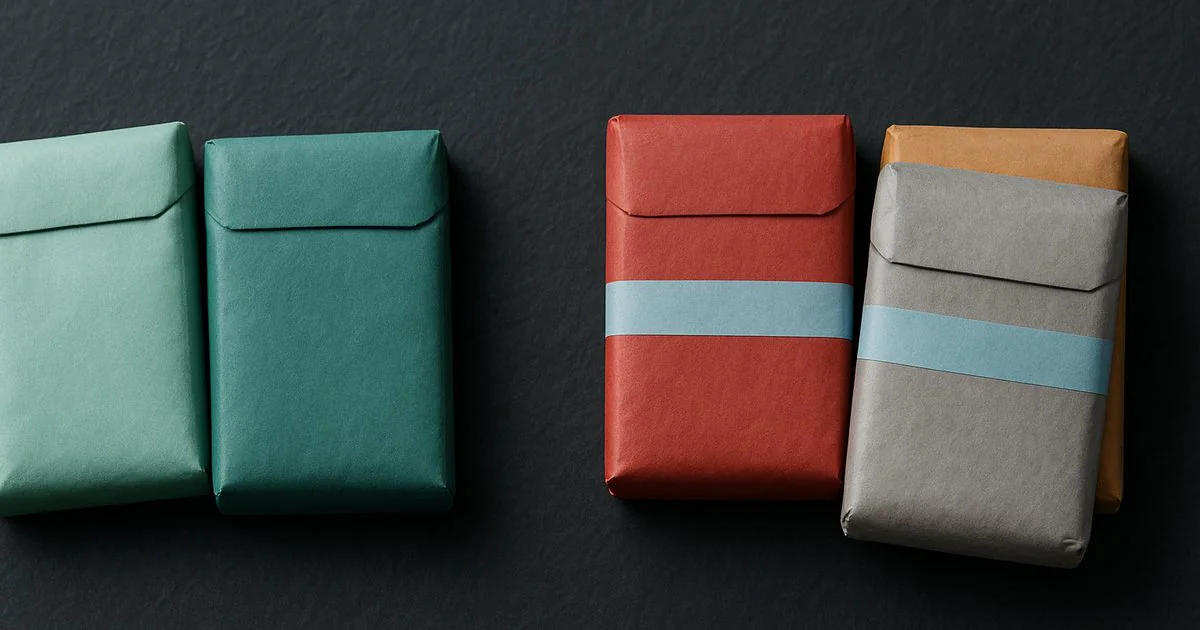
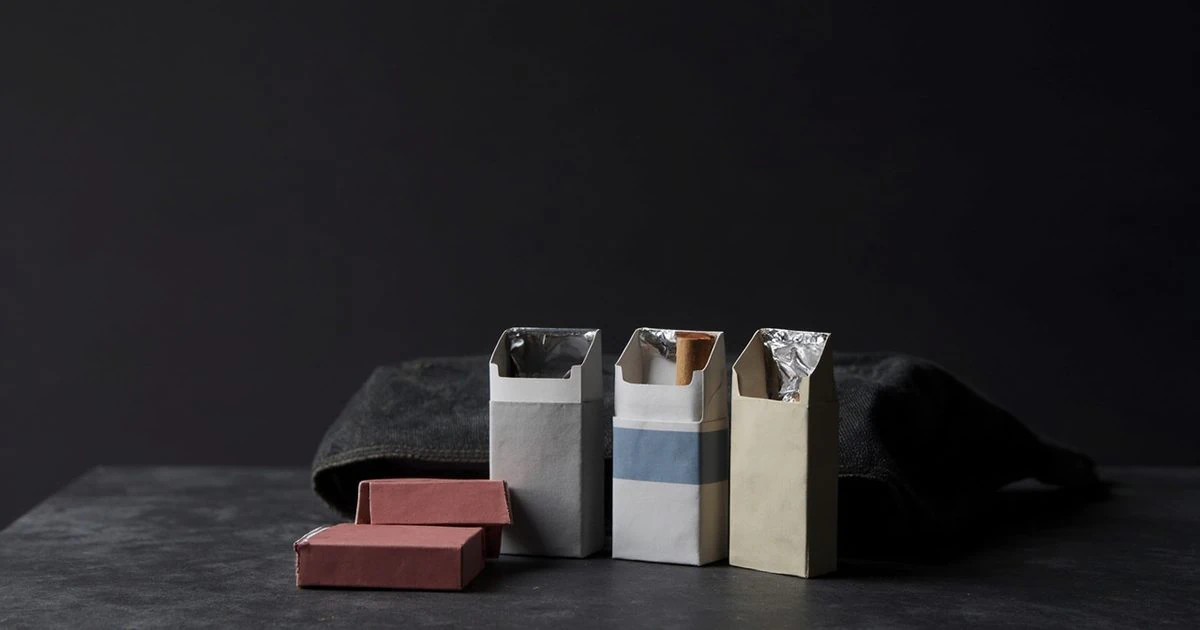
Buying cigarettes online vs in store in Canada shown as four soft paper cigarette packs beside a plain shipping parcel

Buying cigarettes online and buying them at a counter are two ways of getting the same carton. What is inside the pack does not change. What changes is how much of the catalogue you can see, what you pay per carton, how long you wait, who hands the parcel over, and how you pay for it.

This guide separates the two lists. First the things that stay identical, then the five things that genuinely change when you order from the full shop instead of walking into a store, and finally an honest account of what you give up. Everything below comes from the live catalogue: fourteen stocked brand families, thirty-eight cigarette products, prices read directly from the product pages, and the shipping, payment and delivery rules the store publishes.

If you already know you want to order online and just need the mechanics, open the cigarette category and work from there. If you are still deciding whether an online order makes sense for how you actually smoke, read the comparison first.

What does not change: the carton is the same carton

A carton holds ten packs of twenty cigarettes — 200 sticks — whether you carry it out of a store or receive it from a courier. That count is what every price calculation in this article is built on. There is one catalogue exception worth knowing about: Canadian Goose cartons are described in two configurations, eight packs of twenty-five or ten packs of twenty, and both still total 200 cigarettes. The pack format is king size at roughly 84 mm across the lineup.

Pack size does not shift because of the channel either. If you smoke king size, you get king size. The full breakdown of king size versus 100s versus slims lives in the cigarette pack sizes guide, and none of it is affected by ordering from a screen rather than a counter.

What does not change: your brand and your tier

The variant words on the front of the pack mean the same thing online. Full Flavor, Original, Light, Silver, Ultra Blue, Extra Lights, Ultra Light and Menthol all describe the same position on the same ladder in both channels. If you smoke a light cigarette at the counter, you smoke a light cigarette from a parcel.

The one thing an online catalogue does better is show you the ladder in one place. The catalog map by strength groups all fourteen stocked families into full flavor, light, ultra-light and menthol. The strength levels explainer and the full flavor versus light comparison cover the tier definitions themselves. A counter shows you what is on the shelf behind the clerk; a catalogue shows you the whole set at once, which is the first real difference.

Change one: what you can actually see

A store shelf is limited by space and by what the buyer chose to stock. The online catalogue is limited only by what is published, and at the time of writing that is thirty-eight cigarette products across fourteen families, plus three nicotine pouch SKUs, a mystery pack, a mystery carton and three spend-tier gift items. Every variant of every family is visible in the same place, at the same time, on the same page.

Families with four variants

Four families run a complete four-variant lineup. Canadian Cigarettes covers Full Flavor, Lights, Ultra Lights and Menthol. Canadian Classics runs Original, Silver, Ultra Blue and Menthol. Classics runs Full Flavor, Lights, Extra Lights and Menthol. Playfare runs Full Flavour, Light, Ultra Light and Menthol.

The four-variant lineup comparison puts those four families side by side if you are choosing between them rather than within one.

Families with three, two and one variants

Three families run three variants. BB covers Full Flavor, Light and Menthol. Discount covers Full Flavor, Lights and Menthol. Rolled Gold covers Full Flavor, Light and Menthol. The three-variant comparison covers those lineups in detail.

The two-variant families are dM (Original, Smooth), Nexus (Full Flavor, Light), Putters (Full Flavor, Light), Time (Full Flavor, Blue), DK’s (Full, Light) and Canadian Premium (Original, Special). The two-variant guide covers those. Canadian Goose is the single-SKU family.

For a slower way in, the sampler packs guide explains the mystery cigarette pack at $6.00 and the mystery carton at $50.00. The A-Z brand directory is the flat list of every family if you would rather scan names than tiers.

Change two: what you pay per carton

This is the difference most shoppers care about, so it is worth stating exactly. Every cigarette pack in the catalogue is listed at $5.00, with one exception: Rolled Gold Menthol is listed at $6.00 per pack. Cartons are not a flat price. They fall into two bands.

The $29.00 carton band

Five cigarette SKUs are listed at $29.00 per carton: Discount Full Flavor, Discount Lights, Playfare Ultra Light, Putters Full Flavor and Time Blue. Band membership is per SKU, not per brand. Discount Menthol, for example, sits in the higher band while the other two Discount variants sit in the lower one.

At $29.00 for 200 sticks, the carton works out to 14.5 cents per cigarette.

The $38.99 carton band

The other thirty-three cigarette SKUs are listed at $38.99 per carton, including Canadian Full, Canadian Classics Original, Classics Full Flavor, Playfare Full Flavour, BB Full Flavor, Rolled Gold Full Flavor, Canadian Goose, Discount Menthol and Playfare Menthol. At $38.99 for 200 sticks the carton works out to 19.5 cents per cigarette.

Why the band matters more than the brand

A shopper used to comparing brands at a counter tends to assume price follows the brand name. In this catalogue it follows the SKU. The gap between the two bands is $9.99 per carton, or about five cents a stick, which is $99.90 across ten cartons. The carton price comparison and the cheap versus premium tier guide go through the bands in more depth.

One thing this article will not do is tell you online is always cheaper than a store, because that depends on where you are. Store pricing varies by province and by shop. The store versus online price comparison works through the provincial picture. What can be stated as fact is the other way around: the catalogue prices above are the same for every Canadian address, which is not true of any physical counter.

Change three: how the order reaches you

At a counter, the carton crosses the counter. Online, it goes through the mail. The store ships to Canadian addresses through Canada Post and publishes three live options:

  • Free Xpresspost over $99 — 1 to 3 business days
  • Xpresspost at $20 — 1 to 3 business days
  • Expedited at $15 — 1 to 5 business days

The published service standard is 2 to 5 business days for most Canadian locations, with remote areas running longer. Canada Post works Monday to Friday, so a Friday afternoon order does not move over the weekend.

Orders paid before 9 AM PST are usually processed and shipped the same business day. Orders after that cutoff, or orders whose payment has not cleared, go out the next business day. That single rule explains most of the gap between two shoppers who ordered on the same evening and got their parcels days apart. The shipping options guide and the $99 free shipping walkthrough cover the ladder in full.

Someone has to sign for it

This is the biggest practical difference between the two channels and the one that surprises people. Every parcel requires an adult signature and government-issued photo ID at the door. If nobody is there, Canada Post leaves a notice card and the parcel waits at the nearest outlet. Parcels are shipped plain and unmarked, which is covered in the discreet delivery guide, but plain packaging does not remove the signature requirement.

The signature and handoff guide is the detailed version: what happens at an apartment buzzer, a concierge desk, a rural mailbox or a post office collection counter. Tracking is self-serve through order tracking with an order number and billing email, and the tracking statuses guide explains each scan.

Change four: how you pay

A counter takes cash, debit or a card. The online checkout takes three payment paths:

  • Credit card — two card processing listings sit at the checkout, both presented to the customer under the single label “Credit Card”. You do not choose between them.
  • Interac e-Transfer — the order stays on hold until the transfer is confirmed, which adds time before dispatch.
  • Cryptocurrency — settles at its own pace and shows the same on-hold behaviour until confirmed.

Cash on delivery is not offered. Debit at the door is not offered either. If the card option is what you want, the payment methods guide covers the checkout step by step, and the payment problems guide covers declined cards, e-Transfer holds and crypto that will not confirm.

The practical consequence is worth saying plainly: paying by card is the only path that reliably meets the 9 AM cutoff on the same morning. An e-Transfer sent at 8:55 AM may not be confirmed by 9 AM, and the order then ships the next business day.

Change five: the account layer

A store receipt gives you a receipt. An account gives you a running balance. The store runs a points program called puffs, with four published earn rules:

  • 1 puff per $1 spent on the order subtotal
  • 300 puffs for creating an account, which is exactly the cost of the $10 cash-back credit reward
  • 5 puffs per daily sign-in
  • Puffs for product reviews and referrals

Puffs redeem against free packs, free cartons or a percentage off a later order. The rewards guide has the full table, and the loyalty reward page is where you redeem. None of that exists at a counter.

There is also a cart-total layer. Three spend tiers unlock free items: $80 earns a free pack, $240 earns a free carton, and $480 earns two free cartons. The bundle deals guide explains how to plan a cart around them. Note that free promo items do not themselves earn puffs.

Side by side

                    STORE COUNTER        |  ONLINE ORDER
--------------------+---------------------+----------------------------
Carton contents     200 sticks            |  200 sticks (same)
Pack format         king size / 100s      |  same
Variant ladder      same words            |  same words
Selection           shelf stock only      |  38 SKUs, 14 families
Pack price          varies by shop        |  $5.00 catalog-wide
Carton price        varies by shop        |  $29.00 or $38.99
Wait time           none                  |  2-5 business days
Handoff             you carry it          |  adult signature + photo ID
Payment             cash / debit / card   |  card / e-Transfer / crypto
Hours               store hours           |  any hour, ships 9AM cut-off
Rewards             none                  |  puffs + spend tiers
Tracking            receipt only          |  self-serve by order number
Changes/cancels     talk to the clerk     |  2-hour window, pre-ship

What you give up

Four honest trade-offs, because a comparison that only lists wins is not a comparison.

  • You cannot inspect before you buy. At a counter you can look at the pack. Online you are trusting the product title and the listing description, which is why the guide to reading product listings exists. The written variant name on the page is the authoritative description of what arrives.
  • You wait. Even the fastest published option is 1 to 3 business days. A store run takes twenty minutes.
  • Someone has to be reachable. Because of the signature rule, a parcel that arrives on a workday morning will often end up at a post office. Plan around that rather than against it.
  • Small orders are uneconomic. A single $5.00 pack plus $15.00 expedited shipping is a $20.00 pack. Shipping is a fixed cost, so the per-stick advantage of ordering online only appears once a cart is large enough to spread it.

There is also one thing both channels share, which is that you cannot fix a dispatched order after the fact. Online orders can be changed or cancelled inside a short window before dispatch — the order change guide documents it — and after that the parcel is gone, exactly as a carried-out carton is.

How to decide

Buy at a counter when

You need cigarettes in the next hour, you want to pay cash, you are buying a single pack to get through the evening, or you genuinely want to look at the pack before committing. None of those are wrong reasons. An online order cannot beat a five-minute walk.

Buy online when

You want a specific variant that your local shop does not stock, you want cartons rather than packs, you are planning more than a couple of weeks ahead, you want several brands in one basket, or you want to order at 11 PM. The one-carton shopper saves the most per stick; the two-carton shopper clears the $99 free-shipping threshold and removes the shipping cost from the calculation entirely. The carton buying guide and the monthly carton math guide handle the quantity planning.

Split the two channels

Plenty of shoppers do this and it is the sensible default: keep a pack or two from a local shop for same-day needs, and buy the working supply by the carton online. The two do not interfere. Nothing about an online order changes what you can buy at a counter, and nothing at a counter changes your catalogue prices.

A first online order, start to finish

Seven steps, no surprises.

  1. Pick the tier first, the brand second. Full flavor, light, ultra-light or menthol. The menthol guide and the light cigarettes comparison shortcut this.
  2. Open the product page and choose pack or carton. Both prices show before you add to cart.
  3. Build the cart. Two cartons is the practical sweet spot: it clears free shipping and starts approaching the $240 spend tier.
  4. Check the address. Unit number, buzzer code, and the postal code. Address errors are the most common cause of a missed delivery, and the delivery problems guide covers what happens when one slips through.
  5. Choose shipping and pay. Card if you want the morning cutoff; e-Transfer if you do not mind the confirmation wait.
  6. Expect a confirmation email within the hour, then dispatch on the next cutoff.
  7. Track it yourself through order tracking and be reachable on the delivery day.

The first-time buyer guide covers the same ground in more depth, including the account setup and the checkout fields.

Common questions

Is a carton always cheaper online than in a store?

No, and anyone who tells you it always is has not checked. Store prices vary by province and by shop, and in some places a local carton will undercut the catalogue. What is consistent is the catalogue price itself: $29.00 or $38.99 per carton, the same for every Canadian address. Compare against your own local price using the provincial price comparison rather than a general claim.

Can I order a single pack?

Yes. Every cigarette product page offers a pack option at $5.00, or $6.00 for Rolled Gold Menthol. It is just rarely the best value: a $5.00 pack plus $15.00 shipping is $20.00 delivered. If you want to try a brand without committing, the mystery pack is the better-priced experiment, and the sampler guide explains why.

Do I need an account?

Guest checkout is available, so you can order without registering. You just cannot earn or spend puffs as a guest, because the balance is attached to an account. Since the sign-up bonus is worth a $10 credit, registering before a first order is the better move.

How fast is delivery, realistically?

Published: 1 to 3 business days on Xpresspost, 1 to 5 on Expedited, with 2 to 5 business days typical and longer for remote areas. Realistically, add the payment confirmation time and remember Canada Post does not move parcels on weekends. An order paid by card on Monday morning is the cleanest case.

What if my brand is unavailable?

The brand substitutes guide maps closest matches by tier and format. If you are switching families entirely, the switching brands guide is the structured version.

Are the pouches part of the same comparison?

They are a different format with a different cost model. The three pouch SKUs — Spearmint, Watermelon and Peach Bellini — are listed at $15.99 per can of twenty. The ZYN guide and the cigarettes versus pouches comparison cover the trade-off.

The short version

Ordering online changes logistics, not product. The carton still holds 200 sticks, the variant words still mean what they mean, and the pack is still king size. What you gain is the whole catalogue at once, two transparent carton price bands, a points balance and a cart large enough to make shipping disappear. What you pay for it is a wait, a signature at the door and a cart that needs to be big enough to justify the fixed shipping cost.

If that trade sounds right for how you smoke, start with the cigarette category, or go straight to the full shop and build a two-carton cart. If you would rather check the store itself first, the nine-point store check covers what to verify before you spend, and customer help answers the shipping, cutoff and delivery questions directly.
Why Does My Cigarette Burn Unevenly? Canoeing, Tunnelling and Relights Explained (2026 Guide)

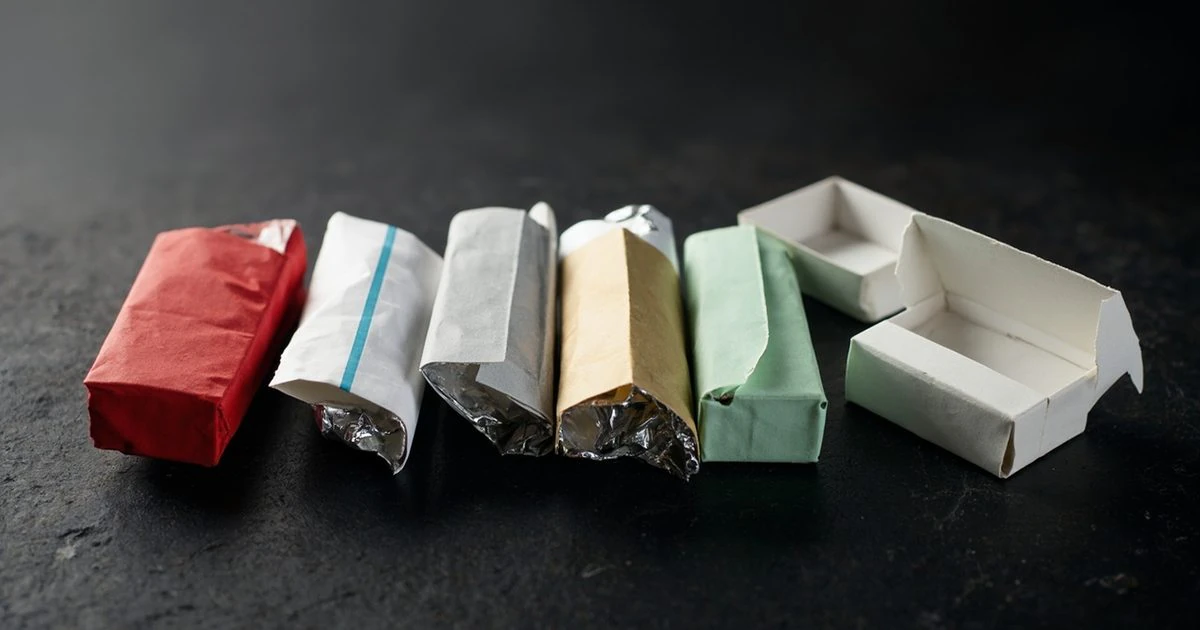
Why does my cigarette burn unevenly — five soft paper cigarette packs in a neat row on a dark slate surface

A cigarette that burns down one side, tunnels through the middle, or keeps going out is one of the most common complaints among people who buy by the carton. The good news is that it is almost never random. A crooked burn is the result of a specific physical condition inside the paper tube, and in most cases you can identify the cause from the shape of the burn itself.

This guide explains why cigarettes burn unevenly, what canoeing and tunnelling actually are, how lighting and ashing technique change the burn, and how storage and the way you carry a pack affect every stick you pull out of it. It also maps the behaviour to the packs in the BCO catalogue, so you can pick a variant whose burn matches how you actually smoke.

Quick answer: the four things that make a cigarette burn unevenly

If you want the short version, an uneven burn comes from four forces, alone or in combination:

  • Moisture imbalance. One side of the tobacco column is drier than the other, so the coal moves toward the dry side first. This is the biggest single cause, and it usually starts with how the pack was stored or carried.
  • Pack density. Tobacco that is too loose burns fast and falls away; tobacco that is too tight starves the coal of air and tunnels down the middle. A crushed or over-squeezed pack in a pocket changes density at the tip.
  • Airflow. Wind, a fan, an open window or a moving car pulls the coal toward the exposed side. You can light a cigarette perfectly and still watch it cone within a minute in a crosswind.
  • Lighting and draw technique. Lighting only one edge, dragging hard and fast, or holding the flame in one place all set the burn pattern for the whole stick.

Two background guides feed into this one and are worth reading alongside it: how to store cigarettes so they stay fresh covers the humidity and temperature side, and carrying cigarettes day to day covers what happens to a pack in a pocket, bag or glovebox.

How a cigarette burns, in plain terms

A cigarette is not a candle. It is a small, carefully tuned airflow device. Four components decide how the coal travels:

The paper is engineered to control speed

Cigarette paper is not plain paper. It is made with mineral fillers and burn-control salts that keep the coal moving at a steady, predictable rate instead of racing up the tube. That is why a cigarette burns down at roughly the same pace whether you are holding it upright or at an angle, and why the thin band of paper just behind the coal turns brown and holds its shape rather than flaring.

When the paper is bent, creased or slightly torn, that control layer is compromised at that exact spot, and the burn will favour the damaged side. If you have ever pulled a pack out of a pocket and found the top sticks squashed, you have found tomorrow’s canoe.

The tobacco column has to be even

The cut tobacco inside a machine-rolled cigarette is packed to a specific density from end to end. Air has to move through that column at a consistent rate for the coal to advance in a flat line. Anywhere the tobacco is denser, air struggles; anywhere it is looser, air rushes in and the burn accelerates.

This is one reason the cut and blend matter to the smoking experience and not just the flavour. The tobacco blends guide covers how Virginia, Burley and Oriental leaf behave differently in the tube, and the filters, paper and cut guide explains how the cut length affects draw resistance.

The filter ventilates the draw

Most modern filters carry a ring of tiny ventilation holes near the mouth end. Those holes let room air into the draw, which is why a light or ultra-light cigarette feels softer than a full-flavour stick with the same tobacco volume. Hold your fingers over that ring and the draw tightens noticeably.

Ventilation also affects the burn, because a tighter, hotter draw pulls more air through the coal. If you unconsciously cover the vent holes, you get a hotter coal, a faster burn and more of the sharp, hot notes at the back of the stick.

The ash ring holds the coal in place

That pale grey ring of ash is not waste. It insulates the coal, slows the incoming air and keeps the burn line flat. Flick it off the moment it forms and the coal is exposed, hotter, and much more likely to run off to one side. There is a right time to ash, and it is later than most people think.

Canoeing: when one side races ahead

Canoeing is the classic uneven burn. The cigarette burns down one side while the opposite side stays intact, so the coal line ends up shaped like the hull of a canoe. You can see it as a diagonal burn line, a strip of unburnt paper on one side, and a chunk of tobacco that eventually falls away.

What causes canoeing

  • Lighting one edge. If the flame is only applied to the front half of the tip, that half is already burning before the rest catches. The burn then follows the path of least resistance.
  • Wind or a side draft. Air moving across one side of the coal feeds it more oxygen. A window, a fan, an air-conditioning vent or an open car window will do it in under a minute.
  • A dried-out or damp side. A pack that sat half in sun, or a pocket pack where one face was against your body and the other against cold air, has a moisture gradient across the column.
  • A squashed tip. Pressure at the top of the pack changes the density of the first sticks. That is why the first two cigarettes out of a fresh pack are often the worst burners.
  • A bent stick. Even a slight bend in the paper tube creates a low-resistance channel on the inside of the curve.

How to stop it

Light the tip evenly by rotating the cigarette slowly in the flame rather than holding it still. Keep the coal out of direct drafts where you can, or cup the tip with your hand for the first few draws. Rotate the stick a quarter turn as you smoke it, so the coal does not sit in the same orientation for the whole session. And store cartons flat and sealed so the packs you pull out are all at the same moisture level.

Tunnelling: the hot core down the middle

Tunnelling is the opposite failure. The centre of the tobacco column burns ahead of the paper, so you get a hot, hollow core while the outer tobacco and paper lag behind. It usually shows up as a stick that suddenly goes harsh, produces a thin stream of smoke from a small hole, and leaves a fragile, cone-shaped ash.

What causes tunnelling

  • An over-dense tip. Machine-rolled cigarettes are packed evenly, but tapping a pack down hard on a table drives tobacco toward one end and compresses it. That compressed end tunnels.
  • Hard, fast drags. Pulling hard pulls air straight down the centre line of least resistance. The coal follows the air.
  • Not ashing. A long ash column sounds tidy, but if it grows past the point where the coal can breathe evenly, the centre gets the air and the outside starves.
  • Slim formats. A narrower column has less distance between the centre and the paper edge, so the same draw pulls the burn forward faster. Slim variants tunnel more readily than king size sticks.
  • Very dry tobacco. Dry leaf burns faster and loses the structure that keeps the coal spread evenly across the full circle.

How to stop it

Do not tap or pack the cigarette down before lighting. Take slower, longer draws instead of short hard ones. Ash at roughly the halfway point of the exposed ash rather than letting it build into a long column. If you smoke slims, treat them as a lighter, quicker session format and expect a tighter margin for error.

The troubleshooting table

Symptom              Most likely cause             First fix
-------------------  ----------------------------  -----------------------------
Burn line diagonal,  Wind or uneven lighting       Cup the tip, rotate while
paper intact one     or a squashed pack tip        lighting, turn stick as you
side                                                smoke
Hollow hot core,     Pack tapped down, hard        Stop tapping the pack, draw
thin smoke stream    fast drags, long ash          slower, ash earlier
Goes out mid-stick   Damp tobacco, tight pack,      Dry the pack properly, loosen
                     heavy relight habit           the tip between fingers
Hot, harsh after     Coal too close to filter      Slow down, ash before the
two thirds                                         last third
Ash falls in flakes  Very dry tobacco              Store at stable humidity,
                                                   smoke fresher cartons
Paper splits at      Bent or creased stick         Carry the pack flat, don't
the seam                                           stuff it in a back pocket
Burns fast overall   Low moisture, high airflow    Move out of the draft, check
                                                   pack storage

Lighting technique sets the first inch

The first ten seconds decide how the rest of the stick behaves. A cigarette that is lit on one edge will usually canoe; one that is over-lit with a torch flame at close range gets a scorched, uneven tip that tunnels.

Matches versus lighters

A match gives a soft, wide flame that lights the whole tip fairly evenly, but it also carries a sulphur smell for the first fraction of a second, which is why some smokers let a match burn for a beat before applying it. A standard butane lighter gives a clean flame, but a jet or torch lighter concentrates heat in one spot and is the fastest way to produce a scorched, uneven tip. If you use a torch, hold it further away and keep it moving.

Lighting out of the wind

Cup the tip with your hand, put your back to the wind, or light inside a doorway. The goal is a still pocket of air around the tip for the two or three seconds it takes to catch. This matters most outside, which is why the wind-handling advice in the outdoor events guide and the camping guide overlaps so much with burn troubleshooting.

Three lighting mistakes worth breaking

  • Dragging while the flame is still on the tip. You pull hot combustion products straight down the tube and set an uneven burn in one motion. Light first, then draw.
  • Holding the flame in one place. Rotate the cigarette instead, so the paper catches all the way around.
  • Relighting a half-smoked stick repeatedly. Each relight chars a new edge. Two relights on the same stick is usually the point where the taste turns ashy.

Ashing: when, and why it matters

Ash is a temperature regulator. A short, even ring keeps the coal insulated and the burn line flat. Ash too often and you expose a hot coal that races; ash too rarely and the column collapses unevenly or the centre starves.

The practical rule is to ash when the ring is long enough to fall on its own with a light tap, and to tap rather than flick. Flicking sends the coal sideways and often pulls a chunk of unburnt tobacco with it, which is what produces that ragged, torn-looking tip that never burns straight again.

Storage and handling: the freshness half of an even burn

Nearly every persistent uneven-burn complaint traces back to moisture. Fresh factory tobacco is packed at a moisture level tuned for a steady burn. Once a pack dries below that, three things happen at once: the burn speeds up, the ash goes flaky, and the flavour sharpens into something thin and hot.

Pack versus carton

An unopened pack inside a sealed carton is the best-protected format you can buy. The carton’s cellophane and cardboard slow moisture exchange, so a carton stored flat in a cupboard holds its condition far longer than loose packs rattling around a drawer. If you smoke more than a few packs a week, buying by the carton is a burn-quality decision as much as a price one. The carton buying guide and the carton price guide cover the economics, and do cigarettes expire covers what actually changes over time.

How long an opened pack holds

An opened pack starts losing condition the moment the foil is broken. In a normal indoor room it is usually fine for several days and noticeably drier after a week or so. In a hot car, on a radiator, or next to a window in direct sun, that window shrinks to hours. If you routinely leave a half-smoked pack in the car, you have found your canoe.

Where not to store cigarettes

  • The freezer or fridge. Condensation forms inside the pack when it comes back to room temperature, which is worse than simple dryness. The storage guide explains the mechanism in detail.
  • A glovebox or a sunny windowsill. Heat drives moisture out fast and can warp the paper.
  • An open shelf next to a heater or a dehumidifier. Steady dry air is a slow, reliable way to ruin a carton.

Carrying a pack without wrecking it

Pressure is the other half of the problem. A pack in a back pocket takes constant load on one face, which compresses the tobacco on that side and changes how those sticks burn. A pack loose in a bag with keys and coins gets its paper creased. A pack in a shirt pocket against body heat picks up a moisture gradient.

Carry the pack flat and upright in a front pocket or an inside pocket, away from direct pressure, and rotate which face is against your body. The day-to-day carrying guide goes through the formats pack by pack, including king size versus 100s versus slims.

Which variants burn differently

The catalogue is organised by strength tier, and that tier is a reasonable proxy for how a stick burns. Here is how the families map.

Full flavour: steadier, slower, more forgiving

Full-flavour sticks carry the densest tobacco column in the catalogue, which usually means a slower burn, a sturdier ash and the widest tolerance for imperfect lighting. If you have been fighting canoeing, a full-flavour variant is the easiest place to start. Try Canadian Full Cigarettes, Canadian Classics Original, Classics Full Flavor Cigarettes, Playfare Full Flavor Cigarettes or BB Full Flavor Cigarettes. The heavier-value end of the tier includes Discount Full Flavor Cigarettes, Putters Full Flavor, Time Full Cigarettes, DK’s Full Cigarettes, dM Original Cigarettes, Rolled Gold Full Flavor Cigarettes and Canadian Goose. The full-flavour buying guide compares them side by side.

Lights: a slightly quicker, softer burn

Light variants sit between the full-flavour and ultra-light ends. The draw is softer and the column marginally less dense, so the burn is a little faster and the ash a little lighter. They generally behave well as long as the pack is fresh. Options include Canadian Lights, Canadian Classics Silver, Classics Lights Cigarettes, Playfare Light Cigarettes, Putters Light Cigarettes, BB Light Cigarettes, Nexus Light Cigarettes, DK’s Light Cigarettes, dM Smooth Cigarettes, Discount Lights Canadian Blend and Rolled Gold Light Cigarettes. The light cigarettes comparison covers the whole tier.

Ultra lights and extra lights: most ventilation, most sensitivity

The lightest sticks in the catalogue rely most heavily on filter ventilation, which makes them the most sensitive to how you hold and draw them. Cover the vent ring and the burn runs hot; draw hard and the centre tunnels. Canadian Ultra Lights, Canadian Classics Ultra Blue, Playfare Ultra Light Cigarettes and Classics Extra Lights Cigarettes all reward a slower hand. The light versus ultra-light guide explains the difference in draw.

Menthol: same mechanics, different cues

Menthol variants burn the same way as their non-menthol equivalents, but the cooling effect makes a hot, tunnelling burn harder to notice until the tip is already ragged. If you smoke menthol, watch the ash rather than the taste. The catalogue carries Canadian Menthol Cigarettes, Canadian Classics Menthol, Classics Menthol Cigarettes, Playfare Menthol Cigarettes, BB Menthol Cigarettes, Discount Menthol Canadian Blend and Rolled Gold Menthol Cigarettes, plus Time Blue Cigarettes, which the catalogue describes as a smooth light blend rather than a cooling one. The menthol buying guide has the full rundown.

Wind, cold and humidity

Outdoor conditions are the single fastest way to produce a canoe, because moving air feeds one side of the coal. Cold weather adds a second problem: the temperature swing between a warm pocket and cold air pushes moisture around inside the pack, so the first stick you light outdoors often behaves differently from the last. Humidity does the opposite, softening the paper and slowing the burn so much that a stick can go out between draws.

Seasonal guides with practical notes on each condition: winter, summer, fall and spring. If you smoke in the car, the road trip guide covers the airflow problem in detail, and the night out guide covers the patio-and-wind scenario.

When it is the pack, not you

Sometimes the pack arrives already compromised. If a carton shows up visibly crushed, if the cellophane is torn, or if the sticks inside are visibly dry and the paper feels brittle, that is a receiving problem rather than a technique problem. The delivery problems guide walks through what to check on arrival, and the signature and handoff guide covers what happens at the door.

Damaged or incorrect orders are handled through support with the order number and photos, and the published window for that is two business days. The contact page is the place to start, and order tracking will show you the delivery status in the meantime.

Building an order that burns right

Once you know the burn behaves best when the tobacco is fresh and the packs are protected, the shopping decision gets simpler.

1. Buy cartons for anything you will not smoke this week

Packs are $5.00 each across most of the catalogue, with Rolled Gold Menthol at $6.00. Cartons run $29.00 to $38.99 depending on the SKU, and the $29.00 band covers Discount Full Flavor, Discount Lights, Time Blue, Putters Full Flavor and Playfare Ultra Light — carton band membership is per SKU, not per brand. The glossary explains the band split and the catalogue map shows every family by tier.

2. Use a sampler when you are still choosing

If you have not settled on a variant yet, the mystery pack at $6.00 and the mystery carton at $50.00 are a low-commitment way to test how different brands burn in your routine. The sampler guide explains how they are assembled.

3. Watch the spend tiers and the shipping line

Shipping is $15 flat for expedited and $20 for Xpresspost, with free Xpresspost over $99 measured on the pre-discount subtotal and a second free threshold at $149 on the post-discount total. Priority is $45, and signature delivery applies over $99. The free shipping guide and the shipping options guide break the ladder down. The three Buy More, Get More listings — $240 and $480 as well — are added to the cart as line items and confirmed against your cart total, not auto-applied. The bundle deals guide covers the mechanics.

4. Order at the right time

Orders paid before 9 AM PST ship the same business day; anything after that or still pending payment ships the next business day. Canada Post runs Monday to Friday, and transit is typically two to five business days, longer for rural and remote addresses. Card and crypto authorise at checkout, while an Interac e-Transfer order stays on hold until the transfer is matched — worth knowing if you are down to your last pack. Payment options are covered in the payment guide, and the customer help page has the published policy.

Frequently asked questions

Why does my cigarette burn down one side?

Canoeing is almost always uneven lighting, a side draft, or a pack that was squashed in a pocket. Light the tip evenly by rotating it in the flame, keep it out of moving air for the first few draws, and carry the pack flat.

Is a brand responsible for an uneven burn?

Less often than technique and storage, but not never. Denser full-flavour sticks are generally more forgiving, while ultra-light and slim formats have a narrower margin because ventilation and column width both amplify a bad draw. If one SKU misbehaves and others from the same carton do not, look at the pack rather than the family.

Why does my cigarette keep going out?

Three common reasons: the tobacco is damp from humid storage, the pack was packed too tight when you tapped it down, or you are leaving long gaps between draws in still air. Move the pack somewhere dry, stop tapping it, and draw a little more regularly.

Does a lighter change the burn?

Yes. A soft flame lights the tip evenly with little risk of scorching. A torch or jet lighter concentrates heat in one spot and is the fastest route to a scorched, uneven tip, so hold it further back and keep it moving.

Do 100s burn differently from king size?

They have more tobacco and paper, so a full session is longer, but the burn behaviour is the same in kind. The burn time guide covers the duration side and the pack sizes guide covers the formats.

Is the burn a freshness test?

It is one of the better ones. Dry tobacco burns hot and fast with flaky ash; tobacco stored well burns evenly with a compact ash ring. The storage guide lists the other tests, including the squeeze and draw checks.

Do nicotine pouches fit into this at all?

No burn involved. The ZYN Spearmint, Watermelon and Peach Bellini pouches are $15.99 for 20, and the only condition that matters is keeping the tin sealed. The pouches comparison covers the format difference.

Start with a fresh pack and a steady hand

An even burn is mostly a storage and technique story: fresh tobacco, a pack that has not been squashed, a tip lit all the way around, and ash left alone until it is ready to fall. Fix those four and most crooked burns disappear without changing brands at all.

If you are due for a restock, browse the full cigarette catalogue or start with the shop page. Buying a carton keeps the packs sealed and stable until you need them, and the spend tiers make a larger order cheaper per stick. Brand families are also browsable by archive: Canadian Cigarettes, Canadian Classics, Classics, Playfare, BB, Discount, Time, Rolled Gold, Putters, Nexus, dM, DK’s, Canadian Premium and Canadian Goose.

Related reading: how to taste cigarettes, how long a cigarette lasts, top-up orders, how to reorder and the first-time buyer guide.

Carrying Cigarettes Day to Day in Canada: Packs, Pocket Protection and How Much to Bring (2026 Guide)

Carrying cigarettes day to day in Canada: four soft paper packs and a dark canvas bag on a slate surface

Carrying cigarettes day to day is a small logistics problem with a few real consequences. A pack that lives loose in a pocket gets crushed. A pack that sits in a glovebox through a hot afternoon dries out. A pack that was supposed to last until Thursday runs out on Wednesday because nobody counted how many sticks a day actually go missing. This guide covers how to carry a pack properly, where not to store one, how many packs to bring for a shift or a week, and how to line your carry rate up with the size of order you place.

Everything below is written for the normal case: you have a brand you already smoke, you buy it by the pack or the carton, and you want the pack in your pocket to reach you in the same condition it left the carton. If you are still choosing a brand, start with the cigarette category or the full shop page, then come back here for the carry side.

The Short Answer: What to Carry and How to Protect It

Carrying cigarettes day to day comes down to five habits, and none of them take more than a minute to set up.

  • Carry one open pack plus one sealed spare. That covers a normal day and a long day without turning your pocket into a carton.
  • Leave the carton at home. A carton is ten packs of twenty cigarettes. It is a supply unit, not a carry unit.
  • Keep the open pack in a pocket or bag where nothing rigid presses on it. Keys, coins, tools, and a phone with a hard case are the usual culprits.
  • Do not treat the car as storage. A glovebox in direct sun is the fastest way to dry out a pack you planned to finish next week.
  • Count your sticks per day before you buy. Two packs a day and half a pack a day are different orders, different carton math, and different carry plans.

Why an Opened Pack Behaves Differently Once It Leaves the Carton

A sealed pack is a closed paper envelope with a foil liner inside. The paper wrap and the foil do most of the work of holding the tobacco at a stable moisture level, and the folded top flap is part of that seal. The moment you tear the flap, the pack starts exchanging moisture with whatever air surrounds it. In a dry room that means the tobacco slowly dries. In a humid room it means the paper and tobacco take on moisture and the draw tightens up. Nothing dramatic happens in an hour. The change shows up over days.

That is also why the standard advice for a carton at home and the standard advice for a pack in your pocket are not the same advice. Cartons want a cool, dark, dry cupboard where the seal stays intact for weeks, which is covered in detail in how to store cigarettes so they stay fresh. A pack you are actively smoking through wants the opposite treatment: it wants to be carried flat, kept out of heat, and finished in a reasonable number of days rather than nursed for a month. If any of the packaging vocabulary in this guide is unfamiliar, the cigarette terms glossary defines pack, carton, soft pack, and the rest in plain English.

Match the Carry Format to the Pack You Buy

King size packs

Most of the catalog is king size, and king size is what most people picture when they think about carrying a pack. A king size pack is roughly the size of a deck of cards, so it fits a front pocket, a jacket pocket, or the small pocket of a work bag. The trade-off is that a full pack is stiff enough to bend if something heavy sits on it. Full-flavor brands in the catalog like Canadian Full, Canadian Classics Original, and Classics Full Flavor all come in the same king size pack format, so the carry problem is identical across brands. What changes between brands is the tobacco inside, not the box around it.

Slim formats and nicotine pouch tins

If pocket space is the limiting factor, slim formats and tins solve it. The ZYN Spearmint, ZYN Watermelon, and ZYN Peach Bellini cans hold twenty slim portions each and are built to be carried — the catalog copy describes the slim profile as pocket-ready. A can is a different object than a pack: it is rigid, it does not crush, and it does not care about humidity. If you carry both formats, the tin goes in the pocket that gets sat on and the pack goes somewhere flatter. The comparison between the two formats is covered in cigarettes vs nicotine pouches if you are deciding between them rather than carrying both.

Cartons are not a carry format

A carton is ten packs wrapped together, two hundred cigarettes. Nobody carries a carton in a pocket, but people do carry one in a backpack or leave one in a vehicle as a “supply”, and that is where the freshness problem starts. If you want a bulk supply, buy the carton, break it down at home, and carry packs out of it. The buying by the carton guide covers when the carton actually makes sense, and carton prices in Canada covers the price side.

Pocket Carry: The Three Things That Actually Damage a Pack

Pressure and bend

A pack that gets bent in the middle cracks the tobacco column inside. The sticks do not break in half, but the fill loosens, the wrapper can crease, and the draw becomes uneven between sticks. This is the single most common carry failure and it is almost always caused by where the pack sits, not by how carefully you handled it. A front trouser pocket with a phone is the worst arrangement, because the phone is rigid, warm, and presses constantly. A jacket chest pocket, an inside coat pocket, or a bag’s flat front compartment all do better.

Lint, keys and coins

Once the top flap is open, the pack is a container with a gap in it. Coins, keys, and pocket lint work their way in, and lint in particular gets into the exposed ends. A pack shared with a keyring also gets scuffed, and the scuffing wears the paper at the corners until the pack starts to split. If you have to carry keys in the same pocket, put the pack in a soft sleeve or use the inside pocket instead.

Body heat and sweat

A pack pressed against the body sits at close to skin temperature all day. Warm, slightly damp conditions are exactly what you want to avoid if the goal is a stable pack, and a pack carried in a sweaty pocket through a summer shift will be noticeably softer and drier by the end of the week than the same pack kept in a bag. This is a slow effect, not an overnight one, but it is the reason a pack that has ridden in a pocket for a week tastes different from the first pack out of the same carton.

Bag Carry: Day Bags, Work Bags and Backpacks

A bag is the better default for anyone who carries more than one pack or works away from a fixed spot. Three rules cover most of it.

  • Keep the pack flat and upright. A pack on its narrow edge in a loose bag slides around and lands on its corner. A flat pocket or the bag’s document sleeve keeps it stable.
  • Do not put the pack under anything rigid. The classic mistake is a pack at the bottom of a backpack under a laptop. Even a short commute is enough to flatten a soft pack.
  • Keep the sealed spare in a separate compartment. The spare stays sealed and fresh, and you are not opening two packs at once. The Playfare Ultra Light listing makes the same point in its own wording: cartons for extended travel, slim packs when space matters.

For travel and multi-day trips, the format question matters more than the brand. The road trip pack planning guide covers how to spread packs across a vehicle and a bag so that one bag is not carrying everything, and cigarette pack sizes explains what actually changes in physical size between king size, 100s, and slims.

Car Carry: Glovebox, Cup Holder and Direct Sun

The car is the most common place a pack quietly goes bad. Two things make it bad: heat and light. A glovebox in direct sun gets very hot very quickly, and a pack left there through an afternoon is being slowly baked. The cup holder is a slightly better spot for a pack you are actively smoking, because it is shaded and easy to reach, but it is a bad spot for a spare because the pack sits on its corner and picks up vibration. If you keep a supply in the vehicle at all, put it in a closed compartment out of sunlight and treat it as a short-term supply rather than a month’s worth.

The related problem is winter. A pack left in a cold vehicle and then brought into a warm room collects condensation on the wrapper and on the paper, and opening it wet accelerates the change. Let a cold pack come up to room temperature before you break the seal. The winter cigarettes guide covers the cold-weather side in more depth, including why a frozen pack is not damaged but a thawed-and-reopened one is compromised.

How Much to Bring: The Week Math

Most carry problems are actually counting problems. The fix is to work in sticks, convert to packs, and only then think about cartons. A pack is twenty cigarettes. A carton is ten packs, so two hundred cigarettes.

Start with sticks per day

Count actual sticks for three normal days rather than guessing. Most people are surprised: the number that matters is not the number you smoke on a day off, it is the average across the days you are out of the house. If you land on fifteen, you are at seven packs a week. If you land on eight, you are at three packs a week with a few sticks left over. The burn time and consumption guide explains why that count matters even more if you smoke slowly and leave sticks burning.

Convert to packs, then to cartons

  Sticks/day  |  Packs/week  |  Cartons/month  |  Carry per day
-------------+--------------+-----------------+----------------
      5       |     1.8      |      0.8        | 1 pack (spare sealed)
     10       |     3.5      |      1.5        | 1 pack + spare
     15       |     5.3      |      2.3        | 1 pack + spare
     20       |     7.0      |      3.0        | 2 packs
     30       |    10.5      |      4.6        | 2 packs + spare
     40       |    14.0      |      6.1        | 2 packs + spare

The numbers above are planning figures, not rules. The useful part is the middle column: it tells you how long one carton actually lasts, which is the number you need to decide between packs and cartons. cigarette math for monthly carton needs walks through the full calculation with a two-person household variant, and the monthly supply guide covers how to set up a supply that does not need re-planning every week.

What to Leave at Home: The Carton Is the Reserve

The clean division of labour is: the carton is the reserve, the packs are the working stock, and one open pack is what you actually carry. Break the carton down when it arrives, keep the sealed packs in a cool dry cupboard, and take out a pack only when the previous one is empty. Doing it this way means a carried pack is always recently opened, and the reserve never travels with you.

That said, if the reserve is running low, the restock schedule guide and the top-up order guide both cover how to bridge the gap without buying a full carton you do not need yet.

Carrying for a Group: Nights Out, Camping and Events

Group carrying is where the count usually goes wrong. The rule is the same as the household rule: work out what the group will actually use, add one pack as margin, and let one person carry the supply rather than four people each carrying a partial pack.

  • A night out is a single-evening count. Two packs between three people is usually enough. The night out guide covers the timing side as well.
  • A campsite is a multi-day count with no top-up option, which means margin matters. See cigarettes for camping for a realistic per-person number.
  • A tailgate, concert, or festival has a supply problem at the gate rather than a carry problem at home. The outdoor events guide covers what to bring and what to leave in the vehicle.

If the group wants variety rather than one brand, the mystery cigarette pack and mystery carton are the low-commitment route, and sampler packs explains how to use them without ending up with a lot of one brand nobody wants.

Brand-by-Brand Format Notes for Carrying

Pack format is consistent enough that carrying advice transfers across brands, but the lineup does differ in how many variants each family offers, which matters if you carry two packs of different strengths. Here is the catalog as it actually stands.

Canadian Cigarettes

Four variants: Canadian Full, Canadian Lights, Canadian Ultra Lights, and Canadian Menthol. A common carry pattern is a full-flavor pack for the day and a lighter pack for evening, which is two packs in the bag rather than two packs in a pocket. All four are in the Canadian Cigarettes brand archive.

Canadian Classics

Four variants: Original, Silver, Ultra Blue, and Menthol. Note the naming: Silver and Ultra Blue are the lighter tiers, while Original is the full-flavor pack. Carrying two of these together is where people mix up which is which, so check the written name on the pack rather than relying on the colour. Full lineup: Canadian Classics brand archive.

Classics

Four variants: Classics Full Flavor, Classics Lights, Classics Extra Lights, and Classics Menthol. Classics and Canadian Classics are two separate brands with similar names, which is a real source of ordering mistakes — see Canadian vs Canadian Classics if you have ever bought the wrong one. Archive: Classics brand archive.

Playfare

Four variants: Full Flavor, Light, Ultra Light, and Menthol. Playfare Ultra Light is one of the five cartons that sits in the lower price band, which makes it a practical brand to keep as a carry pack and a reserve carton at the same time. Archive: Playfare brand archive.

BB

Three variants: Full Flavor, Light, and Menthol. A three-variant family is easy to carry across because there are only three packs to tell apart. Archive: BB brand archive.

Discount

Three variants: Discount Full Flavor, Discount Lights, and Discount Menthol. Two of the three cartons sit in the lower price band, so this is the family that makes the “carry cheap, keep a carton” plan easiest to run. Archive: Discount brand archive.

Time

Two variants: Time Full and Time Blue. Worth flagging for carry purposes: Time Blue is catalogued as the lighter, smoother blend in the family, so it is the one people reach for as a second pack. Archive: Time brand archive.

Rolled Gold

Three variants: Full Flavor, Light, and Menthol. Rolled Gold Menthol is the one pack in the catalog priced at $6.00 rather than $5.00, so if you carry it as a second pack the carry cost is slightly higher than the rest of the lineup. Archive: Rolled Gold brand archive.

Putters, Nexus, dM and DK’s

These are two-variant families, which makes them simple to carry: you either have the full-flavor pack or the lighter pack. Putters Full Flavor and Putters Light (the full flavor carton is in the lower price band), Nexus Full Flavor and Nexus Light, dM Original and dM Smooth, and DK’s Full and DK’s Light. Archives: Putters, Nexus, dM, DK’s.

Canadian Premium and Canadian Goose

Canadian Premium Original and Canadian Premium Special are two variants where the second is a special formulation rather than a stated strength tier, so read the pack name rather than assuming it is a lighter version. Canadian Goose is a single king size full-flavor SKU, which makes it the easiest family in the catalog to carry — there is only one pack to identify. Archives: Canadian Premium, Canadian Goose.

ZYN nicotine pouches

Three tins: Spearmint, Watermelon, and Peach Bellini. Each can holds twenty portions, and the catalog describes each portion as lasting up to thirty minutes. Tins are the one format in the catalog that genuinely does not care about pocket pressure, which is why they are the natural carry format for anyone who splits time between cigarettes and pouches. The ZYN guide covers the lineup, and nicotine pouch cost per day covers the money side if you carry a tin every day.

When a Pack Gets Crushed, Damp or Frozen

Three things happen to carried packs, and each has a different outcome.

  • Crushed or bent: the pack still smokes, but the fill is looser and the draw is uneven from stick to stick. Move the pack to a flat pocket and finish it before opening the next one.
  • Damp: paper that has taken on moisture dries back out, but slowly and unevenly. Do not put a damp pack somewhere hot to speed it up. Keep it out of sunlight and let it dry at room temperature.
  • Frozen: cold itself does not damage the tobacco. The problem is condensation when the pack comes back inside, which is why you let it reach room temperature before opening. A pack frozen and thawed while still sealed is fine; one opened while cold and wet is not.

If the damage happened before the pack reached you — a carton that arrived crushed, or a delivery that sat somewhere it should not have — that is a different problem. The cigarette ordering mistakes guide covers the ordering side, and support handles the arrival side: damaged or incorrect orders should be reported within two business days with the order number and photos.

Matching Your Carry Rate to Your Order Size

Packs first

Every cigarette SKU in the catalog is sold as a pack at $5.00, with Rolled Gold Menthol at $6.00. If you smoke a pack every two or three days, packs are the correct unit and a carton is over-buying. Packs are also the way to test a brand before committing, which is the whole point of comparing brand lineups.

Cartons when the math works

Cartons run $29.00 to $38.99 depending on the SKU, and the band is per product, not per brand. Five cartons sit at $29.00: Discount Full Flavor, Discount Lights, Playfare Ultra Light, Putters Full Flavor, and Time Blue. Everything else is $38.99, including the remaining variants in those same families. That detail matters when you are buying a carton as a reserve: the cheapest way to hold a reserve is not always the cheapest brand you like, it is the specific SKU in that family that sits in the lower band.

Spend tiers and free shipping

Two order-level thresholds interact with carry planning, and both are based on cart total rather than on how much you carry in a day.

  • Shipping: Expedited is $15 and Xpresspost is $20. Xpresspost is free over $99, free shipping also kicks in over $149, and Priority is $45 for next business day. Guaranteed Delivery with signature is available at $99 and up.
  • Spend tiers: the Buy More Get More tiers add a free item at $80 (free pack), $240 (free carton), and $480 (two free cartons).

The planning implication is simple: if you are going to buy a reserve anyway, buying it in one order that crosses $99 gets the shipping for free, and crossing a spend tier adds a free item on top. Planning a $99 order and cigarette bundle deals both cover the arithmetic in detail, and shipping options covers the service levels. Dispatch is same-day for orders paid before 9 AM PST, and Canada Post delivers Monday to Friday with most Canadian addresses landing in two to five business days.

A Short Carry Checklist

  • One open pack, one sealed spare. Not three open packs.
  • Flat pocket or bag compartment, never under anything rigid.
  • No keys or coins in the same pocket as an open pack.
  • Nothing stored in the glovebox long-term.
  • Carton broken down and stored at home, sealed packs untouched.
  • Cold pack allowed to reach room temperature before opening.
  • Sticks-per-day count refreshed whenever your routine changes.
  • Next order placed before the reserve drops below one carton, not after.

Frequently Asked Questions

Is it better to carry one pack or two?

Two: one open, one sealed. The sealed pack is your buffer against a long day and it stays fresh because it is untouched. Carrying cigarettes in two open packs at once is the arrangement that produces stale packs, because each one sits half-used for longer.

Do slims carry better than king size?

For pocket space, yes. Slim formats and pouch tins take up less room and sit flatter. For a full day of cigarettes in one pack, king size is the more practical carry because a king size pack holds twenty standard sticks. The trade-off is covered in pack sizes.

Should you keep a carton in the car?

No. Heat and light are the two things that age a pack fastest, and a vehicle has both. Carry what you need for the day and leave the rest at home.

How long does an opened pack stay fresh in a pocket?

It depends on how fast you finish it. A pack finished in two or three days in reasonable conditions is not going to be noticeably different from the pack it came out of the same carton with. A pack that sits half-open in a warm pocket for two weeks will be. The practical answer is to finish an open pack before opening the next one.

Can you carry a mystery pack instead of a carton?

Yes, and it is a reasonable way to carry variety without committing to a carton of one brand. The mystery cigarette pack is $6.00 and the mystery carton is $50.00. Note that the free items in the Buy More Get More tiers and the Puffs Points rewards catalogue are cigarette-based, so they work alongside a mystery pack rather than replacing one.

Order Ahead So the Carry Supply Never Runs Out

Carrying cigarettes day to day only works if the reserve behind the carried pack is real. Order before the cupboard is empty, not after: place the order when you still have a carton in hand, so the two-to-five-day delivery window does not leave you buying single packs at the last minute. Orders paid before 9 AM PST go out the same day, and every order over $99 ships free on Xpresspost.

Start with the full cigarette catalog or the shop page, check your reserve against the table above, and build the order around the SKU you actually carry. If you are new to ordering, the first-time buyer guide and the online ordering questions cover the checkout side, and track your order once it ships. Delivery requires an adult signature and government-issued photo ID, so plan for someone to be there — the receiving an order guide explains what happens if nobody is home.

Discreet packaging and airtight packing are standard on every order, which is also why a carton arrives in good condition and stays that way if you store it properly. Questions about a specific brand, strength, or order go to support through the customer help page, or through live chat Monday to Friday, 10am to 6pm EST.

Receiving a Cigarette Order in Canada: Signature, Photo ID and What Happens If You Are Not Home (2026 Guide)

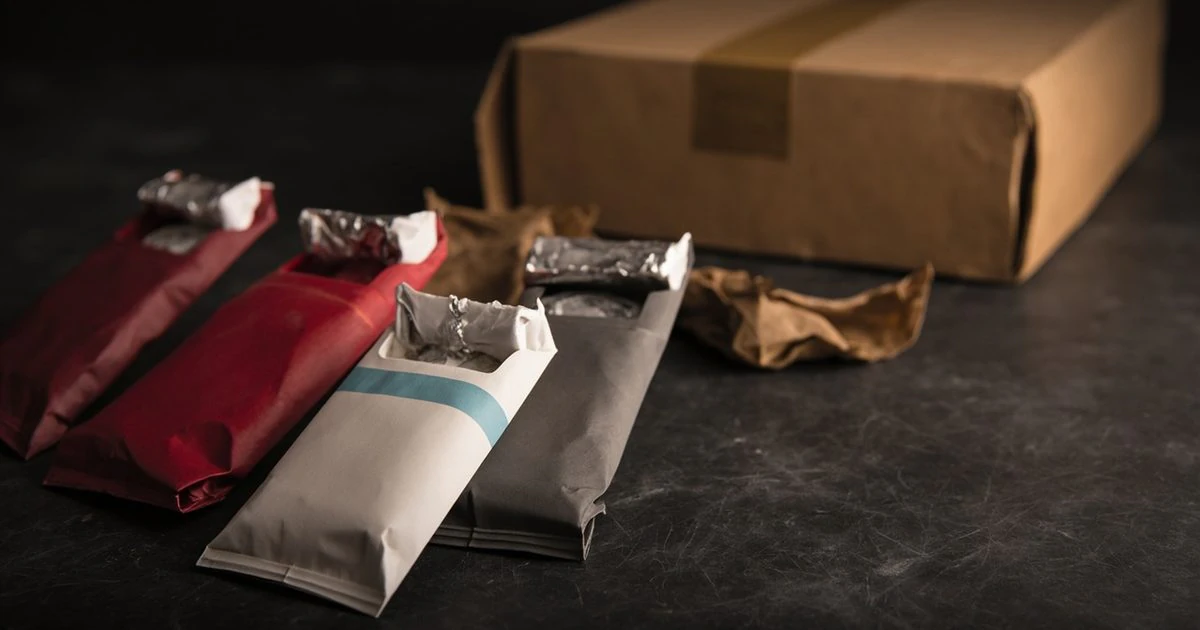
Cigarette delivery signature — soft paper cigarette packs beside a plain cardboard shipping box ready for a signed delivery in Canada

Ordering cigarettes online raises one question that has nothing to do with brand or strength: where does the box actually end up if nobody is standing at the door when it arrives? It is a fair worry. Most people are at work during the day, and a cigarette parcel is not something a courier can quietly leave on a porch step.

The short version: an adult has to sign for it, and that signature has to come with government-issued photo ID. If nobody is home, the parcel does not disappear — it goes to a Canada Post outlet with a notice card, and you pick it up within 15 calendar days. There is also a way to send the order straight to a post office on purpose so you never have to guess.

This guide covers the whole handoff — what the delivery agent asks for, what happens on a failed attempt, how to write a buzzer or unit number into an address so it actually routes, and how order size and shipping speed change the odds of a clean delivery. Everything here comes from the store’s own customer help centre and Canada Post’s published delivery rules.

The short answer: a cigarette order needs a person, not a doorstep

Every order shipped by Buy Cigs Online requires an adult signature and valid government-issued photo ID at the point of delivery. The age on that ID is 19+ or 18+ depending on the province you live in. This is part of the delivery process itself, not an optional add-on at checkout.

That single requirement drives everything else in this guide. A parcel that needs a signature cannot be left in a vestibule, tucked behind a planter, or handed to whoever happens to be walking past. Somebody at the address has to be there, be of age, and be able to produce ID.

Why this matters more than it sounds

If you are used to ordering other things online, you are probably used to the parcel appearing on your step whether you were home or not. That is a different delivery class. For a signed parcel, a missed attempt does not mean a lost parcel — it means an extra trip to the post office. Knowing that in advance turns an annoying surprise into a planned errand.

The practical fix is to plan the order around a day when someone will be home, or to route it to a post office from the start. Both are covered below.

What the delivery agent needs at the door

Government-issued photo ID

A driver’s licence, provincial photo card, passport or permanent resident card all do the job. What matters is that it carries a photo and a date of birth. A health card without a photo, a student card, or a photocopy will not clear the check.

Who can sign if it is not you

Another adult at the same address can usually sign in your place — a partner, a roommate, an adult family member — as long as they can show their own government-issued photo ID. This is where the two-smoker household order setup has an advantage: if two adults live at the address, the daytime delivery window is much easier to cover.

What does not work is a neighbour signing for you. The parcel is tied to the address on the label, and the person signing has to be able to receive at that address with valid ID.

What the parcel looks like when it arrives

Packages ship plain and unmarked, with the contents secured in airtight packaging. There is no branding on the outside that announces what is inside, which matters if a building concierge, front desk or family member is the one taking delivery. The packaging also keeps the cartons from drying out in transit, which is the same reason proper storage after arrival matters.

Why a cigarette parcel does not get left at the door

Canada Post does leave some parcels without a signature. That practice is called a safe drop, and the published rules are specific about when it is allowed. All three conditions have to hold:

  • There is a safe place to leave the parcel.
  • The parcel does not require a signature or the collection of any fees.
  • The sender has not requested that the parcel not be safe dropped.

A cigarette order fails the second condition every time, because the adult signature is the whole point of the delivery. That is why you will not see a photo-confirmation drop notification for this kind of parcel. When nobody is available, the parcel goes back to the depot and then to a post office.

This is also why “it says delivered but nothing is here” is not a normal outcome for a signed parcel. If tracking says delivered, somebody signed for it. If tracking says notice left, the parcel is at a post office waiting for you.

The three ways an order actually reaches you

Path                        What happens                          What you need
--------------------------  ------------------------------------  ----------------------------
1. Signed at the door       Agent hands over the parcel            Someone 19+/18+ at home
                                                                   with photo ID
2. Notice card + pickup     Attempt fails, card left, parcel       Notice card + photo ID
                            moves to a Canada Post outlet          within 15 days
3. Send to post office      Order addressed to a post office       Photo ID at the counter
   on purpose               or P.O. box from the start

Path 1 — signed at the door

The clean outcome. The agent knocks, an adult with photo ID signs, and the order is in the house. Most orders land here when someone is home during the day, or when a building’s front desk or concierge is staffed and willing to accept a signed parcel for a resident.

Path 2 — notice card and post office pickup

The most common outcome for anyone working standard hours. The agent attempts delivery, nobody of age answers, and a Delivery Notice Card is left. Tracking switches to “notice left,” then “available for pickup” once the parcel reaches the outlet. You then collect it in person.

Path 3 — send it to a post office on purpose

You can skip the guessing entirely. Two ways to do it:

  • Ship to a P.O. box. The store ships to P.O. boxes through Canada Post, and the parcel is placed in the box or a notice card is left inside it if the parcel does not fit.
  • Use a post-office delivery address. Canada Post’s FlexDelivery service gives you a free post-office address you can use as your shipping address, and you pick up with government-issued photo ID when it lands.

Both routes convert an unpredictable doorstep into a predictable counter pickup. If you order regularly and nobody is home during the week, this is the single change that removes the most friction from the whole process. It also pairs well with repeat orders, which you can place on a schedule rather than when you run out.

If you miss it: the pickup trip in detail

Picking up a cigarette parcel is not complicated, but there are a few details that catch people out.

  • Bring the Delivery Notice Card if you have one, plus government-issued photo ID. Both, not one or the other.
  • Someone else can collect it for you. They need their own government-issued photo ID, plus either your signed notice card with their name printed on it, or a letter of authorization showing they can act for you.
  • The outlet holds the parcel for 15 calendar days. A final notice card is sent after 5 calendar days. After the 15-day window closes, the parcel is returned to the sender.
  • Pickup hours are counter hours, not delivery hours. Many outlets inside retail stores close earlier than the store itself, so check the specific location printed on the card.

The 15-day window is generous, but it is not infinite. If you travel for work or go away for a week, the window can run out before you get to it. That is another argument for a P.O. box or a post-office address if your schedule is unpredictable.

Tracking vocabulary is worth learning, because it tells you which of the three paths you are on. “Out for delivery” means the attempt is happening today. “Notice left” means the parcel is heading to an outlet. “Available for pickup” means it is on the shelf. “Delivery attempt made / rescheduled for delivery next business day” means a second attempt is coming, and it is usually too early to collect. The full set of statuses is decoded in the order tracking guide, and you can check progress any time on the tracking page with your order number and billing email.

Buzzers, condos and mail rooms: the address details that decide the delivery

Put the unit number and buzzer code where the agent will see them

The most common avoidable failure in apartment buildings is a missing unit number. Write the unit as part of the street address line, not buried in a delivery note: 1200 – 45 Example Street, Unit 1200, buzzer 204. If the buzzer code is required to get into the lobby, include it. A delivery agent with a signed parcel and no way to reach you will leave a notice card.

If your building uses a call box that rings a phone, make sure the number on file is current. A disconnected number is functionally the same as nobody being home.

Concierge and front desk hours

Buildings with a staffed desk can often accept a signed parcel for a resident, which is the smoothest possible outcome for a condo dweller. Confirm two things before you rely on it: that the desk is staffed during the day, and that the building’s policy actually allows them to sign for and hold parcels. Not every building does.

Community mailboxes and building parcel lockers

Some addresses are served by a community mailbox or a parcel locker in the lobby. Small, non-signed parcels can end up there. A signed cigarette parcel generally cannot, because a locker does not collect a signature. Expect the notice card path instead, even if your neighbours’ ordinary online orders show up in the mailbox.

This is one of the reasons the store publishes the address-verification behaviour you may see in tracking: if the address is incomplete or ambiguous, the parcel can be flagged for verification and delayed, and an address that cannot be verified is returned to the sender. Getting the address right at checkout is cheaper than fixing it later.

P.O. boxes, rural routes and general delivery

Rural addresses are not a problem. The store ships Canada-wide through Canada Post, including to P.O. boxes and addresses without home mail delivery.

  • P.O. box: the parcel goes in the box if it fits, or a notice card is left in the box if it does not.
  • Rural mailbox addresses: the agent attempts delivery at the door, and leaves a notice card if nobody is available.
  • No home delivery at all: the parcel is sent to the nearest Canada Post outlet for pickup.

Rural and remote transit runs longer than urban transit — the published window is 2–5 business days for most Canadian locations and 3–8 business days for rural or remote areas. If you are outside a city centre, plan the order a few days earlier than you would otherwise. The province-by-province delivery guide breaks down what that looks like regionally.

Timing the order around your week

Delivery timing is mostly about the shipping method you choose and when you pay. The mechanics, from the live shipping configuration:

Method                          Speed                   Cost
------------------------------  ----------------------  ------------------------
Flat Rate Expedited             1-5 business days       $15
Flat Rate Xpresspost            1-3 business days       $20
FREE Xpresspost (over $99)      1-3 business days       $0
FREE Xpresspost (over $149)     1-3 business days       $0
Flat Rate Priority              next business day       $45
Guaranteed Delivery             tracked and signed      available at $99+

Two details matter for delivery planning. First, the $99 free-shipping threshold is measured on the merchandise subtotal before any discount code is applied, while the $149 threshold is measured after discounts. Second, an order that is paid before 9 AM PST is usually processed and shipped the same day; anything after that cutoff, or any order still waiting on payment, moves to the next business day.

Canada Post moves parcels Monday to Friday. A Friday afternoon order does not start travelling until Monday, and a weekend does not count as transit time. If you want an order in hand before a weekend or a long weekend, work backwards from the dispatch day rather than the order day — the shipping options guide and the holiday order-by dates both cover this in more detail.

Payment method also moves the clock

Card and crypto orders authorise at checkout, so the clock starts immediately. Interac e-Transfer orders sit on hold until the transfer is received and matched, which means the transit clock starts later. If you are timing a delivery tightly, a card payment removes one moving part. The full comparison is in the payment methods guide, and the payment problems guide covers what to do when a card declines or a transfer is not picked up.

Matching the order size to the signature trip

If a signature is required either way, the size of the order changes how often you have to be home. That is the strongest argument for buying cartons rather than single packs when you know what you smoke.

  • A pack is 20 cigarettes and lists at $5.00 across the catalogue, with Rolled Gold Menthol at $6.00.
  • A carton is 10 packs of 20 — 200 cigarettes — and lists between $29.00 and $38.99 depending on the SKU. Canadian Goose also ships in 8 x 25 layouts, which is still 200 cigarettes.
  • Carton pricing is per SKU, not per brand. Some variants in a brand family sit in the $29.00 band and the rest sit in the $38.99 band, which is worth checking before you assume a brand’s price.

The store’s spend tiers reward the bigger order: $80 adds a free pack, $240 adds a free carton, and $480 adds two free cartons. Those free items are specific catalogue SKUs — the $80 free pack, the $240 free carton and the $480 double carton — and the mechanics are spelled out in the bundle deals guide.

Two cartons and a couple of extra packs is a single signature trip that covers a month of ordinary smoking instead of four separate ones. If you already know your rotation, this is the simplest logistics improvement available. The $99 free shipping walkthrough shows how to build the cart to hit both the shipping threshold and a spend tier at once.

Choosing what goes in that carton

Since the delivery trip is fixed, the more useful question is what to put in it. Full-flavour smokers can build a whole order out of one tier: Canadian Full, Canadian Classics Original, Classics Full Flavor, Playfare Full Flavor, BB Full Flavor, Discount Full Flavor, Rolled Gold Full Flavor, Putters Full Flavor, Nexus Full Flavor, dM Original, DK’s Full, Time Full and Canadian Premium Original.

Lighter smokers have the same depth one rung down: Canadian Lights, Canadian Classics Silver, Classics Lights, Playfare Light, BB Light, Discount Lights, Rolled Gold Light, Putters Light, Nexus Light, dM Smooth and DK’s Light, with Canadian Ultra Lights, Classics Extra Lights, Playfare Ultra Light, Canadian Classics Ultra Blue and Time Blue on the light end.

Menthol buyers can stay in the same lane for a full carton: Canadian Menthol, Canadian Classics Menthol, Classics Menthol, Playfare Menthol, BB Menthol, Discount Menthol and Rolled Gold Menthol. Single-SKU families such as Canadian Goose and the special formulation Canadian Premium Special round out the options.

If you want one parcel to cover more than one taste without committing to a full carton of each, the mystery pack and mystery carton are built for exactly that, and the sampler guide explains when a sampler beats buying blind. Pouches are a separate line entirely — ZYN Spearmint, ZYN Watermelon and ZYN Peach Bellini 9mg — and the pouch cost breakdown is worth reading before mixing formats in one order.

Browsing shortcuts help too: every family has an archive, from Canadian and Canadian Classics through Classics, Playfare, BB, Discount, Rolled Gold, Putters, Nexus, dM, DK’s, Time, Canadian Goose and Canadian Premium. The catalog map by strength is the fastest way to see every tier side by side.

After the handoff: the first two days

Once you have signed for the parcel, a few things are worth doing quickly, because the windows are short.

  • Check the carton count before you open anything. If the order is short or the wrong variant arrived, the store asks for contact within 2 business days with the order number and photos.
  • If tracking stalls, wait 48 hours. Scans get missed. If there is no update at all after 48 hours, contact support so a trace can be opened with Canada Post.
  • Store the cartons properly. Sealed, out of direct heat, away from a radiator or a sunny window. Airtight and cool keeps a carton smoking the way it did on day one.

If a delivery genuinely goes wrong — late, missing, damaged or wrong item — the recovery steps and what to have ready are laid out in the delivery problems guide. If the order has not shipped yet, there is also a short window to change or cancel it, covered in the order change guide.

A 30-second checklist before you check out

  • Is the street address complete, with unit number and buzzer code in the address itself?
  • Will an adult with photo ID be at that address on the delivery day?
  • If not, is a P.O. box or post-office address the better ship-to?
  • Is the order big enough to justify the trip — a carton or two rather than a single pack?
  • Is the cart past $99 on merchandise to clear free shipping, and near $80, $240 or $480 to earn a free item?
  • Is payment method and cutoff time lined up so the parcel dispatches on the day you expect?

Frequently asked questions

Will my cigarette order be left at the door?

No. Every order requires an adult signature and government-issued photo ID on delivery, so it cannot be safe dropped. If nobody is available, a notice card is left and the parcel goes to a Canada Post outlet.

How long do I have to pick it up?

Canada Post holds the parcel at the post office for 15 calendar days and sends a final notice card after 5 calendar days. After that it is returned to the sender.

Can someone else sign for it?

Another adult at the same address can sign with their own government-issued photo ID. For a post office pickup, a different person can collect it with their photo ID plus your signed notice card showing their name, or a letter of authorization.

Can I ship to a P.O. box or a rural address?

Yes. P.O. boxes are supported through Canada Post, and addresses without home delivery are routed to the nearest Canada Post outlet for pickup.

Why does a signature-required parcel not go into my building’s parcel locker?

A locker cannot collect a signature, so a signed parcel takes the notice card route even if your building has lockers for ordinary deliveries.

Does a bigger order change the delivery?

Only in a good way. The signature requirement is the same, so ordering cartons instead of single packs means fewer separate trips to the door or the post office for the same amount of smoking. The spend tiers at $80, $240 and $480 add free items on top.

What if the parcel arrives damaged or short?

Contact support within 2 business days of receipt with the order number and photos of the issue. Detailed steps are in the delivery problems guide, and general order questions are answered in the 25-question Q&A.

Ready to place the order

The delivery is the boring part once you know how it works: someone signs, or it waits for you at a counter for 15 days. Plan for one of those two outcomes and the rest is just choosing what you actually smoke.

Start at the shop to see every brand in one grid, or go straight to the cigarette category if you already know the tier you want. Cartons are the value end, packs are the trial end, and nicotine pouches are a separate line if you are mixing formats. First order? The first-time buyer’s guide and the cigarette terms glossary will save you a few confused clicks, and Puffs Points starts earning on the first one.

Questions about a specific delivery or an address that keeps failing? Support is reachable through the help centre and the contact page.

Cigarette Terms Explained: A Plain-English Glossary for Buying Online in Canada (2026)

Cigarette terms explained: soft paper packs in red, blue-banded white, silver, gold and green representing different strength variants

Every listing on this site is built from the same small vocabulary: full flavor, lights, ultra light, original, smooth, blue, silver, carton, pack, package type. Regulars read it without thinking, but if you are ordering cigarettes online for the first time — or switching from a brand you used to buy at a store — those words do most of the work of deciding what lands at your door.

This page is the reference sheet. It defines each term the way the catalogue actually uses it, shows which products carry that word, and links the SKU where you can see it in context. Definitions below are tied to live listings, current prices and the published shipping terms — nothing is inferred about a pack beyond what the product page states.

How to use this glossary

  • Start with the pack word, not the brand. The word after the brand name (Full Flavor, Lights, Ultra Light, Menthol) tells you what tier you are buying inside that family.
  • Then confirm the package type. The same cigarette sells as a pack or a carton, and the price changes with it.
  • Check the SKU, not the brand, for price. A brand can sit at one carton price on one variant and a different one on another. The five $29.00 cartons are named further down.

Variant words: the terms printed after the brand name

These are the words that decide what you are actually smoking. They are not interchangeable between brands, but they follow a pattern across the whole catalogue.

Full Flavor (also spelled Full Flavour)

The strongest tier name in the catalogue. A full flavor listing is the most tobacco-forward version a brand offers. Ten products carry the word: BB Full Flavor, Canadian Full, Classics Full Flavor, Discount Full Flavor, DK’s Full, Nexus Full Flavor, Playfare Full Flavor, Putters Full Flavor, Rolled Gold Full Flavor and Time Full. Two brands use a different word for the same position: Canadian Classics Original and Canadian Premium Original.

Note the spelling split. Most titles use the American “Flavor”; Playfare and the blog guides use “Flavour”. Both mean the same tier, so if a search comes up empty, try the other spelling before assuming the product is gone.

Lights

The middle tier. Same brand family, same format, dialled back from full flavor. If you know you want a brand but not the strongest version, “Lights” is the default step down: Canadian Lights, Canadian Classics Silver, Classics Lights, Discount Lights Canadian Blend, DK’s Light, Nexus Light, Playfare Light, Putters Light, Rolled Gold Light and BB Light.

Ultra Light and Extra Lights

Two different words for the bottom rung of a lineup. They mean the same thing: the lightest variant the brand makes. In the catalogue you will see Canadian Ultra Lights, Playfare Ultra Light and Classics Extra Lights. Do not assume the two spellings sit on the same brand — Classics uses “Extra Lights” where Canadian and Playfare use “Ultra Light”.

Menthol

The cooling variant. Seven products in the catalogue carry the word: Canadian Menthol, Canadian Classics Menthol, Classics Menthol, Discount Menthol Canadian Blend, Playfare Menthol, Rolled Gold Menthol and BB Menthol. Menthol is its own lane, not a strength step — every one of those brands also sells a non-menthol version separately. The full comparison lives in the menthol buying guide.

Original

Some brands do not use “Full Flavor” at all — they call the baseline version Original. In practice it is the same position: the strongest of that lineup. Canadian Classics Original stands opposite Silver and Ultra Blue in the four-variant lineup, and dM Original is the fuller of the two dM SKUs.

Smooth

Used as an actual product name in exactly one place: dM Smooth, the lighter of the two dM variants. Elsewhere “smooth” appears in descriptive copy for many brands, but it is not a tier word unless it is in the title.

Blue

A colour word used as a strength cue. Time Blue is the lighter of the two Time SKUs — the catalogue lists it as a smooth light blend — while Time Full is the fuller one. Colour words are a browsing shortcut only: the written variant name is what you are buying. If a colour cue is doing the deciding for you, the pack colour guide explains how each brand uses them.

Silver

Another colour-as-tier cue, seen at Canadian Classics Silver. Silver generally signals a lighter variant in colour-coded lineups, but check the listing rather than assuming — the same colour rarely means the same tier across two different brands.

Ultra Blue

A two-word cue that combines the bottom-rung word with a colour. Canadian Classics Ultra Blue sits at the light end of the Canadian Classics four-variant lineup. If you are stepping down from Silver, this is the next step.

Special

Not a strength word at all. Canadian Premium Special is a distinct formulation inside the Canadian Premium family, not simply the light version of Original. Treat “Special” as its own product rather than a tier you can read off a chart.

Canadian Blend

A blend descriptor rather than a strength descriptor, used in two Discount SKU names: Discount Lights Canadian Blend and Discount Menthol Canadian Blend. It tells you the tobacco style, not how strong it is. How Virginia, Burley and Oriental components shape that style is covered in the tobacco blends guide.

Variant cue quick reference

Pack word    | What it usually means      | Example SKU
-------------+----------------------------+-------------------------
Full Flavor  | strongest tier in a brand  | BB Full Flavor
Original     | same position, other name  | dM Original
Lights       | middle tier                | Canadian Lights
Ultra Light  | lightest tier              | Playfare Ultra Light
Extra Lights | lightest tier, other name  | Classics Extra Lights
Menthol      | cooling variant, own lane  | Playfare Menthol
Smooth       | lighter variant name       | dM Smooth
Blue         | lighter cue, brand-specific| Time Blue
Silver       | lighter cue, brand-specific| Canadian Classics Silver
Ultra Blue   | lightest cue, two words    | Canadian Classics Ultra Blue
Special      | separate formulation       | Canadian Premium Special

Packaging and order-unit terms

Pack

One pack is 20 cigarettes and is priced at $5.00 across almost every brand in the catalogue. The one exception is Rolled Gold Menthol at $6.00. Packs exist so you can try a variant without committing to 200 sticks.

Carton

A carton is 10 packs, or 200 cigarettes, and it is where the pricing splits into two clear bands: $29.00 and $38.99. The full breakdown of when a carton beats packs is in the carton buying guide.

Package Type

The attribute on every product page that switches the price between Pack and Carton. This is the single most common place an order goes wrong: the page loads on one option and the shopper assumes the other. Check the package type line before you add to cart, and again in the cart. Reading a listing correctly is covered in more depth in how to read cigarette product listings.

Mystery Pack and Mystery Carton

Multi-brand samplers, listed as their own products at $6.00 for the mystery pack and $50.00 for the mystery carton. They are not a discount on a named brand — they are a way to see several brands in one order. If you want to control exactly what you get, buy named SKUs instead; if you want variety, the sampler guide explains the trade-off.

Spend Tier

The three Buy More, Get More free-item lines: spend $80 for a free pack, spend $240 for a free carton, and spend $480 for two free cartons. These are separate catalogue products, not coupon codes, and they sit on top of free shipping rather than replacing it. The mechanics are spelled out in the bundle deals guide.

Sealed carton

An unopened carton keeps its packs fresher than ten loose packs. If you buy a carton and only smoke a pack every few days, open it as you go rather than breaking every pack at once. Storage detail is in the freshness and storage guide.

Strength, draw and construction terms

Strength tier

The position a variant holds inside its brand: full flavor at the top, lights in the middle, ultra light at the bottom. Tiers are relative within a brand, not across brands — one brand’s Lights and another brand’s Lights are not the same thing by name alone. The strength levels guide maps the tiers, and the catalogue map lists every branded tier in one place.

Draw

How much effort it takes to pull smoke through the cigarette. A “tighter” draw usually comes from a denser pack of tobacco or more filter ventilation; a “looser” draw from a lighter fill. It is the term most often used to describe a smoother cigarette, and it is the main difference people notice when they step down a tier.

Filter and ventilation

The filter is the tip; ventilation refers to the small air intakes that dilute each draw. More ventilation generally means a lighter-feeling smoke, which is why ultra light variants lean on it. The physical mechanics behind why two packs taste different are covered in filters, paper and cut explained.

King size

The standard length in this catalogue, listed at 84–85mm on product pages. If you are comparing a king size to a 100s or a slim, the pack sizes guide covers the differences. Almost everything stocked here is king size, so the term rarely needs a decision.

Blend

The tobacco recipe inside the cigarette. Three component names cover most of what you will read: Virginia (sweet, bright), Burley (body, earthiness) and Oriental (spice). “Canadian blend” is a style label built from those components, not a strength rating.

Burn time

How long a single cigarette actually lasts, which varies with draw pace, paper and moisture rather than with price. It matters for planning: it is how you convert “how many do I smoke a day” into packs and cartons. The numbers are in how long a cigarette lasts.

Shopping and checkout terms

SKU and variant

A SKU is one buyable row — a specific brand, variant and package type. A brand page can hold three or four variants, and each variant holds a pack and a carton option, so a single brand can be eight SKUs. Browse by family at the cigarettes category, or start from a brand archive such as BB, Canadian Classics or Playfare.

Price band

The carton price group a SKU belongs to. Two bands exist: $29.00 and $38.99. The $29.00 cartons are Discount Full Flavor, Discount Lights Canadian Blend, Playfare Ultra Light, Putters Full Flavor and Time Blue. Everything else is $38.99. Note that band membership is per SKU, not per brand: Discount Menthol is $38.99 while the other two Discount cartons are $29.00, and Playfare Light is $38.99 while Playfare Ultra Light is $29.00.

Free-shipping threshold

The cart total at which delivery cost drops off. A flat rate applies below the threshold and free shipping kicks in above it, with a second threshold that behaves differently once discounts are applied. Rather than guess, check the shipping options guide for the current ladder and the $99 cart plan for how to build an order that reaches it without buying things you do not want.

Service level

The delivery speed you pick at checkout — flat-rate expedited, Xpresspost or priority. Delivery runs through Canada Post, typically 2–5 business days for most Canadian addresses and 3–8 business days for rural or remote ones. Canada Post operates Monday to Friday, so weekend days do not count.

Cut-off

9 AM PST. Orders that are paid before the cut-off are usually processed and shipped the same day; anything after it moves to the next business day. If you order from Ontario or points east, that cut-off lands early in your afternoon — plan around your own clock, not Pacific time labels.

On hold

An order status that means payment has not cleared yet. Card and crypto payments authorise at checkout, while Interac e-Transfer stays on hold until the transfer is confirmed. If you never confirm the transfer, the order simply sits there. The payment methods guide explains which option matches a same-day timeline.

Tracking number

The Canada Post reference emailed to you when the parcel ships. It is what the order tracking page and the carrier’s own site both read from. What each scan status means is covered in how to read every tracking status.

Signature and photo ID

Every parcel is handed over against an adult signature and government-issued photo ID. Practically, this means someone who can sign needs to be at the delivery address. If you are not usually home, use a workplace address or a P.O. Box, or plan the order to land on a day you are in.

Discreet packaging

Plain, unmarked outer packaging with the contents sealed inside. It is standard on every order, not an upgrade, and it is also what keeps the packs airtight in transit. The discreet delivery guide covers how that works alongside address details.

Final sale

Once a tobacco order has shipped, it cannot be returned or exchanged. Two related windows matter more: an order can be cancelled within two hours of placement if it has not shipped, and a damaged or incorrect order must be reported within two business days of arrival with the order number and photos. Both are explained in cancellations and changes and delivery problems.

Puffs Points and referral credit

The loyalty currency earned on orders, plus the credit a referral brings in. Both reduce what you pay on a later order rather than discounting the current one. The earning and redemption rules are in the rewards guide and the balance lives on the rewards page.

Nicotine pouch terms

Pouch and can

A pouch is a single nicotine portion; a can holds 20 pouches. Every pouch SKU here is $15.99 per can: ZYN Spearmint Slim, ZYN Watermelon Slim and ZYN Peach Bellini Slim 9mg. Pouched products do not qualify for the cigarette-based free-item tiers, so plan their cost separately — the per-day maths is in the pouch cost guide.

Slim and mg

“Slim” describes the pouch shape; “mg” is the stated nicotine per pouch, and only Peach Bellini carries a rating in the published copy (9mg). If you are weighing pouches against cigarettes as a format, the comparison guide and the ZYN guide cover the trade-offs.

Price-band quick reference

Item                     | Price   | What you get
-------------------------+---------+-------------------------
Pack (most brands)       | $5.00   | 20 cigarettes
Pack (Rolled Gold Ment.) | $6.00   | 20 cigarettes
Carton, $29.00 band      | $29.00  | 10 packs / 200 sticks
Carton, $38.99 band      | $38.99  | 10 packs / 200 sticks
Mystery pack             | $6.00   | multi-brand sampler
Mystery carton           | $50.00  | multi-brand sampler
Nicotine pouch can       | $15.99  | 20 pouches

Five confusions this glossary settles

  1. Lights vs Ultra Light. Lights is the middle tier; Ultra Light is the bottom one. Two words exist for the bottom rung — Ultra Light and Extra Lights — and they mean the same position.
  2. Original vs Full Flavor. Same tier, different brand convention. Canadian Classics and Canadian Premium say Original; everyone else says Full Flavor.
  3. Blue vs Ultra Blue. Blue is a lighter cue on its own; Ultra Blue stacks the bottom-rung word on top of it. They are not the same tier.
  4. Brand price vs SKU price. Discount Full Flavor is a $29.00 carton and Discount Menthol is $38.99. Read the SKU line, not the brand name.
  5. Spend tier vs coupon. The Buy More, Get More lines are catalogue products you add to reach a total, not discount codes, and they stack with free shipping.

Where to start with this vocabulary in hand

If you know the tier word you want, go straight to a variant: Canadian, Classics, Discount, DK’s, dM, Nexus, Putters, Rolled Gold and Time. If you are brand-agnostic and only care about the tier, the light cigarettes comparison lines up every lighter variant side by side.

If you do not know the tier yet, buy one step wider than you think you need: a mystery pack or two single packs at $5.00 each costs less than one carton and answers the question properly. Then commit to the carton, where the per-pack price drops to $2.90 on the $29.00 band and $3.90 on the $38.99 band. Single-variant families such as Canadian Goose make that decision for you, and the Canadian Premium archive keeps it to two choices. Full four-variant families such as Canadian Classics and Canadian Premium Special reward a little reading first.

And if the shopping itself is the unfamiliar part rather than the words, the shop page lists everything in one grid, the price comparison puts pack and carton costs in context, and the 25-question guide answers the rest.

Short answers to the most common term questions

What does “Full Flavor” mean on a cigarette listing?

The strongest tier in that brand’s lineup. It is the most tobacco-forward variant the brand offers, and it is usually the highest-priced carton band too.

Is a carton cheaper than ten packs?

Yes, always. Ten packs at $5.00 each is $50.00; a $29.00 carton works out to $2.90 per pack and a $38.99 carton to $3.90 per pack. The only exception is the single $6.00 Rolled Gold Menthol pack, which is still $60.00 for ten.

What is “Package Type”?

The Pack / Carton selector on a product page. It changes both the unit and the price, so it is the field to double-check before checkout.

Does “Lights” mean the same thing on every brand?

No. It means “the middle tier of that brand”, and middle tiers differ between brands. Compare within a brand first, then across brands using the light cigarettes comparison.

What does “on hold” mean on my order?

Payment has not cleared. Card and crypto authorise at checkout, while Interac e-Transfer stays on hold until the transfer is confirmed — which also means it misses the 9 AM PST cut-off more often.

Cigarettes for Outdoor Events in Canada: Golf, Tailgates, Concerts and Festivals (2026 Guide)

Cigarettes for outdoor events in Canada — five soft paper cigarette packs in varied colours beside a canvas tote bag and sunglasses

An outdoor event is a different kind of cigarette buy from a normal restock. You are away from the house for four to twelve hours, everything you need is in a pocket or a small bag, and there is no shelf of cartons waiting at home. The pack you bring is the pack you have.

This guide covers the outdoor situations Canadian shoppers ask about most — golf rounds, tailgates, concerts, festivals and picnics — and gives you a pack count, a strength tier and a brand to start with for each one. It also covers how to carry packs so they survive the day, and how far ahead to order so the parcel lands before the event instead of after it.

The short answer

  • For an event under five hours, one pack is usually enough for a light to moderate smoker. A pack-a-day smoker should bring two.
  • For a full festival day, plan roughly one pack for every four to five hours on site.
  • Buy packs rather than a carton unless a group is sharing. A carton is ten packs and stays home.
  • Order three to five business days ahead. Orders paid before 9 AM PST usually ship the same day, then Canada Post takes two to five business days across most of Canada.
  • Pick the tier for the conditions, not just for taste. Wind and long hours outside favour a stronger variant; a short warm afternoon usually suits a lighter one.

Why outdoor events plan differently

Three things change when the whole day happens outside, and each one changes what you should put in the cart.

Duration beats everything else

Indoors, a pack sits within arm’s reach and you top up as needed. Outdoors, you carry a fixed supply and you cannot go back for more. The only planning number that matters is how many hours you will actually be on site, plus travel each way. A round of golf is four to five hours; a festival day is closer to twelve once you count the walk in, the sets and the walk out.

Wind and weather change the burn

A cigarette left in moving air burns faster than one smoked in still air, because more oxygen reaches the coal between draws. On a windy afternoon at a golf course or an open-field festival, a stick you set down for two minutes is shorter than you expect when you come back to it. That is a mechanical fact about smouldering paper and tobacco, and it is the reason experienced outdoor smokers bring a spare pack rather than exactly the number they would use at home. If you want the full breakdown of burn time and draws per stick, the burn time and pack planning guide covers it.

You are carrying the supply, not standing next to it

A pack in a back pocket gets sat on. A pack loose in a tote bag gets crushed by a water bottle. Paperboard is thin by design, and a flattened pack draws badly and burns unevenly. Section five below covers the carrying problem properly, but the short version is: bring the pack in a rigid pocket or a side pocket of a bag, and leave the carton in the house.

How many packs for each event

These counts are planning targets, not rules. They assume packs of twenty, which is the standard layout across the catalogue — the pack sizes guide covers king size, 100s and slims if you want the format detail. Canadian Goose cartons are laid out as eight packs of twenty-five or ten packs of twenty, both two hundred cigarettes, so a carton swap does not change the count.

Event                |  Time out  | Light/moderate | Pack-a-day
---------------------+------------+----------------+------------
Picnic               |  2-3 hours | 1 pack         | 1-2 packs
18 holes of golf     |  4-5 hours | 1 pack         | 2 packs
Tailgate             |  3-4 hours | 1 pack         | 1-2 packs
Concert              |  3-4 hours | 1 pack         | 2 packs
Festival day         |  8-12 hours| 2-3 packs      | 3-4 packs
Backyard gathering   |  4-6 hours | 1-2 packs      | 2 packs

If two people are going and both smoke, double the row and add half a pack. Groups always burn through slightly more than the sum of their usual habits, mostly because packs get passed around. That is the one situation where a carton makes sense: four or more smokers on a full-day event will work through most of ten packs.

Matching the strength tier to the event

The catalogue runs four tiers: full flavor, lights, ultra lights and menthol. Each brand family uses its own words for those tiers, which is why Canadian Classics says Original and Silver while Classics says Full Flavor and Lights. The strength levels guide maps the naming across every family, and the variant lineup guide covers which brands offer how many tiers.

Full flavor: long days and open ground

For a windy golf course, a parking-lot tailgate or an all-day festival field, most shoppers default to a full flavor variant. It is the strongest tier in the catalogue and it does not disappear under you when the conditions are working against a slow, careful smoke. The mainstays are Canadian Full Cigarettes, Playfare Full Flavor, Canadian Classics Original and Classics Full Flavor. If you want a broader shortlist, the full flavor buying guide ranks the whole tier.

The rest of the full flavor shelf: BB Full Flavor, DK’s Full, Nexus Full Flavor, Putters Full Flavor, Time Full, dM Original, Discount Full Flavor, Rolled Gold Full Flavor, Canadian Premium Original and Canadian Goose.

Lights: daytime events and warm afternoons

For a picnic, a summer concert or an afternoon tailgate in warm weather, a light variant is the easier pack to carry through several hours. The tier is well covered here — light cigarettes across every brand compares the whole group — and the individual picks are Canadian Lights, Playfare Light, Canadian Classics Silver, Classics Lights, BB Light, Nexus Light, Putters Light, DK’s Light, dM Smooth, Time Blue, Discount Lights and Rolled Gold Light. Canadian Premium Special is its own thing — the catalogue lists it as a special formulation rather than a named tier, so treat it as a separate taste to try rather than a lighter Canadian Premium.

Ultra lights: short windows on hot days

Ultra lights suit a hot afternoon when you are squeezing a smoke into a ten-minute break between sets or between holes. The tier is thinner on the ground than lights, with four options: Canadian Ultra Lights, Playfare Ultra Light, Canadian Classics Ultra Blue and Classics Extra Lights. For an event that runs eight hours, this is usually the wrong tier — you will go through more sticks than you planned.

Menthol: warm-weather events

Menthol variants are the usual choice for a hot outdoor day, and the catalogue carries seven: Canadian Menthol, Playfare Menthol, Canadian Classics Menthol, BB Menthol, Classics Menthol, Rolled Gold Menthol (the one pack listing at $6.00 rather than $5.00) and Discount Menthol Canadian Blend. The menthol buying guide covers the full group, and if you are moving the other direction the switching away from menthol guide maps each menthol to a non-menthol match. Time Blue is listed in the catalogue as a smooth light blend, not a cooling variant, so do not count it as menthol.

Event by event: what to put in the cart

Golf: a four-hour round with one hand free

A round runs four to five hours and you are moving the whole time, so the practical setup is one pack plus a spare. Carrying a carton in the bag is unnecessary weight and a crushed-pack risk; a single pack in the bag’s valuables pocket or a jacket pocket is the right call. If you are playing with three other smokers, bring a carton and split it — that is cheaper per pack and nobody has to ration.

For most players a full flavor pack holds up best over a long round in open ground. Canadian Goose is a single-variant full flavor line, and Putters Full Flavor and Canadian Full are the two most common starting points. If you normally smoke lights at home, bring the same tier rather than switching up for the day — an unfamiliar strength on a five-hour round is not the day to experiment.

Tailgates: short, social, and shared

Tailgates run three to four hours and involve more standing around than smoking, which means packs get passed around and half-smoked sticks get abandoned. Bring one pack for yourself, plus a spare specifically to hand out. A mystery cigarette pack at $6.00 is a cheap way to have a second, different pack on hand without committing to a full carton of something you have not tried.

Since you are sharing, a mid-tier brand is usually the sensible pick — Canadian Classics Original or BB Full Flavor are both familiar enough that nobody turns them down. If you want the group to have options, the hosting guide covers building a multi-brand supply for a crowd.

Concerts and festivals: the long ones

A concert is three to four hours; a festival day is eight to twelve. This is the event class where the pack count actually matters, because you are not going back to the car or the house. Using the four-to-five-hour rule, a light to moderate smoker needs two to three packs for a festival day and a pack-a-day smoker needs three to four.

Two practical notes. First, bring packs rather than a carton — a carton in a day bag gets crushed by everything else in it. Second, bring a spare in a separate pocket so a lost or flattened pack does not end your day at hour six. For the strength, most festival-goers run a light or full flavor pack during the day and switch to menthol in the evening; Playfare Light and Playfare Menthol are a clean two-pack pairing from the same family, and the brand combinations guide covers pairing two families in one order.

If you want something for the stretches when a cigarette is not practical — a crowded stage front, a long set — the ZYN Spearmint Slim pouches are $15.99 for twenty and each pouch is used for up to thirty minutes per the product copy. The ZYN guide covers the three flavours — Spearmint, Watermelon and Peach Bellini, the only one of the three with a milligram rating in the product name at 9mg — and the cigarettes vs pouches comparison explains the trade-off in format.

Picnics and backyard gatherings

A picnic is two to three hours and a backyard gathering is four to six, so one or two packs covers it. This is the event where a mixed pack makes the most sense: you are close to home, the stakes are low, and trying something new costs you nothing. A mystery carton at $50.00 is the multi-brand sampler if you want variety for the whole season, and the sampler packs guide explains how the mystery SKUs work.

For a daytime picnic in warm weather, a light or ultra light pack is the usual pick. Canadian Lights and Canadian Ultra Lights come from the same family, which makes it easy to bring both without learning two new brands. For an evening gathering that runs later, move up to Canadian Full.

Pack or carton for an event day

The per-pack math is the reason this question comes up. Every standard pack listing in the catalogue is $5.00, except Rolled Gold Menthol at $6.00. Carton listings run from $29.00 to $38.99 depending on the brand and variant. A carton is ten packs, so the per-pack cost works out like this:

So a carton is clearly cheaper per pack, and for a group event it is the right buy. For a single smoker going to one concert, it is not: you would be committing $29.00 to $38.99 and ten packs for an event where you will use two. The rule that works is simple — carton when the event has four or more smokers or lasts more than a day, packs when it does not. The carton prices guide and the when bulk makes sense guide go deeper on both sides of that decision.

Carrying packs without crushing or drying them

This is the part of event planning that people skip, and it is the part that most often ruins a day. Paperboard packs are thin, and the two failure modes are physical damage and moisture.

Pocket choice

A back pocket is the worst place for a pack. Sitting on it flattens the box, and a flattened pack puts uneven pressure on the sticks inside. A chest pocket, a jacket pocket or the side pocket of a shoulder bag keeps the pack square. If you normally carry a pack in a shirt pocket, the pack sizes guide explains how king size, 100s and slims differ in pocket fit.

The carton sleeve stays home

When you do buy a carton for a group, do not carry it around the event. Break it down at the car or at home: pull out the packs you need and leave the sleeve and the rest of the carton somewhere flat and dry. A carton sleeve in a day bag is the single most reliable way to end up with ten dented packs.

Heat and humidity

A glovebox in the sun and a hot trunk are both bad places for a pack. Heat and humidity soften tobacco and can leave a pack smoking differently from the one you opened at home. If you are driving to the event, keep the supply in the cabin rather than the trunk, and take it inside when you get home. A partly used pack resealed in a zip bag holds up much better over a humid afternoon than an open pack loose in a bag. The storage and freshness guide covers the home side of the same problem.

Ordering early enough for the event

This is where most event orders go wrong. The shipping facts that matter: orders paid before 9 AM PST usually ship the same day, Canada Post runs Monday to Friday, and transit is two to five business days across most of Canada with three to eight business days for rural and remote addresses. That means a Saturday event needs an order paid by Tuesday or Wednesday at the latest.

Event day      | Order paid before 9 AM PST by
---------------+-------------------------------
Saturday       | Tuesday or Wednesday
Sunday         | Wednesday
Friday         | Monday or Tuesday
Long weekend   | The Tuesday before
Any day, rural | Three business days earlier than above

Two things can push that timeline. First, payment method: card and crypto payments clear immediately, while an Interac e-Transfer stays on hold until the transfer is confirmed, which can move a same-day dispatch to the next business day. If you are ordering close to the event date, pay by card rather than e-Transfer. The payment methods guide covers all three gateways and the payment problems guide covers what to do if a payment does not go through.

Second, shipping speed. The shipping options guide has the full rate card: flat rate expedited at $15, Xpresspost at $20, Priority at $45 for next business day, free Xpresspost on orders over $99 before discounts and free Xpresspost over $149 after discounts. If the event is inside three business days, Priority is the only option that reliably lands in time. Once the parcel is moving, the order tracking guide explains each status, and the tracking page takes your order number and billing email.

Getting more out of an event order

Event orders tend to be larger than a normal pack restock, which means they often cross the store’s spend tiers. Those tiers add free items to a cart once the subtotal passes a threshold:

A four-smoker festival order is a realistic $240 cart, so it is worth checking what the tier adds before you check out. The bundle deals guide walks through the arithmetic, and the free shipping guide covers the $99 threshold alongside it. Both thresholds matter at once — the free-shipping minimum is measured before discounts on the $99 rule, and the spend tiers are measured on cart subtotal, so a single cart can collect a free pack and free shipping together.

If the event is a regular thing rather than a one-off, the restock schedule guide and the monthly carton math guide are the two posts that turn event-by-event buying into a routine.

Quick matching guide

Event            | Packs | Tier to start with | Brand to check first
-----------------+-------+--------------------+----------------------
Picnic           |  1-2  | Light / ultra      | Canadian Lights
Golf round       |  1-2  | Full flavor        | Canadian Full
Tailgate         |  1-2  | Full flavor        | Canadian Classics
Concert          |  2    | Light + menthol    | Playfare Light
Festival day     |  2-4  | Full + menthol     | Playfare Full Flavor
Backyard party   |  1-2  | Any / mixed        | Mystery pack

Event-day checklist

  • Count the hours on site, not the hours of the event itself — add travel each way.
  • Bring one more pack than the count suggests, in a separate pocket.
  • Keep the pack out of your back pocket and out of a hot glovebox.
  • Leave the carton sleeve at home or in the car, broken down.
  • If four or more smokers are going, buy a carton and split it at $2.90 to $3.90 per pack.
  • Pay by card rather than e-Transfer if you are ordering inside the same-week window.
  • Order three to five business days ahead, and check whether the cart clears the $80, $240 or $480 spend tier before checking out.

Where to start

All fourteen brand families are browsable from the shop page, and the full cigarette catalogue sits under cigarettes. If you already know your tier, go straight to the family page — Canadian, Playfare, Canadian Classics, Classics, BB, Discount, Rolled Gold, Time, Nexus, Putters, dM, DK’s, Canadian Premium and Canadian Goose — and pick the variant that matches the day.

If the event is more than a day out and you are not sure which pack to bring, the brand self-assessment guide narrows it by what you already smoke, and the substitutes guide helps if your usual brand is out of stock. For the closest comparisons to this post, see the camping pack planning guide, cigarettes for a night out, road trip planning and the fall buying guide.

Switching From Menthol Cigarettes in Canada: How to Find Your Non-Menthol Match (2026 Guide)

Switching from menthol cigarettes - soft paper menthol packs beside non-menthol pack alternatives on a dark slate surface

If you have been smoking menthol cigarettes and want to try something without the cooling, you are facing a decision the catalogue makes unusually easy to solve. Every menthol variant in our range has a non-menthol counterpart in the same brand family, and most of those counterparts sit at the same strength tier. This guide covers switching from menthol cigarettes the practical way: match your current menthol to the closest non-menthol option instead of guessing from the pack colour.

Menthol is not a strength level. It is a flavour and sensation layer applied on top of a blend, and removing it changes how the underlying tobacco reads. A full-flavour menthol and a full-flavour non-menthol are not equivalent smokes, and a menthol Lights and a non-menthol Lights are not equivalent either. The cooling masks tobacco taste, so when it disappears the same blend tastes fuller and less smooth than the pack you are used to. That is the single most common reason a first switch goes badly, and it is entirely avoidable by matching tier before you match brand.

Switching From Menthol Cigarettes: What Actually Changes

Three things shift when menthol comes out of the picture, and they are easier to handle separately than together.

  • The cooling sensation disappears. Menthol contributes a physical chill you notice at the back of the throat and along the sinuses. Non-menthol cigarettes have no equivalent, and no product in our range replicates it. If the chill was the main reason you stayed with menthol, the honest options are a nicotine pouch with a mint profile or accepting that you are giving that up.
  • The tobacco flavour reads stronger. Menthol suppresses the sharper tobacco notes. Remove it and the same blend exposes more of what it actually tastes like. This is why a full-flavour menthol smoker who jumps straight to full flavour often describes the smoke as harsh, and it is why a lot of menthol smokers land on lights or ultra lights first.
  • The finish changes. The aftertaste that lingers after a menthol stick is mint-forward and short. A tobacco blend leaves a drier, more persistent finish. Most people notice this within a couple of days and stop noticing it within a couple of weeks.
  • Our menthol cigarettes buying guide breaks menthol down into sensation, flavour and routine, which is the same framework that works when you are moving in the other direction. If you want to understand what a specific non-menthol blend tastes like before committing to a carton, the flavour notes guide lists the tasting profile of every variant we stock, menthol and non-menthol side by side.

    Step 1: Name Your Current Tier Before You Shop

    Do not start from brand names. Start from the tier you are smoking now, because tier is what determines whether the new smoke will feel stronger or weaker. There are eight menthol products in the catalogue right now, and they break down as follows.

    • Full-strength menthol: Canadian Menthol Cigarettes, Canadian Classics Menthol, Playfare Menthol Cigarettes and Rolled Gold Menthol Cigarettes. These carry real tobacco weight. The closest non-menthol match is a full-flavour blend, not a light one.
    • Light menthol: BB Menthol Cigarettes and Classics Menthol Cigarettes. The closest match is a lights or silver blend.
    • Budget menthol: Discount Menthol Canadian Blend. The closest match is Discount Full Flavor Cigarettes or Discount Lights Canadian Blend.
    • Not menthol despite the name: Time Blue Cigarettes is catalogued as a smooth light tobacco blend, not a cooling one. The Time brand guide covers both Time variants and is worth reading before you use a colour cue to decide anything.
    • If you are not sure which tier you are on, the strong versus smooth strength guide explains how the tier names map across brands, and the cigarette strength levels guide covers where light, ultra light and full flavour sit relative to each other.

      Quick Matching Guide: Menthol to Non-Menthol

      This is the same-brand version. Every row below stays inside one brand family so that the only variable changing is the menthol. If you want to change brand and menthol at the same time, use the tier-first method in the switching cigarette brands guide instead, and use the table below to confirm your tier.

      YOUR MENTHOL PICK          MATCH THIS NON-MENTHOL VARIANT       TIER
      ---------------------------------------------------------------
      Canadian Menthol    -->   Canadian Full Cigarettes             Full
      Canadian Menthol    -->   Canadian Lights Cigarettes           Light
      Canadian Classics   -->   Canadian Classics Original          Full
      Canadian Classics   -->   Canadian Classics Silver            Light
      Playfare Menthol    -->   Playfare Full Flavor Cigarettes      Full
      Playfare Menthol    -->   Playfare Light Cigarettes            Light
      BB Menthol          -->   BB Full Flavor Cigarettes            Full
      BB Menthol          -->   BB Light Cigarettes                  Light
      Classics Menthol    -->   Classics Full Flavor Cigarettes      Full
      Classics Menthol    -->   Classics Lights Cigarettes            Light
      Rolled Gold Menthol -->   Rolled Gold Full Flavor Cigarettes   Full
      Rolled Gold Menthol -->   Rolled Gold Light Cigarettes         Light
      Discount Menthol    -->   Discount Full Flavor Cigarettes      Full
      Discount Menthol    -->   Discount Lights Canadian Blend      Light
      

      Two brand families deserve a specific note. DK’s and Putters do not have a menthol variant at all, so if you are moving off menthol and want a two-variant family to keep the decision simple, those two are already built for it. The two-variant brand guide explains how those lineups work.

      Best Non-Menthol Full-Flavor Matches

      If your menthol was a full-strength one, start here. These are the blends with real tobacco weight, and they are the right landing spot if you were never a light smoker.

      • Canadian Full Cigarettes — a full-strength blend with a robust, traditional profile and strong aroma. The most direct swap for Canadian Menthol. Packs at $5.00, cartons at $38.99.
      • Canadian Classics Original — an authentic traditional blend built for heritage-style smoking. Pairs with Canadian Classics Menthol.
      • Playfare Full Flavor Cigarettes — a bold full-flavour option in a family that also stocks light and ultra light, so you can step down later if the tobacco taste is more than you want.
      • BB Full Flavor Cigarettes — a rich, full-bodied king-size with a bold taste and smooth draw. Cartons at $38.99.
      • Rolled Gold Full Flavor Cigarettes — a bold native-style smoke with a rich profile that the catalog copy describes as still smooth enough for everyday use, which makes it a good first full-flavour pick if you are nervous about the strength jump.
      • Classics Full Flavor Cigarettes — bold and full-bodied with smooth construction.
      • Discount Full Flavor Cigarettes — the lowest carton price in the range at $29.00, which makes it the value route if you are also cutting what you spend per smoke.
      • DK’s Full Cigarettes — a rich full-bodied blend in king size with aged tobacco leaves.
      • Putters Full Flavor — rich and robust with a complex aroma. Cartons at $29.00.
      • Nexus Full Flavor Cigarettes — a bold, rich tobacco taste with a smooth, satisfying draw.
      • dM Original Cigarettes — bold and full-bodied with smooth construction, which makes it a useful counterpart to dM Smooth if you want to move strength and menthol together.
      • Time Full Cigarettes — the full-strength option in the Time family, and the natural pick if you were using Time Blue as your smoke and want more weight from the same brand.
      • Canadian Premium Original — a classic authentic blend in a brand that also offers Canadian Premium Special, a distinct formulation that the catalogue does not tier.
      • Canadian Goose Cigarettes — a rich, smooth taste blended for an everyday smoke. This is a single-variant family, and the listing also describes 8-packs-of-25 carton layouts, so check the pack maths on the product page before you plan around a carton equalling 200.
      • The best full-flavour cigarettes guide ranks these by flavour profile if you want a second opinion, and the tobacco blends guide explains what Virginia, Burley and Oriental actually contribute to a blend like these.

        Best Non-Menthol Lights Matches

        If your menthol was a light one, or if you are moving off full-strength menthol and want a gentler landing, these are the blends to look at. The catalog copy for these consistently uses words like smooth, mild and balanced.

        The light cigarettes comparison puts every lights and ultra-lights variant side by side, and light versus ultra light covers the decision between the two lightest tiers.

        Best Non-Menthol Ultra-Light Matches

        Three non-menthol variants sit at the ultra-light end, and all three are described in the catalogue as exceptionally mild with an ultra-smooth profile.

        There is also Classics Extra Lights Cigarettes, which the catalogue lists as the lightest smoking experience in that family. Extra light, ultra light and light are not identical tiers, and the strength levels guide maps where each one sits.

        Same-Brand Switches: The Lowest-Risk Way to Start

        If your menthol habit is well established and you want the smallest possible change, staying inside one brand family is the sensible first step. You already know how this brand draws, how it burns and what the pack feels like in your hand. Only the menthol is different, so the learning curve is one variable instead of three.

        Eight families in the catalogue have both a menthol and a non-menthol option: Canadian Cigarettes, Canadian Classics, Playfare, BB, Classics, Rolled Gold, Discount and Time. The four-variant families give you the most room to adjust strength once menthol is gone: four-variant lineups and three-variant lineups break those down, and the catalogue map by strength shows every family and tier on one page.

        If You Want the Cooling Without the Menthol

        Some of what menthol does cannot be replaced by another cigarette. If the cooling is the part you actually like, the only item in our range with a mint cooling profile is ZYN Spearmint Slim Nicotine Pouches, where the catalog copy describes an instant cooling lift without tobacco. It is a different format entirely, so treat it as a parallel option rather than a cigarette substitute.

        Be clear about the money before you commit. A can of ZYN is $15.99 for 20 pouches, while a cigarette pack is $5.00. That makes pouches the highest per-unit price item in the catalogue, and the nicotine pouch cost guide works through the per-day arithmetic. The cigarettes versus nicotine pouches comparison covers the format trade-offs, and the ZYN guide lists the three flavours we stock: Spearmint, Watermelon and Peach Bellini Slim 9mg.

        Build a Transition Order

        Once you have a shortlist, it is easier to test than to argue about it. The sampler packs guide covers how to compare several variants side by side, and the tasting guide gives you a five-step routine for comparing two brands in one sitting.

        For a low-risk trial, Mystery Cigarette Pack is a multi-brand sampler at $6.00, and the Mystery Cigarette Carton is the same idea at carton scale for $50.00. If your usual menthol is temporarily out of stock, the brand substitutes guide maps out-of-stock picks to their closest replacements by tier and flavour profile.

        Cartons are where the per-stick price drops. Cartons across the range run $29.00 to $38.99, and a carton is 10 packs of 20. The carton price guide compares every carton listing, the pack and carton price breakdown covers the numbers against store pricing, and the carton needs calculator guide helps you work out how many cartons to order for your own rate. If your household smokes at different rates, the two-smoker shared order guide covers splitting a cart across two people. The restock schedule guide helps you time the order so you are not caught short.

        There are also three automatic spend tiers in the catalogue that take the guessing out of carton maths: spend $80 and get a free pack, spend $240 and get a free carton, and spend $480 and get two free cartons. The bundle deals guide covers how to structure a mixed order around them.

        Shipping, Payment and Tracking

        Orders are dispatched the same day if payment is received before 9 AM PST, and Canada Post delivers Monday to Friday, so a weekend order ships on the next business day. There are three live shipping options for orders under $99: Flat Rate Expedited at $15 for one to five business days, and Flat Rate Xpresspost at $20 for one to three business days. Orders over $99 qualify for free Xpresspost shipping, and the threshold is calculated on the subtotal before discounts. Most Canadian locations receive parcels in two to five business days, while rural and remote routes can take three to eight.

        Delivery is plain and unmarked, and an adult signature with valid government photo ID is required at the door. Canada Post can deliver to P.O. Boxes, and rural customers without home delivery may have parcels sent to the nearest outlet for pickup. You get a tracking number by email once the order ships, and you can check status any time through the order tracking page with your order number and billing email. The shipping options guide has the full breakdown, and the delivery problems guide explains what to do if a parcel is late, missing or wrong.

        Payment runs through credit card, Interac e-Transfer or cryptocurrency. The payment methods guide explains how each one behaves, including why e-Transfer orders sit on hold until the transfer clears, and the payment problems guide covers declined cards and transfers that do not confirm. For repeat orders, the reorder guide shows how to keep your shortlist saved, and the Puffs Points rewards guide explains the points and referral credits.

        Frequently Asked Questions

        What is the closest non-menthol cigarette to menthol?

        There is no cigarette that replicates the cooling sensation. If you are moving off menthol because you want the tobacco taste, start with the non-menthol variant from the same brand at the same tier. If you are moving off it because you want the cooling gone, then the closest thing available is the full tobacco profile of a standard blend, and you should expect a stronger taste for the first few smokes.

        Should a menthol smoker switch to full flavour or lights?

        If you smoked a full-strength menthol such as Canadian Menthol or Rolled Gold Menthol, start with full flavour. If you smoked a light menthol such as BB Menthol, start with lights. The single most common mistake is dropping menthol and dropping strength at the same time, which leaves you with a smoke so light it will not satisfy you.

        Do non-menthol cigarettes taste harsher than menthol ones?

        At first, yes, and it is a sensation issue rather than a strength issue. Menthol masks sharper tobacco notes, so the same blend exposes more of its own character once the cooling is gone. In practice this settles within a few days. The why cigarettes taste different guide explains the filter, paper and tobacco cut mechanics behind that change.

        Is it normal to want menthol again after switching?

        It is common in the first few weeks. The cooling was a large part of what you were enjoying, and plain tobacco takes longer to get used to than most people expect. If you want something in between, a smooth light blend such as dM Smooth or Canadian Lights is the middle ground to try before you go back to a full flavour.

        Can I order one pack to try a new non-menthol brand?

        Yes. Every cigarette product in the catalogue sells as a single pack at $5.00, so you can test two or three blends before committing to a carton. The product listings guide explains how the pack and carton options appear on each page.

        Which brands have the most non-menthol options to compare?

        The four-variant families give you the most room: Canadian Cigarettes (full, lights, ultra lights), Canadian Classics (original, silver, ultra blue), Playfare (full flavour, light, ultra light) and Classics (full flavor, lights, extra lights). The A-Z brand directory lists every family with its variants, and the variant lineup guide covers how to read the names on the packs.

        Where should I start if I have never bought non-menthol cigarettes before?

        The brand self-assessment asks six questions about strength, flavour and format and narrows the catalogue down to a short list. If you would rather not think about it at all, the first-time buyer’s guide covers the whole ordering process from cart to doorstep, and the checkout mistakes guide lists the errors worth avoiding.

        Pick Your Non-Menthol Match and Order It Online

        The full catalogue is browsable by tier in the cigarettes category and by family in the shop. Start with your current menthol, find its non-menthol counterpart in the table above, order a pack, and adjust from there. If you would like help narrowing the list, the contact page and the live chat in the bottom corner of every page are both available Monday to Friday, 10 AM to 6 PM EST.

        If you are still undecided, the pack colour guide shows what the colours on the shelf actually signify so you are not reading a cue that does not exist. Colours are a browsing shortcut only. The written product name and brand family are what determine what you are buying.

How to Taste Cigarettes in Canada: A Flavour Notes Guide (2026)

How to taste cigarettes in Canada: soft paper cigarette packs in varied colours next to a blank tasting notepad

Most people pick a cigarette the same way: they read the pack, they see a colour, they pick up a carton. That works fine until the day they light one and the taste is nothing like what they expected. Learning how to taste a cigarette properly is the fastest way to stop guessing at the shelf and start choosing with intent.

There is a method to it. You are not trying to become a sommelier. You are learning to separate four things that arrive at once in a single draw: the aroma off the pack, the resistance of the draw, the weight of the smoke in the middle of the stick, and the finish that stays with you at the end. Once you can name those four things separately, every brand in the catalogue becomes a set of clear options instead of a lottery.

This guide walks through that method, then applies it to every brand family we stock, with the flavour profile of each variant drawn from its own product description. Packs are $5.00, with Rolled Gold Menthol at $6.00, and cartons land between $29.00 and $38.99. You can pick up single packs rather than committing to a carton while you work out which notes you actually like.

What “tasting” a cigarette actually means

Tasting is not about the first impression of the first puff. It is about breaking a single smoke into parts and judging each one on its own. There are four parts, and they are separate enough that a cigarette can be excellent at one and disappointing at another.

1. The aroma

Open the cellophane and smell the tobacco before you light anything. This is the aroma of the leaf and the casing, at full concentration, with no smoke diluting it. It is the cleanest read on a blend you will get, and it is where you will notice whether a cigarette smells sweet, woody, minty, or simply like tobacco.

It is worth knowing the aroma and the inhaled flavour are not the same thing. A cigarette can smell far stronger than it tastes, or the reverse. If a pack smells rich and bold but the smoke reads thin, that is a real result and a useful one. It tells you the character is in the leaf, not in the burn, and it is a sign you want a fuller-bodied option if you like that aroma.

2. The draw

The draw is how much resistance you meet through the filter. This is the single most tactile part of tasting and the most sensitive. A draw that pulls freely and stays steady is what most people mean when they say a cigarette is smooth. A draw that catches, that requires you to work for each pull, that ends ragged is a different experience entirely.

Draw resistance is engineered, and it is worth understanding why. Filter density and filter length both change it, as does the ring of ventilation holes around the filter that most people have never noticed. Paper porosity affects it too, because the burn rate and the airflow through the rod are connected. If you want the mechanical detail behind why two brands at the same strength still feel completely different, our guide on filters, paper and tobacco cut covers exactly that.

3. The body

Body is the weight of the smoke in the middle of the stick, once the smoke has warmed up and the first cold draw has passed. This is where full flavour separates from light in a way that strength words alone will not tell you. A full-bodied smoke sits heavy and stays present. A light smoke thins out. An ultra-light smoke is barely there by the midpoint, and a lot of smokers who think they want a light cigarette actually want a smooth one with more body than they have been buying.

If body is the thing you are missing, our full flavour versus light comparison and the smoothest cigarettes guide are worth reading together. They cover the ground our catalogue maps to strength in more detail.

4. The finish

The finish is what is left in your mouth after the last draw, and it is the most revealing of the four. A dry, clean finish is common in lighter blends. A sweet finish suggests caramel or honey notes. A cocoa or pepper finish shows up in the more heavily roasted tobaccos. Mint that lingers as a cooling finish rather than just a sharp hit at the start tells you the menthol is there all the way through instead of only on the first few draws.

Judge the finish after the stick is out, not while it is burning. It takes a few seconds to settle, and the note you are looking for is the last thing to arrive.

A five-step tasting routine

This is the routine. It takes about the length of one cigarette and it works on any brand, in any order, every time.

Step 1: Open the pack and smell it

Before you light, take the pack out, check the cellophane is still sealed, and smell the tobacco. Note the first thing that comes to you as a word, not a judgement. Maple. Molasses. Cedar. Mint. If the pack smells flat or stale, that is a freshness problem and it is worth resolving before you try to taste anything else. Our storage and freshness guide explains how long cigarettes keep, and what makes them go off.

Step 2: Light it and take one slow pull

Light the tip and take a single slow draw rather than a deep first hit. That first pull gives you the cold character of the blend before the burn has fully developed, and it is where the draw resistance is easiest to feel. If you rush the first draw, you will taste the harshness of a fresh burn and not much else.

Step 3: Let it burn down and smoke the middle

Let the cigarette burn a little way down before judging it. The middle of the stick is where the body settles and where the flavour is most consistent. Watch the burn on the way there: an even burn that holds its own ash and does not run fast or go out is a sign of well-constructed paper and a well-packed rod. Fast-burning cigarettes taste thin because they outpace your draw. Cigarettes that go out taste worse than cigarettes that burn at all.

There is more on burn mechanics and what makes a cigarette run fast in our guide to burn time and draws per stick, if you want the numbers behind the pacing.

Step 4: Note the mid-session profile

At the midpoint, ask one question: does the smoke have weight? Full-bodied, medium, light, featherlight. That single call is more useful than any label on the pack, because the label tells you the marketing position and the midpoint tells you the actual smoke. A light-titled cigarette with real body at the midpoint is a better buy than a light-titled cigarette that disappears.

Step 5: Let the finish settle

Finish the stick, then wait a couple of seconds before you do anything else. Whatever is left is your finish note. Write it down while it is still there. This is the note you will compare against other brands, and it is the one that tells you whether you want to reorder.

The flavour vocabulary you will hear

Once you start describing what you taste, you need words for it. These are the notes that actually appear in the product descriptions of the brands we stock, so you can use them when comparing and when reading listings.

TOASTED / TOASTED OAK / TOASTED CEREAL
  A dry, bready, slightly charred note from the burn.
  Found in: DK's Full, Canadian Full

MOLASSES / CARAMELISED SUGAR / AMBER
  A dark, syrupy sweetness that usually sits under
  a roasted tobacco core.
  Found in: Canadian Full, DK's Full, Playfare Full, Time Full

MAPLE / MAPLE WOOD SMOKE
  A rounded, mid-sweet woody note. Warmer and less
  sharp than caramel.
  Found in: Canadian Classics Original, Canadian Premium Special

COCOA / DARK ROASTED TOBACCO
  A heavy, bitter-sweet depth. Usually paired with
  pepper or spice.
  Found in: Putters Full, DK's Full

CEDAR / WOOD SMOKE / SMOKEHOUSE
  A dry, structural woodiness that reads as craft
  rather than sweetness.
  Found in: DK's Light, Playfare Full, Canadian Premium Special

HONEY / VANILLA / TOASTED ALMOND
  Soft, rounded sweetness with almost no bite.
  Found in: Canadian Lights, DK's Light, Playfare Light

GRAIN / CEREAL / CRISP GRAIN
  A light, dry, almost oat-like texture. The signature
  of the gentler blends.
  Found in: Canadian Ultra Lights, Canadian Classics Silver

SPICE / PEPPER / BAKING SPICE
  A peppery lift on the finish, usually with a roasted
  body underneath.
  Found in: Putters Full, Canadian Premium Original, DK's Light

MINT / PEPPERMINT / COOL MINT / CRUSHED MINT
  Cooling notes. "Bright mint" is a top-note mint.
  "Crushed mint" and "cool mint" carry further down.
  Found in: Canadian Menthol, Discount Menthol, Time Blue

CITRUS / HERB / VANILLA UNDERTONE
  Light, high-note aromatics that show up in the
  gentler and ultra-light blends.
  Found in: Playfare Ultra Light, Time Blue

One thing to keep in mind while you build this vocabulary: notes are not flavours, they are shorthand for a momentary impression, and the order they arrive in is the order that matters. A cigarette described as dark roasted tobacco with cocoa and a hint of pepper is not three separate flavours. It is one profile that moves from roasted at the start to cocoa in the middle to pepper at the finish. Read the sequence, not the list.

Full-flavour tasting notes

Full flavour is the widest spectrum in the catalogue, and the differences between these brands are mostly about what sits underneath the strength. If you already smoke full flavour, this is the section that will tell you which of these to try next.

Canadian Full Cigarettes

Canadian Full Cigarettes — bold toasted tobacco with molasses undertones and a confident finish, on a dependable full body. This is the plainest expression of the full-flavour profile in the catalogue and the easiest one to use as a baseline when you are tasting by comparison. Read the full Canadian Cigarettes brand range to see how it sits against the other three variants in the family.

DK’s Full Cigarettes

DK's Full Cigarettes — toasted oak, molasses sweetness and a lingering hint of cocoa. The description notes that the complexity rewards slow draws, which is a genuine tasting instruction rather than a slogan: this is not a cigarette to rush. If you like layered depth over flat strength, this is the one to put on a slow burn and give real attention. The DK’s range has a light counterpart if the full version is too much.

Putters Full Flavor

Putters Full Flavor — dark roasted tobacco, cocoa and a hint of pepper. The pepper is what separates this from every other full-flavour entry here, and it shows up on the finish rather than the first draw. It is the most pepper-forward profile in the catalogue. See the Putters brand range for the light version, which drops the roast and the pepper together.

Playfare Full Flavor

Playfare Full Flavor — robust tobacco layered with caramelised sugar and gentle smokehouse accents. The smokehouse note is the interesting part here. It is a woodier, more structured profile than the other full flavours, sitting closer to a cured-tobacco character than a sweet one. Playfare also carries the widest flavour range of any single brand in the catalogue, so the Playfare brand page is worth a browse before you settle on one pack.

Time Full Cigarettes

Time Full Cigarettes — deep roasted tobacco with amber sweetness and an assertive finish. The amber here is the closest thing in the catalogue to maple syrup sweetness, and the description positions this as a reward for seasoned smokers who appreciate tradition. Time is a two-variant brand, and the other one is a menthol, which makes it an easy brand to test both ends of a flavour range at once.

dM Original Cigarettes

dM Original Cigarettes — bold, full-bodied flavour with smooth construction and a consistent burn from first puff to last. The note here is consistency. dM Original is listed as the kind of cigarette that performs identically across the stick, which matters if you are tasting to find out whether you like the profile or whether you liked one lucky first cigarette. The dM range pairs it with the smooth version.

Discount Full Flavor Cigarettes

Discount Full Flavor Cigarettes — rich tobacco depth with a pleasantly smoky finish, and the description makes the case plainly: it rivals higher-priced cartons. This is the entry point if you want full flavour and you also want the per-pack price to be $5.00. There is a detailed comparison of value tiers in our cheap versus premium guide if you are working out where the price tiers actually sit.

Classics Full Flavor Cigarettes

Classics Full Flavor Cigarettes — bold, full-bodied taste with smooth construction and a consistent burn. The Classics line runs four variants, which makes it the natural brand to taste across if you want to understand how a single house style changes as the strength moves. The Classics brand page covers the whole lineup.

BB Full Flavor Cigarettes

BB Full Flavor Cigarettes — rich and authentic, described as a bold full-bodied flavour with a smooth draw and consistent quality. The product copy bills BB as one of the most popular cigarette brands in Canada, and the full-flavour variant is the reference point for the house style. The BB brand range includes a light and a menthol for comparison.

Nexus Full Flavor Cigarettes

Nexus Full Flavor Cigarettes — bold, rich tobacco taste with a smooth, satisfying draw. What makes this one worth a separate note is the pairing. Nexus is one of the brands where the draw is called out as a feature rather than an accident, so if you are tasting specifically to find out whether you like a smooth draw or a heavy one, this is a clean test case.

Canadian Premium Original

Canadian Premium Original — rich toasted tobacco, subtle spice and a slow burn. The slow burn is the practical point here: this is the full-flavour option that keeps pace with you instead of racing ahead. The Canadian Premium range also carries a Special variant with a very different profile, covered below.

Canadian Classics Original

Canadian Classics Original — full-bodied tobacco with hints of toasted maple and subtle spice. This is the maple reference point in the catalogue, and it is also the most traditional of the Classics line. If maple is a note you want to understand, this is the pack to judge it by.

Canadian Goose Cigarettes

Canadian Goose Cigarettes — a rich, smooth taste from a high-grade Canadian blend, with a consistently smooth and satisfying draw and a well-rounded flavour profile. This is the single-SKU option for full flavour, so it is a good pick when you want a clean, uncomplicated full smoke without working through a four-variant lineup. Note that its cartons come in two configurations, 8 packs of 25 or 10 packs of 20, and both come to 200 cigarettes.

Rolled Gold Full Flavor Cigarettes

Rolled Gold Full Flavor Cigarettes — a bold, classic native-style smoke with a rich full-bodied profile that still stays smooth enough for everyday use. That combination, full body with a draw that does not fight you, is the defining feature of the Rolled Gold line and the reason it has a strong repeat-order base. The Rolled Gold range has a light and a menthol to compare against.

Light and smooth tasting notes

Light cigarettes are where most of the confusion in the catalogue lives. A light smoke is not automatically a smooth one, and a light smoke that keeps its body is a different product from one that fades to nothing. Here is what each of the light variants actually tastes like.

Canadian Lights Cigarettes

Canadian Lights Cigarettes — a silky tobacco body with hints of honey and toasted cereal. The honey is the differentiator. Most light blends in this catalogue go for grain or cedar instead, so if you want sweetness in a light smoke, this is the one that has it. The Canadian Cigarettes range also carries an Ultra Lights variant for comparison.

Canadian Classics Silver

Canadian Classics Silver — a silky body with toasted cereal and restrained spice. The description calls it adaptable, and it is the middle of the Classics range, which is exactly where a mid-strength light belongs. If you want to know what a balanced, mid-bodied smoke tastes like, this is the reference point.

Playfare Light Cigarettes

Playfare Light Cigarettes — soft honeyed grains, toasted almond and light spice, described as an approachable semi-light profile. Toasted almond is a note you will not find anywhere else in the catalogue, and it is what gives this blend its roundness. Pair it against the full-flavour Playfare to see how much the house style shifts between tiers.

Putters Light Cigarettes

Putters Light Cigarettes — mellow grains, gentle spice and a crisp finish, described as a social, easygoing profile that never overwhelms. The crisp finish is the useful detail. A lot of light cigarettes go flat and powdery at the end; a finish that stays crisp means the smoke still has structure when it gets there.

dM Smooth Cigarettes

dM Smooth Cigarettes — an ultra-smooth, mild experience with refined tobacco flavour and gentle strength, built around a balanced blend that keeps the drag comfortable from start to finish. This is the smoothest option in the catalogue for a smoker who wants the draw handled for them. Our smoothest cigarettes guide ranks the full field if draw feel is your priority.

Nexus Light Cigarettes

Nexus Light Cigarettes — smooth, mellow flavour with a refined blend and an easy draw, positioned for smokers stepping down from full flavour or who simply prefer a gentler smoke. The cleanest ease-of-transition option in the catalogue, and it comes with the same smooth-draw construction as its full-flavour counterpart.

Discount Lights Canadian Blend

Discount Lights Canadian Blend — a featherweight body with gentle sweetness and a tidy burn, set apart from generic discount lights. The tidy burn is worth tasting for on its own: a light cigarette that burns evenly and holds its ash is a much better smoke than one that runs, and at $5.00 a pack this is a low-cost way to find out whether you like light blends at all.

BB Light Cigarettes

BB Light Cigarettes — a smooth, milder experience with balanced flavour and reduced strength, and a king-size format that keeps the session from ending early. Balanced is the word to pay attention to. BB Light is built to keep flavour present rather than simply strip it out, which is the distinction between a light cigarette and a smooth one.

Classics Lights Cigarettes

Classics Lights Cigarettes — smooth, mild flavour with quality construction. Compared with the full-flavour Classics, this is the version to pick if you want the house tobacco character at a lighter intensity rather than a different flavour entirely.

DK’s Light Cigarettes

DK's Light Cigarettes — delicate vanilla sweetness, soft cedar and a whisper of baking spice, described as an easy all-day option for smokers who crave nuance. Vanilla is the rarest note in the catalogue, and it is what makes DK’s Light worth a separate pack. The cedar underneath keeps it from reading as flat.

Rolled Gold Light Cigarettes

Rolled Gold Light Cigarettes — a smooth, mellow native-style smoke with a cleaner, easier draw that is kinder on the throat while keeping the Rolled Gold character intact. This is the version to pick if you liked the Rolled Gold full-flavour body but want less of it, and the native-style leaf is the thread running through the whole family.

Canadian Premium Special Cigarettes

Canadian Premium Special Cigarettes — balanced maple wood smoke, light caramel sweetness and a clean finish, described as familiar yet upscale. It is the most unusual placement in the catalogue, because it reads as a light-to-mid profile with genuine depth rather than a light cigarette that has been dialled down. If you want the Canadian Premium tobacco character without the Original’s full body, this is the one to taste.

Menthol tasting notes

Menthol changes how you taste, and it changes the method too. Because cooling overrides a lot of the tobacco character, menthol cigarettes need to be judged on a different axis. The question is not how strong the tobacco is underneath, it is how the cooling sits: is it a top note that fades, or does it run the whole length of the stick.

Our menthol cigarettes guide covers the format and flavour mechanics in more depth. For tasting purposes, the distinction below is the one that matters.

Canadian Menthol Cigarettes

Canadian Menthol Cigarettes — bright mint leading into balanced tobacco, with a lingering fresh finish that resets the senses. The finish is the point here. A lingering fresh finish means the mint is present through the last third rather than only hitting at the start, which is a different experience from a menthol that disappears halfway down.

Canadian Classics Menthol

Canadian Classics Menthol — refreshingly cool mint over a medium-bodied tobacco core that stays satisfying year-round. This is the one where the underlying body is called out most directly, because the cooling sits over a medium-bodied tobacco core rather than a thin one. If you find most menthols too thin, this is the one that will not be.

Discount Menthol Canadian Blend

Discount Menthol Canadian Blend — crushed mint crystals brightening a straightforward Canadian tobacco base with a smooth exhale. Crushed mint and cool mint are not the same claim. Crushed mint crystals sit closer to a true peppermint sharpness rather than the softer, rounder cooling of a mint oil, and this is one of the most direct menthols in the catalogue at $5.00 a pack.

Playfare Menthol Cigarettes

Playfare Menthol Cigarettes — a fresh peppermint lift layered over mild wood smoke. The wood smoke underneath is what keeps this from being a pure menthol hit, and it is the reason Playfare’s menthol sits alongside a full-flavour option with the same wood character. If you like menthol that still smells and tastes like tobacco, this is the one.

BB Menthol Cigarettes

BB Menthol Cigarettes — a refreshing menthol infusion for a crisp, invigorating smoke in king-size format. A straightforward, even-handed cool profile without a heavy tobacco core, which makes it an easy entry point if you are moving from a full flavour into menthol.

Time Blue Cigarettes

Time Blue Cigarettes — icy mint with soft vanilla undertones, keeping the experience crisp while holding onto a silky body. The vanilla underneath an icy mint is the combination worth tasting here, and it is why Time is the brand worth buying across if you want to compare a full-flavour profile with a cool one in the same order. The Time brand range is only two variants.

Rolled Gold Menthol Cigarettes

Rolled Gold Menthol Cigarettes — a cool, refreshing menthol hit with a clean, crisp finish, built around a smooth native-style tobacco blend and rich leaf character. This one sits at $6.00 a pack rather than $5.00, and it carries more leaf weight than most of the other menthols here. If you want the Rolled Gold body with the cooling on top, this is the variant.

Ultra-light tasting notes

Ultra-light is the one strength tier where the method has to change most, because there is genuinely less to taste. The evaluation shifts from body to texture: does the smoke stay present at all, does the draw stay clean, and does the finish stay crisp instead of turning powdery. These are the four ultra-light variants in the catalogue.

Canadian Ultra Lights Cigarettes

Canadian Ultra Lights Cigarettes — a featherlight profile with crisp grain notes and a clean finish. The grain is the whole identity here, and the clean finish is what separates a well-made ultra-light from one that just goes thin. The Canadian Cigarettes range also carries a fuller Lights option if ultra-light reads as too restrained.

Canadian Classics Ultra Blue

Canadian Classics Ultra Blue — a featherlight draw with a chilled mint nuance and a whisper-soft finish. This is the only ultra-light in the catalogue with any menthol character at all, and the cooling keeps it from reading as thin. If ultra-lights usually taste like nothing to you, the mild menthol lift here is the version that still has something in it.

Playfare Ultra Light Cigarettes

Playfare Ultra Light Cigarettes — an airy body with soft citrus, cereal grain and faint herb notes, keeping the draw whisper-light. Citrus and herb are the notes that give this one any character at all, and they are the reason it does not read as blank. The Playfare range spans this all the way to full flavour, which makes it the easiest brand to taste up and down the scale.

Classics Extra Lights Cigarettes

Classics Extra Lights Cigarettes — an ultra-smooth, extra mild flavour and the lightest experience in the catalogue, built for the days when you want the format without the weight. If you are new to this or moving down a tier, this is the floor of the range and the honest place to start if you want to find out how little you actually want.

How to compare two brands side by side

Tasting one brand tells you what that brand is like. Tasting two tells you which one you prefer, and preference is the only thing that actually matters when you are deciding what to reorder. Two brands at the same strength will still differ in draw, body and finish, so the comparison is where the method earns its keep.

Set up the comparison properly. Smoke them on different occasions rather than back to back, because your palate resets and your expectations carry over. Keep the same conditions: same time of day, similar pace. Then judge each one against the same four checkpoints, in the same order, and write the notes down in the same order every time.

If you would rather not buy two brands to start with, the cigarette sampler pack guide covers the different ways to structure a multi-brand order, including the mystery pack and the mystery carton, which are built precisely for people who want to find out what they like before committing to a specific brand.

There is also a simpler version of the same exercise. Our brand self-assessment guide works through six questions that narrow the catalogue down before you smoke anything, which is faster if you already know your strength and your menthol preference.

Keep a tasting log

This is the part that pays off. A four-line note per brand, written in the same four categories, is enough to make your next order obvious instead of experimental. Use the vocabulary above and keep it to a single line per category.

BRAND / VARIANT:  ______________________________
AROMA (pack):      ______________________________
DRAW:              free / steady / working / catching
BODY:              full / medium / light / featherlight
FINISH:            ______________________________
VERDICT:           reorder / maybe / no

BRAND / VARIANT:  ______________________________
AROMA (pack):      ______________________________
DRAW:              free / steady / working / catching
BODY:              full / medium / light / featherlight
FINISH:            ______________________________
VERDICT:           reorder / maybe / no

Once you have logged a few brands, you will notice that your draw preference and your body preference are usually the same preference, and that your finish preference is what actually decides between two otherwise identical options. The finish is what you are tasting for.

Ordering a tasting run

You do not need to buy a carton to taste. Single packs are $5.00 across the catalogue, with Rolled Gold Menthol at $6.00 and the mystery pack at $6.00. Cartons run from $29.00 to $38.99. That means a proper tasting run across four brands is a $20.00 order, and you can restock at carton price once you know what you are ordering.

Three things worth knowing before you order. First, shipping is free on orders over $99 measured before any discount code, and free again over $149 when discounts are applied, so a carton order crosses the threshold by itself. Expedited is $15 and arrives in one to five business days, Xpresspost is $20 for one to three days, and Priority is $45 for next business day. Orders over $99 come with a signature required on delivery. The full ladder is in our shipping options guide.

Second, there are three spend tiers that add a free item to the cart. Spend $80 and you get a free pack, spend $240 and you get a free carton, spend $480 and you get two free cartons. Third, you can pay by credit card, Interac e-Transfer, or cryptocurrency. Card and crypto authorise at checkout; an e-Transfer order sits on hold until the transfer is received and matched, so if you are close to running out, do not pair an e-Transfer with the slowest shipping option. More detail on all three payment methods is in our payment methods guide.

Browse the full range by brand on the shop page, or work through the cigarettes category if you would rather see everything in one place. The catalogue map by strength is the fastest way to find the tier you are chasing, and if you have questions once you have tasted something, our customer help centre and contact page will get you an answer.

Frequently asked questions

Do I need to buy cartons to taste cigarettes properly?

No. Packs are $5.00 and a single pack is more than enough to judge a brand on all four checkpoints. Buy cartons once the taste log has told you what you are ordering. If you want to know how the carton and pack formats differ for the same brand, our pack sizes guide covers it.

Why does the same brand taste different from one pack to the next?

It is usually a freshness difference rather than a product difference. Cigarettes lose their character over time, and how long that takes depends on how they have been stored. Our storage guide explains what speeds it up, and the note on how long cigarettes keep is in do cigarettes expire.

Does menthol change how I should judge strength?

It changes what you are judging. Cooling masks a lot of the tobacco character, so the menthol version of a brand will always feel lighter than its non-menthol counterpart. Judge menthol cigarettes on the depth of the tobacco underneath and on how far the cooling carries, not on how hard the smoke feels.

Should I try nicotine pouches at the same time?

They are not tasted the same way. A pouch sits under the lip and releases steadily for up to thirty minutes with no draw and no burn, so there is no aroma, no ash and no burn rate to judge. If you want to understand the format itself, our ZYN guide covers the flavours and strengths, and the cigarettes versus pouches comparison works through when each one fits.

Is there a faster way than tasting every brand?

If you already know your strength tier and your menthol preference, start from the catalogue map by strength and taste three brands inside that tier. You are comparing like with like, which is the only comparison that tells you anything useful. The light cigarettes comparison and the strength levels guide both narrow the field first.

How do I order more of what I liked without repeating the whole process?

Your account keeps your order history, so the repeat-order path is already set up once you have an account. The reorder guide covers how that works, and if you want to work out how much to order at once rather than one pack at a time, the monthly supply guide and restock schedule guide will do the arithmetic for you.

Start with a pack, not a carton

The whole catalogue is $5.00 a pack, and every brand family in this guide has at least one variant that will tell you something different from the rest. Pick two brands from the same tier, taste them against the four checkpoints, and write down what you find. That is the fastest route to an order you will actually repeat.

Browse the full shop, or go straight to the cigarettes category to see every pack and carton we stock. If you want to see how the flavours stack up across the whole range before you pick, the brand comparison guide and the brand substitutes guide both cover the wider catalogue.

Cigarette Gift Exchange in Canada: Secret Santa, White Elephant and Office Exchange Picks (2026 Guide)

Cigarette gift exchange idea: a row of soft paper cigarette packs in red, white with blue band, silver, gold and mint green beside a kraft paper gift bag and blank gift tag on a dark slate surface, no people, no text, no logos.

What Makes a Group Gift Exchange a Different Buying Problem

Buying cigarettes for one person is a two-variable problem: their brand, and their strength. Buying cigarettes for a group is a three-variable problem, and the third variable is the one most people get wrong.

A gift exchange adds a cap and a clock to a normal purchase. Somebody in the group set a budget, usually between $20 and $50 per person, and there is a fixed date on a calendar when the gifts get handed over. Your order has to land before that date, and it has to stay inside the cap even after shipping is added.

There is a third constraint that makes cigarette gift exchanges unlike every other kind of gifting, and it is the reason this needs its own guide. You usually do not know who drew whom. In a name-draw exchange you may be buying for a colleague whose entire smoking history you have never heard. In a bring-your-own exchange, the gift can be opened, judged, and stolen by a different person than the one you bought for. A gift that is too specific to the wrong smoker is a wasted purchase, and tobacco cannot be returned once it ships.

That constraint changes the buying strategy. The goal is not the perfect match. The goal is the gift with the widest acceptance: a popular strength, a well-known brand family, a price that fits the cap, and enough units in one order that you are not making twelve separate deliveries. The rest of this guide works through that in order: count the packs, pick a survivable product, match it to the room, then plan the delivery date and the cart total.

The Four Exchange Formats You Will Meet

Four names get used for the same two underlying games. Knowing which one you are running tells you whether you need to hide a gift and whether you need to hide a flavour.

Name-draw formats: Secret Santa and Dirty Santa

Everyone draws a name, and you buy for exactly one person without knowing who. Typical published budgets for this format run $20 to $50 per person, with office exchanges commonly settling around $25 to $40. The defining feature is anonymity: the gift should not reveal who bought it, and ideally not reveal much about the buyer’s own habits either. That is a reason to pick something ordinary rather than something specific, and a reason to plan on buying for one stranger rather than for a known colleague.

Bring-your-own formats: White Elephant and Yankee Swap

Everyone brings a wrapped gift, and the gifts get opened one at a time in a turn order, with open stealing allowed. The common price suggestion for this format is around $20 per gift, and the usual rule is that a gift can be taken by someone else once it has been opened, with a limit on how many times it can be stolen. Because your gift may end up with anyone in the room, the acceptance requirement is much higher than in a name-draw exchange. A narrow taste is a liability here. A mainstream full-flavour or light is the safer buy, and if the group is mixed, a pack that covers more than one strength lane is better still.

  Format          | How it works            | Who you buy for | Typical cap
------------------+-------------------------+-----------------+--------------
  Secret Santa     | Draw a name             | One stranger    | $20 - $50
  Dirty Santa      | Draw a name             | One stranger    | $20 - $50
  White Elephant   | Bring one, steal others | Whoever opens it| ~$20
  Yankee Swap      | Bring one, steal others | Whoever opens it| ~$20

Step 1: Count the Packs Before You Choose the Product

Do this first, because it decides everything downstream: how much you spend, which shipping method you can use, and whether you hit a free-item tier. One pack is 20 cigarettes, and a standard carton is 10 packs, or 200 cigarettes. That is the number that matters for a group. If you need twelve gifts, you need twelve packs, and a carton gives you ten of them in one line item.

Every pack in the catalogue is $5.00, with one exception: Rolled Gold Menthol Cigarettes is $6.00 a pack. Cartons are either $29.00 or $38.99. The $29.00 cartons are Discount Full Flavor Cigarettes, Discount Lights Canadian Blend, Time Blue Cigarettes, Putters Full Flavor and Playfare Ultra Light Cigarettes. Every other carton in the catalogue is $38.99.

That price split is what makes a carton the right unit for a group order. A single pack is $5.00 and covers one gift. A $29.00 carton is ten packs for $29.00, so it works out to $2.90 per gift. If you buy the same ten people individually as packs, you spend $50.00 and you have to make the order work across ten separate product lines. If you are running a larger exchange, that difference compounds fast. One layout note: most cartons in the catalogue are ten packs of twenty, and the Canadian Goose Cigarettes listing also describes an eight-pack of twenty-five layout, so check the pack count on the product page if you are buying that family in bulk.

  People | Packs needed | Build the order            | Cost    | Per gift
  -------+--------------+----------------------------+---------+---------
    5    |      5       | 5 packs                    | $25.00  |  $5.00
   10    |     10       | 1 carton                   | $29.00  |  $2.90
   12    |     12       | 1 carton + 2 packs         | $39.00  |  $3.25
   20    |     20       | 2 cartons                  | $58.00  |  $2.90
   40    |     40       | 4 cartons                  | $116.00 |  $2.90

Per-gift cost is the number to hold on to, because it is what the cap is measured against. If your group set a $25 cap and you are running twelve gifts, the $39.00 build in the table sits at $3.25 a gift, which leaves plenty of room. If the cap is tight, the carton-per-person line in the Discount Cigarettes archive is the one to work from, because those cartons start at $29.00 for ten packs.

Step 2: Choose a Gift That Survives the Steal Rule

This is the step that decides whether the purchase was a good idea. In a White Elephant or Yankee Swap, the gift is opened in front of the room and can then be taken by somebody else. The room votes with its hands, not with its manners. A gift that only one person in the group would actually pick up is a gift that gets passed over, and you are left with the contents of a pack you cannot return.

So the rule is simple: buy the most broadly acceptable product you can find at the price point, and buy it in the variant the largest number of people in the group already smoke. In practice that means a mainstream full-flavour product as the default, because full flavour is the biggest lane in the catalogue and the easiest to hand to a stranger.

The strongest candidates for that role are Canadian Full Cigarettes and Playfare Full Flavor Cigarettes, both of which sit in the Canadian Cigarettes and Playfare Cigarettes brand families, and BB Full Flavor Cigarettes from the BB Cigarettes family. If the group skews light, Canadian Lights, Playfare Light Cigarettes and Classics Lights Cigarettes cover that lane instead. If the group skews menthol, Canadian Menthol Cigarettes and BB Menthol Cigarettes are the two to check first.

One useful detail about the room you can actually observe: a name-draw exchange gives you no information at all about the person you bought for, so you want the broadest possible product. A bring-your-own exchange gives you information about the room, because you can see what everyone else brought. If five people brought menthol, the group is a menthol group, and a full-flavour gift becomes the odd one out. This is where the Mystery Cigarette Pack earns its place. At $6.00 it is a multi-brand sampler that covers more than one strength lane in a single unit, which is a better fit for an unknown recipient than any one named product.

Step 3: Match the Gift to the Room, Not to One Person

Once you know the group size, the cap and the format, you need a product that lands well with the widest possible set of people. The catalogue splits cleanly into four strength lanes, and the mistake to avoid is picking a lane that only some of the room occupies.

  Gift tier      | Full-flavour smoker | Light smoker | Menthol smoker
  ----------------+---------------------+--------------+----------------
  Full flavour   | Best match          | Too strong   | Wrong lane
  Light          | Lighter than usual  | Good match   | Wrong lane
  Ultra light    | Noticeably weaker   | Good match   | Wrong lane
  Menthol        | Different lane      | Different    | Best match
  Mystery pack   | Covers all lanes    | Covers all   | Covers all

If you are buying for a room with a mixed profile, a carton of a mainstream full-flavour product plus a smaller line of a light product covers the most people. The Canadian Classics Cigarettes family is a good source of both: Canadian Classics Original for the full-flavour side and Canadian Classics Silver for the light side, with Canadian Classics Menthol covering a menthol-heavy room. The full catalogue breakdown by tier is in the brand-by-strength catalog map, and the two-, three- and four-variant lineups are broken out in the two-variant, three-variant and four-variant guides if you want to see how many flavours each family gives you before you commit.

There is a second question in a mixed room: not everyone smokes. A group of twelve people might contain nine smokers. The cleanest approach is to count the smokers and buy for them, rather than buying a mystery unit for a non-smoker and hoping the sampler lands well. Where someone wants a smoke-free option with the same ritual, the ZYN nicotine pouches guide covers the format, and the nicotine pouches category lists the three pouches currently stocked. A pouch can is $15.99 for 20 pouches, which is a different price point from a $5.00 pack, so factor that into the cap rather than treating it as a like-for-like substitute.

Step 4: Plan the Delivery Date, Not Just the Cart

Most gift-exchange failures happen here. A group order is placed too late, the shipping option was chosen for price rather than for the calendar, and the packs arrive after the exchange has already happened. There is no second attempt, because tobacco cannot be returned once it ships.

  Method                              | Speed              | Cost / rule
  -----------------------------------+--------------------+----------------
  Flat Rate Expedited                 | 1-5 business days  | $15 flat
  Flat Rate Xpresspost                | 1-3 business days  | $20 (taxable)
  FREE Xpresspost                     | 1-3 business days  | Over $99
  FREE Xpresspost                     | 1-3 business days  | Over $149
  Flat Rate Priority                  | Next business day  | $45 flat
  Guaranteed Delivery | Signature     | Tracked, signed    | Over $99

Two thresholds carry different rules, and it matters when you are calculating a cap. The $99 method measures the merchandise subtotal before any discount, so a discounted total will not qualify for it. The $149 method measures the total after discounts. For a group order with no coupon applied, treat $99 as the free-shipping line and build toward it deliberately. A $116.00 four-carton build clears it comfortably, and a $58.00 two-carton build does not. The free shipping planning guide covers the threshold in more detail, and the full ladder sits in the shipping options guide.

Now work backwards from the exchange date. Canada Post operates Monday to Friday, so weekend days are not transit days, and a Friday exchange date is the tightest realistic target. An order placed before 9 AM PST and paid for is usually processed and shipped the same day; an order placed after 9 AM PST, or one still waiting on payment, goes out the next business day. For a Friday exchange, an Expedited order needs to be in roughly the previous Monday, and an Xpresspost order around the previous Tuesday. A Priority order is the only one that lands the next business day, at $45. If the exchange is in the second half of December, the holiday pause and the reduced Canada Post schedule apply on top of all of this, and the holiday delivery guide has the order-by dates.

One delivery, not twelve

The single biggest logistics decision in a group exchange is that you ship one order to yourself and hand the units out on the night. You are not making twelve separate deliveries to twelve addresses, and you are not mailing tobacco to a stranger’s home. Order to your own address, split the cartons into packs at home, and carry them in. That is why pack-level purchasing matters above, and why the pack variation on each product page is the line you want when the group is small.

Two practical points come with that. Packages arrive plain and unmarked with secure, airtight packaging, and an adult signature with valid government-issued photo ID is required at the door, so somebody has to be there to receive it. Canada Post can deliver to P.O. boxes, and for rural customers without home delivery the parcel may be sent to the nearest Canada Post outlet for pickup. If the exchange is at the office and the building cannot receive a courier, the P.O. box or outlet route is the fallback to plan around. The customer help centre has the full delivery policy, and order tracking is where you confirm a parcel moved once it ships.

Step 5: Use the Spend Tiers and Mystery SKUs to Stretch the Budget

For a group order, the three Buy More, Get More listings are worth a look because they are sized for exactly this kind of larger cart. The catalogue labels them at three spend levels: Spend $80 Get a Free Pack, Spend $240 Get a Free Carton and Spend $480 Get 2X Free Cartons. Add the relevant listing to the cart and confirm the cart total before you check out, since the offer names and availability can change.

The two mystery SKUs solve a different problem. Mystery Cigarette Pack is $6.00 and Mystery Cigarette Carton is $50.00, and both are multi-brand samplers. They are the right choice for the unknown-recipient part of an exchange, where picking one named brand is a guess and a sampler covers more lanes. They are also a reasonable way to round out a large order without committing your whole budget to one brand family. The bundle deals guide covers the three spend tiers in more depth, and the multi-brand combination guide shows how to build a mixed order that still lands on a named tier.

Six Ready-Made Group Orders

These are working builds, priced from the live catalogue, that you can copy and adjust. Every one assumes a single delivery to your own address.

  Build                                    | Units | Merch   | Ship   | Total
  -----------------------------------------+-------+---------+--------+-------
  5 x Discount Lights pack                 |   5   | $25.00  | $15.00 | $40.00
  1 x Discount Full Flavor carton          |  10   | $29.00  | $15.00 | $44.00
  Time Blue carton + 2 Canadian Lights pack|  12   | $39.00  | $15.00 | $54.00
  2 x $29.00 cartons                       |  20   | $58.00  | $15.00 | $73.00
  Mystery pack + 3 x $29.00 cartons        |  31   | $93.00  | $15.00 | $108.00
  4 x $29.00 cartons                       |  40   | $116.00 | Free   | $116.00

The mystery pack counts as one unit in that line, so three cartons plus a sampler covers 31 units rather than the 30 the cartons alone would give you. Read the last two lines together. Four $29.00 cartons give you 40 packs and clear the $99 pre-discount threshold, so the shipping cost drops to zero and your per-gift cost stays at $2.90. The mystery build covers 31 units for $108.00 including shipping, but it spreads the order across four brand families instead of two, which is the better trade when the group is a mixed room and some of the packs will be opened by strangers.

Where a group is large enough to justify it, the carton needs calculator works out the pack-to-carton conversion for any group size, and the store versus online price comparison shows what the same build costs against a convenience store, which is usually the argument that makes a group order worth doing in the first place.

Mistakes to Avoid

  • Buying a niche variant for a stranger. An ultra light picked blind is a pack nobody in the room wants. Stick to the mainstream lanes.
  • Ordering the day before the exchange. A Friday order for a Friday exchange is a missed exchange, and there is no return.
  • Forgetting shipping in the cap. A $15 Expedited fee on a five-person order is a third of the merchandise total. Build the cart to $99 or more and the fee disappears.
  • Making a separate delivery per person. One order, split at home, is faster and simpler.
  • Over-buying a single flavour. If the group is mixed, two or three families across the order beats one family over and over. The sampler guide has the strategies for that.
  • Ordering before 9 AM PST and expecting same-day dispatch. Orders paid after 9 AM PST, and any order still waiting on an e-Transfer, go out the next business day.

Frequently Asked Questions

How many packs do I need for a 12-person cigarette gift exchange?

Twelve packs, one per person, assuming every participant smokes. One carton gives you ten, so a twelve-person exchange is one carton plus two packs, which is $39.00 in merchandise at the $29.00 and $5.00 price points.

Is one carton enough for a White Elephant exchange?

One carton is ten packs, so it covers a group of ten and leaves nothing spare. For a twelve-person exchange you need a carton plus two packs, and for anything above ten people the carton-per-person build in the Putters Cigarettes or Time Cigarettes archives keeps the per-gift cost at $2.90.

Can I ship the order to myself and hand out the gifts?

Yes, and for a group exchange it is the sensible route. Ship one order to your own address, split it into packs at home, and bring them. A parcel needs an adult signature and photo ID at the door, so someone has to be there. Canada Post can also deliver to a P.O. box or hold a rural parcel at the nearest outlet for pickup.

What if some people in the group do not smoke?

Count the smokers and buy for them. Where someone wants a smoke-free option, the pouches in the nicotine pouches category are the current option, at $15.99 for 20 pouches per can. Do not plan a puff sampler as a like-for-like stand-in for a $5.00 pack; the price points are different.

When should I order for a December exchange?

Earlier than you think. Canada Post runs Monday to Friday, the 9 AM PST cutoff pushes afternoon orders to the next business day, and the December holiday pause compresses the schedule further. The holiday delivery guide has the order-by dates for Christmas, New Year and the long weekends, and the order tracking guide explains what each status means once the parcel is moving.

Can I get a receipt or invoice for the order?

Your order confirmation email arrives within an hour of a completed purchase, and the order number from it is what you use for support and for tracking. If you need a specific document for an expense claim, raise it with the support team through the contact form rather than assuming a format, and quote the order number. Payment itself runs through credit card, Interac e-Transfer or cryptocurrency, and the payment methods guide explains how each one affects when the order is actually released for shipping.

Build the Group Order

Start from the count: how many people, and how many of them smoke. Turn that into packs, turn the packs into the fewest cartons that cover them, and check the total against your group’s cap before you pick a product. Then choose the variant the room is most likely to accept, and pick a shipping speed that lands the parcel before the date on the calendar.

Browse the full cigarette catalogue to price out the build, or start from a brand family to see how a single family covers the lanes. The shop page has everything in one place, and the gift buying guide covers the case where you are buying for one named person instead of a group.

Cigarettes for a Night Out in Canada: How to Choose, Pack and Time Your Order (2026 Guide)

Cigarettes for a night out in Canada - row of soft paper cigarette packs in red, cream, silver, gold and sage green

A night out is a different buying problem from a weekly restock. A restock is about covering the next month. A night out is about covering one specific evening, and the real risk is not running out of cigarettes — it is running out at 11pm on a Saturday, when Canada Post has already stopped moving parcels for the weekend. This guide covers three things: which variant to pick for the kind of night you are having, how much to bring, and how to time the order so the box is at your door before you leave the house.

Everything below is drawn from the current Buy Cigs Online catalogue and the store’s published shipping, payment and support policies.

Quick matching guide: cigarettes for a night out

Start here, then read the section that matches your night.

  The night                  | Start with                    | Add
  ---------------------------+-------------------------------+----------------------------
  Quick drink, 1-2 hours     | One full-flavour or Lights   | Usually a single pack
  Dinner, then drinks        | A Lights or smooth variant   | A menthol to finish on
  Long night, 4 hours plus   | A full-flavour pack          | A second pack
  House party with friends   | Two brands, two tiers        | Mystery pack
  Game night or hockey night | A full-flavour pack          | A menthol option
  You need it Friday evening | Order by Tuesday             | Priority shipping
  Saturday night             | Order by Wednesday           | Priority shipping

Step 1 — Match the cigarette to the length of the night

The most useful question is not “which brand is best” but “how long will I be out.” A cigarette that satisfies you over four hours of conversation is a different product experience from the one that works for a twenty-minute break, and the catalogue’s own product descriptions are written around that distinction. Pick the length of the night first, then the brand falls out of it.

A short stop — one to two hours

For a short stop, a full-flavour or Lights variant gives you the most per stick without turning the evening into a marathon. The catalogue describes Canadian Full Cigarettes as a “bold toasted tobacco” profile with “molasses undertones and a confident finish” — dependable rather than delicate, which is what you want when you are not sure how long you are staying.

Playfare Full Flavor sits in the same place with a different character: “robust tobacco layered with caramelised sugar and gentle smokehouse accents.” If you want something slightly less heavy but still full in the hand, Discount Full Flavor Cigarettes is described as “rich tobacco depth with a pleasantly smoky finish” and is the cheapest full-flavour pack on the shelf at $5.00.

Where the catalogue leans Light rather than Full, the descriptions are about approachability over hours. Canadian Lights is “silky tobacco body with hints of honey and toasted cereal.” Canadian Classics Silver is “silky body, toasted cereal, and restrained spice,” and the listing frames it as a good fit for “rooftop gatherings, or anytime you want a balanced cigarette that pairs with food and drink.”

A long evening — four hours or more

Longer nights reward a fuller, slower profile. The catalogue’s “when to light up” notes for Putters Full Flavor call it “ideal for late-night conversations, clubhouse celebrations, or pairing with a rich stout” — the dark roasted tobacco, cocoa and hint of pepper in that blend is built to hold its character rather than fade out. DK’s Full Cigarettes is put “after dinner, during winter campfires,” and the listing says many customers keep it as “their evening indulgence.”

Canadian Premium Original is the clearest match for the end of a night: the product copy says to light it up “after hearty meals, nightcaps, or late-night gatherings where a bold profile fits the mood.” Rolled Gold Full Flavor Cigarettes is the value version of the same idea — full-bodied but “smooth enough for everyday use,” and it is one of the cheaper cartons in the range at $29.00.

Know the brand families before you pick

Fourteen brand families sit behind the 46 products in the range, and most of them have a straightforward line-up. Knowing which family a product belongs to makes a last-minute substitution far easier, because brands with the same variant name are usually the closest thing to an interchangeable option you will find.

Each family has its own archive page with the full variant list: Canadian Cigarettes, Canadian Classics Cigarettes, Playfare Cigarettes, Discount Cigarettes, BB Cigarettes, Rolled Gold Cigarettes, Putters Cigarettes, DK’s Cigarettes, dM Cigarettes, Nexus Cigarettes, Time Cigarettes, Classics Cigarettes, Canadian Premium Cigarettes and Canadian Goose Cigarettes. The guide to the similar-named Canadian brands explains why Canadian, Canadian Classics and Classics are three separate things and which one you are actually looking at.

Step 2 — Match the cigarette to where you are going

A bar or pub

Where you are going changes the practical requirements more than the taste. In a bar or pub you want something that does not fight the smell of the room and is easy to carry. Canadian Ultra Lights is described as a “featherlight profile with crisp grain notes and a clean finish,” and the listing notes that packs “slip easily into evening clutch bags and travel kits” — it is the most discreet option in the range. The same listing recommends it for “social settings where discretion matters.”

If discretion is not the priority, Putters Light Cigarettes is worth a look: it is recommended for “any moment when you need a light companion stick that won’t distract from conversation.” That is the entire point of the product for a long social evening.

A house party

A house party is the one case where you are supplying more than yourself, and that is a different order — one that involves other people’s preferences. The full guide to hosting in Canada covers the multi-brand build in detail, including headcount maths and the mistake of assuming everyone smokes the same tier.

The short version for a night out: bring coverage across two tiers rather than a stack of one. Canadian Classics Original is the traditional option — the copy frames it for “post-work relaxation, hockey nights, or gatherings demanding a traditional cigarette.” Pair it with something lighter such as Playfare Light Cigarettes, which the catalogue describes as “soft honeyed grains, toasted almond, and light spice” and recommends for “casual gatherings, backyard dinners.”

Two ways to shortcut the decision. The Mystery Cigarette Pack at $6.00 and the Mystery Cigarette Carton at $50.00 are mixed-brand selections, which is a reasonable way to cover a group without researching each brand in advance. The cigarette sampler guide explains when a sampler order is the right call versus buying named products outright.

Dinner out

Dinner changes the pace — the first cigarette tends to happen after the meal rather than before it, and the last one is usually later than you expect. Time Full Cigarettes is described as “perfect after hearty meals, during long drives, or whenever you want a grounding cigarette,” and Canadian Premium Special Cigarettes is the one to reach for if you want something lighter that still has nuance: the copy suggests it “alongside craft beer, sparkling water, or quiet patio evenings when you crave nuance without harshness.”

For the stretch after dinner, menthol is the conventional finish. Canadian Menthol Cigarettes leads with “bright mint” over balanced tobacco and is recommended “after dinners.” Playfare Menthol Cigarettes is a “fresh peppermint lift layered over mild wood smoke” and is aimed at “warm evenings” and “a palate-cleansing cigarette.” If you smoke menthol, the menthol buying guide compares all seven menthol options in the catalogue by strength and profile.

A game night or hockey night

Long, stationary, and usually with the same people for hours. This is the case the catalogue’s own copy is most explicit about: Canadian Classics Original is recommended for “post-work relaxation, hockey nights, or gatherings demanding a traditional cigarette.” It is a straightforward, full-bodied traditional blend with no menthol to wear off, which is exactly why it holds up over a long evening.

Full-flavour alternatives for the same role include BB Full Flavor Cigarettes, Rolled Gold Full Flavor Cigarettes, Nexus Full Flavor Cigarettes, dM Original Cigarettes, Classics Full Flavor Cigarettes, Time Full Cigarettes and Canadian Goose Cigarettes. The best full-flavour guide ranks them against each other by profile if you want the detail.

Step 3 — Work out how much to bring

The arithmetic is simple and it is worth doing before you order. A pack holds 20 cigarettes. A carton holds 10 packs, so a carton is 200 cigarettes. The one exception in the catalogue is Canadian Goose Cigarettes, whose carton is listed as either 8 packs of 25 or 10 packs of 20 — both configurations come to 200 king-size cigarettes.

Most stock is 84mm king size, which is worth knowing if you are used to a different format; the pack size guide covers the difference. BB Light Cigarettes is listed at 85mm.

For a single night out, one pack is usually the right quantity and a carton is usually too much. A carton makes sense when the same order is also covering the rest of your week — the top-up order guide covers how to combine a night-out purchase with a normal restock without over-ordering, and the carton needs guide works out monthly quantities from a daily count.

Prices across the range: single packs are $5.00 for almost every product, with Rolled Gold Menthol Cigarettes at $6.00. Cartons are $29.00 or $38.99 depending on the line — $29.00 for Time Blue Cigarettes, Discount Full Flavor, Discount Lights Canadian Blend, Playfare Ultra Light Cigarettes and Putters Full Flavor, and $38.99 for the rest including Canadian Full Cigarettes, Playfare Full Flavor, Putters Light Cigarettes and DK’s Full. The carton price guide has the full per-product breakdown.

Step 4 — Order early enough to land before the weekend

This is the step that decides whether the night goes as planned. Canada Post only operates Monday to Friday, and there are no weekend dispatches. An order that ships on a Friday is not delivered until Monday. If your night out is Friday evening or Saturday, the delivery has to leave the warehouse earlier in the week, and the published cut-off is 9 AM PST — orders placed and paid before 9 AM PST are usually processed and shipped the same day, while anything later, or still awaiting payment, is processed the next business day.

Working back from a Friday night, you want the parcel in hand by Thursday evening at the latest. That means paying before 9 AM PST on Tuesday for the standard 1-3 business day service, or on Monday if you are paying by e-Transfer and want a buffer for the transfer to be matched. For a Saturday night, Wednesday is your last clean cut-off and Monday is the safe one.

Here is the current shipping ladder as configured on the store’s Canada zone:

  • Priority Shipping — next business day, $45. This is the option to use when the night is fixed and a day of margin matters.
  • Xpresspost — 1-3 business days, $20 flat.
  • Free Xpresspost over $149 — 1-3 business days, free. The threshold is measured on your discounted total.
  • Free Xpresspost over $99 — 1-3 business days, free. The threshold is measured on your merchandise subtotal before any discount is applied.
  • Expedited Shipping — 1-5 business days, $15 flat.
  • Guaranteed Delivery with signature required — automatically applied on orders over $99.

Those two free-shipping thresholds are not the same rule, and it is easy to misread them. The $99 threshold is measured before discounts, so a cart that lands at $105 and then takes a discount still qualifies. The $149 threshold is measured after discounts, so a discounted total can still reach it. The full shipping options guide walks through how each one applies to a specific cart.

One more thing to check before you commit: how you pay moves the clock. Card and cryptocurrency orders are authorised at checkout, so the transit time starts straight away. An Interac e-Transfer order sits on hold until the transfer is received and matched, which pushes the whole schedule back by however long the transfer takes. If your night is fixed, do not pair an e-Transfer payment with the slowest shipping option. The payment methods guide covers all three gateways in detail.

Step 5 — Keep it fresh and carry it right

For a night out you will usually want packs, not cartons — a carton is a storage format, and the catalogue is explicit that cartons “keep your stockroom organised while packs offer grab-and-go convenience for day trips.” A pack in a jacket pocket is the practical unit for an evening out.

Keep it out of a hot car. The storage guide covers the four variables that actually matter — humidity, temperature, light and airflow — and explains why the freezer is a bad idea despite being the most common piece of advice floating around. If you are running a car in winter, a pack left in the glovebox overnight loses more than one left in the house.

Do not buy your night-out cigarettes months early to save money. Cartons are cheaper per stick, but only if you will smoke them inside their shelf life. The expiry guide covers how long stock stays at its best and how to tell a pack that has gone off.

If your usual brand is out of stock

It happens more often than it should, and it is the moment when a planned night-out order falls apart. The fix is to match the substitute on the thing you actually care about rather than on the name. The substitutes guide has a full matching table, and the three passes it uses are worth repeating here: match the pack format, match the tier, then match the flavour profile. Tier is the one that matters most — swapping a full-flavour for a light and assuming they are the same is the commonest mistake.

For a night out specifically, a substitute that keeps its character for hours matters more than usual. Nexus Full Flavor Cigarettes is a “bold, rich tobacco taste with a smooth, satisfying draw.” Classics Full Flavor Cigarettes is “bold, full-bodied flavor with smooth construction.” dM Original Cigarettes is “bold, full-bodied flavor with smooth construction” as well, while dM Smooth Cigarettes is the gentle version of the same brand. The catalogue map by strength lists every variant in the range by tier so you can do this in one pass.

For the parts of the night you cannot smoke

Some parts of an evening are not suitable for a cigarette — a restaurant where smoking is not permitted, a venue you cannot leave, or the drive home. For those stretches the catalogue carries nicotine pouches, which produce no smoke, no ash and no lingering odour, and are small enough to sit under your lip without being noticed.

All three stocked pouches come in 20-pouch cans at $15.99. ZYN Spearmint Slim is the everyday option — “clean spearmint flavor delivers an instant cooling lift” with a “slim, low-drip design.” ZYN Watermelon Slim is the fruit option, “juicy watermelon flavor rounded with a cool finish for an all-day pouch.” ZYN Peach Bellini Slim 9mg is the strongest of the three at 9mg per pouch, layered as “ripe peach with sparkling citrus notes.”

The product copy gives the usage line for all three: “place one pouch between gum and lip, enjoy up to 30 minutes, then dispose responsibly.” The cigarettes versus pouches guide covers when each format makes more sense, and the pouch cost guide works out what a can works out per day and per pouch.

Ordering both in one cart means one delivery, one age verification and one shipping charge. The multi-brand combinations guide covers how to build that kind of mixed cart.

Three night-out order plans

Plan A — one night, one person

One pack of Canadian Full Cigarettes for a long night, or Canadian Lights for a shorter one. Add a menthol pack if you want a different finish. At $5.00 per pack this is the cheapest way to cover a single evening, and it keeps the delivery small enough to be straightforward.

Plan B — house party, four to six people

Two full flavours and two Lights across two brands so that everyone has something they will actually smoke, plus a Mystery Cigarette Pack for the people who did not tell you what they take. A single Mystery Cigarette Carton at $50.00 is the same idea at carton scale.

Plan C — a night out plus the rest of the week

Build the night out on top of a normal order rather than instead of one. The Buy More Get More tier at $240 adds a free carton to a qualifying cart, and the $80 and $480 tiers add a free pack and two free cartons respectively — the bundle guide explains exactly how the tiers stack against your cart total.

Two thresholds also apply to shipping: over $99 your order ships free, and over $149 it ships free even after a discount. A night-out order plus a weekly restock will usually cross one of them on its own, which is why the combined cart is the cheaper way to run both.

Frequently asked questions

Can I get cigarettes delivered on a Saturday?

Not through Canada Post. Canada Post operates Monday to Friday and there are no weekend dispatches, so anything shipped on a Friday is delivered Monday. For a Saturday night, order by Wednesday at the latest, and earlier if you are paying by e-Transfer. The holiday delivery guide covers the same timing problem for statutory holidays, where the calendar makes it even tighter.

How early should I order for Friday night?

Tuesday is the clean answer for a Friday night using the standard 1-3 business day service, because it gives you a Thursday or Friday delivery with a day of margin. Monday is safer if your payment is an e-Transfer. If the night is fixed and immovable, Priority Shipping at $45 gets it to the next business day.

Is there a minimum order?

No minimum order value, and orders can be placed online around the clock. Orders over $99 qualify for free shipping.

Do I need to be there to sign for it?

On orders over $99, delivery is guaranteed and requires a signature, plus adult age verification at the door — 19+ in most provinces, 18+ in Alberta, Manitoba and Quebec. That means someone has to be at the address, so plan the delivery for a day when that works. The delivery problems guide covers what to do if a parcel is late, missing or arrives damaged.

How discreet is the packaging?

Orders are sealed airtight for freshness and placed in plain, unmarked boxes with no visible branding. The discreet delivery guide covers the packaging in detail, and the nine-point store checklist covers what to look for when judging any online tobacco retailer.

How do I track the order once it ships?

A Canada Post tracking number is emailed within 24 hours of dispatch, and you can use it on the Canada Post site or app. The order tracking guide explains every status in the sequence, including the ones that look stalled but are not.

Can I reorder the same thing quickly next time?

Yes — your account keeps your order history, so a repeat order takes a couple of clicks. The reorder guide covers the account tools, and the Puffs Points guide covers the referral credits and free-pack tiers that come with repeat business.

What if my usual brand is out of stock on the night?

Substitute on tier first, then flavour profile, then pack format — in that order. The substitutes guide has the full table from out-of-stock brand to best-fit replacement, and the self-assessment guide helps you work out which tier you actually want if you have never been deliberate about it.

Pick the cigarette for the night, and order it early

A night-out order is a small, specific decision: one or two packs, the right tier for the length of the evening, delivered before the weekend starts. Start from the full cigarette catalogue or the nicotine pouch range, work through the steps above, and if you want the order ready to go, the shop page lists every product currently in stock.

Questions before you order are answered on the customer help centre and the FAQ, and the live chat in the bottom right corner of the screen reaches a person — email is answered within 24 business hours, Monday to Friday, 9 AM to 5 PM EST. Once the order is placed, track your order takes your order number and billing email.

Please select your product