














30,000+ Reviews Trusted by Canadian smokers nationwide Use: SMOKE15 for 15% off your purchase today Shop now

DK’s vs Canadian Cigarettes: Two Rungs or Four? A 2026 Buyer Comparison

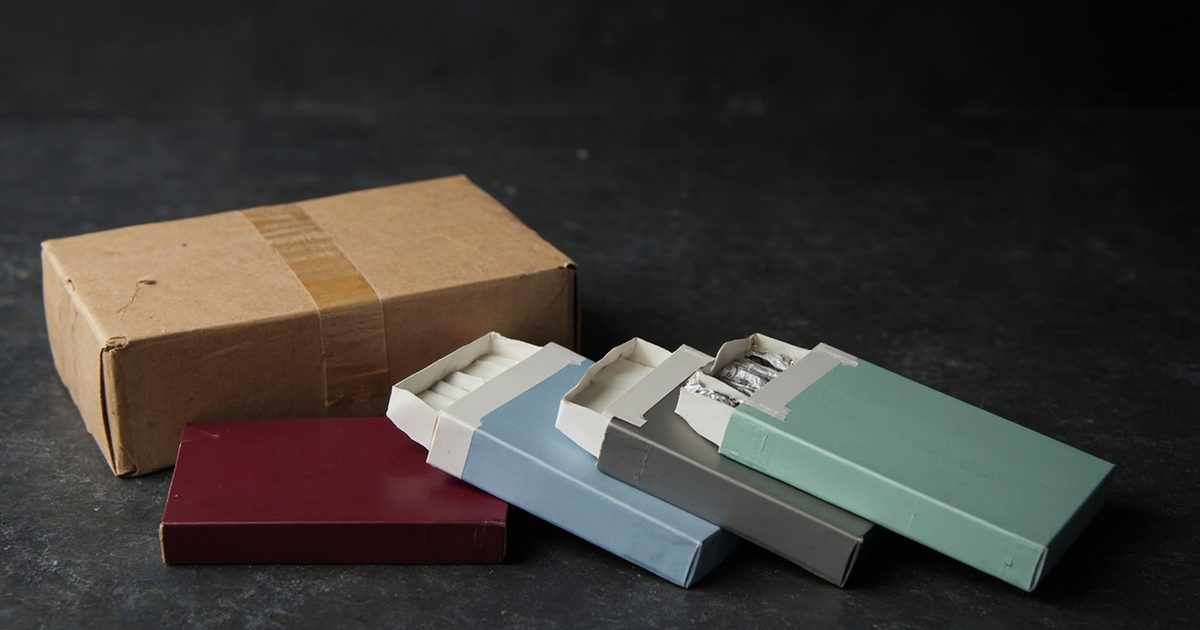
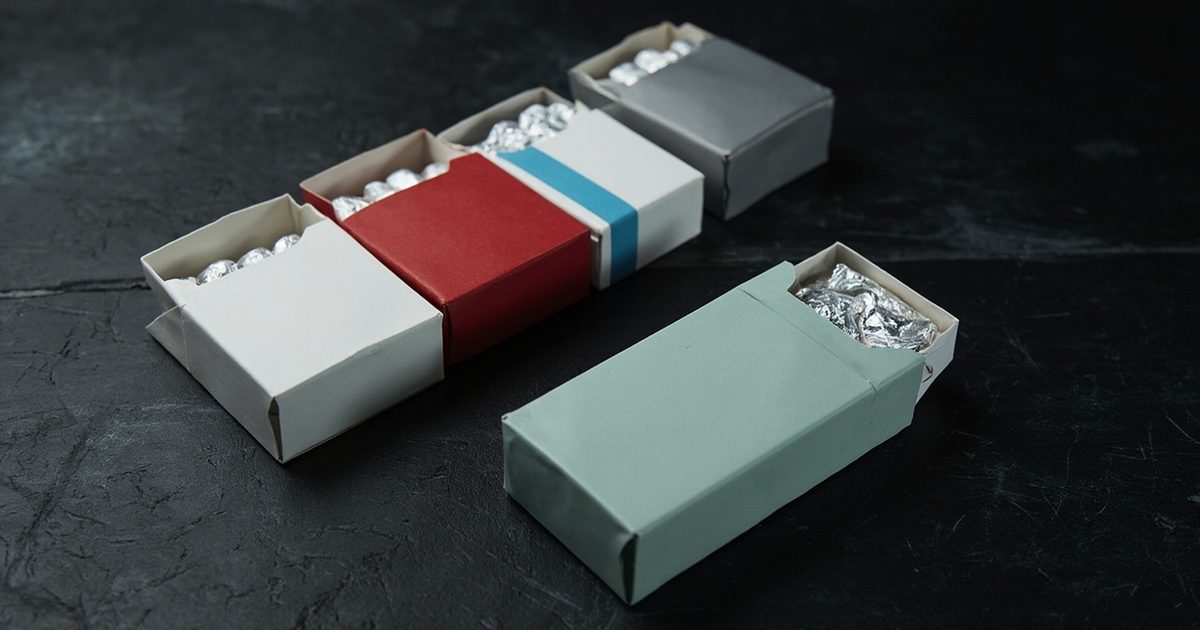
DK's vs Canadian cigarettes comparison showing two rows of soft paper cigarette packs representing two and four strength variants

DK’s and Canadian are two of the most-viewed families in our cigarette catalogue, and they get compared for a simple reason: both sit at the same price. A pack of either is $5.00 and a carton of either is $38.99. So the decision was never about money. It is about how many strength rungs each family gives you, whether either one covers menthol, and which blend actually matches what you already smoke.

This guide breaks the two lineups down variant by variant, maps your current strength to the closest pack in each family, and walks through the cart math that decides whether one carton or two is the smarter order. If you only want the short version, it is in the next section.

The short answer

DK’s is a two-rung lineup: DK’s Full Cigarettes and DK’s Light Cigarettes. Canadian is a four-rung lineup: Canadian Full Cigarettes, Canadian Lights, Canadian Ultra Lights and Canadian Menthol Cigarettes.

  • Choose DK’s if you smoke full flavour or a standard light and you want the decision finished in one step. Two options, no browsing, done.
  • Choose Canadian if you want room to move up or down in strength without changing brand, or if you want a menthol in the same family.
  • Both cost the same, so the only real question is which ladder you want to stand on.

What each lineup actually contains

Stripping out the marketing, here is the whole matrix. Both families are listed as pack or carton, both are $5.00 and $38.99 respectively, and the only structural difference is which strength tiers exist.

Family    | Rungs | Full | Light | Ultra light | Menthol | Pack  | Carton
----------+-------+------+-------+-------------+---------+-------+--------
DK's      |   2   |  yes |  yes  |     no      |   no    | $5.00 | $38.99
Canadian  |   4   |  yes |  yes  |     yes     |   yes   | $5.00 | $38.99

That table is the entire comparison in one view. Everything below explains what each row of it means when you are actually deciding what to put in a cart.

Price is not the tiebreaker

Most brand comparisons come down to cost per stick. This one does not. Both families sit in the $38.99 carton band, which is the standard band across most of the catalogue — the cheaper band at $29.00 is a separate group of five variants that includes Discount Full Flavor, Discount Lights, Playfare Ultra Light, Putters Full Flavor and Time Blue. You can see both bands laid out in the cigarette price list if you want the full picture before choosing.

Within this comparison, a carton is a carton. A carton in this catalogue is 10 packs of 20, so 200 cigarettes — the same structure for both DK’s and Canadian. Canadian Goose is the one family that lists an 8 packs of 25 layout, which also works out to 200. So the per-stick math is identical whichever of the two you pick:

  • Carton: $38.99 ÷ 200 sticks = about $0.195 per cigarette.
  • Pack: $5.00 ÷ 20 sticks = $0.25 per cigarette.
  • Difference: roughly $0.055 per stick, or about 22% less per cigarette in a carton than in packs.

That 22% is the only price lever you have here, and it applies equally to both brands. If the carton math is the part you care about, the carton buying guide and the monthly carton math guide cover it in more detail than this post needs to.

DK’s Full Cigarettes

DK’s Full is the flagship of the family and the single most-viewed product page on the site. The catalogue describes it as a king size cigarette with robust body, long-burning sticks and a confident throat hit, built for smokers who want weight in the draw rather than a light, quick smoke.

In practice that means it sits at the top of the DK’s ladder and there is nothing above it and nothing below it except DK’s Light. If you already smoke a full flavour from another family and you are brand-hopping, this is the pack that maps to your current tier. It is also the safest single-pack trial in the family, because it is the variant the brand is built around.

Full flavour as a category is covered in more depth in the full-flavour comparison, and the broader strong versus smooth strength guide explains how the tier words are used across every family.

DK’s Light Cigarettes

DK’s Light is the second and final rung: a smooth, refined blend with a mild flavour profile that the catalogue positions as gentle but still satisfying. It is the everyday version of the same brand — same king size format, same carton price, lower strength tier.

This is where the two-rung structure starts to matter. If DK’s Light is slightly too much for you, there is nowhere lower to go inside the family. You either accept the light tier or you move families. That is not a flaw in the product; it is simply what a two-variant lineup is. The same logic applies to every short lineup, which is what the two-variant brand guide covers across the catalogue.

Canadian Full Cigarettes

Canadian Full is the anchor of the four-rung family: a hearty, traditional blend described in the catalogue with a bold toasted tobacco focus. It is the strongest option in the Canadian lineup and the natural starting point if you smoke full flavour and want to try the brand for the first time.

Where DK’s Full is described in terms of body and throat hit, Canadian Full is described in terms of depth and tradition. Those are different selling angles on the same tier, and the honest way to pick between them is to buy a pack of each rather than a carton of either. At $5.00 a pack, that trial costs $10 and settles a question that a 200-stick commitment cannot.

Canadian Lights

Canadian Lights is the middle rung: a balanced light profile the catalogue describes as smooth and pleasant, positioned as the classic Canadian light rather than a stripped-down version of the full flavour. If you smoke a standard light from any brand, this is the direct equivalent in the family.

This is also the rung that lines up most cleanly against DK’s Light. Both are the second tier of their family, both are king size, both are $5.00 and $38.99. If you are choosing strictly on light-tier credentials, this is a genuine either/or and the tiebreaker is blend character, not structure. The full flavour versus light guide is the place to start if you are still deciding which tier you belong in.

Canadian Ultra Lights — the rung DK’s does not have

This is the clearest structural difference between the two families. The catalogue describes Canadian Ultra Lights as ultra-mild and gentle, the mildest option in the lineup. DK’s has no equivalent.

For anyone who smokes ultra light, that settles it: Canadian is the only one of these two families that can keep you in-brand. And for anyone drifting downward in strength, the third rung is the reason to pick Canadian over DK’s even if you start at full flavour — you get the option later without switching brands. The light versus ultra-light guide explains the gap between the two tiers, and the light cigarettes comparison shows which other families carry an ultra-light rung.

Canadian Menthol — the other missing lane

DK’s does not make a menthol. Canadian does, and the catalogue describes it as a crisp cooling sensation with clean mint, positioned as a refreshment variant rather than a different tobacco blend underneath.

That single fact decides the comparison for a menthol smoker. If menthol is your lane, half this post is irrelevant and the menthol buying guide is a better use of your time — it covers every menthol variant in the catalogue, including the other families that stock one. If you are moving in the other direction, away from menthol, the menthol switching guide maps out the non-menthol equivalents by tier.

Matching your current tier across both families

If you already know what you smoke, this is the fastest way to translate it. Find your current tier on the left and buy the pack named in that row.

You smoke          | DK's pick        | Canadian pick
-------------------+------------------+-------------------------
Full flavour       | DK's Full        | Canadian Full
Light / mild       | DK's Light       | Canadian Lights
Ultra light        | none stocked     | Canadian Ultra Lights
Menthol / cooling  | none stocked     | Canadian Menthol

Two rows have a blank on the DK’s side. That is the whole comparison in practical terms: the DK’s ladder is shorter, so there are two buyer profiles it cannot serve at all. Everything else is a matter of taste between two packs at the same price.

If you sit between Light and Ultra Light

This is the most common edge case, and it is worth handling explicitly. Someone who finds a full flavour too heavy but a standard light slightly too thin has three practical moves:

  • Stay on the light rung and adjust how you smoke rather than what you buy. The tier words describe the blend, not a fixed experience at the filter.
  • Move to Canadian Ultra Lights if the light rung genuinely is not enough and you want the next step down inside the same family.
  • Compare across families instead of inside one. Strength tiers are not identical between brands — the strength levels explainer covers how the words are applied, and the catalogue strength map lets you browse every variant by tier instead of by brand.

What you should not do is buy a carton to find out. Two hundred sticks is a long experiment. A pack of each is $10 and answers the question in an afternoon.

What a two-rung lineup is good for

There is a real argument for DK’s specifically, and it is not about the products. A two-variant family removes the browse step. You pick full flavour or light, you pick pack or carton, and you are done. For a repeat buyer who already knows their tier, that is a faster checkout than scrolling through four rungs and second-guessing.

The same is true of every short lineup in the catalogue — the two-variant guide groups them together, and the four-variant guide covers the families that go the other way, Canadian included. If you are the type of shopper who wants the decision made, the short lineup is a feature. If you want options, it is a constraint.

Buying one pack before a carton

The most reliable way to choose between these two is to stop reading and buy a pack of each. Everything ships as a single pack at $5.00, so the trial is cheap, and it protects you from committing $38.99 to a carton you do not want.

If you want to test more broadly, there are two listings built for exactly that: the mystery cigarette pack at $6.00 and the mystery cigarette carton at $50.00. Both are multi-brand samplers rather than a specific SKU, so treat them as a way to widen your range, not as a controlled test of one brand. The sampler pack guide explains how to use them without ending up with a pile of variants you will not finish.

Carton math: what 200 sticks actually changes

Once you have settled on a brand, the only remaining decision is pack or carton, and the numbers are simple. At $5.00 a pack, a 20-stick day costs $5.00. The same 20 sticks from a $38.99 carton cost about $3.90. Across a month of daily smoking that gap is roughly $33 — which is why the carton is the default recommendation for anyone who has already picked their variant.

Both families are in the same band, so this math does not favour DK’s or Canadian. It only argues for buying a carton of whichever one you land on. If you want to see how the tier structure works out over a longer period, the monthly carton guide runs the same arithmetic over a month and a year.

Cart planning against the spend tiers and free shipping

This is the part most shoppers miss, and it applies to both brands identically. There are two separate thresholds that matter at checkout, and they are not the same number.

  • Free shipping at $99. The threshold is measured on the pre-discount subtotal, so the qualifying amount has to be reached before any discount comes off. Below it, standard expedited shipping is $15.
  • Spend tiers at $80, $240 and $480. These are the Buy More, Get More free-item levels: a free pack at $80, a free carton at $240 and two free cartons at $480. They are separate from free shipping.

Worked through with a $38.99 carton, that creates some specific break points:

Cart                    | Subtotal  | Hits
------------------------+-----------+-------------------------------
1 carton                |  $38.99   | nothing
2 cartons               |  $77.98   | just under the $80 tier
2 cartons + 1 pack      |  $82.98   | $80 free pack tier
2 cartons + 5 packs     | $102.98   | $99 free shipping + $80 tier
3 cartons               | $116.97   | $99 free shipping + $80 tier
6 cartons + 2 packs     | $243.94   | free shipping + $240 tier
12 cartons + 3 packs    | $482.88   | free shipping + $480 tier

The two-carton row is the one that matters most in this comparison. Two cartons of DK’s or two cartons of Canadian come to $77.98 — $2.02 short of the $80 tier. Adding a single $5.00 pack pushes the cart to $82.98, clears the tier and turns a near-miss into a free pack. That is worth knowing before you check out, not after.

The full mechanics are in the bundle deals guide, the free shipping guide and the worked examples in the order budget guide. If you want to aim at a specific total rather than a specific brand, the price list is the fastest reference.

Payment, dispatch and delivery

Nothing about DK’s versus Canadian changes the checkout, but the timing does affect which order you should place. Payment options are credit card, Interac e-Transfer and cryptocurrency. Card and crypto clear immediately; e-Transfer stays on hold until the transfer is confirmed, which can push your order to the next business day. The payment guide covers the differences.

Dispatch runs on a 9 AM PST cutoff, Monday to Friday. Orders paid before the cutoff usually ship the same day; anything after it moves to the next business day. Delivery is Canada Post, typically 2 to 5 business days for most Canadian addresses and 3 to 8 for rural or remote ones. Expedited is $15, Xpresspost is $20, free shipping kicks in at $99, and Priority is $45. A signature and government-issued photo ID are required at the door, which is why the $99 threshold also carries the signature tier. All of that is explained in the shipping options guide and on the customer help page.

Which family to start with

Reduced to a rule, the decision looks like this:

  • You smoke full flavour or light and you do not want options. DK’s. Two rungs, same price, faster checkout.
  • You smoke ultra light. Canadian, because it is the only one of the two that stocks the tier.
  • You smoke menthol. Canadian, for the same reason. DK’s has no menthol.
  • You are not sure which tier you belong in. Canadian, because the four-rung ladder lets you adjust without changing brand.
  • You want to compare blend character between two standard lights. Buy a pack of each and settle it for $10.

You can browse both families side by side from the shop page or the cigarettes category, and the brand archives for DK’s and Canadian list each lineup in one place. The A-Z brand directory is the full list of families if you want to keep browsing.

Where these two sit against the rest of the catalogue

Both families are mid-tier, $38.99-carton brands. They are not the cheapest option here and they are not the most expensive — because almost everything in this catalogue is priced in the same band, the tier labels describe blend style more than they describe price. The cheap versus premium comparison explains how those labels are used across every family.

If neither family fits, the closest structural alternatives are worth a look: BB for a three-variant lineup, Canadian Classics for a four-variant ladder with an ultra-light rung, and Canadian Premium if you want a two-variant premium-labelled family. The pair comparisons for BB versus Canadian Classics, Putters versus Rolled Gold and Discount versus Playfare use the same method as this post if you want to work through them the same way.

If you are switching families entirely rather than choosing between two, the brand switching guide, the substitutes guide and the glossary of cigarette terms cover the vocabulary and the practical steps. First-time online buyers should start with the first-time buyer guide.

Frequently asked questions

Is DK’s stronger than Canadian?

Only at the top of the ladder, and only in the sense that both families top out at full flavour. DK’s Full and Canadian Full are both full-flavour king size cigarettes. DK’s then stops, while Canadian continues down through Lights, Ultra Lights and Menthol.

Does DK’s make ultra light cigarettes?

No. The DK’s lineup is DK’s Full and DK’s Light only. Canadian Ultra Lights is the ultra-light option in this comparison.

Does DK’s make a menthol?

No. Canadian Menthol is the only menthol between the two families.

Are both families the same price?

Yes. Every variant in both families is $5.00 for a pack and $38.99 for a carton. Price does not separate them.

How many cigarettes are in a carton?

A carton in this catalogue is 10 packs of 20, so 200 cigarettes, and both DK’s and Canadian follow that structure. Canadian Goose is the one family listed as 8 packs of 25, which also totals 200.

Can I mix both brands in one order?

Yes. Packs and cartons from both families can go in the same cart, and a mixed cart counts toward the same $99 free-shipping threshold and the same $80, $240 and $480 spend tiers as a single-brand order.

What if I order the wrong one?

Orders can be cancelled within two hours of placement if they have not shipped, so check your cart before you commit. Once an order has shipped, tobacco sales are final, which is the main argument for buying a single pack first rather than a carton. The order change guide explains what is still fixable and when.

Bottom line

DK’s and Canadian are the same price, so this was never a value question. DK’s is the shorter, faster decision: two rungs, both standard, nothing to browse. Canadian is the wider ladder: four rungs including an ultra-light and a menthol, which makes it the only one of the two that can keep a menthol smoker or an ultra-light smoker in-brand.

If you already know your tier, buy a pack of the matching variant from each family, smoke them in the same week, and commit a carton to whichever one you finish first. If you want to skip the trial and go straight to the carton, remember the two break points: two cartons leaves you $2.02 short of the free-pack tier, and $99 is what unlocks free shipping.

Start with the DK’s lineup, the Canadian lineup, or browse everything on the shop page.
Putters vs Rolled Gold Cigarettes: Which Value Lineup Fits Your Cart? (2026 Guide)

Putters vs Rolled Gold cigarettes value lineup comparison

Shoppers comparing the value end of the catalogue usually end up looking at the same two families: Putters and Rolled Gold. Both are sold as packs and cartons, both sit alongside the cheaper native-style brands, and both are priced per variant rather than per brand — which is exactly where the decision gets made.

This guide compares the two lineups against the live listings: what each family contains, what the cartons cost, what that works out to per cigarette, which one has the menthol, and how a cart built from either brand behaves against the shipping threshold and the spend tiers.

Quick answer: which of the two is cheaper

Putters Full Flavor has the cheapest carton in the pair at $29.00. Every other carton across both families is $38.99, including Putters Light, Rolled Gold Full Flavor, Rolled Gold Light and Rolled Gold Menthol. The pack price is $5.00 on four of the five variations; Rolled Gold Menthol is the exception at $6.00.

Lineup        Variant       Pack    Carton   Per stick
------------  ------------  ------  -------  ---------
Putters       Full Flavor   $5.00   $29.00   14.5 cents
Putters       Light         $5.00   $38.99   19.5 cents
Rolled Gold   Full Flavor   $5.00   $38.99   19.5 cents
Rolled Gold   Light         $5.00   $38.99   19.5 cents
Rolled Gold   Menthol       $6.00   $38.99   19.5 cents

The per-stick column is the number to keep in mind. A $29.00 carton of 200 cigarettes is 14.5 cents a cigarette. A $38.99 carton of the same 200 cigarettes is 19.5 cents. The gap is $9.99 per carton, which is five cents on every stick.

The two lineups side by side

Putters is a two-variant family: a full flavour and a light. Rolled Gold is a three-variant family: a full flavour, a light and a menthol. Neither brand carries an ultra light, so if the mildest tier is what you smoke, this comparison will end with you looking at the Classics lineups instead.

  • Putters: two variants, one of them in the $29.00 carton band. No menthol, no ultra light.
  • Rolled Gold: three variants, including the only menthol. All three cartons sit at $38.99.
  • What they share: 20 cigarettes per pack, 10 packs per carton, 200 cigarettes per carton, and both pack and carton available on every variation.
  • Where they differ: the pack price on Rolled Gold Menthol, which is $6.00 rather than $5.00.

Putters: two variants, one real decision

Putters Full Flavor

Putters Full Flavor is the value anchor of the comparison. The carton is $29.00 and the pack is $5.00, which puts it in the small group of listings priced under the standard carton rate. The catalogue describes it as the bolder of the two Putters variants, with the fuller body you would expect from a full-flavour blend.

For a full-flavour smoker who does not want to spend $38.99 on a carton, this is the most direct answer in the catalogue. It is the same 200 cigarettes, in the same pack and carton format, at $9.99 less than the standard rate.

Putters Light

Putters Light is the milder of the two, described in the listing as a smoother, gentler draw. The catch is the price: the light sits at the standard $38.99 carton rate, so choosing the lighter variant inside Putters costs $9.99 more per carton than choosing the full flavour. That is a pricing pattern worth knowing before you assume the whole brand is cheap — it is not, only one variant is.

What Putters does not make

There is no Putters menthol and no Putters ultra light. That is the whole lineup: two variants, five dollars a pack, one carton at $29.00 and one at $38.99. If you want a cooler smoke or a lighter-than-light tier inside the same brand, Putters will not get you there and you will need to switch families.

Rolled Gold: three variants and the $6.00 pack

Rolled Gold Full Flavor

Rolled Gold Full Flavor is the full-strength option, described in the catalogue as a traditional native-style full-flavour blend. Pack $5.00, carton $38.99. It is the direct head-to-head competitor to Putters Full Flavor and the $9.99 difference between the two cartons is the single biggest decision in this comparison.

Rolled Gold Light

Rolled Gold Light is the milder blend of the three, listed as a smoother, lower-strength version of the same brand character. Pack $5.00, carton $38.99 — the same price as Putters Light, so between these two lights the choice comes down to which one you prefer in a $5.00 test pack rather than to price.

Rolled Gold Menthol

Rolled Gold Menthol is the odd one out on price. The carton is $38.99 like the rest of the family, but the single pack is $6.00 — the only $6.00 pack in the cigarette catalogue, where everything else is $5.00. If you buy packs rather than cartons, that extra dollar is the practical difference between this brand and a $5.00 pack. If you buy the carton, the pack price stops mattering and you pay the same $38.99 as any other standard carton.

Full flavour head to head: $29.00 against $38.99

This is the comparison most shoppers are actually making. Putters Full Flavor at $29.00 against Rolled Gold Full Flavor at $38.99. Same pack size, same carton count, same 200 cigarettes inside. The $9.99 difference is a listing-level difference, not a claim that one blend is better than the other.

Put the two numbers on a per-stick basis and the gap is easier to see:

  • $29.00 carton ÷ 200 cigarettes = 14.5 cents per cigarette
  • $38.99 carton ÷ 200 cigarettes = 19.5 cents per cigarette
  • One carton a month for a year: $348.00 against $467.88, a difference of $119.88

Whether that difference matters depends on how you buy. If you are choosing one carton to test a brand, the $9.99 is noise. If you are running a carton a month for a year, it is about the price of three more $38.99 cartons. The full price structure across all 46 listings is in the cigarette price list if you want to check the bands against other brands before you commit.

Lights head to head: both at $38.99

Between Putters Light and Rolled Gold Light there is no price decision at all. Both are $5.00 a pack and $38.99 a carton. Both are described as the milder variant of their family. That makes this the one pairing in the article where you should buy two $5.00 packs, smoke them in the order you normally smoke, and let the packs settle it.

Two packs is $10.00 and gives you 40 cigarettes to judge. That is a cheap way to avoid a $38.99 carton you do not want. If you are new to either brand, the first-time buyer guide walks through the same test-before-you-commit logic from a standing start.

Menthol: only one side has it

Putters has no menthol, so if menthol is non-negotiable the comparison is over and Rolled Gold Menthol is the answer from this pair. It is the only menthol in the two lineups, and it is the only $6.00 pack on the shelf.

It is not the only menthol in the catalogue, though. If you want to compare the cooler options before choosing, the other menthol listings are Classics Menthol, Canadian Menthol, BB Menthol, Canadian Classics Menthol, Playfare Menthol and the Canadian Blend menthol from Discount. All except Rolled Gold are $5.00 a pack and $38.99 a carton. The menthol buying guide covers the full set in one place, and the switching off menthol guide guide is the one to read if you are moving in the other direction, off menthol and back to a regular blend.

Pack first, carton second: the $5.00 test

Both families sell single packs, and the arithmetic makes the pack a sensible first purchase even when you intend to buy cartons long term. A $29.00 carton is the same money as 5.8 packs. A $38.99 carton is the same money as 7.8 packs. Five packs is 100 cigarettes — half a carton — for $25.00, which is enough to know whether the blend suits you.

The other reason to start with packs is that the pack price is identical across both brands at $5.00, apart from the menthol. Testing four packs — Putters Full Flavor, Putters Light, Rolled Gold Full Flavor and Rolled Gold Light — costs $20.00 and covers the entire decision space of this comparison. The pack sizes guide post explains what a pack and a carton actually contain if you want the format detail before ordering.

Cart planning against shipping and the spend tiers

Shipping inside Canada is a flat $15.00 or $20.00 depending on the option you pick at checkout, with free shipping once the cart passes $99.00. On top of that, three cart-total tiers add free merchandise: a free pack at $80.00, a free carton at $240.00 and two free cartons at $480.00. Every one of those thresholds is measured on the cart, not on the shipment, so a cart built from either brand behaves the same way.

What that looks like with Putters Full Flavor at $29.00 a carton:

Cart                                       Total    Shipping
-----------------------------------------  -------  --------
2 cartons Putters Full Flavor              $58.00   $15.00
3 cartons Putters Full Flavor              $87.00   $15.00
4 cartons Putters Full Flavor              $116.00  free
8 cartons + 2 packs (clears the $240 tier) $242.00  free
16 cartons + 2 packs + 1 menthol pack      $480.00  free

Two things stand out. First, three cartons at $87.00 still pay shipping, because the free-shipping line is $99.00 — the fourth carton is the one that crosses it. Second, $29.00 cartons make the top spend tier unusually reachable: sixteen cartons plus a couple of $5.00 packs and one $6.00 menthol pack lands exactly on $480.00, which is the two-free-cartons tier. The bundle deals guide post and the free shipping guide post cover the threshold logic in more detail, and $50, $100 and $200 cart walkthrough works the same numbers at $50, $100 and $200.

If you are deliberately building a cart around either brand, the free pack at $80, free carton at $240 and two free cartons at $480 listings are the free-item products that arrive with the tiers, and the mystery cigarette pack and mystery cigarette carton are the other two non-standard listings worth knowing about when you are one item short of a threshold.

Where the pair sits against the rest of the value tier

Putters Full Flavor is one of exactly five cartons in the $29.00 band. The other four are Discount Full Flavor, Discount Lights, Playfare Ultra Light and Time Blue. Everything else in the cigarette catalogue is $38.99, which means the value decision is usually not “which brand is cheap” but “does the variant I want happen to sit in the lower band”.

Rolled Gold sits entirely in the standard band, so it competes on lineup width instead: three variants in one brand, including a menthol. The Classics, Canadian, BB, Playfare, Canadian Classics, Time, Nexus, Discount, DK’s, dM, Canadian Premium and Canadian Goose families all sit at the same $38.99 rate per variant, so price rarely separates them — the variant ladder does.

If you want the two families compared in the same format as this article, the Discount vs Playfare comparison and BB vs Canadian Classics comparison posts use the same structure. The catalogue strength map lays out every brand against its strength tiers, and cheap versus premium comparison explains how the bands were drawn.

If neither brand has the variant you want

Two gaps are worth naming. Neither Putters nor Rolled Gold makes an ultra light, and Putters makes no menthol.

One formatting note if you are comparing cartons: nearly every carton here is ten packs of twenty, but the Canadian Goose listing is described as eight packs of twenty-five. Both come to 200 cigarettes, so the per-stick maths above still holds — just do not count packs when you are comparing.

Keeping a carton in shape between orders

If you buy four cartons to clear the shipping threshold, three of them will be sitting in a cupboard for months. Keep the cartons closed until you need them, keep them out of a hot car or a bathroom, and keep packs out of a coat pocket that collects lint. The storing cigarettes guide covers the detail, and taste fatigue guide is worth a read if the same brand starts tasting flat after a few months of it.

Paying for the order and receiving it

Two card listings, Interac e-Transfer and cryptocurrency are the payment options at checkout. Card and crypto clear at the time you pay; an e-Transfer order sits on hold until the transfer is confirmed. Cash on delivery is not offered. Orders placed before the daily cut-off move into the same-day dispatch queue, and a signature with photo ID is required at the door on qualifying orders, which is covered in receiving an order guide and payment methods guide.

A five-minute ordering checklist

  • Decide the variant first, then the brand: the carton price follows the variant, not the label on the family.
  • If you want the $29.00 carton, it has to be Putters Full Flavor — the other Putters variant is $38.99.
  • If you want a menthol in this pair, it is Rolled Gold Menthol, and the pack is $6.00 while the carton stays $38.99.
  • Buy single packs to test; four packs covers both families for $20.00.
  • Check the cart total against $99.00 for free shipping and $80.00, $240.00 or $480.00 for the free-item tiers.
  • Confirm the variant name on the cart line before paying — two variants of the same brand can differ by $9.99.

Frequently asked questions

Is Putters cheaper than Rolled Gold?

Only in full flavour. Putters Full Flavor is $29.00 a carton against $38.99 for Rolled Gold Full Flavor. Putters Light and Rolled Gold Light are both $38.99, so the two brands cost the same at the light tier.

Does Putters make menthol cigarettes?

No. The Putters lineup is two variants, full flavour and light. The menthol in this comparison comes from Rolled Gold.

Does Rolled Gold make ultra light cigarettes?

No. Rolled Gold stops at a light. The ultra light tier is covered by Classics Extra Lights, Canadian Ultra Lights, Canadian Classics Ultra Blue and Playfare Ultra Light.

Why is the Rolled Gold Menthol pack $6.00 when the others are $5.00?

The listing prices it that way. The carton is the same $38.99 as the other standard cartons, so the difference only shows up if you are buying single packs.

Is a $29.00 carton smaller than a $38.99 carton?

No. Both are ten packs of twenty, 200 cigarettes. The price difference is $9.99 and the cigarette count is identical.

Can I order both brands in the same cart?

Yes. Mixing families and formats in one cart is normal, and both count toward the same shipping and spend thresholds. A common build is three $29.00 cartons plus a $5.00 pack to cross $99.00 and pick up the free pack at $80.00 on the way.

Do these prices change?

They can. The numbers in this article match the live listings on the date it was published, and the product pages are always the authority — check the carton price on the listing before you build a large order around it.

Where to start

If you want the cheapest carton in this pair, start with Putters Full Flavor. If you want the widest lineup, including the menthol, start with the Rolled Gold brand page and pick a pack. If you would rather browse everything before deciding, the cigarette category category and the shop page page carry the full range, and the first-time buyer guide guide covers the ordering basics.

Both families ship from the same warehouse, under the same $99.00 free-shipping line and the same spend tiers, so the only decision left is which variant you actually want to smoke.

BB vs Canadian Classics Cigarettes: Which Lineup Fits Your Cart? (2026 Guide)

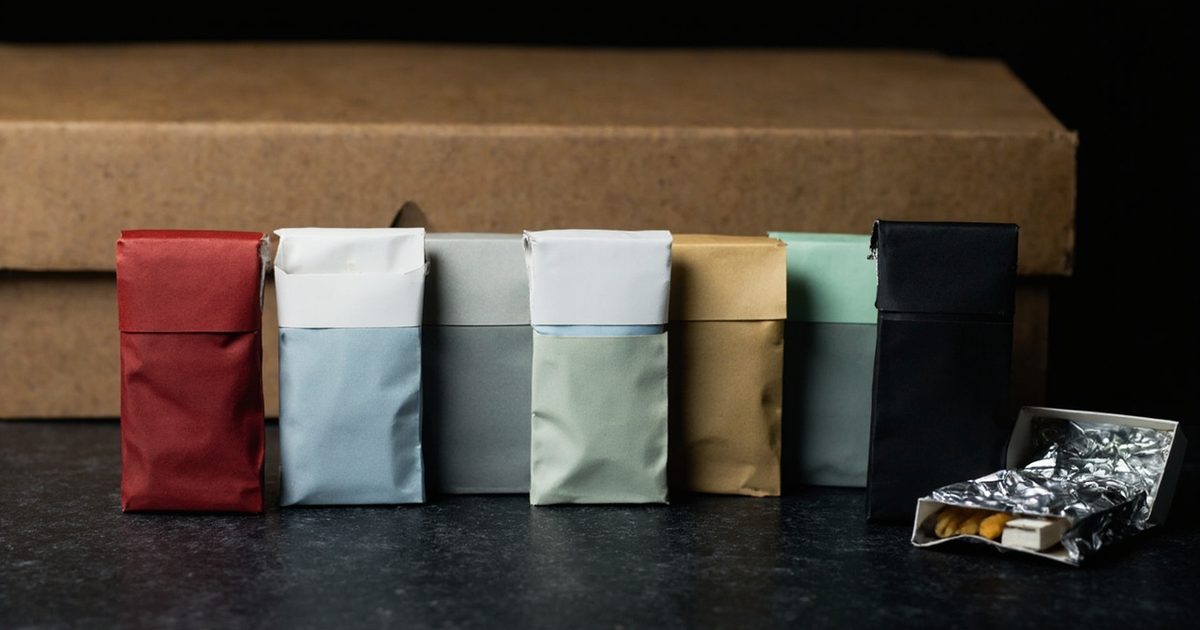
BB vs Canadian Classics cigarettes comparison showing soft paper pack lineups for both brand families

BB and Canadian Classics are two of the larger brand families in our catalogue, and they get compared for a simple reason: they occupy the same shelf position. Both are full-strength Canadian style cigarettes, both are listed in king size, and both are priced identically at $5.00 for a pack and $38.99 for a carton.

So price will not decide this for you. The thing that actually separates them is lineup depth. BB ships three variants. Canadian Classics ships four. Whether that matters depends entirely on which strength tier you smoke, and this guide walks through the lineup of each family, how the variant names line up against each other, and how either choice plays out when you build a real cart.

The short answer

Lineup at a glance

Here is the full published lineup for each family, with the strength tier each listing states. This is the whole comparison in one block; everything after it is the detail behind these rows.

              BB (3 variants)          CANADIAN CLASSICS (4)
  ----------  -----------------------  -------------------------
  Full         BB Full Flavor           Canadian Classics Original
  Light        BB Light                 Canadian Classics Silver
  Ultra light  (not offered)            Canadian Classics Ultra Blue
  Menthol      BB Menthol               Canadian Classics Menthol
  Pack price   $5.00                    $5.00
  Carton       $38.99                   $38.99
  Format       King size                King size

Two things stand out immediately. First, the price columns are identical, which removes money from the decision. Second, there is a hole in the BB column at the ultra light row. That single missing tier is the most common reason a shopper ends up in the Canadian Classics lineup instead of BB.

BB Cigarettes: three variants, one clear stopping point

The BB brand page carries three SKUs, and the catalogue copy for each one describes a different job. BB does not try to cover every strength; it covers the three tiers most smokers actually buy and stops there.

BB Full Flavor

BB Full Flavor is the top of the BB ladder. The listing describes it as a bold, full-bodied smoke built for traditional smokers, in premium king size, sold in packs and cartons. If you already smoke full flavor in another brand and you are looking at BB as a value-conscious swap, this is the pack that matches your tier. It is $5.00 a pack and $38.99 a carton, the same as every other BB variant.

BB Light

BB Light is the middle of the BB lineup. The catalogue copy describes a smoother, milder smoke with balanced flavour and reduced strength, positioned for everyday use. That word “reduced” matters: this is a genuine step down from Full Flavor, not a rebranded full-strength pack. It is the variant to pick if you smoke lights now and want the BB price point.

BB Menthol

BB Menthol is the third BB SKU, described as a natural menthol infusion with a crisp, cooling character in king size. It is the only cooling option in the family. If you smoke menthol and want BB, this is your only door in, and it sits at the same $5.00 and $38.99 as the other two.

What BB does not make

There is no BB ultra light. That is not a gap in our stock; it is the shape of the lineup. If your current pack is an ultra light, BB has nothing below BB Light to offer you, and jumping to a light tier is a real change to your smoke rather than a like-for-like swap. Options at that tier include Canadian Classics Ultra Blue and Playfare Ultra Light.

Canadian Classics: four variants, full ladder

The Canadian Classics brand page carries four SKUs and covers every tier from full strength down to ultra light. The catalogue copy leans on heritage language throughout, describing traditional Canadian tobacco blends rather than a modernised recipe. Practically, the value of this family is that it lets four different smokers buy the same brand without any of them compromising on strength.

Canadian Classics Original

Canadian Classics Original is the full-strength entry, described as an authentic traditional tobacco blend with a heritage character. Note the naming convention: this family calls its full-strength pack “Original” rather than “Full Flavor,” which is the single most common source of confusion when people compare these two brands. If you want the strongest pack Canadian Classics makes, Original is it.

Canadian Classics Silver

Canadian Classics Silver is the light tier, described in the listing as a smooth light flavour profile with a balanced, mild character. Silver is the direct counterpart to BB Light when you are matching by tier rather than by brand name. The pack colour guide covers why silver is the near-universal cue for a light pack across this catalogue.

Canadian Classics Ultra Blue

Canadian Classics Ultra Blue is the ultra light, described as exceptionally mild with an ultra-smooth, gentle character. This is the SKU with no BB equivalent, and it is the reason a lot of ultra light smokers never seriously consider BB at all. If you are unsure whether you are a light or an ultra light smoker, the light versus ultra light guide breaks down the difference in plain terms.

Canadian Classics Menthol

Canadian Classics Menthol is the cooling option, described as a cool mint character with a crisp, refreshing finish. It is one SKU matched against one SKU here: BB Menthol is the only menthol BB makes, and Canadian Classics Menthol is the only menthol in this family. Both are $5.00 a pack, so a menthol smoker comparing these two is genuinely choosing on preference rather than price.

How the variant names line up

If you already know your tier, this table is the whole decision. Each row pairs the closest available variant by stated strength tier. It is a tier match, not a claim that the two packs smoke identically; only your own pack settles that.

  If you smoke...      BB choice        Canadian Classics choice
  -------------------  ---------------  ------------------------
  Full strength        BB Full Flavor   Canadian Classics Original
  Light                BB Light         Canadian Classics Silver
  Ultra light          none             Canadian Classics Ultra Blue
  Menthol              BB Menthol       Canadian Classics Menthol

The two naming traps are worth naming explicitly. Canadian Classics uses “Original” for its full-strength pack, so a shopper scanning for “Full Flavor” in that family will not find the word. And BB uses “Light” for a single middle tier, so anyone looking for an ultra light in the BB lineup will search forever; there is nothing below Light. The cigarette terms glossary defines each of these words if you are still working out where you sit.

What identical pricing means for your cart

Because both families sit at $5.00 per pack and $38.99 per carton, there is no cheaper side to this comparison. That is unusual enough to be worth stating plainly, since most brand comparisons in this catalogue come down to a price band difference. Here the only variable is which variants exist.

The per-stick math is the same on both sides. A pack is 20 cigarettes for $5.00, which is $0.25 a stick. A carton is ten packs, 200 cigarettes, for $38.99, which is about $0.195 a stick. Buying the carton instead of ten separate packs saves $11.01, and nothing about choosing BB or Canadian Classics changes that arithmetic. If you want the full spread of carton prices across every brand, the carton price guide and the full price list cover it.

Trying a pack of each before committing to a carton

A carton is 200 cigarettes of one variant. That is a large commitment to a pack you have never opened, and it is the main reason people ask which of these two families to start with. The low-risk version of this decision costs $10: buy one pack of BB Full Flavor and one pack of Canadian Classics Original, smoke through both, then order the carton.

If you would rather sample more widely, the mystery cigarette pack is $6.00 and the mystery carton is $50.00. Both are multi-brand samplers, so they are a way to try across families rather than a way to buy a specific BB or Canadian Classics variant. The sampler packs guide explains how those work and when they make sense versus just buying two packs.

Cart planning against the spend tiers

Our store runs three automatic cart-total tiers: spend $80 and a free pack is added, spend $240 and a free carton is added, spend $480 and two free cartons are added. The free items are the $80 free pack, the $240 free carton and the $480 two-carton tier. Because both BB and Canadian Classics cartons cost $38.99, the arithmetic lands in exactly the same place whichever family you pick.

  • Two cartons comes to $77.98, which is $2.02 short of the free pack. Adding one $5.00 pack takes the cart to $82.98 and clears the tier.
  • Three cartons comes to $116.97, which also clears the $99 free-shipping threshold. If free shipping is your goal rather than the spend tiers, three cartons is the line where it starts.
  • Six cartons comes to $233.94, which is $6.06 under the free-carton tier. One pack gets you to $238.94 and still short; two packs reach $243.94 and clear it.
  • Twelve cartons comes to $467.88. Two packs get you to $477.88, still under $480. A third pack reaches $482.88 and trips the two-free-carton tier.

Those gaps are the practical reason to plan the cart instead of adding items one at a time. The bundle deals guide covers the tiers in more depth, and the worked-cart budget guide runs the same arithmetic at $50, $100 and $200.

Shipping and payment when you order either family

Nothing about the choice between BB and Canadian Classics changes how the order arrives, but the shipping ladder is worth knowing before you decide how many cartons to buy. Within Canada the current options are:

  • Expedited at $15, quoted at 1-5 business days.
  • Xpresspost at $20, quoted at 1-3 business days.
  • Priority at $45 for next business day.
  • Free Xpresspost once the order clears $99, with a second free-shipping rule at $149 on the post-discount total.
  • Signature on delivery applies once an order clears $99, and an adult signature with government photo ID is required on tobacco deliveries regardless.

Payment is card, Interac e-Transfer or crypto. Both card gateways display as “Credit Card” at checkout, so there is nothing to choose between them from your side. An e-Transfer order sits on hold until the transfer is confirmed, while card and crypto orders move ahead immediately. Cash on delivery is not offered. The free shipping guide covers how to build a cart that clears the threshold without overshooting, and the payment methods guide covers the three options in detail.

Which one should you buy first?

Work backwards from the pack in your pocket rather than from the brand name.

One more framing that helps: a family with four variants is not automatically better than a family with three. It is only better if you happen to smoke the tier it adds. For a full strength or light smoker, BB’s shorter lineup is not a limitation at all, and the three-variant lineup guide and four-variant lineup guide both map the rest of the catalogue on the same logic.

Frequently asked questions

Is BB stronger than Canadian Classics?

Not at the top of the ladder. BB Full Flavor and Canadian Classics Original are both the full-strength pack in their family, at the same price. The real difference is what sits beneath them: Canadian Classics adds an ultra light, BB does not.

Does BB make ultra light cigarettes?

No. The BB lineup is Full Flavor, Light and Menthol. There is no ultra light BB listing, so an ultra light smoker has to look at Canadian Classics Ultra Blue, Playfare Ultra Light or another family. The light cigarettes comparison lists every lighter-tier pack we carry.

Which of the two is cheaper?

Neither. Every BB variant and every Canadian Classics variant is $5.00 for a pack and $38.99 for a carton. If you want the cheaper carton bands in the catalogue generally, those start at $29.00, and the budget brands guide covers what sits in them.

Can I mix variants inside a single carton?

No. A carton is a sealed ten-pack unit of the single variant you select, so a BB Light carton is 200 BB Light cigarettes and nothing else. Mixing means buying packs, or buying more than one carton. The buying by the carton guide explains when a mixed cart makes more sense than a straight carton order.

Are both brands king size?

Yes. Both families are listed in king size in the catalogue. Neither is offered in 100s or slims; the pack sizes guide covers which families carry the longer and slimmer formats.

How long will a carton last?

A carton is 200 cigarettes. At a pack a day that is ten days; at half a pack a day it is roughly three weeks. The burn time and pack planning guide converts sticks per day into packs and cartons if you want the math done for your own habit.

Do both families include a menthol?

Yes, one each: BB Menthol and Canadian Classics Menthol. Both are the only cooling pack in their family, and both are $5.00 a pack. The menthol buying guide lists every cooling option we carry.

Where do these two sit against other families?

The four-variant guide groups Canadian Classics with Canadian Cigarettes, Classics and Playfare as the families that cover every tier. BB sits with the three-variant group. If you are choosing between two specific families at the same price point, the Discount versus Playfare comparison uses the same method on a different pair.

Bottom line

BB versus Canadian Classics is not a price question and it is barely a brand question. It is a coverage question. If you smoke full strength, lights or menthol, both families give you the pack you need at $5.00, and the carton math is identical at $38.99. If you smoke ultra lights, BB has nothing for you and Canadian Classics does.

Open the BB lineup or the Canadian Classics lineup and pick the tier that matches your current pack, or browse the full cigarettes category to compare against every other family. Both brands ship from the same shop with the same cart tiers, the same free shipping thresholds and the same delivery requirements, so the only thing left to decide is which pack you actually want in your hand.

Discount vs Playfare Cigarettes: Which Lineup Fits Your Cart Better? (2026 Guide)

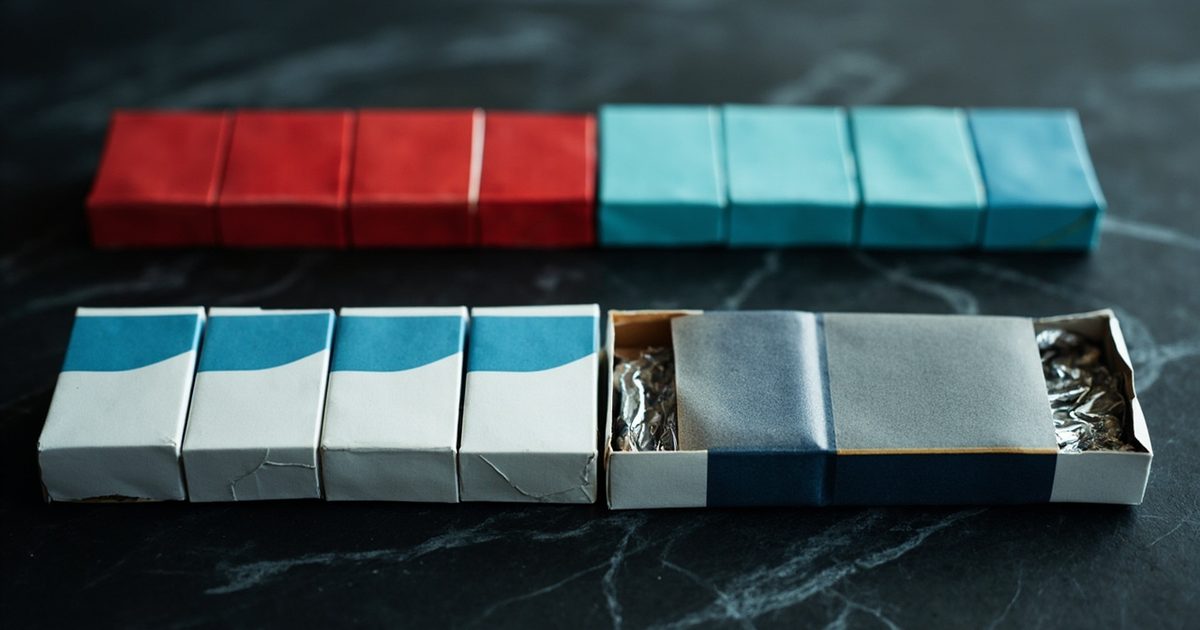
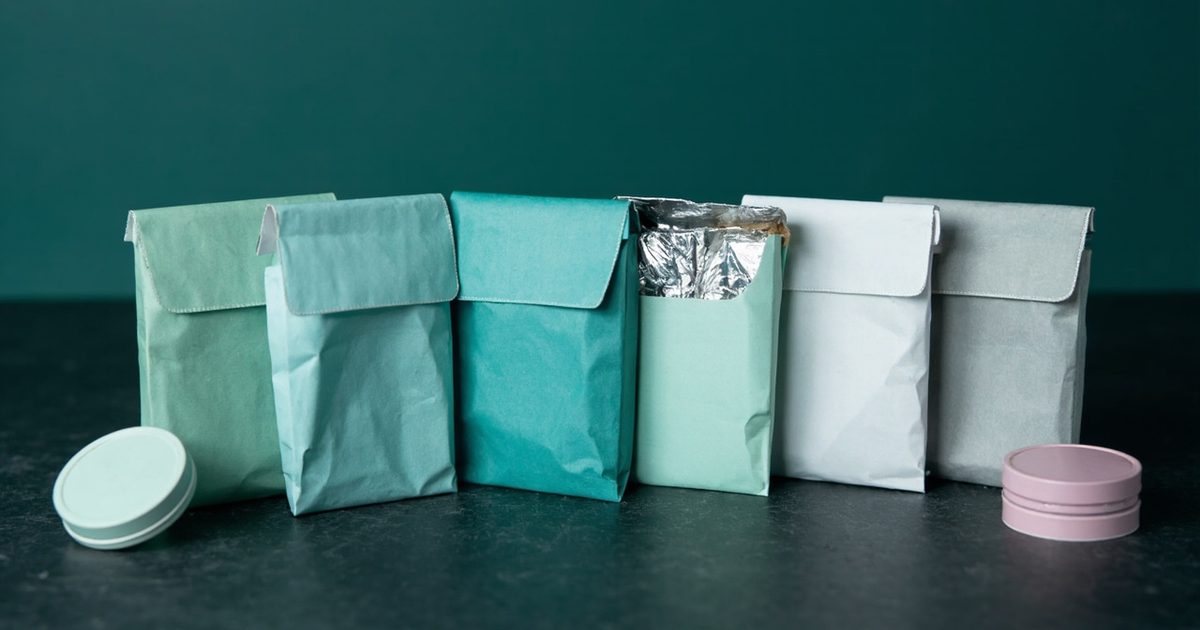
Discount vs Playfare cigarettes: two rows of soft paper cigarette packs in red, white with a blue band, silver and teal representing both brand lineups

Discount and Playfare are the two lineups shoppers cross-shop most often when they want a lower per-carton price without leaving the cigarette catalogue. Both brands sit in the same part of the store, both sell packs at the same $5.00, and both offer a carton below $30 — but not on the same variants. That is the entire decision, and it is easy to get wrong if you only look at the brand name.

This guide compares the two families variant by variant, using the live carton and pack prices on each product page. By the end you will know which of the two is cheaper for the strength you actually smoke, and how to build a two-brand order that clears the free-shipping line instead of paying for it.

Quick answer: the cheaper carton depends on the tier

Discount carries a $29.00 carton on its full flavour and its lights. Playfare carries a $29.00 carton on its ultra light only. Everything else in both families is $38.99 a carton. So:

That is the short version: Discount wins on price in full flavour and lights, Playfare wins by simply existing in ultra light, and menthol is a draw.

The two lineups side by side

Both brands sell the same two units: a single pack at $5.00 and a carton. Prices below are the live catalogue prices at the time of writing, taken from each variant’s product page rather than from a brand-level average.

  Variant          Brand      Pack     Carton
-----------------------------------------------
  Full Flavor      Discount   $5.00    $29.00
  Lights           Discount   $5.00    $29.00
  Menthol          Discount   $5.00    $38.99
  -----------------------------------------------
  Full Flavor      Playfare   $5.00    $38.99
  Light            Playfare   $5.00    $38.99
  Ultra Light      Playfare   $5.00    $29.00
  Menthol          Playfare   $5.00    $38.99

  Band total: Discount $96.99 (3 cartons)
              Playfare $145.97 (4 cartons)

A full set of either family costs more than one carton, so most shoppers are choosing one or two variants, not the whole lineup. The table matters because it shows the two $29.00 cartons are not in the same place on both brands.

What each family actually contains

Discount: three variants, with Canadian Blend naming on two of them

The Discount brand page lists three listings: Full Flavor, Lights Canadian Blend, and Menthol Canadian Blend. The two “Canadian Blend” names are the light and menthol entries — the words describe the blend the listing is built around, not a different strength. If you are used to reading variant names as strength tiers, treat “Canadian Blend” as part of the product name and read the strength word in front of it.

Discount has no ultra light and no extra light listing, so the family stops at Lights. For a shopper who wants the mildest option on the shelf, that is the first hard limit to know before comparing prices. The three-variant brand guide covers how a family of this size is meant to be shopped, and the same structure applies here.

Playfare: four variants, one for each strength lane

Playfare runs one listing per strength: Full Flavor, Light, Ultra Light, and Menthol. Nothing is doubled up with a blend-name suffix. The Playfare brand page shows all four, and the four-variant lineup guide explains why a family built this way is easier to compare across brands — every tier has its own page and its own price.

Playfare’s naming is also the more literal of the two. Ultra Light means an ultra light listing and a $29.00 carton. Light means a light listing and a $38.99 carton. There is no blend word to interpret.

Full flavour: Discount is $9.99 cheaper per carton

Discount Full Flavor at $29.00 is the cheapest full-flavour carton in either family, and it is $9.99 below Playfare Full Flavor at $38.99. Both are listed as full flavour, both are $5.00 a pack, and both ship from the same cigarette category.

For a full-flavour smoker buying one carton a month, that is $119.88 a year between the two choices. For someone buying two cartons a month it is $239.76. This is the single largest price gap in the comparison and the reason Discount is usually the starting point for shoppers who know they want a full-strength pack. If you are still deciding which strength lane fits you, the full flavour vs light guide is the more useful read than a price table.

Lights: the same story at $29.00 against $38.99

Discount Lights Canadian Blend is $29.00 a carton. Playfare Light is $38.99. Both are light listings at $5.00 a pack, so the carton is the only place the difference shows up.

This is the tier where the two brands are most directly comparable, because both have a clean light entry with no extra naming. If you smoke a light cigarette and you are choosing purely on carton price, Discount is the cheaper of the two by $9.99. If you want the wider family around that light — an ultra light to step down to, or a menthol in the same line — Playfare is the only one of the two that offers it. The light cigarettes comparison maps every light listing in the store if you want to widen the shortlist beyond these two.

Menthol: a straight draw at $38.99

Both menthol listings are $38.99 a carton and $5.00 a pack: Discount Menthol Canadian Blend and Playfare Menthol. There is no price advantage to weigh, so the decision comes down to which family name you want to stay in — useful if you are already buying full flavour or lights from one of the two and want the menthol to match the same brand.

Note that Discount’s menthol sits at $38.99 while its full flavour and lights sit at $29.00, so the menthol is not the cheap entry into that brand. Menthol is the one lane where the Discount price advantage disappears entirely. The menthol buying guide covers the rest of the menthol listings if neither of these fits.

Ultra light: Playfare is the only option, and it is in the $29.00 band

Playfare Ultra Light is $29.00 a carton and $5.00 a pack. Discount has no ultra light or extra light listing, so for a shopper who wants the mildest of these two families there is no comparison to make — Playfare is the answer, and it happens to be the cheapest carton in the Playfare lineup.

That detail is worth pausing on, because it reverses the usual assumption. The mildest variant in a family is often the one people expect to pay more for. Here it is $9.99 below the same brand’s full flavour. If your usual tier is ultra light or extra light, the strength levels guide is worth reading before you commit to a carton, since ultra light and extra light are not labelled identically across brands.

Why one brand can carry two different carton prices

The price band is set per listing, not per brand. That is why Discount can have two cartons at $29.00 and one at $38.99 without any contradiction, and it is why Playfare’s cheapest carton is its ultra light rather than its full flavour. Reading a brand name and assuming one price for the whole family is the most common mistake in this comparison.

The cigarette price list shows the full picture: five cartons sit in the $29.00 band across the catalogue and everything else is $38.99. The carton price guide goes through how to compare value when the band and the variant do not line up, and the terms glossary defines “price band” if the phrase is new to you.

Packs are $5.00 on both — use them to test before you commit

Every listing in both families is $5.00 for a single pack, with no brand-level difference. That makes packs the cheap way to settle the question rather than guessing at a carton: two packs, one of each brand, is $10.00. A pack of each variant you are considering is still less than a single carton in the $38.99 band.

The trade-off is the per-stick price. Ten single packs at $5.00 come to $50.00, against $29.00 or $38.99 for the same ten-pack carton. Packs are for deciding; cartons are for buying. The carton buying guide covers when the bulk unit makes sense, and the sampler packs guide covers the multi-brand trial route if you would rather not pick two brands blind.

The per-stick math behind the $9.99 gap

14.5 cents against 19.5 cents

A standard carton is ten packs of twenty cigarettes, so 200 sticks. At $29.00 that is about 14.5 cents per cigarette. At $38.99 it is about 19.5 cents. The difference is roughly five cents a stick, which sounds small until you multiply it by a month of smoking.

What the gap looks like over a year

  • One carton a month: $9.99 × 12 = $119.88 a year.
  • Two cartons a month: $239.76 a year.
  • Four cartons a month: $479.52 a year.

That is the honest case for picking Discount on full flavour or lights: the saving compounds quietly. The bulk buying guide and the worked cart budgets both build on the same arithmetic, and the cheap vs premium comparison explains where the tier boundaries sit across the whole catalogue.

Building a two-brand cart that clears the free-shipping line

The shipping ladder in the Canadian zone is fixed: $15.00 for expedited (1–5 business days), $20.00 for Xpresspost (1–3 business days), $45.00 for priority next business day, free Xpresspost on orders over $99.00, free Xpresspost on orders over $149.00, and free guaranteed delivery with signature required from $99.00 up. A single carton rarely clears $99.00 on its own, so the cart is where a cheap carton can turn into a poor-value order.

Two cartons: $58.00, and you pay the shipping

One Discount Full Flavor carton and one Discount Lights carton come to $58.00. Add $15.00 expedited and the order lands at $73.00 — a 26% shipping load on top of the product. Nothing is wrong with the cartons; the order is simply too small to be efficient.

Three cartons plus three packs: $102.00, free shipping

Three $29.00 cartons come to $87.00, which is already above the $80.00 spend tier that adds a free pack, but still under the $99.00 shipping line. Adding three $5.00 packs brings the subtotal to $102.00 and triggers free Xpresspost. You end up with three cartons and three extra packs for $12.00 more than the product alone — less than the $15.00 expedited rate you would otherwise pay.

Four cartons: $116.00, free shipping and past the $80.00 tier

Four $29.00 cartons come to $116.00. That clears free shipping, clears the free-pack tier, and is the natural size for a two-smoker or heavier-use household. Mixing the two brands here is easy: two Discount cartons and two Playfare Ultra Light cartons is also $116.00. The free shipping guide walks the $99.00 threshold in more detail, and the bundle deals guide covers the $80.00, $240.00 and $480.00 spend tiers.

When Discount is the better buy

  • You smoke full flavour and want the lowest carton price in the store’s $29.00 band.
  • You smoke lights and want the same advantage without changing family.
  • You buy by the carton on a fixed monthly budget and the $9.99 per carton matters.
  • You want one brand that covers your two usual tiers — full flavour and lights — at the same price.

The discount brand round-up covers the wider set of value listings if you want to check Discount against the rest of the lower-priced catalogue before deciding.

When Playfare is the better buy

  • You smoke ultra light or extra light and want a $29.00 carton — there is no Discount equivalent.
  • You want all four strength lanes under one brand name so future switches stay inside the family.
  • You buy menthol and want the option to add a full flavour or light from the same lineup later.
  • You prefer variant names that state the strength without a blend suffix.

Playfare also has the wider spread for anyone easing down a tier: full flavour at $38.99, light at $38.99, ultra light at $29.00. The variant lineup guide compares that structure against the other multi-variant families, and the self-assessment guide is the longer version of the same decision if you are unsure which lane you are in.

Mixing both brands in one rotation

Nothing prevents an order from carrying both families, and for a lot of shoppers that is the practical answer: Discount full flavour for the everyday carton, Playfare Ultra Light for the milder part of the week. Both are $5.00 a pack, both ship in the same order, and both are stocked under the same cigarette category.

Two useful patterns come up repeatedly. The first is a two-brand cart: one Discount carton at $29.00 plus one Playfare Ultra Light carton at $29.00 for $58.00, then top up to the shipping line with packs. The second is a two-tier cart within Playfare: full flavour plus ultra light, both from one brand, $67.99 for the pair. If you tend to get tired of a single brand, the substitutes guide is the reference for swapping without leaving your tier, and the easy draw guide covers the milder end of the catalogue if Playfare Ultra Light is a step too far.

A five-minute ordering checklist

  • Pick the variant, not the brand. Discount full flavour and Discount menthol are different price bands. Read the listing title the way the product listing guide describes before you compare.
  • Check the carton price on the page. Do not assume $29.00 or $38.99 from the brand name; the price list is the fast cross-check.
  • Ignore pack colour as a strength guarantee. Colour is a browsing cue only, as the pack colour guide explains.
  • Do the cart math before checkout. Two $29.00 cartons is $58.00 and pays shipping. Four is $116.00 and does not.
  • Store the cartons properly. A four-carton order will outlast a month; the storage guide covers how to keep the sealed ones sealed.

FAQ

Is Discount cheaper than Playfare?

Yes on full flavour and lights, where Discount is $29.00 a carton against Playfare’s $38.99. No on menthol, where both are $38.99. And Playfare is the only one of the two with an ultra light, which is also $29.00. The answer depends entirely on the variant.

Does Playfare have a $29.00 carton?

Yes — Playfare Ultra Light is in the $29.00 band. The other three Playfare listings are $38.99 a carton.

Is Playfare Ultra Light the same as an extra light?

They occupy the same position in a lineup — the mildest tier — but the labels are not interchangeable across brands. Some families use “Ultra Light”, others use “Ultra Blue” or “Extra Lights”. Treat the listing title as the specification and the tier position as a guide, as covered in the strength levels guide.

Can I buy one carton of each brand in the same order?

Yes. Both families are stocked in the same store and ship together, so a mixed cart is no different from a single-brand one at checkout. The savings only change at the cart-total thresholds: $80.00 for the free pack tier, $99.00 for free shipping.

Do these prices stay the same?

Prices are read from the live product pages, and the catalogue price is the only figure that counts at checkout. If a listing has changed since this was written, the current price list and the product page will show it. Nothing in this comparison depends on a sale price.

Are packs ever cheaper per cigarette than cartons?

No. Packs are $5.00 and a ten-pack carton is $29.00 or $38.99, so the carton is always the lower per-stick price. Packs make sense for testing a variant or for a small top-up to reach a shipping threshold, not as a way to spend less per cigarette.

Where to start

If you already know your strength, go straight to the listing: Discount Full Flavor and Discount Lights Canadian Blend for the $29.00 full flavour and light cartons, or Playfare Ultra Light for the $29.00 mild carton. Menthol sits at $38.99 either way, on Discount or Playfare.

If you are still undecided, start with packs: one of each variant is $5.00 apiece, and two packs settle a question that a carton costs $29.00 or $38.99 to answer. Browse the Discount lineup and the Playfare lineup side by side, or open the full shop if you would rather see every listing in one place before building the cart.

Before you pay, check the order total against the two thresholds that matter: $99.00 for free shipping and $80.00 for the free pack tier. Those two numbers will usually decide whether your cart is finished. Delivery requirements and the delivery window are set out on the customer help page, order status is on track order, and repeat orders earn credit through the rewards page.

Cigarette Order Budget in Canada: Three Worked Carts at $50, $100 and $200 (2026 Guide)

Cigarette order budget: three carts of packs and cartons for $50, $100 and $200 orders

A cigarette order that lands near $50, $100 or $200 can be built several different ways, and the gap between a careful build and a careless one is usually 40 to 200 cigarettes for the same money. The prices below are the live catalogue prices, the shipping tiers are the live checkout rates, and every cart on this page is worked out line by line so you can copy the structure and swap the flavours.

If you would rather just see every price on one page, the full cigarette price list covers all 46 listings. This page does the opposite: it takes three cigarette order budgets and shows exactly what to put in each cart, what it costs per cigarette, and where a small addition changes the entire order.

How a cigarette order’s price is actually built

Every listing in the catalogue sells in two formats: a single pack and a carton. A carton is ten packs of twenty, so 200 cigarettes. That single fact is where most of the savings sit, because pack listings and carton listings are not priced proportionally.

Single packs are $5.00 across the catalogue, with one exception: Rolled Gold Menthol is $6.00. Cartons split into two price bands, and the band a product sits in is decided per SKU, not per brand:

That inconsistency is worth knowing before you build a cart. It is not a mistake and it is not a sale, it is just how the two bands fall. The practical effect is that the cheapest per-cigarette builds on the site come from the $29.00 cartons, and the $38.99 band is the normal tier for most brands.

The per-cigarette math

FORMAT              PRICE    CIGARETTES   PER CIGARETTE
--------------------+--------+------------+--------------
pack                 $5.00    20           $0.250
Rolled Gold Menthol  $6.00    20           $0.300
carton, $29 band     $29.00   200          $0.145
carton, $38.99 band  $38.99   200          $0.195
mystery pack         $6.00    varies       --
mystery carton       $50.00   varies       --

The $29.00 carton is the outlier in a good way: 14.5 cents a cigarette is roughly 42 percent below the pack price. The $38.99 carton is still 22 percent below the pack price, so cartons win either way, but the gap between the two carton bands is bigger than the gap between a $38.99 carton and a pack of twenty.

The three levers that move your total

Only three things change what a cigarette order budget actually buys beyond the products themselves. Get all three right and a $100 cart behaves like a much bigger one.

1. Format: carton first, packs second

Packs are for trying a flavour or topping up a rotation. Cartons are for smoking. A cart of ten packs costs $50.00 and gives you 200 cigarettes; a cart of one $29.00 carton plus four packs costs $49.00 and gives you 280. Same money, 80 extra cigarettes, which is the entire argument for buying by the carton in one sentence.

2. The three cart-total tiers

The store runs a buy-more-get-more program that keys off your cart subtotal, before shipping:

In percentage terms the $80 tier returns 7.5 percent of the cart, while the $240 and $480 tiers each return about 21 percent. That is a large difference, and it is the reason a cart sitting at $190 is in a very different position from a cart sitting at $245.

3. The shipping ladder

Checkout offers five options in Canada, and the labels spell out the timing:

  • Flat Rate Expedited Shipping, 1-5 business days — $15
  • Flat Rate Xpresspost Shipping, 1-3 business days — $20
  • FREE Xpresspost Shipping on orders over $99, 1-3 business days
  • Free Xpresspost Shipping on orders over $149, 1-3 business days
  • Flat Rate Priority Shipping, next business day — $45
  • Guaranteed Delivery with Signature Required, available at $99 and up

The full breakdown of each option is in the shipping options guide. For cart-building purposes the important line is the $99 threshold: crossing it removes the $15 or $20 charge entirely, which is frequently worth one extra carton. A $94 cart that pays $15 shipping costs $109. A $104 cart that ships free costs $104 and carries 200 more cigarettes.

Cart One: the $50 starter build

This is the smallest cart that still behaves like a carton order rather than a pack order. One carton carries the volume, four packs cover variety.

ITEM                                          PRICE
----------------------------------------------+--------
1 carton Discount Full Flavor ($29 band)      $29.00
1 pack BB Full Flavor                         $ 5.00
1 pack Playfare Light                         $ 5.00
1 pack Time Full                              $ 5.00
1 pack Canadian Lights                        $ 5.00
----------------------------------------------+--------
SUBTOTAL                                      $49.00
Expedited shipping (1-5 business days)        $15.00
----------------------------------------------+--------
LANDED                                        $64.00
Cigarettes: 280   Per cigarette: $0.175

Why this build works: the carton does the volume, and the four packs are four different brands at $5.00 each, so the next order can be built around whichever one you actually liked. If a flavour misses, you lost $5 and not $38.99.

Two ways to improve it without spending more. First, swap the carton for the $29.00 band wherever possible — Discount Full Flavor, Discount Lights, Putters Full Flavor, Time Blue and Playfare Ultra Light are all in it, which covers full flavour, lights and an ultra light. Second, if you already know your brand, use the cheap versus premium comparison to decide whether the $38.99 band is actually buying you anything you notice.

At $49.00 the cart sits $31 short of the free-pack tier and $50 short of free shipping. If you have another $15 to spend, put it here rather than into a second order later: $64.00 crosses the free-shipping threshold, saves the $15 charge, and adds 200 cigarettes. At that point you are at $65.00 subtotal and one $6.00 pack short of the $80 tier.

Cart Two: the $100 build that ships free

The $100 cart is the sweet spot for a single smoker ordering roughly every three to five weeks. It clears free shipping, clears the free-pack tier, and mixes both carton bands.

ITEM                                          PRICE
----------------------------------------------+--------
1 carton Time Blue ($29 band)                 $29.00
1 carton Canadian Full ($38.99 band)          $38.99
6 packs at $5.00                              $30.00
1 pack Rolled Gold Menthol                    $ 6.00
----------------------------------------------+--------
SUBTOTAL                                      $103.99
Xpresspost shipping (order over $99)          FREE
----------------------------------------------+--------
LANDED                                        $103.99
Cigarettes: 540   Per cigarette: $0.193
Free pack from the $80 tier                   included

540 cigarettes is 27 packs, so this is a little over a carton per week for a pack-a-day smoker, or roughly five weeks at three-quarters of a pack a day. Compare the concentration of value with a $100 cart of twenty packs: that build gives 400 cigarettes and no free shipping tier benefit at the top end. The carton-led build gives 540, ships free, and picks up a free pack worth $6.00, which works out to about 18 cents a cigarette after the free item.

The two cartons are deliberate. One from the $29.00 band does the heavy lifting on cost, and one from the $38.99 band is there because most brands live there — Canadian Full, Canadian Classics Original, BB Full Flavor, Classics Full Flavor, DK’s Full, Nexus Full Flavor, Playfare Full Flavor, Rolled Gold Full Flavor, dM Original, Canadian Premium Original and Canadian Goose are all $38.99. Swapping the second carton for a $29.00 SKU would drop the subtotal to $94.00 and lose free shipping, which is a net loss.

The six $5.00 packs are your trial row. Popular choices in this slot: BB Light, Canadian Classics Silver, Classics Lights, Playfare Light, Putters Light, Time Full, Nexus Light, Canadian Lights and DK’s Light. Two or three menthol packs fit the same budget if that is your lane: BB Menthol, Canadian Classics Menthol, Classics Menthol, Playfare Menthol, Canadian Menthol and Discount Menthol.

Cart Three: the $200 build and the $240 edge

Two hundred dollars is where most people stop, and it is also where the most money gets left on the table. Here is the build first.

ITEM                                          PRICE
----------------------------------------------+--------
2 cartons $29 band (Discount Full, Putters FF)$58.00
2 cartons $38.99 band (CC Original, BB Menthol)$77.98
10 packs at $5.00                             $50.00
1 mystery cigarette pack                      $ 6.00
----------------------------------------------+--------
SUBTOTAL                                      $191.98
Xpresspost shipping                           FREE
Free pack from the $80 tier                   included
----------------------------------------------+--------
LANDED                                        $191.98
Cigarettes: 1,000+   Per cigarette: $0.192

Note the last line item. The mystery cigarette pack is $6.00 and is the cleanest way to round a cart out, because it adds variety without adding a $38.99 commitment. If you want volume instead of variety, the mystery cigarette carton at $50.00 is the same idea at carton scale and it pushes a $192 cart past the $240 tier in one line.

The $48 decision

A $191.98 cart is $48.02 short of the free-carton tier. Two ways to close it:

  • Add the mystery carton ($50.00). Subtotal becomes $241.98, the free carton worth $50.00 is added, and you have effectively paid $50 for a carton and received a carton back. This is the highest-value single click in the whole order.
  • Add one $38.99 carton plus two $5.00 packs ($48.99). Subtotal becomes $240.97, the free carton is added, so the additional spend of $48.99 returns a $50.00 item. Net cost of the extra 400 cigarettes, before counting the free carton, is negative one dollar.

That arithmetic is the whole point of this section. If your cart naturally lands between $190 and $239, you are in the worst band on the site: you qualify for the $80 free pack but not the $240 free carton, and $1 to $50 of extra product converts about a fifth of your cart into free cigarettes. The reverse is also true — a $239 cart and a $240.97 cart cost dramatically different amounts per cigarette.

What the $480 tier actually looks like

The $480 tier returns the same 21 percent as the $240 tier, so there is no percentage advantage in going higher — it only makes sense when one order has to cover a long stretch or two smokers. A build that clears it:

ITEM                                          PRICE
----------------------------------------------+--------
5 cartons at $29.00                           $145.00
8 cartons at $38.99                           $311.92
5 packs at $5.00                              $ 25.00
----------------------------------------------+--------
SUBTOTAL                                      $481.92
Free cartons from the $480 tier (2x)          $100.00
Xpresspost shipping                           FREE
----------------------------------------------+--------
LANDED                                        $481.92
Cigarettes: 2,700   Per cigarette: $0.178
After the $100 in free cartons: $0.141

2,700 cigarettes is 135 packs. At a pack a day that is over four months of supply, which makes this a quarterly order rather than a monthly one. For two smokers it is closer to two months, and the shared household order guide covers how to split one cart like this without mixing up whose rotation is whose. Storage is the real constraint at this scale, and the storage guide covers how long an unopened carton holds up.

All three carts side by side

                  CART 1     CART 2     CART 3
------------------+----------+----------+---------
subtotal          $ 49.00    $103.99    $191.98
shipping          $ 15.00    FREE       FREE
landed            $ 64.00    $103.99    $191.98
cigarettes        280        540        1,000+
per cigarette     $0.175     $0.193     $0.192
$80 free pack     no         yes        yes
$240 free carton  no         no         $48 short
worth upgrading?  +$15      -          +$48.99

Cart Two has the highest cost per cigarette of the three, which surprises people. The reason is the mix: it carries the most $5.00 packs relative to cartons. If per-cigarette cost is your only metric, Cart One wins; if flexibility matters more than the last two cents, Cart Two is the better month-to-month order. Neither is wrong, but it helps to know which one you are building.

Cart-building mistakes that cost real money

Building an all-pack cart

Twenty packs costs $100.00 and delivers 400 cigarettes. Two cartons from the $38.99 band cost $77.98 and deliver the same 400. The packs are not wrong if you are sampling, but an all-pack cart is the single most expensive way to buy cigarettes on the site.

Landing at $94 to save $5

A $94.00 cart pays $15.00 shipping and lands at $109.00. A $104.00 cart ships free and lands at $104.00 with 200 more cigarettes. The threshold reward is bigger than the spend that triggers it, which is why the $99 free-shipping guide treats $99 as a target rather than a limit.

Splitting one big order into two small ones

Two $70 orders cost $140 in product, pay $30 in shipping, and earn no tier reward. One $140 order pays nothing for shipping and earns a free pack. The restock schedule guide is the practical way to consolidate two mid-month top-ups into one order, and the top-up guide covers what to do when you are caught short before the next one.

Ignoring the band when choosing a brand

Two variants of the same brand can differ by $9.99 a carton. Discount Full Flavor is $29.00 and Discount Menthol is $38.99. Putters Full Flavor is $29.00 and Putters Light is $38.99. Over five cartons that is $50, which is more than a whole carton. The carton price comparison lists both bands in full.

Forgetting that pouches sit outside the tier math

The three ZYN Spearmint, ZYN Watermelon and ZYN Peach Bellini cans are $15.99 each, which does count toward cart total and therefore toward the tiers and the free-shipping threshold. One can plus a $85 cart is a $101 cart: free shipping, free pack, no carton math involved. The pouch cost guide covers the per-day math on those separately.

How to check your cart before you pay

  • Read the subtotal, not the total. The tier rewards are measured on the cart subtotal, so check that number against $80, $240 and $480 before checkout.
  • Confirm which shipping method is selected. Free Xpresspost appears as an option once you are over the threshold; a paid method can remain selected if it was chosen earlier.
  • Check the band on every carton line. The product listing guide explains where pack and carton prices appear on each page.
  • Confirm the free item is in the cart. The tier products show up as line items, so you should see the free pack or free carton listed before you pay.
  • Keep one brand you know. A cart built entirely from untried SKUs is the most common source of the regret covered in the ordering mistakes guide.

Payment method does not change the arithmetic — card, Interac e-Transfer and crypto all use the same cart total. What changes is timing: card and crypto clear at checkout, while an e-Transfer order sits until the transfer is confirmed. Once the order moves, the tracking guide explains each status.

Frequently asked questions

What is the cheapest way to build a cigarette order?

Fill the cart with $29.00 cartons and add the smallest number of packs needed to clear $99 for free shipping. That combination produces the lowest cost per cigarette on the site at roughly 14.5 to 17 cents. The five $29.00 SKUs are Discount Full Flavor, Discount Lights, Playfare Ultra Light, Putters Full Flavor and Time Blue.

Is it worth adding $50 to reach the free-carton tier?

If your cart is already between $190 and $239, yes. Adding $48.99 to $50.00 returns a $50.00 carton, so the extra spend effectively buys its own value back in cigarettes. If your cart is at $120, chasing $240 means spending $120 to earn $50, which is not the same trade and is usually not worth doing.

Do packs and cartons of the same brand smoke the same?

They are the same product in different packaging — a carton holds ten packs of the same variant. The practical difference is that a carton commits you to 200 cigarettes of one flavour, while packs let you rotate. The glossary defines pack, carton and the variant terms if you want the vocabulary in one place.

Can I mix brands and formats in one cart?

Yes, and most of the builds on this page do exactly that. Mixing does not affect the tier rewards or free shipping, both of which are calculated on the combined cart subtotal rather than per product. The brand substitutes guide is useful when one of your lines is out of stock mid-build.

How should a first cigarette order budget be split?

Put roughly 60 percent of a first cigarette order budget into one carton from the band that matches your strength, and the rest into single packs of brands you have not tried. That split keeps the cost per cigarette low while still leaving room to learn what you like, and it means the second order can be built almost entirely from cartons instead of guesswork.

How often should a $100 cart be repeated?

Cart Two carries 540 cigarettes. At a pack a day that is 27 days; at half a pack a day it is roughly eight weeks. The carton math guide converts any smoking rate into a monthly carton count, and the monthly supply guide builds a full month around it.

Where to start

If you are building your first cart, start with one $29.00 carton from the band that matches your strength, four $5.00 packs of brands you have not tried, and then adjust to hit $99 for free shipping. If you already have a rotation, build the cartons first and let the packs fill the gap to the next threshold.

Everything is in the shop, and the cigarette category lists all 38 cigarette SKUs in one grid. If you would rather browse by brand, the Discount, Putters, Time, Playfare, Canadian and Canadian Classics archive pages group the variants by family, and the brand-by-strength catalogue map puts every variant on one page.

One last note for anyone ordering for the first time: the cart is the cheap part of the decision. The first-time buyer guide covers the account, delivery and ID steps, and the rewards guide covers the points side, which stacks on top of the cart-total tiers described here.

Paying for Cigarettes With Bitcoin and Crypto in Canada: A Step-by-Step Checkout Guide (2026)

Pay for cigarettes with bitcoin in Canada — soft paper cigarette packs beside a phone for crypto checkout

If you want to pay for a cigarette order without putting a card number into a checkout form and without waiting on a bank transfer, cryptocurrency is the third option at Buy Cigs Online. It is live, it is settled in real orders, and the flow is shorter than most people expect: pick the coin, send the exact amount shown, wait for one confirmation.

This guide walks through the whole thing at the level of detail that actually matters: which coins are in the selector, why the amount is quoted for exactly two hours, why the network you pick matters more than the coin, and what to do when a transaction goes sideways. If you already know you want a straight card or e-Transfer checkout, the general guide to paying for cigarettes online in Canada covers all three methods side by side.

What the crypto option actually is

At checkout, the payment step lists three live methods: Credit Card, Interac EMT (Email Money Transfer), and Cryptocurrency. Cash on delivery is not offered. Choosing Cryptocurrency does not send you to a third-party hosted page where you create an account and buy coins — you stay on the order, select a currency, and get an amount to send from a wallet you already control.

That is the practical difference from a card. With a card, the payment rails decide whether the charge goes through, and a decline sends you back to the checkout form. With crypto, the order is quoted in a coin amount and the rest is a transfer you make. Nothing about it changes the product side of the order: the same cart, the same shipping options, the same adult signature on delivery.

Which coins you can pick

The currency selector is long. It pulls from our payment processor’s currency list, which covers dozens of coins and tokens, and each one is tied to its own wallet address on our side. The names you will recognize are all there:

  • Bitcoin (BTC)
  • Ethereum (ETH)
  • Litecoin (LTC)
  • Dogecoin (DOGE)
  • XRP, Solana (SOL), Stellar (XLM), Monero (XMR), Tron (TRX)
  • Stablecoins as separate network entries: Tether (Ethereum), Tether (Tron), USD Coin, Multi-collateral DAI, TrueUSD, Gemini Dollar

The stablecoin rows are the ones worth reading twice. “Tether (Ethereum)” and “Tether (Tron)” are different entries because they are different networks, and a USDT transfer sent on the wrong network does not arrive. That point gets its own section below because it is the single most common way a crypto order goes wrong.

In practice, the orders that settle on this store are concentrated: Bitcoin, Ethereum, and Tether on Tron account for the overwhelming majority. If you hold any of those three, you are on the well-worn path. If you want to pay with something more exotic, the selector may have it, but expect to do the network check yourself.

The crypto checkout, step by step

Here is the full sequence from cart to confirmation. It takes about as long as a card checkout once you have paid this way before.

  1. Build the cart. Packs, cartons, or a mix from several brands — the full catalogue is one page.
  2. Go to checkout and enter your shipping details. Delivery address, name, contact. Nothing crypto-specific happens yet.
  3. Select Cryptocurrency in the payment methods list.
  4. Choose the coin or token from the currency dropdown. The prompt reads “Please select a currency” until you do.
  5. Place the order. You land on a payment page showing the exact amount in that coin, the wallet address to send it to, and a QR code for phone wallets.
  6. Send that exact amount from your wallet or exchange, on the network the coin entry names. Copy the address rather than retyping it.
  7. Wait for one confirmation. The order registers as paid once the transaction confirms on-chain, then it moves into processing like any other paid order.

Why the amount is fixed for two hours

The payment page carries a countdown. Ours is set to two hours, which is the same window the store gives you to cancel or change an order before it is processed, so the two line up neatly.

The timer exists because a coin amount is only worth a dollar figure for a short time. The order total is calculated in Canadian dollars, then converted at the rate the processor quotes when the order is placed. If Bitcoin moves two percent in either direction, a quote from this morning no longer equals the same order value. Rather than re-quote mid-payment, the store fixes the amount and the window, and asks you to send inside it.

Practical consequence: do not place the order and then go fund a wallet for an hour. Have the coin ready first, place the order second, send third.

The amount is what identifies your order, not the address

This is the detail that catches people who are used to exchanges that generate a fresh deposit address for every transaction.

On this store, each coin has one wallet address. Multiple orders paid in Bitcoin go to the same Bitcoin address. The same is true for Ethereum and for Tether on Tron. What differs between orders is the amount — quoted to more decimals than you would normally send, precisely so that each incoming transaction can be matched to one order.

Which means: send the exact figure, to the full decimal precision, not a rounded version of it. Sending “about 0.00075” when the page says “0.0007490” is how an order ends up paid but unmatched.

Choosing the right network is the mistake that costs money

Two things have to match for a crypto payment to work: the coin, and the network it travels on. Coin is obvious. Network is where money gets lost.

  • Tether is three different assets. USDT on Ethereum (ERC-20), USDT on Tron (TRC-20), and USDT on Binance Smart Chain (BEP-20) all say “USDT” and all trade at a dollar. They do not share addresses. The store lists Tether (Ethereum) and Tether (Tron) as separate currency entries for exactly this reason.
  • Ethereum has a second home. The list also carries ETH on Base and Wrapped Ether. Those are not the same entry as plain Ethereum.
  • Address formats tell you the network. Bitcoin addresses start with bc1, 1, or 3. Ethereum and other EVM networks start with 0x. Tron addresses start with T. If the address you were given does not look like the network your wallet is set to, stop.

On most exchanges you choose the network in the withdrawal screen, in a dropdown that sits right under the address field. Pick the wrong row there and the exchange will happily broadcast your transfer to a network the store’s wallet is not listening on. Recovery is not automatic and not guaranteed.

Exchange withdrawal fees and sending the exact amount

If you are paying from an exchange rather than a personal wallet, the fee usually comes out of the amount you send, not on top of it. Ask to send 0.0007490 and withdraw 0.0007490, and what lands may be 0.0007000 after the network fee.

Two ways to avoid it. Either send from a wallet you control, where you can set the fee as an addition rather than a deduction, or add a small buffer to the withdrawal and accept that the received amount runs slightly over. An overpayment is far easier to sort out than a shortfall, because the amount no longer matches anything.

The same logic applies to network congestion: a transfer sent with the cheapest possible fee setting can sit unconfirmed for a long time. The payment window is two hours, so a transaction that stalls for three is a problem even though the money is not lost.

QR codes, copy and paste, and confirmations

The payment page generates a QR code for the amount and address together, which is the least error-prone way to pay if your wallet is on a phone: scan, check the amount on the wallet’s confirmation screen, send.

If you are paying from a desktop wallet or an exchange tab, copy the address with the copy button instead of selecting text by hand. Addresses are long, and a single wrong character sends funds into an address that does not exist — irreversibly.

Confirmation depth is set to one. One confirmed block is treated as paid, which is the standard setting for retail payments and keeps the flow fast. You do not need to wait for six confirmations before the order moves.

What happens after the transaction confirms

Once the transaction confirms, the order is marked paid and drops into processing. From there it follows the same path as a card order:

  • Paid before 9 AM PST on a business day: usually packed and shipped the same day.
  • Paid after that cutoff, or on a weekend: processed the next business day.
  • Shipped by Canada Post, with tracking emailed to you and readable any time at order tracking.
  • Delivered in 2–5 business days for most Canadian addresses, longer for remote areas.

Because crypto settles on-chain rather than through a banking window, a Friday-night payment is confirmed Friday night. The order still waits for a business day to ship, but the money is done moving. Reading the exact status labels is easier with the guide to every order status.

How crypto compares to card and Interac e-Transfer

Method     | Speed to paid      | Best when
-----------+--------------------+------------------------------------------
Crypto     | 1 confirmation,    | You already hold coin and want to
           | usually minutes    | avoid card data entirely
-----------+--------------------+------------------------------------------
Card       | Immediate, if the  | You want the simplest possible
           | charge approves    | checkout and no wallet handling
-----------+--------------------+------------------------------------------
Interac    | Held until the     | You bank with Interac and do not
e-Transfer | transfer is        | mind a manual step and a wait
           | confirmed          |

The honest summary: card is fastest when it works, crypto is fastest when the card would have been declined or when you would rather not use one, and e-Transfer is the method that involves the most waiting because the order sits on hold until the transfer is confirmed.

One thing crypto does not come with is a chargeback right. A confirmed on-chain transfer is final, which is why getting the network, the address, and the amount right matters more here than with any other payment method. If something does go wrong, the fix comes from working through the payment problem with support rather than reversing a transaction.

Building a cart that makes crypto worth the effort

Crypto is a slightly more deliberate way to pay, so it makes sense to place an order worth the effort. Three things drive what a cart actually costs: pack versus carton pricing, the spend tiers, and the free-shipping threshold.

Packs and cartons

Every brand is listed both ways. Single packs are $5.00 across the catalogue, with Rolled Gold Menthol at $6.00. Cartons run $29.00 to $38.99 depending on the brand, and a carton is ten packs of twenty — 200 cigarettes. The carton price comparison lays the whole range out if you want to see which brands sit in the cheaper band.

Spend tiers

Cart totals over $80, $240, and $480 trigger free-item tiers: a free pack, a free carton, then two free cartons. These apply on cart subtotal and are stackable with the standing promo codes, so a larger order is where the arithmetic gets interesting.

Free shipping

Shipping is a flat $15 under $99 and free at $99 and above. A single carton at $29 already crosses into free shipping territory when paired with two packs; four cartons clears it with room to spare. The $99 shipping plan walks through cart combinations that land just over the line instead of just under it.

A first crypto order that covers a few brands

If you are trying crypto for the first time and do not want to commit to four cartons of one thing, a mixed cart is the safer test. One carton of something familiar plus a couple of packs from brands you have not tried gives you a real comparison and still clears free shipping:

If you want the widest spread of brands for the smallest outlay, the two-variant families are the cheapest way to test a profile: Nexus Full Flavor against Nexus Light, dM Original against dM Smooth, or Putters Light against Putters Full Flavor. Single-SKU families are just as easy to add: Canadian Goose in full flavour, Canadian Premium Original, or Time Full and Time Blue. And if pouches are part of your routine, ZYN Spearmint and ZYN Watermelon go through the same crypto checkout.

Brand families are worth browsing as a set, because each one runs a predictable lineup: Canadian and Canadian Classics each run four variants, Playfare and Classics four apiece, BB and Rolled Gold three, and Nexus, dM and Putters two. If the terminology in the listings is unfamiliar, the glossary of cigarette terms defines every variant word in one page.

Seven crypto payment problems and what to do

  1. Sent on the wrong network. The most expensive mistake. Stop and contact support with the transaction hash, the network you used, and the order number before sending anything else. Do not resend on the correct network until someone has looked at it — you may end up paying twice.
  2. The two-hour window expired. The order stays unpaid and the quoted amount is no longer valid. Place the order again to get a fresh quote rather than sending the old amount.
  3. Rounded the amount. Send the exact figure to full precision. If you have already sent a rounded amount, contact support with the hash.
  4. The exchange is holding the withdrawal. Exchanges batch outbound transfers, and some hold first withdrawals for review. Check the transaction hash exists before assuming the payment failed; an empty hash means nothing has been broadcast yet.
  5. The transaction is unconfirmed. Fee set too low, or the network is busy. Wait it out — the transaction does not disappear. If the window closes while it is still pending, contact support so the incoming transfer is not left orphaned.
  6. The address was mistyped. There is no undo. Check the first and last four characters against the payment page before you send, and use copy-paste.
  7. Paid but the order still says pending. Confirmation takes minutes, occasionally longer on Ethereum or Bitcoin during congestion. If it has been over an hour with a confirmed transaction, send support the order number and hash.

Support is reachable through the help centre form, and live chat runs Monday to Friday, 10am to 6pm EST. Include the order number and the transaction hash in the first message — those two pieces of information are what make a crypto issue solvable.

Crypto questions we get asked most

Do I need a special wallet to pay?

No. Any wallet or exchange account that can withdraw the coin you selected will work, as long as you send on the right network. A phone wallet with a QR scanner is the smoothest option.

Is the crypto amount the same as my cart total?

No. The cart total is in Canadian dollars and the payment page converts it to the coin you chose. Your card statement equivalent does not exist here — the transfer is the payment.

Can I pay part crypto and part card?

No. Crypto is the method for the whole order, the same way e-Transfer is. For a smaller first step, buy a single pack or a couple of packs and keep the rest of the cart for later.

What if the coin price drops before I send?

You send the quoted amount either way. The quote is fixed for two hours, which is what protects both sides from the price moving mid-payment.

Does paying in crypto change shipping or delivery?

No. Packaging is the same plain, unmarked parcel described in the discreet delivery guide, the same adult signature is required at the door, and the same 2–5 business day window applies. The only difference is how the money moves.

Can I get crypto payments credited to my rewards balance?

Order value counts the same regardless of payment method, so points accrue as normal — the rewards guide explains how points and free packs are earned, and repeat crypto buyers can reorder the same cart from their account without rebuilding it.

Before you send: the five-second checklist

  • Coin matches what you hold.
  • Network matches the address format.
  • Amount copied to full precision, not rounded.
  • Address pasted, not typed.
  • Inside the two-hour window.

Get those five right and a crypto order is one of the cleanest checkouts on the site: no card number, no bank hold, no waiting on a transfer to clear. Start with a cart of packs or cartons, pick Cryptocurrency at the payment step, and send the exact amount the page gives you.

Shipping Cigarettes to a Hotel, Cottage or Temporary Address in Canada (2026 Guide)

Shipping cigarettes to a hotel parcel with a row of soft paper cigarette packs

Most cigarette orders ship to the address on your account, and most buyers never think about it. The moment you are travelling, staying at a rental, spending a week at a cottage, or ordering for someone else, the delivery address becomes the single detail that decides whether the parcel reaches you or turns into a notice card at a post office three towns away.

This guide covers how to send a cigarette order to a hotel, an Airbnb or short-term rental, a cottage or cabin, a campsite, a friend’s address, or a post office box — plus the two things that trip people up every time: the adult signature at the door, and the processing cutoff that decides which day your parcel actually leaves.

Every detail below matches how ordering on the shop actually works, including the customer help policy page and the live shipping rates at checkout.

The Short Answer

Yes — an order can be delivered to an address that is not your home, as long as the address is a real, complete Canadian street address (or a post office box) and an adult is there to accept the parcel with photo ID.

  • Works well: a hotel or motel, a short-term rental with a unit number, a cottage with a civic address, a friend or family member’s home, a business address, or a Canada Post box.
  • Needs planning: a campsite or RV park (use the park office address plus your site number), a rural or seasonal property with no civic number (the parcel may route to the nearest Canada Post outlet), and anywhere you will only be present for a day or two.
  • Doesn’t work: “leave it at the door” instructions. Every cigarette parcel requires an adult signature and government-issued photo ID at handoff, so someone has to be there.
  • Timing rule: orders paid before 9 AM PST usually ship the same day. Delivery then runs 2-5 business days for most Canadian locations and 3-8 business days for rural or remote areas.

Why the Delivery Address Matters More Than Most Buyers Expect

A cigarette parcel is not a normal online purchase that can be dropped on a porch. Two delivery rules make the address decision structural rather than cosmetic.

Signature and photo ID are required at handoff

Orders ship with an adult signature requirement and age verification: the person accepting the parcel signs and shows valid government-issued photo ID, at 19+ or 18+ depending on the province. That means the address you enter has to be an address where an adult will physically be present on a weekday, because Canada Post delivers Monday to Friday.

This is the part hotel and rental guests underestimate. A front desk that accepts parcels as a courtesy is not the same as an adult who can sign and present ID for your order. If the property will hold the parcel for you, ask them directly whether they will accept a signature-required delivery on your behalf, and confirm the name the parcel will be addressed to. The full handoff process — signature, ID, notice cards, safe-drop rules — is covered in our guide to receiving a cigarette order in Canada.

The parcel will not be left behind

Because a signature is always required, “nobody home” does not mean “left in the lobby.” It usually means a delivery notice card and a hold at the nearest post office, which is a problem if you are only in town for three days. Plan the delivery for a day you will actually be at the address, not the day you arrive.

Address Type by Address Type

Hotel or motel

Enter the property’s street address, including the street number and street name exactly as the hotel publishes them, with your room number in the second address line. Add your check-in date in the delivery notes if the checkout offers a notes field, and keep the name on the order identical to the name on your ID — a parcel addressed to a nickname is the fastest way to fail an age-verified handoff.

Time it so the parcel lands after check-in rather than before. A parcel that arrives two days early sits in a mail room nobody is checking. If your stay is short, consider ordering to arrive on day two of a four-day trip rather than day one of a three-day trip; there is no reason to gamble on a same-day arrival.

Airbnb and short-term rentals

A short-term rental is the most failure-prone delivery address in the country, because the “address” is often a unit, a suite, a basement door, or a buzzer code that never made it into the listing. Get the exact unit number and buzzer from your host in writing before you order, and put the unit number on the second address line — not inside the street address field and not in a note nobody reads at the door.

Ask the host one direct question: will you be available to accept a signature-required parcel, or will you be away? Many hosts are not on site. If the answer is no, ship to a post office box or to a friend’s address in the same city instead — see the sections below.

Cottage, cabin and seasonal property

Properties with a normal civic address and regular mail delivery are straightforward: use the civic number and road name as they appear on the 911 sign, not the nickname the family has used for forty years. Rural properties without home delivery are a different situation — the help page states plainly that for rural addresses without home delivery, packages may be sent to the nearest Canada Post outlet for pickup. That works well if you are staying a week; it is awkward if you are staying a weekend.

If the property has no civic number at all, use the nearest post office box or the nearest outlet address with your name, and plan to collect the parcel in person with photo ID. Do not invent a house number to make the form accept the order.

Campsite, campground and RV park

Sites do not have mailboxes. Use the park office or gatehouse street address as the delivery address, put your site number and stay dates in the second address line and notes, and call ahead to confirm the office accepts signature-required parcels. Seasonal parks in particular often forward mail to a head office in the off-season.

If you are planning a longer stay, our camping pack and carton planning guide covers how much to bring for a trip of a given length, and the day-to-day carrying guide covers keeping an opened pack intact once you are on site.

A friend’s or family member’s address

This is the simplest option, with one condition: the person receiving the parcel must be an adult able to sign and show photo ID. You cannot order a carton to a household where nobody is over the provincial age, and you cannot ask a neighbour to sign on their behalf. Put the recipient’s real name on the order and tell them the parcel needs a signature — an unannounced signature-required delivery is how parcels end up back at the depot.

If you are ordering for that person as a gift rather than as a delivery favour, our guide to buying cigarettes as a gift covers choosing a brand for someone else’s taste.

P.O. box and the post office counter

Post office boxes are supported: the help page confirms that P.O. boxes ship normally through Canada Post. This is often the cleanest answer for a rental or a campsite stay, because the parcel is held at a counter during posted hours rather than depending on someone being at a door. Collect it in person with government-issued photo ID matching the name on the order.

Ordering to a business address works the same way and is covered in more detail in our guide to shipping cigarettes to a work address — including reception, mail rooms and building concierge desks.

Timing the Delivery Into Your Window

The 9 AM PST processing line

Orders placed and successfully paid before 9 AM PST are usually processed and shipped the same day. Anything after that, or any order sitting in a pending payment state, moves to the next business day. If you are leaving on a Friday, an order placed Thursday at noon is realistically shipping Friday and arriving mid-week after that — not Friday morning.

Card and crypto payments clear at checkout. Interac e-Transfer orders stay on hold until the transfer is confirmed, which adds an unpredictable day. If your window is tight, use a payment method that clears immediately; our payment methods guide breaks down all three, and the payment problems guide covers e-Transfer holds specifically.

Work backwards from the date you need it

Transit is 2-5 business days for most Canadian locations and 3-8 business days for rural or remote addresses, and Canada Post only operates Monday to Friday. A practical planning table:

Need it by        Ship window needed        Order by (card/crypto)
---------         -------------------       ----------------------
Wednesday         Mon-Tue dispatch          Sunday or Monday 9am PST
Friday            Mon-Wed dispatch          Monday 9am PST
Next Monday       Tue-Thu dispatch          Tuesday 9am PST
Rural / remote    add 3 business days       one week earlier

Those are planning targets built from published transit times, not arrival guarantees — a holiday, a weather event or a missed scan can move a parcel by a day or two. If your trip has a hard start date, order a week earlier than the arithmetic suggests. The shipping options guide covers the full rate card, and the holiday delivery guide covers the weeks when business days collapse.

For a long trip, the carton math guide for time away is the better starting point than a last-minute order to a hotel.

Address Formatting Rules That Prevent a Failed Delivery

Almost every failed delivery to a temporary address is an address formatting problem, not a shipping problem. The rules that matter:

  • Unit, suite and apartment numbers go in the second address line. Burying “Unit 4B” inside the street field is the most common cause of a returned parcel.
  • Use the civic number on the building, not a landmark. “Behind the Esso” is not an address.
  • Province and postal code must be correct and complete. A postal code with one wrong character can route a parcel to a different city.
  • The name must match the ID of the person signing. Nicknames, initials-only, and business names for a personal parcel all create friction at an age-verified handoff.
  • Do not mix a P.O. box and a street address in the same field. Choose one delivery route.
  • Buzzer codes and entry instructions belong in the notes field, never as a substitute for a unit number.

The checkout mistakes guide covers the other twelve errors that cause an order to stall, and the cigarette terms glossary defines the address and shipping vocabulary if any of it reads as jargon.

What to Order for a Trip or a Rental

Once the address is sorted, the order itself is a pack-versus-carton question. Packs are listed from $5.00 and cartons run $29.00 to $38.99 depending on the SKU, so cartons are roughly a third cheaper per stick and packs are the safer choice for a short stay.

Cartons for a fixed number of days

A carton is 10 packs of 20 — 200 cigarettes — which is about ten days at a pack a day. For a two-week stay, two cartons beats a pile of packs on both price and space in a bag. Full-flavour choices for a long trip include Canadian Full, Canadian Classics Original, Classics Full Flavor, Playfare Full Flavour, BB Full Flavor, Discount Full Flavor (one of the $29.00-band cartons), Rolled Gold Full Flavor, Time Full, dM Original, Nexus Full Flavor, Putters Full Flavor, DK’s Full, Canadian Premium Original and Canadian Goose.

If you smoke something lighter, the carton options are Canadian Lights, Canadian Classics Silver, Classics Lights, Playfare Light, BB Light, Discount Lights, Rolled Gold Light, dM Smooth and Putters Light. Menthol travellers are covered by Canadian Menthol, Playfare Menthol and Discount Menthol. The brand archives are a faster browse if you are deciding by family: Canadian, Canadian Classics, Classics, Playfare, BB, Discount and Rolled Gold.

Packs for a short stay

For a two- or three-night stay, packs are the right buy. The pack sizes guide explains king size versus 100s versus slims if you are choosing a format for travel, and Time Blue and Playfare Ultra Light are in the same $29.00 carton band if you decide mid-trip to size up.

Mystery pack and mystery carton for a group

If several people are sharing the order — a rental with four smokers, a stag, a long weekend at a cottage — the mystery cigarette pack at $6.00 and the mystery cigarette carton at $50.00 let one order cover several tastes without buying five full cartons. The hosting guide covers sizing a multi-brand order for a group.

Pouches when you will be indoors

If your accommodation is smoke-free or your days are indoors, the three ZYN tins travel better than cigarettes: ZYN Spearmint, ZYN Watermelon and ZYN Peach Bellini 9mg are each $15.99 for 20 pouches, need no ashtray and no smoke break outdoors. Our ZYN guide covers flavours and strengths, and the pouch cost guide covers the per-day math.

Free shipping and the spend tiers

At checkout the live rates are $15 flat-rate expedited (1-5 business days), $20 Xpresspost (1-3 business days), free Xpresspost on orders over $99, free Xpresspost on orders over $149, and $45 priority next business day. Guaranteed delivery with signature is also free on orders over $99. For a temporary address where timing matters, paying $20 for Xpresspost is often the difference between arriving during your stay and arriving after it.

Cart totals also unlock free items: spend $80 and get a free pack, spend $240 and get a free carton, and spend $480 and get two free cartons. The free shipping guide and the bundle deals guide show how to land on a threshold without padding the cart with things you will not smoke.

Changing the Address After You Order

Address changes are only possible before the parcel ships. There is a two-hour cancellation window on new orders, and once an order has shipped it is final sale, so the practical sequence is: order, check the confirmation email immediately, and contact support straight away if the address is wrong. Do not wait for a tracking number — by then the label is printed.

The full window and what can still be fixed after checkout are covered in cancel or change a cigarette order. Confirmation emails arrive within one hour, so if nothing has landed, check spam before assuming the order did not process. Support is reachable through the contact page and live chat runs Monday to Friday, 10am to 6pm EST.

If the Parcel Cannot Be Delivered

Trace it before you reorder. The tracking number arrives by email once the parcel ships, and the track order page shows status using the order number plus the billing email. A “delivery attempted” or “notice left” status means the parcel is at a post office, not lost — collect it with photo ID inside the hold period.

If the tracking has not moved in 48 hours, or the parcel was delivered somewhere you were not, the process is in our delivery problems guide and the order tracking guide. Keep the packaging until the order is confirmed correct.

Quick Reference: Address Type to What to Enter

Address type     Enter as                        Watch for
------------     ------------------------------  ----------------------
Hotel            Street + room in line 2        Ask if desk will sign
Airbnb           Street + unit + buzzer code     Host may not be home
Cottage          Civic number on 911 sign        Rural may go to outlet
Campsite         Park office street address      Site number in notes
Friend's place   Their real name and address     Must be an adult with ID
P.O. box         Box number, postal code         Collect in person
Work address     Building + floor or suite       Mail room timing

Frequently Asked Questions

Can I ship cigarettes to a hotel?

Yes, using the property’s street address with your room number in the second address line. Confirm with the hotel that they will accept a signature-required parcel for you, and time the arrival after check-in rather than before it.

Will the hotel front desk sign for my parcel?

Ask them directly — policies vary by property, and a courtesy parcel hold is not the same as an adult signing and presenting photo ID for an age-verified delivery. If they will not, use a post office box and collect it yourself.

Can I ship to a friend’s house?

Yes. Put their real name on the order, make sure they know the parcel needs a signature, and confirm they are over the provincial age and will be home on a weekday.

Can I ship to a P.O. box or a rural address?

Yes. P.O. boxes ship normally. Rural addresses without home delivery may be routed to the nearest Canada Post outlet for pickup, which means collecting in person with photo ID.

Can I change the address after checkout?

Only before the parcel ships. There is a two-hour cancellation window on new orders, and orders are final sale once shipped — so contact support as soon as the confirmation email arrives if something is wrong.

Can I ship to a campsite or RV park?

Use the park office or gatehouse street address, add your site number and stay dates, and confirm the office accepts signature-required parcels before you order.

What name should go on the order?

The exact name on the government photo ID of the person who will sign — full first and last name, no nicknames and no initials-only.

How far ahead should I order before travelling?

Order at least five business days ahead for a standard urban address and a week or more for rural or remote addresses, with a further buffer around statutory holidays. A priority shipping option is available at $45 for next-business-day delivery when the window closes.

Do I have to be there in person to receive it?

An adult has to be there with photo ID. If that is not you, it needs to be whoever is named on the order and can sign at that address.

Order to the Address You Will Actually Be At

The address field is the cheapest thing to get right and the most expensive thing to get wrong. A complete street address, a unit number in the right line, a name that matches the ID at the door, and an order placed early enough to clear the 9 AM PST cutoff will get a cigarette parcel to a hotel, a rental, a cottage or a friend’s place without a single support ticket.

Browse the full catalogue on the cigarettes category page or the shop, and if you order regularly, the rewards page covers points and credits on repeat orders. Planning a longer stay? Start with the monthly carton math guide and the 2026 price list before you build the cart.

How to Put Out a Cigarette in Canada: Stubbing, Saving a Half Stick and Disposing of the Butt (2026 Guide)

How to put out a cigarette - ashtray, lidded tin and three soft paper cigarette packs on a dark slate surface

Putting a cigarette out is the part of the routine nobody explains. You get taught how to light one, how to hold it, how to ash it — and then the moment arrives when you want to stop halfway, and you either grind it into an ashtray, flick it somewhere you should not, or burn your fingers on the last centimetre because you did not want to waste it. This guide covers how to put out a cigarette properly, how to save a half-smoked stick without ruining it, and how to deal with the butt at home, on a balcony, in a car, at work or outdoors in Canada. It also covers the part that actually costs money: what stubbing out half of everything you smoke adds up to over a month.

The quick answer

  • To put a cigarette out cleanly: tap the ash off, press the burning end flat against the ashtray floor, and give it a quarter turn. No grinding, no stabbing. It goes out in about two seconds and the stick stays intact.
  • If you want to save the rest: use the press-and-turn method, not water. Water puts it out instantly but leaves the tobacco wet, and a wet half stick never smokes properly again.
  • If there is no ashtray: use a metal tin, a foil wrapper, a pocket ashtray, or the edge of a hard surface, then carry the butt to a bin. Never grind one into grass, mulch or a planter.
  • The money part: a pack at $5.00 works out to $0.25 a stick. Stubbing out half of every cigarette in a pack a day wastes roughly $2.50 daily, or about $75 a month.

What actually happens when you put a cigarette out

A lit cigarette is not on fire in the way a candle is. It has a coal — the glowing ember behind the ash line — that stays alive because it is insulated by its own ash and fed by air pulled through the paper. Take away the air, or take away the heat, and the coal dies within a second or two. Every method of putting a cigarette out is one of those two things.

Starving it of air is what an ashtray does. Pressing the burning end into a flat surface closes off the oxygen path through the paper and the tobacco column. The coal cools below the point where it can sustain itself, and the stick is out. This is also why a cigarette left sitting in a full ashtray sometimes goes out on its own: the ash pile underneath it is cutting the airflow.

Removing the heat is what water, snow, sand and coffee do. They pull the temperature down fast. This is the fastest method and the worst one if you plan to smoke the rest later, because the cooling medium also soaks into the tobacco and the paper. A water-stubbed cigarette is done.

What does not work is flicking. A cigarette thrown onto pavement, gravel or grass keeps smouldering far longer than most people expect, because nothing is closing off the air supply. That is also why an unfinished stick left balanced on an ashtray rim will sometimes relight itself in the breeze. If you want it out, put it out — do not assume it will die on its own.

The mechanics of the burn itself — how the paper controls the speed, how the ash ring holds the coal, and why a badly packed stick tunnels — are covered in why cigarettes burn unevenly. This guide stays on the last ten seconds of the stick.

Four ways to put out a cigarette, ranked by what they do to the stick

1. The ashtray press-and-turn

This is the standard, and it is standard for a reason. Tap the ash off first so you are pressing the coal and not a pile of loose ash. Then press the burning end flat against the floor of the ashtray and rotate the cigarette about a quarter turn. You will feel the resistance change as the coal collapses. Lift it, look at it, and if there is still a glow, press once more.

The reason not to grind is simple: grinding crushes the last centimetre of tobacco into the ashtray and leaves you holding a chewed, flattened end. A pressed-and-turned stick keeps a clean edge, which matters if you are putting it back in the pack or into a tin to finish later.

2. Water, snow, coffee dregs

Dunking the burning end into any liquid kills it instantly. A mouthful of water in a sink, the dregs of a coffee cup, or a snowbank in February all work the same way. It is the cleanest method for a stick you are finished with, and the worst method for a stick you want to keep.

There is one practical caution with coffee cups and cans: a submerged butt can look like it is out while the tip is still warm, and if you drop a fresh one in on top of it, you end up with a cup that smells like an ashtray. Empty the cup when you are done with it.

3. Sand, grit or dry soil

An outdoor sand bucket or a bucket of grit does the job for a group: push the burning end into the sand and twist. It is the method most campsites and workshops use because it needs no maintenance beyond emptying. Do not use a planter or mulch bed. Peat, dry mulch and bark chips are exactly the wrong material to push a live ember into, and a planter full of butts kills the plant.

4. The pavement stub

Pressing the burning end against concrete or the side of a curb and stepping on it does work, but it is the messiest option. It flattens the end, leaves ash residue on the ground, and if you then put the stick back in the pack it will shed grit into the rest of the pack. It is a last resort for a stick you are throwing away, not a method for one you are saving.

How to put out a cigarette when there is no ashtray

The no-ashtray problem comes up in cars, on walks, at job sites, at rented cottages and anywhere a landlord has decided the balcony is now a “no smoking” zone. The answer is almost always the same: bring something to put it into.

In the car

Most modern cars have a cup holder and no ashtray. A small metal tin with a lid — a mint tin, an empty snus tin, a dedicated cup-holder ashtray — solves it. Press the cigarette out against the inside of the tin, close the lid, empty it into a bin at your next stop. If you use a paper cup instead, half-fill it with water first, and remember that a plastic-lined cup will eventually burn through if you keep dropping live sticks into it dry.

The one thing to avoid is throwing a smoke out of a moving window. Apart from being the most common source of roadside litter complaints, an unfinished stick can catch dry grass along a shoulder and keep smouldering after it lands. The car set-up is covered in more depth in the outdoor smoking set-ups guide, including ventilation and keeping the pack away from the cabin.

On foot, at work, outdoors

A pocket ashtray is the cheapest piece of kit in this whole routine. They come as lined foil pouches, small hinged tins, or rubberised caps that screw onto a bottle. A folded square of aluminium foil inside an empty pack works just as well if you want a free version: press the cigarette out on the foil and drop it in the corner of the pack.

On a job site, a coffee can half-filled with sand left in the truck solves the problem for a whole crew. On a walk, the foil-in-the-pack method is enough to get you to a bin. What you never want to do is stub one out on a wooden railing, a fence post, or a painted window ledge — it leaves a permanent scorch mark and that is the kind of damage that gets a smoking spot shut down.

Can you save a half-smoked cigarette for later?

Yes, and people do it every day, but it is a compromise. The first two or three draws after a relight are hotter and drier than the original stick, and the flavour flattens. That is a taste problem, not a safety problem — the reason to think about how you stub is that a badly stubbed stick is genuinely unpleasant to come back to, and an unpleasant relight is how half packs get thrown away.

How to stub a cigarette you intend to finish

  • Do not use water. Wet tobacco does not dry back to what it was. The paper wrinkles, the draw tightens, and the stick will taste like a wet ashtray.
  • Press, do not grind. Two seconds of flat pressure is enough. Grinding smears the burnt end and pushes ash into the cut tobacco.
  • Blow through it once. A short, gentle exhale through the filter after you press clears the stale smoke sitting inside the column. Do this away from your face, because the first centimetre of a revived stick is where the harshness lives.
  • Store it ember-end up, away from the other sticks. Drop it into an empty corner of the pack or into a separate tin. A stub pressed against the cut tobacco of the other 19 cigarettes flavours them.

How long is too long?

The honest answer is that a saved half is best finished within a few hours. Overnight is survivable — the stick is dry and the first draw is sharp — but a stub left for two or three days in a car console or a jacket pocket is done, and the smell will follow it. The same four things that make a full pack go flat apply to a half stick: air, heat, light and dryness. That is covered in detail in how to store cigarettes so they stay fresh.

There is a practical rule that saves a lot of waste: if you know you are a two-draw-then-stub smoker, buy packs rather than cartons until you find a variant you actually finish. Nothing goes stale faster than a carton you are working through at four cigarettes a day.

Relighting a saved half: what to expect on the first draw

A relight behaves differently from a fresh light for three reasons. The burnt section has already lost its moisture, so it heats faster. The cut end is uneven, so the flame takes on one side before the other. And the smoke that sat in the column while it was out has cooled and condensed, which is why the first drag tastes ashy rather than like tobacco.

The fix is technique, not product. Hold the flame slightly further away than you would on a fresh stick, rotate the cigarette while you draw, and give it two short pulls instead of one long one. The first puff is worth blowing out rather than inhaling — it is mostly the stale smoke from the saved column. The full lighting sequence, including flame distance and packing, is in how to light a cigarette properly.

Why a relight usually canoes

A saved half has a coal line that is not square to the column. One side of the paper lights first, that side burns faster, and the cherry runs down one edge — the canoe. The cure is to ash it, look at which side is ahead, and angle the flame at the lagging side for half a second. If a stick keeps canoeing on a fresh light too, the cause is usually how the pack was handled rather than the cigarette; the uneven burn troubleshooting guide works through the causes in order.

The waste math: what stubbing out actually costs

Almost every cigarette is bought by the pack or the carton, but it is easier to see the cost of a stub when you price the stick. The table below uses the live catalogue prices: $5.00 for a standard pack of 20, $6.00 for Rolled Gold Menthol, and the two carton bands at $29.00 and $38.99 for 200 cigarettes.

What one cigarette costs you

  Purchase            Price     Per stick
------------------------------------------
  20-pack             $5.00     $0.250
  20-pack (RG Menthol)$6.00     $0.300
  Carton, $29 band    $29.00    $0.145
  Carton, $38.99 band $38.99    $0.195

If you stub out half of every stick:

  One pack a day      $2.50 wasted daily  ~$75 / month
  $29 carton, 1 pack/day  $1.45 daily      ~$43.50 / month
  $38.99 carton, 1 pack/day $1.95 daily    ~$58.50 / month

Two conclusions come out of that table. First, the carton is where the savings live: ten packs bought individually at $5.00 cost $50.00, against $29.00 or $38.99 for the same 200 cigarettes in a carton. Second, waste is cheaper to fix by changing how you smoke than by changing what you buy. Stubbing out a quarter of every pack costs you more per month than the difference between the two carton bands.

The full brand-by-brand breakdown, including which five cartons sit in the $29.00 band, is in the cigarette price list. For the bigger planning question — how many cartons a month you actually need at your rate — the cigarette math guide does the arithmetic by smoking rate.

Which variants survive a relight better

If you routinely save half a stick, the variant you buy matters. The pattern follows the strength tier, because the tier describes how much tobacco and how much filter ventilation is between you and the draw.

  • Full flavour holds up best. There is enough body that the flatter first draw after a relight still reads as tobacco. A Canadian Full, a Canadian Classics Original or a Playfare Full Flavor will take a relight without tasting hollow.
  • Lights are the middle case. A Canadian Lights or a Canadian Classics Silver smokes fine fresh and goes a little thin on the second light. Most people notice the difference more in the draw than in the flavour.
  • Ultra lights and extra lights are the least forgiving. With more ventilation in the filter there is less for the relit coal to work with, and the second half can taste like hot paper. A Canadian Ultra Lights or a Canadian Classics Ultra Blue is a stick to finish in one sitting.
  • Menthol keeps its character but the cooling reads weaker on a relight because the first draw is hotter and drier. A Canadian Menthol or a Playfare Menthol is best finished fresh.

If you want the cheap test, the $29.00 band has a full flavour, two lights and a menthol in it: Discount Full Flavor, Discount Lights, Playfare Ultra Light and Putters Full Flavor, plus Time Blue. Buying one of those packs at $5.00 tells you whether the tier fits your habit before you commit to 200 sticks.

How to get rid of the butt: by setting

At home

A lidded ashtray beats an open one. Emptying an open ashtray into a kitchen bag is how a whole bag ends up smelling like cold smoke, and the smell transfers to anything plastic-wrapped next to it. Line the ashtray with a small amount of water if you empty it weekly rather than daily — it kills the residual smell and stops the ash from blowing around when you tip it.

On a balcony

Wind is the issue. An open ashtray on a balcony rail loses its contents the first gusty day, and a live ember in a planter is a real fire risk. A lidded tin, weighted, sitting on the floor rather than the rail, solves both. The balcony-specific details — where to keep the pack, door discipline and wind control — are in the outdoor set-ups guide.

In the car

Lidded tin in the cup holder, emptied at every fuel stop. Do not rely on the door pocket or the gap beside the seat — butts migrate under the seat and the smell is very hard to get out. The cabin filter and fabric side of this is covered in how to keep cigarette smell off your clothes, car and home.

At work

Use whatever receptacle the site provides and nothing else. If you are the person who sets the smoking spot up — a shop, a yard, a depot — a sand-filled coffee can with a lid costs nothing and eliminates the litter complaint that usually ends up closing the spot. People who smoke on short breaks through a shift tend to stub out more than they finish, which is why the sand can fills up faster than expected; the pack-planning side of that is in cigarettes for long shifts.

Camping, cottages and the outdoors

Pack it out. A sealed tin in the kit weighs nothing, and it means no butts in the fire pit, no butts in the lake, and nothing left behind at a site you do not own. If you are smoking around a fire pit, keep the ashtray tin away from the pit itself — an ember in a dry pine floor is the one mistake in this whole routine that has real consequences. The camping-specific packing list is in cigarettes for camping.

Winter and wind: the two things that break a tidy put-out

In February, an outdoor ashtray freezes solid. Ash and old butts set into a block of ice, and you cannot press anything flat against it. Two fixes work: switch to a lidded metal tin you bring inside at the end of the day, or keep a small container of sand indoors and swap it weekly. Do not chip at a frozen ashtray with a cigarette — you will bend the stick and lose half of it.

Wind causes the other problem. A cigarette put down on a windy balcony keeps smouldering and can roll; a lidded tin removes that entirely. If you are smoking outside in the cold, gloves make the press-and-turn harder than it sounds, and the practical answer is to press the coal against the tin lid rather than trying to rotate the cigarette with a gloved hand.

Odour after you stub out

Most of the smell people notice after smoking is not from the lit cigarette — it is from the cold butt sitting in an ashtray and from the residue on hands and a jacket. Emptying the ashtray daily, keeping butts in a lidded container until you bin them, and washing your hands after rather than before the smell sets in does more than any spray. For the clothing side, the smoking jacket and jacket-storage routine in the smoke smell guide is the practical version.

Buying for the way you actually smoke

Once you know your stub habit, the order gets simpler. There are three realistic shapes to it.

You stub out often

Buy packs, or buy one carton in the $29.00 band and work through it. At $5.00 a pack, a wasted half costs $0.125 — annoying but not expensive. A carton in the $29.00 band brings that down to about $0.07 per wasted half. What you do not want is a $38.99 carton going stale while you smoke four cigarettes a day, which is the situation that turns a good price into a bad buy. Pick a variant from the price band you can finish: Discount Menthol if you want cooling, Discount Lights if you want a lighter draw.

You finish every stick

Then cartons make sense, and the $38.99 band opens up the bigger brand families. A BB Full Flavor, a Rolled Gold Full Flavor, a Classics Full Flavor or a DK’s Full all sit in that band. Ten packs at $5.00 each would be $50.00, so a $38.99 carton saves about $11 on 200 cigarettes, and a $29.00 carton saves about $21.

You are still deciding

Do not buy 200 cigarettes of a variant you have never smoked. Buy two or three packs across tiers — a BB Light, a Putters Light, a Nexus Full Flavor — or start with a mystery cigarette pack, which is the cheapest way to sample across brands. The sampler packs guide explains how to read what arrives, and the cigarette terms glossary covers the words on the listing if any of them are unfamiliar.

Getting the order over the line

Two thresholds do most of the work. Shipping is $15 for expedited (1–5 business days) and $20 for Xpresspost (1–3 business days), and Xpresspost becomes free on orders over $99.00 before discounts. There is a second free-shipping line at $149.00 after discounts, and Priority at $45.00 if you need next-business-day. Signature is required at $99.00 and up.

On top of shipping, the store runs three spend tiers: a free pack at $80.00 in the cart, a free carton at $240.00, and two free cartons at $480.00 — those are the $80 tier, the $240 tier and the $480 tier. Three $29.00 cartons lands you at $87.00 and clears the $80 tier on its own. The arithmetic on stacking those with free shipping is in the $99 free shipping guide and the bundle deals guide.

Orders placed before 9:00 AM PST on a business day go out the same day, and Canada Post runs Monday to Friday. If you are down to the last pack, that timing matters more than the shipping tier.

Quick reference: which put-out method to use

Situation                Best method            What it does
----------------------------------------------------------------
Saving the rest          Ashtray press + turn   Keeps stick dry
Finishing it             Water / coffee dregs   Instant, ruins stick
No ashtray, indoors      Lidded tin             Contains smell
No ashtray, outdoors     Pocket ashtray / foil  Carries it to a bin
Group, outdoors          Sand bucket            Kills embers fast
In the car               Tin in cup holder      No smell, no litter
Frozen ashtray           Indoor tin, swapped    Nothing freezes
Windy balcony            Weighted lidded tin    Stops rolling embers

Frequently asked questions

How do you put out a cigarette without an ashtray?

Press the burning end flat against any hard, non-flammable surface and turn it a quarter turn, then put the butt in a tin, a foil wrapper or your pocket ashtray. Pavement, a metal lid, the inside of a tin and the base of a coffee can all work. Do not press it into grass, mulch, a planter or a wooden railing.

Is it bad to put a cigarette out with water if I want to finish it later?

Yes, for practical reasons. Water soaks the tobacco and paper, and a wet stick never dries back to the same draw. It will taste flat and the paper will wrinkle. Use the press-and-turn method instead, then blow through the filter once to clear the stale smoke.

How long can a half-smoked cigarette sit before it is not worth relighting?

A few hours is fine. Overnight works but the first draw is sharp. Past two or three days, especially in a warm car or a pocket, the tobacco is dry and the stick tastes stale — throw it out.

Why does a relit cigarette taste harsher?

The saved half has already lost moisture, the cut end is uneven, and the smoke left in the column has cooled and condensed while it sat. The first draw is mostly that stale smoke. Blow the first puff out and the rest of the stick settles down.

Does pressing a cigarette out in an ashtray make the next one taste different?

Not the next cigarette, but it can affect the rest of the pack if you put the stub back in with the others. Ash and char on the stubbed end transfer to the cut tobacco it touches. Use a separate tin, or at least an empty corner of the pack, and keep the ember end away from the other sticks.

Do 100s or king size cigarettes behave differently when relit?

Longer formats have more stick left when you stub out, so you get more value out of a relight — but there is also more of the column that has already been heated. The size differences themselves are covered in cigarette pack sizes in Canada, and burn time per format is in how long a cigarette lasts.

What about nicotine pouches if I keep stubbing cigarettes out?

Pouches have no lit end, so there is nothing to put out and nothing to waste — a can is used until it is empty. If your pattern is two or three draws and then a stub, a tin of ZYN Spearmint, ZYN Watermelon or ZYN Peach Bellini removes the waste entirely. The trade-offs between the two formats are in cigarettes vs nicotine pouches.

Start with the stick you actually finish

The cleanest put-out costs nothing and takes two seconds: press it flat, turn it a quarter, and put it somewhere it cannot roll. The expensive part of the habit is not the ashtray — it is buying 200 cigarettes of a variant you keep stubbing out at the halfway mark. Work out what you finish, then buy that in the band that matches your rate. If you are still choosing, the cigarettes category lists every stocked family and the shop page shows what is in stock right now, including the current mystery carton if you want to test across brands.

The rest of the routine — carrying a pack without crushing it, keeping it fresh, and getting an order to the door — is covered in carrying cigarettes day to day, cigarette taste fatigue and how to taste cigarettes.

Cigarettes for a Wedding, Stag or Big Party in Canada: Guest-Count Sizing and Group Orders (2026 Guide)

Cigarettes for a party — soft paper packs in mixed colours for a wedding, stag or group celebration order

A party order is not a restock. A restock is one smoker buying what they normally smoke. A party order is a headcount, a fixed window of hours, and a room full of people with different preferences, all of whom expect a cigarette to be available when they want one. Getting it right is mostly arithmetic, and the arithmetic is simple once you separate the four variables: how many people smoke, how long the event runs, how wide the preference spread is, and when the parcel has to arrive.

This guide covers weddings, stag and bachelor weekends, milestone birthdays, anniversaries, retirement parties and corporate celebrations. If you are hosting people at your own place over several days rather than running a single event, the multi-brand hosting guide is the closer match. If the event happens outdoors at a golf course, tailgate or festival, the outdoor events guide covers wind, weather and carrying. This page is about one defined celebration with a guest list and a start time.

Quick answer: how many cigarettes to buy for a party

Plan on one pack (20 cigarettes) per four smoking guests for an event that runs about four hours, then add two or three spare packs. A pack per smoker per day is the right planning figure for anything that runs all day or across a weekend. A carton is 10 packs, or 200 cigarettes, so a single carton covers roughly 16 smokers at a four-hour party with a small buffer left over.

Those numbers assume a mixed crowd. If most of your guests are regular daily smokers and the event includes drinking, move up one step: one pack per two or three smokers for a four-hour event. Drinking slows the pace of everything else and speeds up the pace of smoking, and running out at 10pm is the one failure mode guests remember.

Why a celebration order works differently from a restock

  • The window is fixed. Guests arrive and leave on a schedule, so the supply has to be there before the first guest, not on the day of.
  • The crowd is mixed. A room with 40 people will include full-flavour smokers, light smokers, menthol smokers and people who have not smoked in months.
  • One delivery, one address. Group orders are purchased once, by one person, paid for with one card, and delivered to one door.
  • Leftovers are not waste. Unopened packs keep, so a few spares at the end of the night are inventory, not loss.

That last point matters more than it sounds. Party planning tends to over-correct toward scarcity, and the cost of being short is a guest driving to a store mid-event. The cost of being four packs long is roughly twenty dollars, and those packs carry over to your next order.

Step 1: Count smokers, not guests

The single biggest error in a group order is sizing to the guest list instead of the smoking list. A 100-guest wedding does not need 100 people’s worth of cigarettes. It needs the smokers plus the social smokers plus a buffer.

Ask directly, and ask early

If you know the core group, a text message two weeks out settles it. For a larger event, a line in the group chat or a question on the RSVP form gives you a usable number. Where you cannot ask, plan on a share of the adults in attendance and hold the buffer generous. The exact percentage varies by crowd, region and age mix more than any published figure can capture, so treat any share you use as a starting point rather than a rule.

The social smoker share

The guests who only smoke at events are the ones that break a tight calculation. They rarely smoke in the first hour, they smoke steadily from the second drink onward, and they usually take one from whoever is closest. Budget half a pack per social smoker for a four-hour event and you will not be short.

The buffer rule

Add 20 to 30 percent on top of your calculated number, then round up to whole packs. Packs are the smallest unit you can buy, so rounding up costs very little and removes the risk of a mid-event store run. On a 10-smoker event, that is the difference between three packs and four.

Step 2: Size by hours, not by days

Duration drives quantity far more than headcount does. A three-hour reception and a nine-hour reception with the same guest list are not the same order.

Event length      Per smoking guest   20 smokers
----------------+-------------------+----------
3 hours         | 4 to 5 sticks     | 4-5 packs
4-5 hours       | 5 to 8 sticks     | 6-8 packs
6-8 hours       | 8 to 12 sticks    | 9-12 packs
Full day        | 15 to 20 sticks   | 20 packs
Overnight/weeknd| 20 sticks per day | 1 carton+

These are planning estimates, not promises about what any individual guest will smoke. They exist to get you into the right order of magnitude before you add the buffer. The numbers assume the guests have access to their own cigarettes as well; the party supply is what carries the room, not what replaces everyone’s personal pack.

The drinking multiplier

Any event where alcohol is served should be sized at the top of its duration band. The mechanism is not complicated: people stand around longer, they smoke more often as an excuse to step outside, and they share. A four-hour reception with a bar behaves like a six-hour reception without one.

Multi-day events compound

A stag weekend at a cabin, a wedding weekend with a Friday welcome dinner and a Saturday reception, or a two-night family gathering is three separate days of consumption with one delivery. Size each day, add them, then add the buffer once at the end rather than three times.

Step 3: Build a strength spread that covers the room

One brand in one strength is what a single smoker buys. A party needs coverage, and coverage means two or three tiers at most. More variety than that creates confusion at the table and complicates the arithmetic.

Full flavour: the anchor of the order

Most regular smokers in a mixed adult crowd smoke full flavour, so this is where the bulk of the money should go. Strong, straightforward options include Canadian Full, Canadian Classics Original, Classics Full Flavor, Playfare Full Flavour, BB Full Flavor, Rolled Gold Full Flavor and Nexus Full Flavor.

If the budget needs stretching, the full-flavour cartons at the lower price band are Discount Full Flavor and Putters Full Flavor, both $29.00 a carton against $38.99 for most of the catalogue. Time Full, DK’s Full and the single-SKU Canadian Goose fill out the rest of the full-flavour list.

Lights: the widest net

Lights are the tier that covers the most people you do not know well, which makes them the right second line for a large event. Add Canadian Lights, Canadian Classics Silver, Playfare Light, Discount Lights or BB Light. For a smaller, quieter event, one light carton plus one full-flavour carton is a complete order.

Menthol: outdoor and warm-weather events

Menthol earns its place when the event is outside, in warm weather, or runs late into a summer evening. Six of the stocked families carry a menthol: Canadian Menthol, Canadian Classics Menthol, Playfare Menthol, BB Menthol, Classics Menthol and Rolled Gold Menthol. Discount Menthol and Time Blue complete the cooling options. Note that Rolled Gold Menthol is the one pack in the catalogue priced at $6.00 rather than $5.00.

Ultra lights and extra lights: the small end

Ultra lights are the smallest part of almost any party order. Buy a couple of packs rather than a carton: Canadian Ultra Lights, Canadian Classics Ultra Blue, Playfare Ultra Light or Classics Extra Lights. If the event is short and the crowd skews lighter, the light cigarettes comparison and the light versus ultra-light guide both help you pick the second line without guessing.

Pouches for the smoke-free venue

If the venue is smoke-free, or the event is indoors with a long programme, a can of pouches covers the guests who would otherwise be stepping out every twenty minutes. The catalogue carries three 20-pouch cans at $15.99 each: ZYN Spearmint Slim, ZYN Watermelon Slim and ZYN Peach Bellini Slim 9mg. Each pouch is used for up to 30 minutes, so a single can covers a lot of event. See the cigarettes versus pouches comparison if you are deciding whether to include them.

Step 4: Packs first, cartons second

Packs are the right unit for a one-day event and cartons are the right unit for anything longer. The price difference is significant, but variety matters more than a few dollars when the crowd is mixed and the event ends in six hours.

One-day events: buy packs

A single event rarely justifies three cartons. Buy packs across two or three tiers, keep them in their original packs, and let guests take what they need. Ten to twelve packs of the right mix will cover a 40-guest reception comfortably and leave a usable surplus.

Multi-day events: one carton plus packs

For a weekend, buy one carton of the anchor tier plus packs of the alternatives. The carton covers the steady daily consumption and stays at the accommodation; the packs travel. This is the same split that works on a camping trip, described in the camping pack and carton guide.

The carton stays at home

Opening a carton at the venue is how packs get crushed, damp or lost. Take the packs you need, leave the sleeve behind, and keep the carton closed in a dry place. The storage and freshness guide covers the conditions that matter, and the carrying guide covers keeping packs intact on the move.

Step 5: Price the order before you commit

Party orders are large enough that pricing deserves ten minutes. The catalogue has two carton price bands and one pack price, which makes the arithmetic simple.

Pack price: $5.00 across the catalogue

Every cigarette pack is listed at $5.00 except Rolled Gold Menthol at $6.00. Packs are how you buy variety cheaply.

Carton price: $29.00 or $38.99

Cartons sit in one of two bands, and band membership is per product, not per brand. Five cartons are $29.00: Discount Full Flavor, Discount Lights, Playfare Ultra Light, Putters Full Flavor and Time Blue. Everything else is $38.99, including Discount Menthol. That last one catches people out: two variants of the same family sit in different bands.

The complete price list lays out every product, and the carton value guide covers how to compare two cartons properly.

Sample math: a 40-guest, six-hour reception

Assume 18 smokers, mixed crowd
Full flavour carton (anchor)      $38.99
Light carton                      $38.99
Menthol 5 packs                     $25.00
Ultra light 3 packs                 $15.00
Buffer 4 packs                      $20.00
------------------------------------------
Subtotal                          $137.98
Shipping: free Xpresspost over $99

That is 200 + 200 + 20 + 20 + 20 sticks for a six-hour event, which is comfortably more than 18 smokers will use. If you would rather carry surplus into your own supply than run short, this is the shape of order to place. If the budget is tighter, replace the light carton with 10 light packs and the total lands near $98 before shipping.

Step 6: Order to one address and plan for the signature

Group orders are delivered once, and on this store that means an adult signature requirement on qualifying orders. Somebody has to be at the address to sign, and that person has to present government-issued photo ID. This is the single logistics point that derails otherwise well-planned party orders.

Send it where someone is during the day

If you work weekdays, an order that lands Friday to your home address may arrive when nobody is there. Two workable answers: send it to a workplace that accepts personal parcels, which the business address guide walks through, or order in time for a weekend delivery when you are home.

If nobody can sign

A parcel that cannot be signed for does not get left at the door. It goes to a pickup point with a notice card, and collecting it requires the notice card and photo ID. The signature and pickup guide covers that sequence in full, including what happens when the order is addressed to someone else.

Discretion at the venue

If the parcel is going to a venue, a rental property or a hotel, confirm first that the address accepts parcels for guests and that someone will be at reception during delivery hours. Most will, but a party order that is refused at the door on a Friday afternoon is difficult to recover in time.

Step 7: Get the timing right

Order timing is the part people leave to the last week and then worry about. The store ships through Canada Post with a 9 AM PST same-day cutoff, and transit runs on business days.

The shipping ladder

  • Expedited, $15, 1 to 5 business days
  • Xpresspost, $20, 1 to 3 business days
  • Free Xpresspost on orders over $99 before discounts
  • Free Xpresspost on orders over $149 after discounts
  • Priority, $45, next business day

The full set of options, including what the free thresholds actually apply to, is in the shipping options guide and the $99 order guide.

Order-by math for a Saturday event

Count back from the event date in business days, not calendar days. For a Saturday reception, an Xpresspost order placed by 9 AM PST on Tuesday gives three business days of transit margin. Placing it Wednesday is workable but tight; placing it Thursday is a gamble. Weekend days do not count, and holidays do not either, which is the subject of the holiday delivery guide.

Long weekends and December

A party on a long weekend needs the order to arrive before the holiday, not during it. The same applies to any event in the last three weeks of December, when transit slows and the order-by dates move earlier. Treat every deadline as a planning target built from published transit times rather than an arrival guarantee.

Step 8: Split the cost, not the order

Splitting a group order into individual orders is tempting and usually a mistake. Each split order pays its own shipping, each one resets the spend-tier ladder, and each one needs its own signature. One order, one payment, settle up afterwards.

For a small group, an Interac e-Transfer after the fact is the simplest route. Two practical notes: card and crypto payments authorise immediately, while an e-Transfer order stays on hold until the transfer is confirmed, so a payment made minutes before the cutoff may ship the following business day. And cash on delivery is not an option at this store, so the order has to be paid for at checkout. The payment methods guide sets out all three routes.

Step 9: Use the spend tiers

Three cart-total promotions sit on top of the catalogue, and the largest crowds will cross them without trying:

Build the base cart first, then check which tier it lands in. A 40-guest reception with two cartons and a spread of packs sits close to $240, and a full wedding weekend with three cartons clears $240 before the extras. The bundle deals guide explains how the tiers interact with free shipping and how to compare a bundle against a plain multi-brand order.

Four ready-made party orders

20-guest backyard party, four hours

Six smokers expected, mixed crowd, warm evening. One carton of Canadian Classics Original at $38.99, five packs of BB Light, three packs of Playfare Menthol and two spare packs for buffer. That clears the $80 tier and free shipping in one step.

40-guest wedding reception, six hours

Roughly 18 smokers. The anchor is a full-flavour carton, the second line a light carton, menthol in packs, ultra lights in packs, plus four buffer packs. Order two weeks out with Xpresspost, delivered to a home address where somebody is present on a weekday.

12-person stag weekend at a cabin, two nights

Twelve regular smokers over three days is a genuine carton order. Two cartons of the anchor tier plus a menthol carton, or one carton plus a dozen packs if the group’s preferences split badly. Add a mystery carton if the group wants variety without choosing, and check the sampler guide before you do.

Office or corporate celebration, smoke-free venue

Where smoking is not possible, the practical order is a smaller cigarette spread for the smokers who will step out, plus a few cans of ZYN Spearmint for the room. Two packs per tier and two cans covers a 30-person event with a short window.

What to do with leftovers

Keep the carton sealed

An unopened carton holds its condition far better than a stack of loose packs. If you bought a carton and only opened part of it, keep the sleeve closed and store it away from heat and direct sun.

Move loose packs into your own supply

Spare packs from a party are the easiest restock you will ever do. Record what you have, and use the restock planning guide to work them into your normal cadence rather than buying past them.

Do not hand out a mixed bag

If you are distributing leftovers among the group, keep brands separate. A guest who smokes full flavour does not want four menthol packs, and the brand combination guide is written for people deliberately mixing, not for cleaning up after an event.

Common mistakes at group orders

  • Sizing to the guest list instead of the smoking list.
  • Buying three cartons of one tier and nothing else, then discovering half the room smokes lights.
  • Ordering too late for the weekend, forgetting that weekends and holidays are not business days.
  • Splitting the order into several smaller ones and paying shipping three times.
  • Forgetting that somebody has to be at the address to sign with photo ID.
  • Opening the carton at the venue and carrying loose packs home in a jacket pocket.
  • Assuming cash on delivery is available. It is not; the order must be paid at checkout.

Quick matching guide

Guests      Hours    Start with            Add
----------+--------+---------------------+------------------
under 10   3-4      packs, 2 tiers        buffer 2 packs
10-20      4-6      1 anchor carton       packs of lights
20-40      6        anchor + light carton menthol packs
40+        6-8      2-3 cartons           ultra light packs
weekend    multi    cartons per day       packs to travel

Frequently asked questions

How many packs of cigarettes do I need for 50 guests?

Assume roughly 20 to 25 smokers among 50 adults, then size by hours. A six-hour event lands near 12 to 15 packs; a full evening with a bar pushes toward a carton and a half. Round up to two cartons if the crowd is heavy and the event is long, and treat the surplus as your own restock.

Is one carton enough for a 12-person stag weekend?

Only if the group is small, brief, or light-smoking. A carton is 200 cigarettes; twelve regular smokers over two days is closer to 240 to 300. Two cartons plus packs is the safer weekend order.

Can I mix brands in one party order?

Yes. Mixing is what a party order is for. All forty-six products ship from the same catalogue and can sit in the same cart; the lineup guide and the catalog strength map both help with pairing.

Can the order be delivered directly to the venue?

In most cases, yes, provided the venue accepts parcels and somebody at reception can sign with photo ID during delivery hours. Confirm both before you order, and place the order early enough that a refused delivery can be re-routed.

Do I need an account to order?

You can check out as a guest, but an account makes a large order easier to track and much easier to repeat. The first-time buyer guide and the product listing guide cover the checkout flow end to end, and the ordering mistakes guide covers the errors worth avoiding on a first large cart.

What if I have to change or cancel the order?

There is a two-hour window after checkout if the order has not shipped, and the 9 AM PST cutoff governs same-day dispatch. The change and cancellation guide explains what is still fixable and when. Delivery questions have their own answers in the delivery problems guide, and status meanings are in the tracking guide.

Start with the headcount, then build the cart

Count the smokers, size by hours, pick two or three tiers, and buy the anchor in a carton. Order early enough to leave business-day margin before the event, and send it somewhere a person with photo ID will be during the day. Everything else is detail.

Browse the full cigarette catalogue or go straight to the cigarettes category to build the order. Brand-level overviews live on each family page, for example Canadian Classics, Playfare, Discount, Canadian, BB, Classics, Rolled Gold, Time, Putters, DK’s, Nexus, dM, Canadian Premium and Canadian Goose. Pouches are in their own nicotine pouches category, and order status is on the track order page.

Flavoured Cigarettes in Canada: What’s in Our Catalogue and What to Buy Instead (2026 Guide)

Flavoured cigarettes Canada buyer guide showing menthol cigarette soft packs beside flavoured nicotine pouch tins

If you are searching for flavoured cigarettes in Canada, the useful first step is finding out which flavour lanes a store actually stocks — not which flavours exist somewhere in the world. Our catalogue carries one flavoured cigarette lane, menthol, and one separate flavour lane in tobacco-free nicotine pouches. There is no cherry, grape, vanilla, chocolate or click-capsule cigarette in it.

This guide sets out exactly what is stocked, what each flavoured cigarette costs by pack and carton, which fruit flavours are available in pouch form, and how to tell a real flavour word on a listing from a strength word that only sounds like one. If you want the short version: seven menthol cigarette SKUs, three flavoured pouch SKUs, and a clear answer for every fruit flavour we do not carry.

The Short Answer: Which Flavour Lanes Are Stocked

Here is the whole flavoured side of the catalogue, without the surrounding catalogue of regular and light cigarettes:

  • Menthol cigarettes — seven SKUs across six brand families, sold as packs and cartons. This is the only flavoured cigarette lane.
  • Flavoured nicotine pouches — three ZYN SKUs: spearmint, watermelon and peach bellini. Tobacco-free, no smoke, sold by the can.
  • Everything else — cherry, grape, vanilla, chocolate, caramel, click-to-crush capsules. None of these are in the catalogue, in any format.

That is the honest shape of it. A store that tells you it has twelve fruit-flavoured cigarette lines is usually describing a product list you cannot verify. Ours is verifiable in about thirty seconds: the full cigarette range sits in the cigarette category, and the pouch range sits in the nicotine pouch category.

Why “Flavoured” Is a Narrower Word Than It Sounds

Most cigarette listings use words that shoppers read as flavour cues but which are actually strength or naming cues. Before you go looking for a flavour that was never there, it helps to sort the vocabulary properly. The cigarette terms glossary breaks every term down one by one; the summary that matters for flavour shopping is below.

Words that describe strength, not flavour

  • Full Flavor / Full Flavour — the fuller end of a brand’s strength range. Not a flavour.
  • Lights — a lighter draw within the same brand. Not a flavour.
  • Ultra Light / Extra Lights — lighter again. Still not a flavour.
  • Smooth — a blend descriptor, as in dM Smooth. It signals a gentler blend, not an added flavour.

Words that describe naming, not flavour

Colour words are the most common source of confusion. Blue, Silver and Ultra Blue are tier labels used inside particular brand families — the pack colour guide maps them family by family. A “Blue” cigarette is not mint, and a “Silver” cigarette is not a lighter tobacco blend with a flavour added. Likewise, “Original” and “Special” are naming positions, not flavours: Canadian Classics Original and Canadian Premium Special are both plainly non-flavoured cigarettes.

One clear example of a name that gets misread: Time Blue is catalogued as a smooth light blend, not a cooling or flavoured cigarette. It sits in the lowest carton price band in the store, and shoppers who assume “Blue” means menthol end up surprised. If cooling is what you actually want, read the next section instead.

The Menthol Cigarette Lineup, Variant by Variant

Seven menthol cigarettes are stocked, spread across six brand families. All seven are cartoned at $38.99, and six of the seven are $5.00 a pack. Here is how they differ in position rather than poetry.

Canadian Menthol Cigarettes — $5.00 pack / $38.99 carton

Canadian Menthol is the menthol entry in the four-variant Canadian family, alongside Full, Lights and Ultra Lights. The catalogue copy describes a crisp cooling sensation carried on a standard Canadian blend. If you smoke a Canadian regular and want the same family with menthol, this is the direct swap. The family as a whole is mapped in the Canadian Cigarettes guide and on the Canadian brand page.

Canadian Classics Menthol — $5.00 pack / $38.99 carton

Canadian Classics Menthol is the menthol slot in the four-variant Canadian Classics family (Original, Silver, Ultra Blue, Menthol). The listing describes a traditional menthol blend with a cool mint taste. This is the menthol to look at if you already smoke Canadian Classics Original and want to stay inside the family. Full variant notes are in the Canadian Classics guide.

Classics Menthol — $5.00 pack / $38.99 carton

Classics Menthol belongs to the separate Classics family, which also runs Full Flavor, Lights and Extra Lights. The listing describes crisp, refreshing menthol on a smooth construction. Note the distinction between “Classics” and “Canadian Classics” — they are different brand families with different variant sets, and the similar-named brands guide exists specifically because that trips people up.

Playfare Menthol — $5.00 pack / $38.99 carton

Playfare Menthol is the fourth variant in the Playfare family, after Full Flavour, Light and Ultra Light. The catalogue copy describes a balanced menthol flavour with cooling and smoothness. If you are working out where menthol sits relative to the rest of that lineup, the Playfare guide covers all four side by side.

BB Menthol — $5.00 pack / $38.99 carton

BB Menthol is described in the listing as infused with natural menthol for a crisp smoke in king-size format, and it is the only BB variant with cooling. The other two are BB Full Flavor and BB Light. See the BB brand guide and BB brand page for the full lineup.

Discount Menthol Canadian Blend — $5.00 pack / $38.99 carton

Discount Menthol Canadian Blend is the budget-positioned menthol, and it is the one menthol cigarette whose carton is not in the $29.00 band — it is $38.99 like the rest. That is worth knowing, because two of the three Discount variants (Full Flavor and Lights) do sit in the $29.00 band. Menthol is the exception, not the rule. The Discount guide lays the three out together.

Rolled Gold Menthol — $6.00 pack / $38.99 carton

Rolled Gold Menthol is the only menthol cigarette priced above $5.00 a pack, at $6.00, and the listing describes a sharp minty edge with a clean finish. It completes the three-variant Rolled Gold family alongside Full Flavor and Light — covered in the Rolled Gold guide and on the brand page.

Fruit and Sweet Flavours: What Is Actually Available

There is no fruit-flavoured cigarette in the catalogue. If fruit or sweet flavour is the thing you are after, the flavour lives in the nicotine pouch range, which is tobacco-free and smokeless. Three pouches are stocked, all at $15.99 a can with 20 pouches inside.

ZYN Spearmint — the mint lane

ZYN Spearmint is the closest match for anyone who wants the mint side of a menthol cigarette without smoke. The listing describes a clean spearmint flavour with an instant cooling lift, a slim low-drip format, and 20 portions per can. If you smoke menthol cigarettes mainly for the cooling, this is the pouch equivalent of that lane.

ZYN Watermelon — the fruit lane

ZYN Watermelon is the fruit-forward option: the listing describes a juicy watermelon flavour rounded with a cool finish, 20 portions per can. This is the nearest thing in the catalogue to the sweet-fruit profile that cherry and grape cigarette shoppers are usually chasing.

ZYN Peach Bellini — the sweet lane, rated 9 mg

ZYN Peach Bellini layers ripe peach with citrus notes and is the only one of the three with a milligram rating printed in the product name — 9 mg per slim pouch. The spearmint and watermelon listings do not carry an mg rating, so do not assume the three are interchangeable in strength. Full flavour and strength notes are in the ZYN guide.

Quick Matching Guide: What You Searched vs. What Is Stocked

  You want        |  Stocked?   |  Closest thing in the catalogue
------------------+-------------+--------------------------------------
  Cherry          |  No         |  ZYN Watermelon ($15.99/20) or
                  |             |  ZYN Peach Bellini ($15.99/20)
  Grape           |  No         |  ZYN Watermelon
  Peach           |  No cigs    |  ZYN Peach Bellini (9 mg, $15.99)
  Mint / ice      |  Yes        |  7 menthol cigarettes, or
                  |             |  ZYN Spearmint ($15.99/20)
  Vanilla         |  No         |  ZYN Peach Bellini (sweetest)
  Chocolate       |  No         |  Nothing close
  Caramel         |  No         |  Nothing close
  Crush capsule   |  No         |  Menthol cigarettes (cooling)
  "Smooth"        |  Not a      |  dM Smooth, strength descriptor
                  |  flavour    |
  "Blue"          |  Not a      |  Tier label, strength naming
                  |  flavour    |

Two practical notes on that table. First, a pouch is not a cigarette — it is a tobacco-free portion that sits under the lip, so it satisfies a flavour and nicotine routine rather than a smoke break. The cigarettes vs nicotine pouches comparison covers that difference in detail. Second, flavour and strength are separate axes: a pouch can be sweet and strong, or minty and mild, and the two choices are made independently.

What a Flavour Order Actually Costs

Flavoured products are not priced differently from the rest of their category. Menthol cartons are $38.99 across all seven SKUs, which is the higher of the store’s two carton bands. Packs are $5.00, with the single $6.00 exception noted above. Pouches are $15.99 a can. For the full grid of every product and price, the cigarette price list is the reference to use, and the carton pricing guide explains how to compare value per stick across the two bands.

Carton, pack or can: three different unit economics

A menthol carton is ten packs of twenty, so $38.99 works out to about $0.195 a stick, against $0.25 a stick when you buy $5.00 packs one at a time. A pouch can is 20 pouches for $15.99, or about $0.80 a pouch — roughly four times the per-unit cost of a single cigarette. Pouches are a premium line item, not a budget one; the nicotine pouch cost guide works through the per-day maths honestly.

The spend tiers and free shipping line up with flavour orders too

Two menthol cartons is $77.98, which lands just under the $80 tier — one $5.00 pack of anything else crosses it. The three tiers are spend $80 for a free pack, spend $240 for a free carton and spend $480 for two free cartons. On shipping, the threshold that matters is $99 of merchandise before any discount for free Xpresspost, with a second $149 threshold measured after discounts — the free shipping guide and the bundle deals guide walk through both.

Mixing Menthol and Pouches in One Order

Flavour shoppers tend to be mixed shoppers: a menthol carton for the smoke routine, a can or two of pouches for the parts of the day where smoke is not an option. Both ship in the same parcel and both count toward the same spend tiers and free shipping threshold.

If you are still choosing, the sampler packs guide covers how to build a small comparison order, and the mystery cigarette pack ($6.00) or mystery cigarette carton ($50.00) are the multi-brand options. Be aware that neither mystery listing is a flavour picker — they are multi-brand samplers, so do not order one expecting a fruit or mint selection.

Five Checks Before You Buy a “Flavoured” Listing

Because flavour words are so often mixed up with strength words, a short checklist saves a wrong order. The longer version lives in how to read cigarette product listings.

  1. Read the variant word, not the colour. Menthol is the flavour word. Blue, Silver, Ultra Blue, Original and Special are not.
  2. Check the package type. Every menthol SKU is sold as both a pack and a carton, and the two are separate variations on the same product page.
  3. Match the brand family before the flavour. Six families carry menthol, and the menthol in each one sits at that family’s full-flavour end of the range, not its light end.
  4. Confirm it is a cigarette if you want a cigarette. A pouch listing is clearly labelled as pouches, but the two categories do sit side by side in search results.
  5. Check stock before you plan around it. When a specific variant is unavailable, the brand substitutes guide covers what to buy instead.

Storing Flavoured Products So the Flavour Holds

Menthol is the most volatile thing in a cigarette, which is why a menthol pack that has been open on a dashboard for a week tastes flatter than the same pack fresh from a sealed carton. Keep cartons sealed and closed until you need them, store them somewhere cool and dry away from direct sun, and keep opened packs closed. The storage and freshness guide covers the full routine, and the shelf life guide explains how long the flavour actually holds.

Pouches have the same problem in a different form: an opened can dries out, so keep the lid on and keep the can out of a hot car. Carrying habits for both formats are covered in the day-to-day carrying guide.

Ordering, Payment and Delivery for a Flavour Order

Checkout works the same way it does for any other product here. Card payments authorise at checkout, Interac e-Transfer orders sit on hold until the transfer is confirmed and matched, and cryptocurrency is also accepted. Cash on delivery is not offered. The payment methods guide covers all three, and the payment problems guide covers declined cards and e-Transfer holds.

Delivery options are flat rate: $15 Expedited at 1-5 business days, $20 Xpresspost at 1-3 business days, free Xpresspost over $99 of merchandise before discounts, a second free threshold over $149 after discounts, and $45 Priority for next business day. Orders at $99 and above also carry the guaranteed-delivery option with signature required. The shipping options guide and the signature and handoff guide cover both. Adult signature and government photo ID are required at delivery, so plan for someone to be there. Tracking is self-serve through order tracking with your order number and billing email.

Frequently Asked Questions

Do you sell cherry cigarettes?

No. There is no cherry-flavoured cigarette in the catalogue in pack or carton form. The closest stocked item is ZYN Watermelon, a tobacco-free pouch, or a menthol cigarette if what you actually want is a flavoured cigarette rather than fruit specifically.

Are there grape, vanilla or chocolate cigarettes available?

No — none of those three flavours exists in the catalogue. Menthol is the only flavoured cigarette lane, and the pouch range covers mint, watermelon and peach. We would rather tell you that plainly than send you to a product page that does not match the search.

What is the closest thing to a flavoured cigarette you do stock?

A menthol cigarette. Seven SKUs are stocked at $38.99 a carton, from Canadian Menthol through to Rolled Gold Menthol. If what you want is sweet-fruit rather than cooling, the match is a flavoured pouch instead. The menthol buying guide covers the cigarette side in full.

Is “Smooth” a flavour?

No. Smooth is a blend descriptor used inside a brand family, as with dM Smooth. The same applies to Blue, Silver, Ultra Blue, Original and Special. The brand lineup guide shows which of those words each family actually uses.

Do menthol cigarettes come in cartons?

Yes — all seven are sold as ten-pack cartons at $38.99, and as $5.00 packs, with Rolled Gold Menthol at $6.00. Cartons are the better per-stick value, and two of them get you most of the way to the $80 spend tier in one order.

Can I order cigarettes and pouches together?

Yes. Both categories go in the same cart and ship in the same parcel, and the total counts toward the spend tiers and the free shipping threshold. Mixing is common for shoppers who smoke some of the day and use pouches the rest. The format comparison helps pick the split, and the rewards guide explains how points are earned on both.

Where to Start

If you came here looking for a flavoured cigarette, start with the menthol lane: seven SKUs, one price band, two package types. If you came looking for fruit, the answer is a pouch — and you should know that going in rather than after checkout.

Browse the full range in cigarettes and nicotine pouches, or go straight to the shop. The brand directory and the strength catalog map are the two fastest ways to see every family in one place, and customer help covers the order policies if you need them before you buy.

Please select your product