














30,000+ Reviews Trusted by Canadian smokers nationwide Use: SMOKE15 for 15% off your purchase today Shop now

Top Up Cigarette Orders in Canada: How to Bridge the Gap Between Restocks (2026 Guide)

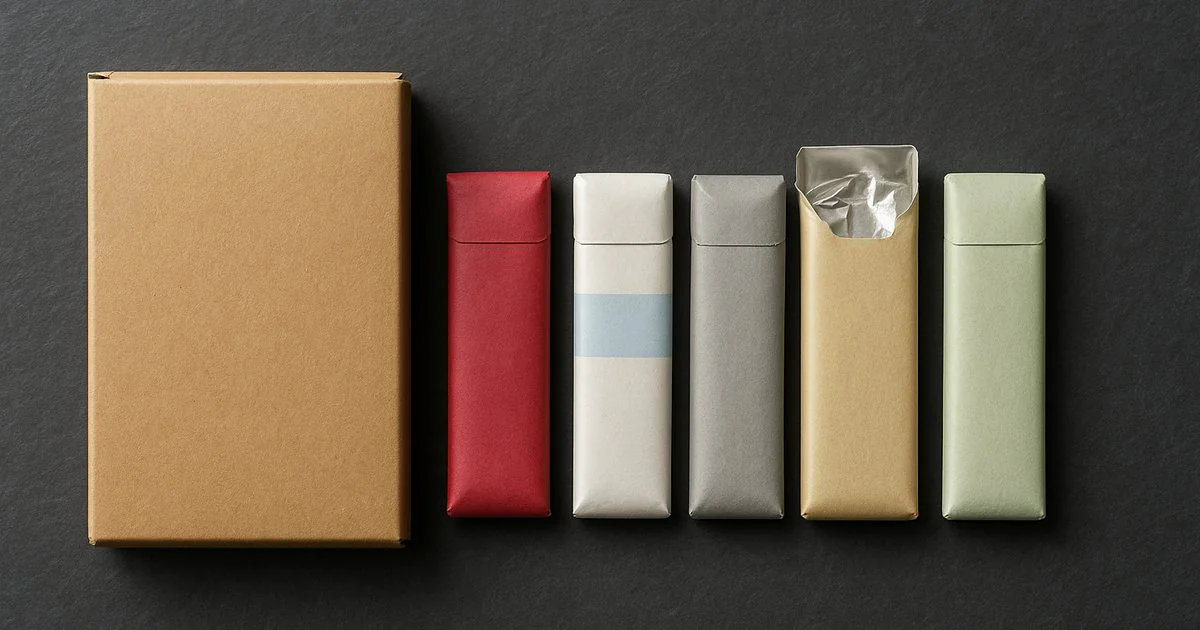
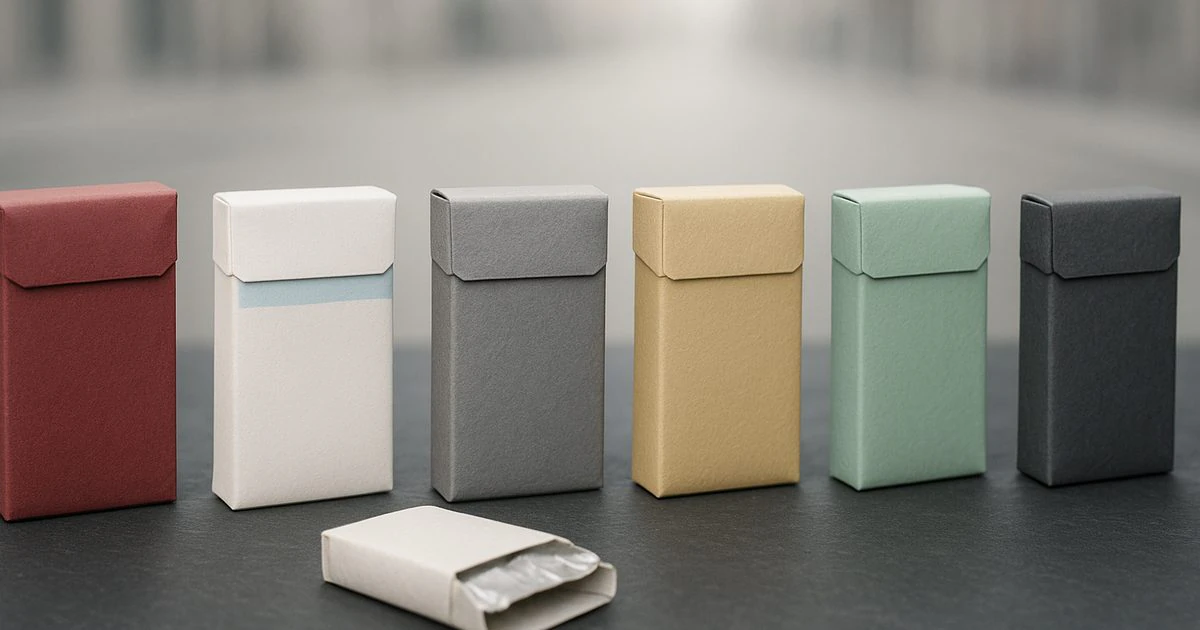
Top up cigarette order — a small bridge order of soft paper cigarette packs beside a plain shipping box.

Most cigarette ordering advice assumes you are starting from empty. Buy a carton, ride it out, order again. That works right up until the day it does not: a carton runs low on a Tuesday, the next planned order is not for another eight days, and the gap has to be closed somehow. That gap-closing order is a top up cigarette order, and it behaves differently from every other order you will place.

This guide covers what a top-up order is, how to size one, which shipping option actually suits a small fast order, why the payment method matters more than usual here, and how to build a bridge cart that does not waste the brands you already have at home. Everything below comes from the live Buycigsonline.co catalogue and shipping configuration.

Quick answer: what is a top up cigarette order?

A top up cigarette order is a small order you place to cover the days between the end of your current supply and the arrival of your next planned order. It is not a restock and it should not be priced like one. Three things define it:

  • It is measured in days, not in cartons. You are counting the days you need to cover, not planning the next month.
  • It is deliberately small. Most top-up orders are 3 to 10 packs, which keeps the cart well under the free-shipping thresholds.
  • Speed matters more than price per stick. On a five-pack bridge order, the $15 flat shipping fee is the single largest line in the cart — not the cigarettes.

If that is new to you, the cigarette restock schedule guide covers the long-cycle ordering system this bridges into. If you have never ordered here at all, start with the first-time buyer’s guide instead.

Why the cost per day looks so much worse

Shipping is a fixed cost. Spread it across 30 packs and it barely registers. Spread it across 4 packs and it dominates. This is the single most important thing to understand about a bridge order, and it is why a top-up order is never the cheap way to buy cigarettes — it is the fast way.

Every pack listing in the catalogue is $5.00, with one exception: Rolled Gold Menthol is $6.00. Flat Rate Expedited shipping is a flat $15. Here is what a top-up order costs per day of product covered at a pack-a-day pace (20 cigarettes a day):

Top-up order size maths (pack-a-day smoker, $5.00 packs + $15 expedited)

  Packs  Days covered   Cart total   Cost per day
  -----  -----------   ---------   ------------
    1        1 day      $20.00      $20.00
    2        2 days     $25.00      $12.50
    3        3 days     $30.00      $10.00
    4        4 days     $35.00       $8.75
    5        5 days     $40.00       $8.00
    7        7 days     $50.00       $7.14
   10       10 days     $65.00       $6.50
   19       19 days    $110.00  FREE shipping, $5.79
   20       20 days    $100.00  FREE shipping, $5.00

Note the last two rows. At 19 packs the cart crosses the $99 threshold and shipping goes to zero, so the effective daily cost drops sharply. That is worth understanding, because it means a bridge order can quietly turn into a legitimate 19–20 day order rather than a genuine emergency top-up. More on that below.

Carton economics: what the same product costs over a full cycle

For comparison, the same maths run over a full carton cycle. Carton listings sit at either $29.00 or $38.99. The $29.00 cartons are Putters Full Flavor, Playfare Ultra Light, Discount Full Flavor, Discount Lights and Time Blue. Everything else is $38.99.

Full-cycle maths on a $29.00 carton, $15 expedited
One carton = 200 cigarettes = 10 days at a pack a day

  Cartons  Days covered   Cart total   Cost per day
  ------  -----------   ---------   ------------
     1        10 days     $44.00       $4.40
     2        20 days     $73.00       $3.65
     3        30 days    $102.00       $3.40
     4        40 days    $116.00  FREE ship, $2.90
     5        50 days    $145.00  FREE ship, $2.90
     6        60 days    $174.00  FREE ship, $2.90

A single 5-pack top-up at $8.00 per day costs more than twice what a 3-carton order delivers at $3.40 per day. That gap is the entire argument for planning your restock cycle properly instead of reacting to it. The cigarette carton needs maths guide works through the full calculation, and the monthly supply guide covers the same ground on a monthly cycle.

So the honest framing of a bridge order: you are paying a premium per day to avoid waiting. That is a completely reasonable trade when you would otherwise run out, and a poor trade when you could have pulled the next order forward by three days. Which is why the first decision is not what to order — it is whether to top up at all.

Should you top up, or pull your next order forward?

Work through these three checks before opening the shop:

  • How many days of product do you actually have left? Count what is in the open pack plus any unopened packs, not what you wish you had. An open half-pack is half a day of buffer at a pack a day, not a full pack.
  • How many business days until your next planned order lands? Business days exclude weekends. Published transit is 1–5 business days on Expedited, so a Friday order does not arrive on Saturday.
  • Would pulling that order forward cost you anything? It costs you the same cart total and it takes the premium away entirely. If your next order is not due for more than a week, pulling it forward by two or three days is almost always better than bridging.

The honest answer is that top-up orders should be the exception, not the habit. Use one when the gap is real and short — five days or fewer. If the gap is longer, close it by rescheduling instead. The cigarette ordering mistakes guide covers the rest of the checkout errors worth avoiding.

Which shipping option to use on a bridge order

The live Canada zone offers six methods. On a small, time-critical cart the choice narrows sharply:

  • Flat Rate Priority, $45, next business day — the correct choice when the gap is 1–2 days and you genuinely cannot wait. Expensive relative to the cart, correct relative to the alternative.
  • Flat Rate Xpresspost, $20, 1–3 business days — the sensible default for a bridge order of a week or less. Half the cost of Priority for a slightly wider window.
  • Flat Rate Expedited, $15, 1–5 business days — cheapest flat option. Fine when the gap is longer than the worst-case transit window, poor when it is not.
  • Guaranteed Delivery with Signature Required, over $99 — a tracked, signed delivery. Not applicable to a typical top-up cart, and available at no added charge once the cart qualifies.

Two thresholds sit above a normal top-up order: FREE Xpresspost on orders over $99 (measured before discounts) and free Xpresspost over $149 (discounts allowed to count). Both are Xpresspost at 1–3 business days. The cigarette shipping options guide has the full rate card with the threshold rules explained.

The mistake that ruins a bridge order

Paying for an Interac e-Transfer on a time-critical order. Card and cryptocurrency authorise at checkout and the transit clock starts immediately. An e-Transfer order sits on hold until the transfer is received and matched, and the clock only starts after confirmation. On a bridge order those extra hours are exactly the hours you were trying to buy back. The payment methods guide covers each gateway’s timing in detail, and the payment problems guide covers what goes wrong when a transfer does not land.

Cash on delivery is not an option — that gateway is disabled, so there is no fallback method if your card fails at 11pm on a bridge order. Card or crypto are the practical choices.

Building the bridge cart: variety beats volume

A bridge cart is the one order where repeating what you already have is the weakest strategy. You are topping up precisely because you are about to run out, so the last thing you need is six more packs of the same variant. Use the bridge order to rotate into something you have not had recently.

The catalogue supports that easily, because every cigarette brand here sells at $5.00 per pack. Three or four packs from different families costs the same as one bigger order from a single brand and gives you four packs of cover.

Full-flavour packs to bridge with

Light and ultra-light bridge packs

Menthol bridge packs

If you are not sure which variant to bridge with, browse by family instead: the Canadian Cigarettes brand archive, Rolled Gold, Playfare, Classics, Canadian Classics, Discount, BB, DK’s, Putters, Nexus, dM, Time, Canadian Goose and Canadian Premium. The full cigarettes category lists everything at once.

If your usual family is temporarily unavailable, the brand substitutes guide maps out-of-stock products to the closest match by tier and flavour lane.

Three bridge cart builds that actually work

1. The five-pack rotation bridge

Five packs from five different families at $5.00 each is a $25.00 cart covering five days at a pack-a-day pace. Add $20 Xpresspost and the delivered cost is $45.00 — $9.00 per day. You get five days of cover, zero repetition, and one shipment. This is the most useful bridge shape for anyone who rotates brands as a matter of habit.

2. The two-pack emergency bridge

Two packs and $45 Priority next-business-day is $55.00 delivered. That is $27.50 per day covered, which looks absurd on paper and is still the correct call if the alternative is nothing. This build is for a genuine gap of one or two days. Everything about it should point at speed: Priority shipping, a card payment, and an address you are certain is correct, because the delivery problems guide is unambiguous that address accuracy is the most common cause of a failed delivery.

3. The accidental full order

If your gap is closer to three weeks than three days, do not top up — just order. Nineteen packs clears the $99 threshold for FREE Xpresspost at 1–3 business days, giving 19 days of cover for $5.79 per day with no shipping charge. Twenty packs is $100.00 and twenty days. Both beat a five-pack bridge by a wide margin, and neither requires you to think about it twice.

Buy the packs from different families and the same maths still holds. The brand combinations guide covers building a mixed cart deliberately, and the two-variant, three-variant and four-variant lineup guides break each family down if you want to pick across variants rather than brands.

When a bridge order accidentally earns you a free item

The Buy More Get More promos are cart-total based, and a bridge cart almost never reaches them. Spend $80 for a free cigarette pack, $240 for a free carton, or $480 for two free cartons.

A five-pack bridge at $25.00 is $55.00 short of the first tier. But the build that crosses $80 while still covering the gap is 16 packs at $80.00 — 16 days of cover with a free pack on top. Whether that is worth it depends entirely on how long your gap really is, which is why step one is counting days rather than counting money. The bundle deals guide covers the tier structure, and the free shipping guide covers the $99 and $149 thresholds in detail.

If you want a bridge order that also gives you something new to try, a mystery cigarette pack is $6.00 and a mystery carton is $50.00. Adding a $6.00 pack to a 15-pack bridge is $81.00 — over the $80 tier, earning a free pack. That is a real 16-pack, 16-day bridge plus a bonus pack for $81.00 delivered. The cigarette sampler guide covers how to use mystery and named products together.

What to put in a bridge cart if you smoke pouches too

The three ZYN pouches are $15.99 for 20 pouches each: Peach Bellini Slim 9mg, Spearmint Slim and Watermelon Slim, all listed in the nicotine pouches category.

A pouch is the highest per-unit item in the catalogue — $0.80 each against $0.25 for a cigarette — but it lasts up to 30 minutes, so the two lines converge over a day of use. On a bridge order this is actually useful: a can covers the gap between shipments in a form that does not compete with the cigarettes you are about to finish. The nicotine pouch cost guide runs the per-unit and per-day arithmetic in full, and the ZYN flavour guide covers what each variety actually tastes like.

Storing a bridge order when it lands

A small bridge order has a specific storage advantage: it gets used quickly, so it does not need to survive months the way a bulk order does. That removes most of the freshness problem. What still matters is the arrival itself — do not leave the box in a hot car or a garage over a warm weekend, and keep the packs out of direct light. The freshness and storage guide covers the humidity and temperature variables in detail.

One packaging note worth knowing: a bridge order is small, so it will often land under the Guaranteed Delivery signature threshold. If nobody is home for a tracked, signed delivery, the cancel or change your order guide covers what happens next, and you can check any order’s progress with the order tracking page using your order number and billing email.

Top-up order checklist

Before you order a bridge:

  [ ] Count actual days of product left (open pack counts as partial)
  [ ] Count business days until your next planned order lands
  [ ] Decide: bridge, or pull the next order forward instead?
  [ ] Size the cart to days of cover, not packs of habit
  [ ] Pick Xpresspost ($20) for a week, Priority ($45) for 1-2 days
  [ ] Pay by card or crypto - never e-Transfer on a time-critical order
  [ ] Check the address is complete and correct before submitting
  [ ] Rotate brands in the bridge - do not repeat what is already at home
  [ ] Note the date the order was placed

Frequently asked questions about top-up cigarette orders

How many packs should a top-up order be?

Enough to cover the days between your last pack and your next delivery, which for most regular orders is 3 to 10 packs. If the number you calculate is above 19, you are not topping up any more — clear the $99 free-shipping threshold and order properly instead.

Is a small order ever cheaper per pack?

No, and this is worth being blunt about. A $5.00 pack plus a share of a flat $15 shipping fee is a worse per-day rate than any carton order. Small orders buy you speed and flexibility, not value. The Canadian price comparison guide covers where the real per-stick savings come from.

What is the fastest way to get cigarettes delivered?

Flat Rate Priority at $45 is the next-business-day option, and it requires a card or crypto payment so the order is not held waiting for an e-Transfer. It is available on any cart size, including a two-pack bridge.

Can I pay cash on delivery for a bridge order?

No. Cash on delivery is disabled. The live payment options are two card listings both presented as Credit Card, Interac e-Transfer, and cryptocurrency.

What if my bridge order arrives damaged or incomplete?

Report it with your order number and photos within two business days, keep the packaging, and contact the team — live chat runs Monday to Friday, 10am to 6pm EST, or use the contact page. The delivery problems guide lays out the full procedure.

How do I reorder the same bridge cart next time?

Your order history keeps the products, quantities and package type, so reordering a bridge is a two-minute job. The reorder guide walks through it, and the product listing guide explains how to read the pack and carton options on each page before you click through.

Plan the cycle so you need fewer bridge orders

The cheapest bridge order is the one you never place. Building a restock cycle that matches your actual pace — and then keeping the calendar honest — removes most of these gaps entirely. The restock schedule guide covers the cadence, the delivery planning guide covers the timing, and the burn time guide gives you the per-stick maths to size the cycle correctly in the first place.

When the gap does arrive, use the shop to build the bridge cart, rotate across brands rather than repeating what is already at home, and pick the shipping speed that matches the number of days you actually have to cover. Browse the full cigarette catalogue or the complete brand-by-strength catalog map when you want to see everything by tier at once.

Nicotine Pouch Cost in Canada: What a Can Really Costs Per Day (2026 Guide)

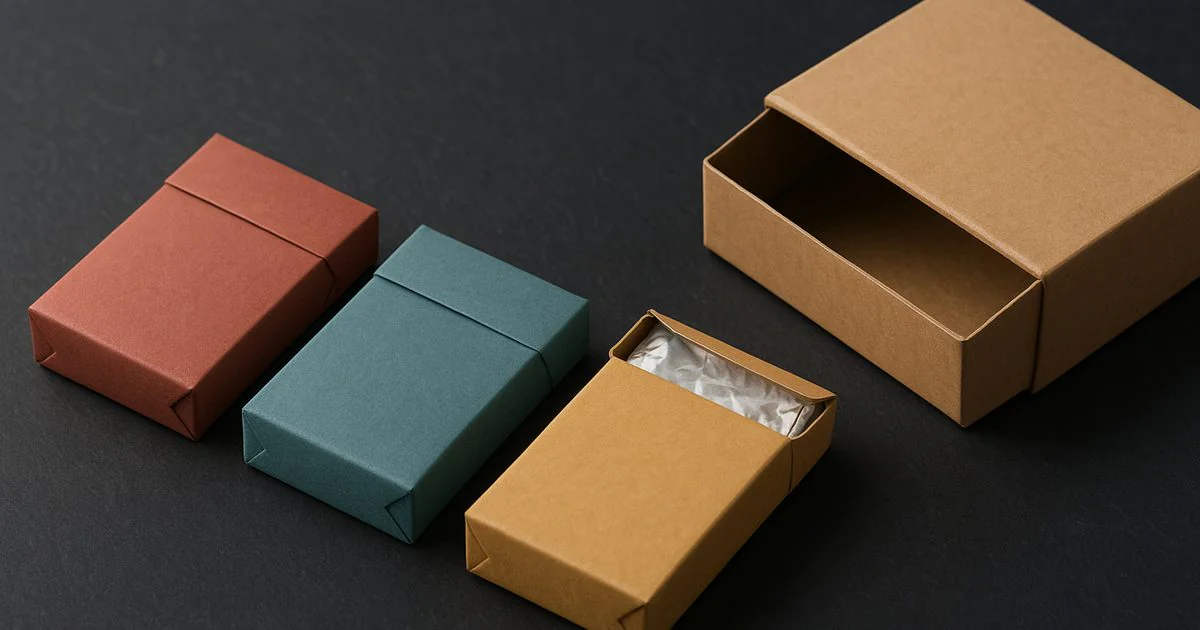
Nicotine pouch cost comparison showing three nicotine pouch cans next to a cigarette pack and a shipping box

What a Nicotine Pouch Costs in Canada: The Real Per-Use Price

The sticker price on a can tells you very little. Nicotine pouch cost is really a per-use number, and the only way to get it right is to divide the can price by the number of pouches inside. Every ZYN slim pouch we stock lists at $15.99 for a 20-pouch can. That works out to $0.80 per pouch, or $1.60 per hour of use if you take the full 30 minutes each pouch is built for.

Put that beside a $5.00 pack of 20 cigarettes and the comparison stops being obvious. A single stick from a $5.00 pack costs $0.25. A pouch costs $0.80. On raw per-unit price, the pouch is the more expensive item — roughly 3.2 times the cost of one cigarette out of a $5.00 pack.

That is the honest headline, and it is the number this whole guide is built on. What follows is how to work out what that price actually buys you per day, where the price breaks down stop being simple, and how pouch cost compares to every other way of buying from our catalogue.

The Basic Nicotine Pouch Cost Math

Three numbers get you everything else in this guide:

  • $15.99 — the price of one can of every ZYN slim flavour we carry
  • 20 — pouches in each can
  • 30 minutes — the use window the manufacturer states for each pouch
Cost per pouch = $15.99 / 20 = $0.7995 = $0.80 Use per can = 20 x 30 min = 600 min = 10 hours Cost per hour = $15.99 / 10 = $1.599 = $1.60

One can is ten hours of use. That is the number most people have never worked out, because cans are sold as a unit and the per-unit figure only appears once you divide. If you use half a can across a working day, you are spending $8.00 on pouches. If you finish a full can, you are spending $15.99.

Nicotine pouch cost per day, by daily use

Daily cost is the figure that matters if you are comparing a pouch habit against a cigarette habit. Here is the same $0.80 pouch at every realistic daily count, with how long one can lasts you.

Pouches/day Day cost One can lasts 6 $4.80 3.3 days 10 $8.00 2.0 days 16 $12.79 1.2 days 20 $15.99 1.0 day

The 16-a-day row is the one most people land on. A pouch every half hour across sixteen waking hours is a full can a day, and that is $15.99 a day in pouches alone. Six a day is a genuinely different product of habit — $4.80 — and it is the rate at which pouches start looking inexpensive next to cigarettes.

How many cans a month, and what that costs

Daily use Cans/month Monthly pouch spend 6 3.3 $52.77 10 5.0 $79.95 16 6.0 $95.94 20 7.0 $111.93

At ten a day you are ordering five cans a month and spending about $80. At six a day you order a little over three. Those are the two quantities worth planning an order around, and both are small enough to fit comfortably in one delivery.

Pouch Cost vs. Cigarette Cost: The Honest Comparison

Our cigarette catalogue lists packs at $5.00 for 20 cigarettes, with the one exception of Rolled Gold Menthol at $6.00. Cartons run $29.00 to $38.99 depending on the brand. Here is the per-unit arithmetic across the whole range, next to the pouch figure.

Item Unit price Unit count ZYN pouch (can of 20) $15.99 20 -> $0.80 Cigarette pack $5.00 20 -> $0.25 Carton, cheapest $29.00 200 -> $0.145 Carton, dearest $38.99 200 -> $0.195

Read per unit and cigarettes win comfortably: a pouch is 3.2 times the price of a stick from a $5.00 pack, and about 4 to 5.5 times the price of a stick from a carton. Buying cigarettes by the carton is the cheapest per-stick route in the catalogue, which is the same conclusion our carton price guide and monthly carton math guide both reach.

Why the per-unit comparison understates what a pouch does

Per unit is not the fairest comparison, because a cigarette and a pouch are not the same length of use. A pouch is built for up to 30 minutes. A cigarette runs somewhere between four and twelve minutes depending on how you smoke it and what the blend does — the mechanics are covered in our guide to how long a cigarette actually lasts.

So compare thirty minutes of use against thirty minutes of use. At $0.80 a pouch, thirty minutes of pouch use costs $0.80. A pack cigarette at five minutes a stick delivers thirty minutes of use for about $1.50 — the cigarette is still dearer per thirty minutes at a short burn time, and cheaper at a long one. Around a six to seven minute stick, the two converge at roughly $1.07 to $1.15 per thirty minutes.

This is the part worth internalising: the pouch price is fixed and knowable in advance, the cigarette price per thirty minutes is not. Every factor covered in that burn-time guide — filter ventilation, paper porosity, tobacco cut, moisture, and how long you let it idle — moves the cigarette side of that equation around. Nothing about the pouch changes.

Running both: the honest blended number

Most people reading this are not switching entirely. They are running cigarettes and pouches together — pouches where smoking is not possible, cigarettes everywhere else. Work the blend at your own rate:

Pouches/day Sticks/day Daily spend 6 10 $4.80 + $5.00 = $9.80 10 5 $8.00 + $2.50 = $10.50 6 5 $4.80 + $2.50 = $7.30 4 20 $3.20 + $5.00 = $8.20

Any of those lands in the same range as an all-cigarette day at one pack. That is the real finding: pouches are not a way to cut the per-use cost of the cheapest thing in the catalogue. They are a premium-format addition, and the premium is about three times per unit. If the reason you are reaching for pouches is price, the arithmetic will not support it.

Which Flavour Costs What: All Three Are Priced the Same

There is no budget and no premium tier inside our pouch range. All three flavours are $15.99 for 20 pouches, which makes the flavour choice entirely a matter of taste rather than price — a genuinely simple decision to price.

  • ZYN Spearmint Slim — $15.99, 20 portions, mint-cool. The straightest-tasting of the three and the easiest entry point if you have never used pouches.
  • ZYN Watermelon Slim — $15.99, 20 portions, fruit with a cool finish. The only one of the three that is not mint-forward.
  • ZYN Peach Bellini Slim 9mg — $15.99, 20 portions, peach and citrus, and the only SKU in the range with a stated milligram rating.

On the strength point, be precise about what the catalogue says. 9mg is published for the Peach Bellini only. The Spearmint and Watermelon listings carry no milligram rating at all — if you are matching those against a known strength, you are guessing, and the honest position is that BCO does not publish a figure for them. Our ZYN nicotine pouch guide covers the format details, and cigarettes versus nicotine pouches covers the format trade-offs if you have not settled that yet.

Shipping Is the Biggest Swing Factor in Your Real Cost

A single can at $15.99 is not enough to qualify for free shipping, so the delivery charge lands on one small order. This is where actual pouch cost departs from the $0.80 headline, and it is the mistake worth avoiding.

Our Canada zone offers Flat Rate Expedited at $15 (1–5 business days), Flat Rate Xpresspost at $20 (1–3 business days), and Priority at $45 (next business day). Free Xpresspost applies at $149 or more when discounts are applied, and at $99 or more before discounts. Orders over $99 also carry a guaranteed delivery with signature required option.

Put that against can counts:

Order Subtotal Expedited Real cost per pouch 1 can $15.99 $15.00 $1.55 3 cans $47.97 $15.00 $1.05 5 cans $79.95 $15.00 $0.79 7 cans $111.93 FREE $0.80 10 cans $159.90 FREE $0.80

A single can delivered alone costs you $1.55 per pouch once the $15 expedited fee is spread across twenty pouches — nearly double the shelf figure. Three cans bring it to $1.05. At seven cans the order clears the free-shipping threshold and the per-pouch cost settles back to exactly $0.80.

The lesson is simple and it is the same one from our cigarette shipping options guide: never order pouches one can at a time. Order to the threshold. Seven cans is a little over two weeks at ten a day, and the shipping cost disappears entirely. Our free shipping planning guide covers the threshold arithmetic in full.

Pairing pouches with cigarettes fills a can order faster

One practical route to the threshold is to build the order with both formats. Two cans at $31.98 plus a carton at $29.00 is $60.98 in a single order that still ships paid, and keeps every flavour stocked at once. Our guide to combining multiple brands in one order works through the arithmetic, and the two-smoker household order guide covers splitting a larger cart between two people.

How Pouch Cost Compares to Every Other Buy

Some shoppers arrive at pouches from a bargain mindset. Here is where the $0.80 unit actually sits against the rest of the catalogue.

Format Price Unit cost Cigarette pack $5.00 $0.25 Carton (cheapest) $29.00 $0.145 ZYN pouch $15.99 $0.80 Mystery cigarette pack $6.00 $0.30 Mystery cigarette carton $50.00 $0.25

A mystery cigarette pack at $6.00 gives you twenty cigarettes at $0.30 each — a higher unit price than a regular pack, and the point of it is variety rather than value. A mystery carton at $50.00 works out to $0.25 a stick.

Against both, the pouch is the priciest per-unit item in the catalogue. Our discount cigarette brands guide and store-versus-online price comparison both make the same point about where real savings in this catalogue actually live: bulk cigarette formats, not premium pouches.

Free Items and Rewards Do Not Apply to Pouches

Worth being direct about, because it changes the real cost calculation for anyone who has ordered cigarettes before.

Our three Buy More Get More tiers — spend $80, get a free pack, spend $240, get a free carton, and spend $480, get two free cartons — award cigarettes. The free items are cigarette packs and cartons, so ordering pouches does not move you toward those tiers any faster than ordering the equivalent value in cigarettes would. Budget the free items out of any pouch cost comparison.

The same applies to Puffs Points: the rewards programme is built around the catalogue order value, but the catalogue behind it is the cigarette range. Our BCO Rewards guide sets out exactly how the tiers work.

Planning a Pouch Order: The Practical Summary

If you use 6 pouches a day

  • Daily spend: $4.80
  • One can lasts 3.3 days
  • Monthly: about 3.3 cans, roughly $53
  • Order 4 cans at a time — covers the month and the per-pouch shipping spread stays low

If you use 10 a day

  • Daily spend: $8.00
  • One can lasts 2 days
  • Monthly: 5 cans, roughly $80
  • Order 5 cans or more; 7 clears free shipping outright

If you use 16 a day

  • Daily spend: $12.79
  • One can lasts 1.2 days
  • Monthly: 6 cans, roughly $96
  • This rate burns through the free-shipping threshold naturally — order monthly

If you are running pouches and cigarettes together

  • Expect a blended daily spend near a one-pack-per-day cigarette habit: $7.30 to $10.50
  • Build one cart with both formats so the shipping fee is spread across the whole order
  • Treat pouches as the premium line item, not the budget one

Ordering Pouches Online in Canada

All three pouch SKUs are in stock and ship from our Canada zone. A few practical notes before you order:

  • Checkout options: Credit Card, Interac e-Transfer, and Cryptocurrency are all enabled. Cash on delivery is not available.
  • Interac e-Transfer holds the order until the transfer is confirmed. Card and crypto authorise at checkout instead.
  • Orders over $99 can be delivered with a required signature — someone has to sign for the box.
  • Track your order with your order number and billing email on our order tracking page.
  • Live chat is available Monday to Friday, 10am to 6pm EST through the widget in the bottom-right corner of the screen.

If a delivery goes sideways, our delivery problems guide covers what to do about late, missing, or wrong orders, and the cancellation and change window explains the two-hour cutoff. Payment issues have their own guide in cigarette payment problems in Canada.

The Bottom Line on Nicotine Pouch Cost

A can is $15.99 for 20 pouches. That is $0.80 per pouch and $1.60 per hour of use. All three flavours are priced identically, so flavour is a taste decision and never a budget one.

Against the rest of the catalogue, pouches are the highest per-unit item we sell: about 3.2 times a stick from a $5.00 pack and 4 to 5.5 times a stick from a carton. Per thirty minutes of use they land much closer to cigarettes than the unit price suggests, because the pouch has a fixed 30-minute window. The free-item tiers and the rewards catalogue are cigarette-based, so they do not reduce a pouch’s cost.

Two habits do more for your real cost than anything else: order in multiples, not one can at a time, since a single can delivered alone works out to $1.55 a pouch against the $0.80 shelf price; and decide honestly whether cigarettes are the budget line, because in this catalogue they are, every time. If you want to see the whole catalogue price ladder before you order, the cigarettes category, the nicotine pouches category, and the brand-by-strength catalogue map are the fastest places to start.

New to ordering online? Our first-time buyer’s guide walks through the whole process, and the full shop has everything in one place.

How Long Does a Cigarette Last? Burn Time, Draws per Stick and Pack Planning in Canada (2026 Guide)

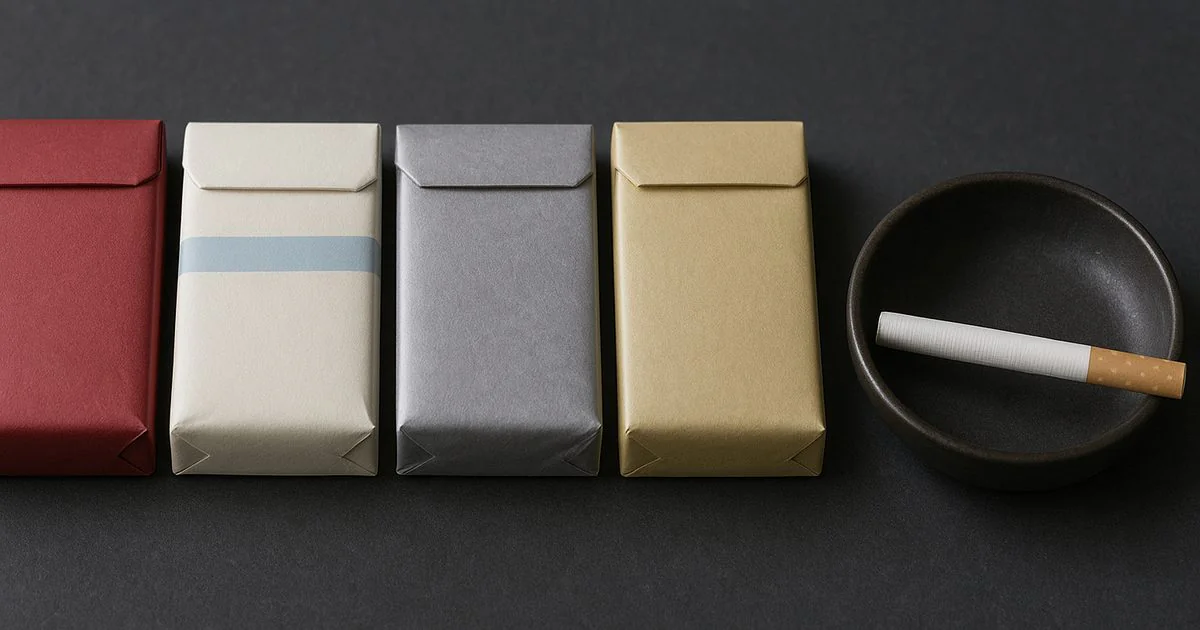
How long does a cigarette last - soft paper cigarette packs beside an ashtray with an unlit cigarette

Most smokers have a rough sense of how long a cigarette takes, but almost nobody has counted. That gap matters when you order online, because every buying decision on this site — one pack or a carton, one carton or two — is really a bet on how fast you go through a stick. This guide covers the mechanical side of that question: how long a single cigarette actually lasts, how many draws you get from it, what changes the clock, and how to turn a session length into a realistic pack-and-carton plan.

Quick answer: how long does one cigarette last?

For a standard king-size cigarette, most smokers finish the stick in about five to ten minutes of session time, taking somewhere in the range of eight to fifteen draws. A longer 100s format typically runs a minute or two longer because there is more tobacco in the tube. Those are ranges, not specifications: the same cigarette can take four minutes in wind and twelve minutes sitting still indoors, and both are normal.

The number that matters for ordering is not minutes. It is sticks per day. A pack holds 20 cigarettes, a carton holds 10 packs, so a carton is 200 cigarettes. Once you know your sticks-per-day figure, everything else — packs per week, cartons per month, whether free shipping is worth chasing — falls out of simple arithmetic.

Three different clocks: length, draws, and session time

People mix up three separate measurements when they ask how long a cigarette lasts. Keeping them apart makes the rest of this guide easier to follow.

  • Stick length is the physical size of the cigarette. A king size and a 100s are different products, and the format guide on this site covers the differences in detail.
  • Draw count is how many pulls you take before the stick is finished. This is the number most affected by how you smoke, not by what you bought.
  • Session time is clock time from light to finish. It includes everything you are not doing — resting the stick in the ashtray, talking, checking your phone — and that idle time is where a lot of the tobacco actually goes.

The distinction is practical. Two smokers can each finish a pack a day, but one takes twenty short breaks of three minutes and the other smokes eight longer sessions. Their carton consumption is identical and their session experience is completely different. When you plan an order, plan on sticks.

The four things that change how fast a cigarette burns

1. Paper porosity and how tightly the tobacco is packed

Cigarette paper is deliberately porous: it lets a small amount of air in along the length of the tube so the burn stays even rather than tunnelling down one side. Papers that let more air through tend to keep the cherry moving; a denser, more tightly packed tube tends to hold its heat and burn more slowly per millimetre. This is the main reason a budget blend with a loose fill can feel like it disappears faster than a firm, densely packed stick.

Our own product copy leans on this idea in different words. The Canadian Goose Cigarettes listing describes a “perfect burn, even airflow” construction, while the Nexus Full Flavor Cigarettes page talks about a draw that does not need “hard pulls or constant relighting.” Those are the two failure modes at opposite ends: a stick that races, and a stick that keeps going out.

2. Filter ventilation and filter density

Most modern filters are ventilated — tiny perforations near the mouth end let air in with each draw. A heavily ventilated filter makes the draw feel light and easy, which is exactly the feel the milder tiers are built around. The trade-off is that an easy draw often means more frequent, shorter pulls, so a light cigarette can be finished faster in clock time than a firm full-flavour stick that you draw on less often. This is one reason “lights” do not automatically mean “lasts longer.”

3. Tobacco cut and moisture

A fine cut exposes more surface area and lights and burns more readily; a coarser cut burns a little more slowly and holds an ember better. Moisture matters even more. Tobacco that has been sealed since packing burns slower and cooler than tobacco that has been sitting in an opened pack in a dry room. Winter is the worst season for this: indoor heating pulls moisture out of an open pack within a few days, and a dry stick can burn noticeably faster and harsher than the same cigarette did when fresh.

The blend behind the cut matters too, which is why the same session length feels different across brands. Virginia, Burley and Oriental tobaccos behave differently in the tube; the blend guide explains the difference. If you want the mechanical version of the same question — what the filter, paper and cut are doing inside the stick — the cigarette construction guide covers it.

4. How you draw, and how long the stick rests

This is the biggest variable and the one nobody counts. A cigarette left resting in an ashtray keeps smouldering: tobacco is consumed without a single draw being taken. Long gaps between draws can eat a third of the stick before you have had half your pulls. Wind makes it worse by feeding the ember. Two smokers with identical packs, identical brands and identical habits can differ by three minutes a stick purely on how often they set it down.

How many draws are in one cigarette?

Draw counts cluster more tightly than session times do. A typical king-size stick gives somewhere between eight and fifteen draws depending on pull strength and ventilation. Strong, quick pulls give fewer but hotter draws; light pulls give more, cooler ones. The table below maps the common patterns.

  Draw style        | Draws  | Session time | Notes
--------------------+--------+--------------+---------------------
  Quick, strong     |  6-9   |  3-5 min     | short break pace
  Steady, normal    | 10-13  |  5-8 min     | most common
  Light, frequent   | 14-18  |  8-12 min    | easy-draw filters
  Resting between   | 8-12   | 10-15 min    | smoulder eats stick
  Outdoor / windy   |  6-10  |  3-6 min     | ember runs between

Use these as a planning tool, not a measurement. If you want a real figure, count draws on three cigarettes on three different days and average them. Most people discover they are at the low end of their own estimate, which usually means they are buying less than they need per order.

Why two smokers finish the same pack differently

If you have ever split a carton with someone and watched them run out first, the reasons are almost always behavioural rather than product-related.

  • Resting the stick. The single largest difference. Every minute in the ashtray is tobacco gone without a draw.
  • Relighting. A stick that goes out and gets relit twice loses tobacco to the relight and tastes worse for the remainder.
  • Wind and weather. Outdoor smoking in any season burns faster than indoor smoking. Winter adds the dry-air effect on the pack itself.
  • Break length. A three-minute work break produces a different count than a ten-minute sit, even with the same number of cigarettes.
  • Variant choice. A firm full-flavour stick and a ventilated light stick pull differently, so the same smoker finishes them at different speeds.

Storage changes the clock

A sealed pack keeps its moisture; an opened one starts losing it immediately. That is why the last three cigarettes in a pack often smoke differently from the first three — drier tobacco burns faster, hotter and harsher. The effect is bigger than most people expect, and it is fully controllable.

Two habits make the biggest difference. First, keep unopened cartons sealed and out of direct heat until you need them. Second, when a pack is open, close it between sessions rather than leaving it open on a counter. The storage guide covers the full routine, and the freshness guide explains how long an unopened pack stays at its best and when a stick is simply past it.

This is also an argument for ordering cartons rather than packs if you smoke steadily: a sealed carton protects its contents better than ten loose packs rattling around a drawer. The carton-buying guide covers when that trade is worth making.

Turning session time into a shopping plan

This is the part that actually changes what you buy. Work through it once and you will never guess at order size again.

Step 1: count sticks per day, not minutes

For three ordinary days, count cigarettes instead of estimating. Most smokers land on a number like 5, 10, 15 or 20. Do not adjust it for a “typical” week — use what you actually smoked.

Step 2: convert to packs per week

Multiply daily sticks by seven, then divide by 20. Ten a day is 70 sticks a week, which is three and a half packs. Twenty a day is 140 sticks, which is exactly seven packs.

Step 3: convert to cartons

A carton is 10 packs and 200 cigarettes. Divide your four-week total by 200:

  Sticks/day | Sticks/4wk | Packs/4wk | Cartons/4wk
-------------+------------+-----------+------------
      5      |    140     |    7.0    |   0.7
     10      |    280     |   14.0    |   1.4
     15      |    420     |   21.0    |   2.1
     20      |    560     |   28.0    |   2.8
     25      |    700     |   35.0    |   3.5

One detail worth knowing before you do this arithmetic: not every carton is configured the same way. The Canadian Goose Cigarettes carton is listed as either 8 packs of 25 or 10 packs of 20, and both come to 200 king-size cigarettes. The pack count inside the carton changes; the cigarette count does not. That is why the table above works in sticks rather than packs.

Step 4: decide pack, carton, or a mixed cart

Pack listings on this site are $5.00 each for most variants, with Rolled Gold Menthol Cigarettes at $6.00. Carton listings run from $29.00 to $38.99. That spread is the whole reason the arithmetic matters: a carton at $38.99 works out to under $4 a pack, and a carton at $29.00 is under $3 a pack, before any free-item tier.

From there the order thresholds do the rest of the work. Flat Rate Expedited shipping is $15 and Flat Rate Xpresspost is $20, and Xpresspost becomes free once the cart clears $99 or, on the post-discount side, $149. If your monthly need is 1.4 cartons, two cartons clears both free-shipping bands comfortably. The shipping guide has the full rate card and the free-shipping guide walks through the threshold behaviour. There are also the three Buy More, Get More tiers — spend $80 and get a free pack, spend $240 and get a free carton, and spend $480 and get two free cartons — which matter if your monthly total already lands near one of those numbers. The bundle guide explains how to build a cart that reaches a tier without stuffing it with products you will not smoke.

If you are close to a threshold, the honest move is not to add a random pack. It is to add the next carton you were going to buy anyway, or to use the gap for a Mystery Cigarette Pack or a Mystery Cigarette Carton if you want to test something without committing to a full carton of a known product. The full monthly-supply walkthrough and the carton-needs math guide both go deeper on this if you want the long version.

Which variants suit a short break and which suit a long sit

Session length is also a product-selection question. If your smoking happens in three-minute gaps between tasks, a firm full-flavour stick is often too much to finish before you have to go back. If your smoking happens in one long sit in the evening, a light, easy-drawing stick tends to run out before you are done. The catalog splits neatly along that line.

Full-flavour sticks for a longer sit

The full-flavour tier across the catalog is described consistently as bold, full-bodied and firm: Canadian Full Cigarettes, Canadian Classics Original, Playfare Full Flavor Cigarettes, BB Full Flavor Cigarettes, Rolled Gold Full Flavor Cigarettes, Discount Full Flavor Cigarettes, Putters Full Flavor, Nexus Full Flavor Cigarettes, dM Original Cigarettes, Classics Full Flavor Cigarettes, Canadian Premium Original, DK’s Full Cigarettes, Time Full Cigarettes and Canadian Goose Cigarettes. If you want one brand family at a time, the Canadian Cigarettes and Canadian Classics archives collect the four-variant lineups in one place.

Lights and smooth variants for quicker breaks

The light tier is where the ventilated, easy-draw construction lives: Canadian Lights, Canadian Classics Silver, Playfare Light Cigarettes, BB Light Cigarettes, Rolled Gold Light Cigarettes, Discount Lights Canadian Blend, Putters Light Cigarettes, Nexus Light Cigarettes, dM Smooth Cigarettes, Classics Lights Cigarettes, Time Blue Cigarettes and DK’s Light Cigarettes. The full Cigarette Brands category lists every variant side by side, and the every-brand light comparison is the fastest way to see the tier across families.

Ultra-lights and menthol

The ultra-light tier — Canadian Ultra Lights, Canadian Classics Ultra Blue, Playfare Ultra Light Cigarettes and Classics Extra Lights Cigarettes — is the lightest draw in the catalog and the tier most likely to be finished quickly if you smoke it in a hurry. Menthol variants — Canadian Menthol Cigarettes, Canadian Classics Menthol, Playfare Menthol Cigarettes, BB Menthol Cigarettes, Discount Menthol Canadian Blend, Rolled Gold Menthol Cigarettes and Classics Menthol Cigarettes — sit at the cool end and are usually smoked at a similar pace to the full-flavour stick they are built on.

Quick match: session length to variant

  Session pattern      | Best-fit tier     | Try first
-----------------------+-------------------+--------------------------------
  3-min work breaks    | Light / ultra     | Canadian Lights, Time Blue
  Normal 5-8 min       | Full or light     | Canadian Full, Playfare Light
  Long evening sit     | Full flavour      | Canadian Classics Original
  Windy outdoor        | Full flavour      | Rolled Gold Full Flavor
  Cold-weather outside | Full flavour      | BB Full Flavor, Canadian Goose
  Alternating sessions | Two-variant cart  | Full + Light same family
  Testing a new brand  | Sampler           | Mystery Pack

Two-variant lineups make this easier than four-variant ones, because there is less to choose between. If you are deciding within a brand family, the four-variant guide and the two-variant guide both break the lineups down by what each variant is actually for.

Common mistakes when estimating consumption

  • Counting minutes instead of sticks. Session length varies by up to three times; stick count barely moves. Count what you buy, not how long you hold it.
  • Forgetting idle smoulder. A stick that rests is still burning. Smokers who set the cigarette down regularly use more per day than their break count suggests.
  • Assuming a carton equals a month. For a 20-a-day smoker a carton is under two weeks. The carton-needs math guide runs the numbers properly.
  • Ordering a carton of an unproven variant. A stick that pulls too hard or burns too fast is a 200-cigarette mistake. Start with a pack or a sampler before committing.
  • Ignoring seasonal drift. Dry winter air and outdoor smoking both speed up the burn. If your consumption rose in January, the pack may be the reason.
  • Never re-measuring. Habits change. Re-count once a season and adjust the standing order size rather than carrying an old number forever.

Frequently asked questions

Does a 100s cigarette last longer than a king size?

Yes, usually by a minute or two, because there is more tobacco in the tube. The difference is smaller than most people expect and is often erased by how you smoke it. The pack sizes guide covers the format differences in detail.

Do light cigarettes burn faster?

They often feel like they do, and for two reasons: a ventilated filter gives an easier, more frequent draw, and a lighter fill can leave a looser tube. It is not a rule, and a firmly packed light stick can outlast a loosely packed full-flavour one.

Do menthol cigarettes burn differently?

Not fundamentally. Menthol changes the feel of the draw, not the burn mechanics. A menthol stick is built on the same base blend as its non-menthol sibling and burns at roughly the same rate.

How long does an opened pack stay at its best?

Days, not weeks, especially indoors in winter with the heat running. A sealed pack holds its moisture far longer than an open one. If you smoke fewer than ten a day, a pack can sit open long enough to go dry — which is an argument for buying packs more often rather than cartons, or for closing the pack properly between sessions. The freshness guide covers the timelines.

Can I work out my monthly carton need from session length?

You can, but it is a two-step. Session length gives you sticks per session; the number of sessions per day gives you sticks per day; sticks per day gives you cartons using 200 per carton. Skipping to minutes-to-cartons directly is where most estimates go wrong.

Plan the order around the count, not the clock

Session time is a comfort question. Consumption is an arithmetic question, and it is the one that decides whether you are paying $5.00 a pack or under $3.00 a pack. Count sticks for three days, convert to cartons at 200 per carton, then let the free-shipping and free-item thresholds decide the rest.

Everything referenced here is in stock in the shop and the Cigarette Brands category, with the full brand list available through the catalog map. If you are not sure which variant to start with, a pack of two or three likely tiers costs less than one carton and answers the question properly.

Related reading: cigarette math for monthly carton needs, buying by the carton, building a restock schedule, storing cigarettes so they stay fresh, the strength guide, pack planning for long shifts, shipping options and shared household orders.

Cancel or Change a Cigarette Order in Canada: The Two-Hour Window and What You Can Still Fix (2026 Guide)

Soft paper cigarette packs and a plain cardboard shipping box illustrating how to cancel or change a cigarette order before it ships

You hit pay, the confirmation email lands, and then you notice the problem: the wrong variant, a missing unit number, a carton you did not mean to buy, or a second browser tab where you already checked out. Most of that is fixable. Some of it is not. Which one you are dealing with depends entirely on how far your order has moved through the system, and that window is shorter than most shoppers expect.

This guide covers what can still be changed after checkout, what cannot, exactly what to send when you contact support, and the short cart review that prevents most of these requests in the first place. It applies to any order from the mystery pack through to a multi-carton purchase.

Quick answer: how much time you actually have

Three rules decide almost every case:

  • Two hours. Our published customer help policy states that orders can be cancelled within two hours of placement if they have not yet shipped. Once processing has begun, cancellations are no longer possible.
  • 9 AM PST is the same-day cutoff. Orders placed before 9 AM PST with payment already received are usually processed and shipped the same day. Orders placed after that, or with payment still pending, are handled the next business day.
  • Once it ships, the order is final. Tobacco products are not returnable or exchangeable after dispatch, so anything you want different has to be fixed on the order side, not after delivery.

Put those together and the practical picture is simple. If you order with a card or crypto at 8:45 AM PST, your realistic window is minutes. If you order at 9 PM and pay by Interac e-Transfer, the order sits unpaid until your transfer is matched, which usually leaves the whole evening to catch the mistake. The same order placed with a card at 9 PM will almost certainly be packed before you wake up.

The five states an order passes through, and what each one allows

  State            | What is happening       | Still changeable
-------------------+-------------------------+------------------
  Pending payment  | Payment not confirmed   | Almost anything
  On hold          | Payment under review    | Almost anything
  Processing       | Paid, being packed      | Nothing reliable
  Completed        | Shipped or delivered    | Nothing on order
  Cancelled/Failed | Closed, nothing shipped | Place a new one

Pending payment is the widest window you will get. The order exists, the stock is reserved, but nothing has been charged or picked, so variant, quantity, address, shipping tier and even a full cancellation are all still on the table. This is where Interac e-Transfer orders spend their first hours.

On hold usually means a transfer or a payment is being matched or reviewed by hand. The order still has not been packed, so the same changes are generally possible, plus any payment question that caused the hold in the first place.

Processing is the danger zone. Payment has cleared, the order has been accepted for picking and packing, and no change is safe to assume. If you need to stop it, ask immediately and accept that it may already be too late.

Completed means the parcel has left. There is nothing left to change on the order itself. From here the question stops being about your order and starts being about your delivery, which is a different process with its own timelines.

Step 1: find the state your order is actually in

Do not guess from memory. Check, because the answer decides what you can ask for.

  • Your confirmation email. The published policy is that you get one within an hour of ordering. It carries the order number you will need in every message you send.
  • Your account. The order history lists each order with its current status and line items, so you can see whether you are looking at a pending order or a processed one.
  • Order tracking. Enter the order number with the billing email used at checkout. This is the fastest way to see whether a tracking number exists yet.
  • Read the status properly. Statuses are not decoration. Our order tracking guide explains what each one means before dispatch and after it.

One specific trap: an Interac e-Transfer order that still says pending payment does not mean the order failed. It means the transfer has not been matched yet. Send one transfer for one order number, then check your account rather than sending a second transfer to be safe.

Step 2: the changes people ask for most

1. “I ordered the wrong variant”

This is the most common mistake, and it usually comes from reading a brand name and stopping there. Every named variant is its own product with its own listing. Classics Lights Cigarettes and Classics Extra Lights Cigarettes look similar in a search result but sit in different strength tiers, the same way Time Blue is a different product from Time Full Cigarettes, and Playfare Ultra Light Cigarettes is not interchangeable with Playfare Full Flavour Cigarettes.

Pack colour is a browsing shortcut only. The written product name is what you are buying, which is why our guide to reading a cigarette listing starts with the full title. If you catch the wrong variant while the order is still pending, support can swap it. If it is already processing, the practical fix is a replacement order for the correct variant rather than a change.

2. “I wanted a carton, not packs” (or the reverse)

Unit changes are a different animal from product changes, because pack and carton are two listings of the same product at two different price points. Single-pack listings sit between $5.00 and $6.00, while carton listings run from $29.00 to $38.99 depending on the brand and variant. Switching units inside the order means the line items change, not just the quantity, so the cleanest route is a cancellation inside the window followed by a corrected order.

If you are not sure which unit suits you, run the numbers first. Our cigarette math guide and carton price comparison show how pack pricing and carton pricing behave across a month, and this carton guide covers when bulk actually pays off.

3. “My address is wrong, or missing the unit number”

Address errors are the ones worth chasing hardest, because they cannot be fixed after dispatch. Send support the order number and the complete corrected address: street, unit or apartment number, city, province and postal code, plus any buzzer or lobby instruction that helps a courier reach you. A parcel that cannot be handed over becomes a delivery problem rather than an order change, and that process is slower than a two-line message sent before dispatch.

Worth remembering when you fix the address: an adult signature and government photo ID are required on delivery per the published policy, so the corrected address needs someone who can actually receive the parcel.

4. “I think I placed the same order twice”

Check the order history before doing anything else. Two orders can exist for one intention, and the correct move is to cancel the duplicate inside the two-hour window rather than pay twice. If you paid by Interac e-Transfer, send a single transfer and tell support which order number it belongs to, so the payment is matched to the order you are keeping.

5. “I forgot to add a second brand, or landed just under a spend tier”

The free-item promotions in this catalogue are built around the merchandise total in your cart, which is why so many change requests come from an order that finished a few dollars short of a tier. The three tiers currently live are spend $80 and get a free pack, spend $240 and get a free carton, and spend $480 and get two free cartons.

Catch it while the order is pending and support can adjust it. Catch it after dispatch and the honest answer is that you rebuild the order properly next time, which is exactly what our bundle deals guide and free shipping planning guide are for. If you are ordering partly to try something new, a mystery pack or mystery carton can do that job in one line instead of five.

6. “I chose the wrong shipping tier”

The live options at checkout are flat-rate expedited at $15 (1-5 business days), flat-rate Xpresspost at $20 (1-3 business days), free Xpresspost over $99 measured before discounts, free Xpresspost over $149 measured after discounts, flat-rate priority at $45 for next business day, and guaranteed delivery with signature required on orders over $99. Changing tier after ordering is a pre-dispatch change, so it has the same clock as everything else in this guide.

One consequence people miss: if a change drops your merchandise subtotal below $99, the free Xpresspost method no longer applies and a flat rate takes over. Our shipping options guide breaks down the ladder in detail.

7. “My payment never completed”

A payment problem is not automatically an order problem: the order can sit at pending payment while nothing has been charged. Check the status first, then send one message with the order number and what you paid with, so support can tell you whether to send a transfer, wait for a card retry, or cancel and start again. Our guides to paying for a cigarette order and fixing payment problems cover the three payment routes and the failures each one produces.

What to put in the message when you ask for a change

Support can move faster than you think when the first message has everything in it. Include:

  • The order number from your confirmation email
  • The billing email you used at checkout
  • The exact product name as written on the listing, if the change involves a product
  • What you want to happen: swap the variant, change the unit, correct the address, change the shipping tier, or cancel
  • Whether money has left your account yet
  • Any tracking number, if the order shows one

Send it through the form on the customer help page or the contact page. Live chat runs Monday to Friday, 10am to 6pm EST, from the icon in the bottom right corner of the site. Outside those hours, one complete message beats three partial ones.

If the order has already shipped: change the plan, not the order

After dispatch the order is locked, and the published policy is that tobacco products are final sale. What you can still do depends on what went wrong:

  • Damaged or incorrect order. Contact support within two business days of receipt with your order number and photos. The policy is a replacement or store credit once the claim is reviewed.
  • Tracking has not moved. Canada Post misses scans occasionally. The policy is to allow 24 to 48 hours, then ask support to look into it.
  • Parcel appears lost. Support opens a trace with the carrier and follows it up. If the parcel is confirmed lost, the policy is replacement or credit.
  • You simply do not want the variant you chose. This is the one case where no process helps, because the sale is final once shipped. The fix is planning the next order properly, which is what the substitute guide and the reorder guide are designed for.

Our delivery problems guide takes each of those situations and walks through what to check before you write in, so the first message already has the evidence support needs.

The 60-second cart review that prevents most of these requests

Nearly every change request traces back to one line in the cart that was read too fast. Run this before you pay:

  • Read the full product name, not the first two words. This walkthrough shows how the variant words map to strength tiers, and the pack colour guide covers the visual cues.
  • Check the unit and the quantity. Packs and cartons are separate listings at $5.00-$6.00 and $29.00-$38.99, and the quantity selector multiplies whichever one you chose.
  • Do the arithmetic once. Carton math and the 25-question guide both cover how much a given pace needs per month.
  • Verify the delivery address, unit number and buzz code. This is the single most expensive line to get wrong.
  • Match the shipping tier to when you need it. Shipping options compared, including the two free-shipping rules.
  • Pick the payment route deliberately. Card and crypto authorise at checkout; Interac e-Transfer holds the order until the transfer is confirmed. Payment methods explained.
  • Check where you land against the spend tiers. Free-item tiers at $80, $240 and $480.

Our checkout mistakes guide lists the twelve errors that show up most often, and it is worth two minutes if you are ordering a brand you have never bought from this catalogue before.

Rebuilding the order: a fast shortlist from the current catalogue

If the fix is a fresh order, start from the lane you actually smoke in rather than scrolling the whole cigarette category. The current catalogue splits cleanly into four strength lanes plus the pouch line.

Full flavour and original

Light and smooth

Ultra light and extra light

Menthol

Nicotine pouches

If you think in brand families rather than tiers, the archives are the faster route: Canadian Cigarettes, Canadian Classics, Classics, Playfare, BB, Discount, Rolled Gold, Nexus, Putters, DK’s, dM, Time, Canadian Premium and Canadian Goose. The nicotine pouch category covers the smoke-free side of the catalogue, and the full catalogue map by strength puts every stocked variant on one page.

Frequently asked questions

Can I cancel my cigarette order after paying for it?

The published policy allows cancellation within two hours of placement, provided the order has not shipped. Once processing has started, cancellations are no longer possible, which is why the fastest possible message gives you the best chance.

Can I change my delivery address after ordering?

Only before dispatch. Send support the order number and the complete corrected address, including unit number and any buzzer details. After dispatch, an address problem becomes a delivery issue rather than an order change.

My e-Transfer order still says pending payment. Did it fail?

Not necessarily. Interac e-Transfer orders stay at pending payment until the transfer is received and matched. Check your account and send one transfer per order. If the status has not changed after a few hours, contact support with the order number rather than sending a second payment.

I ordered the wrong strength. Can I swap it?

Before dispatch, yes, if you reach support in time. After dispatch the order is final, so the practical fix is a replacement order in the right tier. The light cigarettes comparison, strength levels guide and menthol guide all map the tiers across brands, and this full-flavour roundup covers the other end of the ladder.

Will changing my order affect free shipping or the spend tiers?

It can. The $99 free-shipping method is measured on the merchandise subtotal before discounts, so if a change drops you below $99 a flat rate applies. The $149 method is measured after discounts. The free-item tiers at $80, $240 and $480 are also cart-total based, so a change can move you in or out of a tier.

What if the parcel arrives damaged or with the wrong product?

Contact support within two business days of receiving it, with the order number and photos of the issue. Keep the packaging until the claim is resolved. The published policy is a replacement or store credit once the claim is reviewed.

The bottom line

After checkout you get a short window, and what you can change inside it depends on whether the order is still pending payment or already processing. Interac e-Transfer orders give you the most room because nothing moves until the transfer is matched; card and crypto orders move fastest, so they give you the least. Ask early, send the order number, the billing email and the exact product name, and describe one clear outcome.

Then do the part that saves the most time: read the full product name, check the unit and the address, and confirm the shipping tier before you pay. Start from the shop or the cigarette category when you are ready to order, and keep the customer help page and the 25-question guide handy for everything after that.

Cigarette Payment Problems in Canada: Declined Cards, e-Transfer Holds and Crypto That Won’t Confirm (2026 Guide)

Cigarette payment problems in Canada - soft paper cigarette packs beside a blank payment card, illustrating declined cards, e-Transfer holds and crypto payments at online checkout.

Most cigarette orders placed online in Canada go through without a hitch. When one doesn’t, it is almost always one of three things: a card your bank declined, an Interac e-Transfer that hasn’t been accepted yet, or a crypto payment that hasn’t confirmed on the network.

Each of those has a different fix, and none of them means your order is lost. This guide walks through what happens after you press Place Order on each payment method we offer, what each type of failure looks like from your side, and the exact steps to get your order moving again.

Cigarette payment problems in Canada: the short version

  • Card declined? The decision was made by your bank or card issuer, not by the store. The fix is almost always a detail on your side of the checkout: billing address, the bank’s verification prompt, available funds, or the card itself.
  • e-Transfer sitting in limbo? Your order stays on hold until the transfer is accepted. That is by design. Use the recipient details printed in your order confirmation and do not send a second transfer.
  • Crypto that hasn’t confirmed? The order waits for the payment and the payment window is finite. If it closes with nothing received, the order is cancelled and you place it again.
  • Total doesn’t match your cart? Shipping and free-item tiers are added at checkout. There are two free-shipping thresholds, and which one applies depends on your order total before and after discounts.

Why nobody can tell you the reason your card was declined

When a card payment fails, your bank or card issuer makes the call. What comes back to the store is a status — approved, declined, pending — with no explanation attached. If you contact us and ask why your card was declined, we can confirm that the attempt failed, and that is genuinely all we can see.

Your bank, on the other hand, can see the reason. That is why the fix is nearly always on the customer side of the checkout rather than something we can flip on our end. The usual causes, in rough order of how often they come up:

  • Billing address or postal code that doesn’t match what your bank has on file.
  • A verification prompt from your bank that was closed, timed out, or never appeared.
  • Available funds or remaining credit below the order total.
  • A daily or per-transaction spending limit on the card.
  • A fraud flag, which is common on a card that hasn’t been used for this type of purchase before.

What happens after you press Place Order, by payment method

Three payment methods are live at checkout: credit card, Interac e-Transfer, and cryptocurrency. Cash on delivery is not offered, and there is no bank-transfer or cheque option. Every order is charged in Canadian dollars.

Credit card

Two card options appear at checkout and both are labelled simply “Credit Card.” Depending on which one handles your order, you are either redirected to a secure payment page to finish the payment or the charge is authorised while you stay on the checkout. Either way, a successful card payment authorises immediately, so your order moves straight into processing without waiting on you.

One detail worth reading before you pay: your card statement will not show the store’s name. The card option on the checkout page tells you which merchant name will appear on your statement. Read that line, because an unfamiliar merchant name on a statement is the single most common reason customers file a payment dispute on an order that was never actually a problem.

Interac e-Transfer

Choose e-Transfer and your order is placed on hold immediately. That is normal and it is not an error. The order confirmation and the bottom of the checkout page both carry the payment instructions: recipient name, recipient email, security question, and security answer. Send the transfer using exactly those details and the order moves from on hold to processing once it is accepted.

The recipient name will not be the store’s own name. e-Transfer payments are processed through an affiliated company, deliberately, so that your order details don’t end up attached to a third-party payment record under our name. If you were expecting to see “buycigsonline” in your banking app and you don’t, that is the reason.

Cryptocurrency

Pick crypto and the checkout shows you the coin, the exact amount, and the address to send to. The order then waits for the payment. That wait is finite — the order carries a payment window, and if nothing arrives before the window closes, the order is cancelled and you will need to place it again.

Card declined: the fix ladder

Work down this list in order. It runs from the most common cause to the least, and most people solve the problem in the first two steps.

1. Match your billing address to your card statement

Type the billing address exactly as your bank has it, including the unit number and the postal code. A missing apartment number or an old postal code is enough to fail an address check. If you recently moved, update the address with your bank first, then try again.

2. Finish the verification prompt

Many Canadian banks push a verification step to your banking app or send a code by text when a card is used online. If that prompt is dismissed or times out, the payment fails even though everything else was correct. Keep your banking app open on your phone while you check out so the prompt is easy to approve.

3. Check funds, limits and card type

Available credit is not the same as your credit limit — a pending hold from an earlier purchase reduces what is actually available. Debit and prepaid cards are also handled differently by different banks online. If the total is close to your available balance, that is your answer.

4. Retry once

A single retry is a legitimate fix, not a hack. The checkout can route a card payment through more than one processor under the same “Credit Card” label, so a second attempt can succeed where the first one failed. Fix whatever the first three steps flagged, then try once more.

5. Try a different card

If two attempts on the same card fail, stop. Use another card. The problem is with that card or that bank’s rules for this merchant, and a third attempt on the same card will not change it.

6. Switch payment method

Interac e-Transfer and cryptocurrency both bypass the card networks entirely. If a card keeps failing, e-Transfer is the fastest route to a completed order — it just means one extra step in your banking app and a short wait while the transfer is accepted. The full comparison of what each method does well is in our guide to how to pay for cigarettes online in Canada.

7. Stop after three attempts

Repeated failed attempts on the same card can harden a fraud flag, which turns a five-minute problem into a multi-day one. Place the order with another method and sort the card out with your bank separately. There is also a separate list of checkout mistakes that cause failed cigarette orders that is worth a read if this keeps happening to you.

Interac e-Transfer problems and what each one means

“My order still says ON-HOLD”

This is the expected state for every e-Transfer order and it is not a sign that something broke. On hold means the order has been created and is waiting for the transfer. It moves to processing once the transfer is accepted. Nothing ships, and no order detail is lost, while it waits.

Copy the payment details, don’t type them from memory

The recipient email, the security question and the security answer are all printed in your order confirmation. The security answer is your order number, and there is a fixed security password in the instructions. Copy those values rather than recalling them, because a single wrong character in the security answer means the transfer cannot be released and the order stays on hold.

“The recipient name isn’t the store”

Correct, and intentional. e-Transfer payments are handled through an affiliated company so that your order isn’t tied to a payment record under the store’s name. Send to the recipient shown in your instructions and ignore the name mismatch.

“My transfer shows as pending”

Pending almost always means recipient-side timing rather than a failure. Banks batch confirmations, and a first transfer between two parties with no history can sit for a while before it is accepted. If it has been pending for more than a few hours, contact support with your order number and the transfer reference number from your banking app rather than sending anything again.

Do not send a second transfer

A duplicate transfer creates a second payment that has to be matched to the same order and refunded, which takes far longer than waiting. If you are unsure whether the first transfer went through, check the transfer status in your banking app first.

Leave the order alone

The payment instructions also ask you not to add notes to the order. Additional notes slow down matching a payment to a shipment, so leave the order as it is and let the transfer do the talking.

Crypto payments that don’t confirm

Send the exact amount to the exact address

Copy the address from the checkout rather than retyping it, and send the amount shown. A short payment, a payment on the wrong network, or a transfer to an address from a previous order will not settle against the new order.

Confirmation time is not instant

A crypto payment is only complete once the network confirms it, and that takes longer than a card authorisation. Your wallet showing “sent” means the transaction was broadcast, not that it has been confirmed.

If the payment window closes

An order with no confirmed payment before the window ends is cancelled. The fix is straightforward: place the order again and send the payment promptly. If you believe you did send the payment in time, contact support with the order number and the transaction hash before reordering, so the two don’t get crossed.

Never send a second payment for the same order

Two payments against one order means one of them has to be traced and returned. Wait for confirmation, or open a support ticket, before sending anything else.

Payment method at a glance

  Method         | When it clears   | First thing to fix
-----------------+------------------+----------------------------
  Credit card    | Immediately      | Billing address, then the
                 |                  | bank's verification prompt
  Interac        | When the         | Send using the details in
  e-Transfer     | transfer is      | your order confirmation
                 | accepted         |
  Crypto         | After network    | Exact amount to the exact
                 | confirmation     | address, before the window
                 |                  | closes

“Why doesn’t my total match my cart?”

A total that differs from your cart subtotal is usually one of four things, and none of them is a billing error.

  • Shipping is added at checkout. Expedited shipping is $15 (1–5 business days), Xpresspost is $20 (1–3 business days), and Priority is $45 (next business day).
  • Free shipping has two thresholds. Xpresspost is free on orders over $99, and there is a second free Xpresspost tier over $149. One is measured before discounts are applied and the other after, so if you add a free item or a discount changes your total, the free-shipping line can appear or disappear. Check the shipping line again before you pay — the full ladder is broken down in our guide to cigarette shipping options in Canada.
  • Signature delivery kicks in at $99. Orders at that level ship with guaranteed delivery and a signature required, which also means someone has to be there to receive it.
  • Free items are separate products. The Buy More, Get More tiers — spend $80 and get a free pack, spend $240 and get a free carton, spend $480 and get two free cartons — are added as their own line items. That is why they show up in the cart as a second product rather than as a discount on the first.

If the arithmetic still doesn’t work, the $99 free-shipping order plan and the bundle deal breakdown both walk through worked examples with real prices.

“What is this charge on my statement?”

Payments here do not appear under the store’s name, and that catches people out after the fact. A card charge shows the merchant name disclosed on the card option at checkout. An e-Transfer appears as a transfer to the affiliated recipient named in your order instructions. A crypto payment appears in your wallet as an outgoing transfer to the address shown on the order.

Before you dispute a charge, check it against your order history in your account. A chargeback on an order that has already shipped is the slowest possible way to resolve a question, and it is much easier to open a ticket than to reverse a dispute. If you can’t identify a charge, send support the amount, the date and the last four digits and we can match it to an order.

Payment problems that are actually cart problems

Some failed payments are not payment problems at all. Two patterns come up often enough to be worth checking first.

The pack-versus-carton mix-up

Every brand in the catalogue is listed on the same two-tier structure: a single pack, and a carton of ten packs. Both are separate variations on the same product page, and both carry their own price. If your cart shows a total that looks far too low or far too high for what you intended to buy, check whether you selected the pack variation when you meant the carton. The pack listings sit at $5.00 (Rolled Gold Menthol is $6.00) and carton listings sit at $38.99, so a mismatch is easy to spot in the cart.

Popular carton picks to compare against: Canadian Full Cigarettes, Canadian Lights, Canadian Ultra Lights, Canadian Classics Original, Canadian Classics Silver, Classics Full Flavor, Classics Lights, Playfare Full Flavor, Playfare Light, BB Full Flavor, BB Light, Discount Full Flavor, Nexus Full Flavor, Putters Full Flavor, DK’s Full, dM Original, Time Full, Canadian Premium Original, Canadian Goose and Rolled Gold Full Flavor.

The same trap applies to variant names that sound interchangeable but aren’t. If you meant a light cigarette and landed on the full-flavor page, the total will be identical and you will only notice after it arrives. Reading the product listing guide first saves a return conversation.

You’re one item away from a free tier

The spend tiers are measured on your cart total, not on the number of products. If a payment fails and you rebuild the cart from scratch, it is easy to land a few dollars under a tier. Adding a single mystery cigarette pack or a second brand is often the cheapest way to clear a tier — and if you are building a mixed order anyway, the sampler pack guide explains how the multi-brand options work.

Shop the whole catalogue by brand

Every brand in the catalogue follows the same pack-and-carton structure, so once you know your tier you can price any brand against another. Browse by family: Canadian, Canadian Classics, Classics, Playfare, BB, Rolled Gold, Discount, Putters, Nexus, DK’s, dM, Time, Canadian Premium and Canadian Goose.

If a card keeps failing, ordering by the carton rather than by the pack means fewer payment attempts for the same supply. The carton buying guide covers when that trade-off is worth it, and the monthly carton math guide turns it into a number.

A pre-payment checklist

Sixty seconds of checking before you press Place Order prevents most payment problems.

  • Billing address typed exactly as your bank has it, including unit number and postal code.
  • Banking app open on your phone, in case a verification prompt arrives.
  • Enough available credit for the full total, not just the cart subtotal.
  • Shipping line checked after any discount or free item changed your total.
  • Cart contents re-read — pack or carton, and the right variant.
  • If paying by e-Transfer: instructions copied from the order, not from memory.
  • If paying by crypto: the exact amount and address copied from the checkout.
  • If this is your first order here, the first-time buyer guide covers the rest of the flow.

Where to get help fast

Live chat runs Monday to Friday, 10am–6pm EST, from the bottom right corner of any page. There is also a contact form on the contact page. For an order that has already shipped, order tracking needs your order number and the billing email address you used.

Have these ready before you write in, because it cuts the back-and-forth to a single message:

  • Order number and the email used on the order.
  • Payment method and the amount.
  • The date and approximate time of the failed attempt.
  • A screenshot of the decline, the transfer status, or the transaction.
  • For e-Transfer, the transfer reference number from your banking app.
  • For crypto, the transaction hash.

If the order has already left the building and something is wrong with the delivery itself rather than the payment, the right guide is what to do when an order is late, missing or wrong, and how to read every tracking status.

Payment problems FAQ

Can I pay cash on delivery?

No. Cash on delivery is not offered. The live payment methods are credit card, Interac e-Transfer and cryptocurrency.

Will I be charged twice if I retry a failed card payment?

A declined attempt moves no money. If your banking app shows a pending amount from a failed attempt, that is a pre-authorisation hold rather than a charge, and it usually clears on its own. Check your order history in your account before assuming a duplicate order exists.

Why is my order still on hold after I sent the e-Transfer?

Because the transfer hasn’t been accepted yet. The order moves to processing once it is. If it has been more than a few hours, contact support with the order number and the transfer reference.

How long does an Interac e-Transfer take?

Usually minutes to a few hours. Banks batch confirmations, and a first transfer between two parties with no history can add delay. Nothing about your order changes while it waits.

What if I sent the transfer to the wrong email address?

Contact support immediately with the order number and the transfer reference. Do not send a second transfer until you have a reply.

Which payment method clears fastest?

Card, then crypto once it confirms, then e-Transfer. If you are ordering because you are nearly out, card is the fastest route from checkout to a shipped order.

Does the payment method change what I can buy?

No. All three methods cover the full catalogue, including cigarettes, nicotine pouches and the sampler products. Repeat orders are also easier to re-run once your account is set up — see how reorders work.

Start your order

Payment problems are almost always solvable in a couple of minutes, and the fastest fix is usually to switch method rather than to keep retrying the same card. Browse the full shop or jump straight to the cigarette catalogue, build your cart, and check the shipping line before you pay.

Two habits keep the checkout boring, which is what you want. First, keep the pack-versus-carton choice deliberate — it is the single biggest swing in your total. Second, keep a backup payment method in mind before you start, so a bank decline costs you thirty seconds instead of an evening. If you are ordering for the month, the restock schedule guide and the carton math guide between them take the guesswork out of the quantity. And if you want to earn on the order as well, Puffs Points apply to purchases regardless of which payment method you use.

Cigarettes for Two Smokers: How to Plan a Shared Household Order in Canada (2026 Guide)

Cigarettes for two smokers: two red soft paper cigarette packs beside two lighter silver packs arranged for a shared household order

Two smokers in one home usually buy cigarettes the same way: separately, whenever one of them runs out. That means two shipping charges, two delivery windows, and two chances to leave the order a day too late. A shared household order solves the logistics, but only if the quantities are planned around both smokers instead of guessed.

This guide sets out a six-step method for planning cigarettes for two smokers in Canada: work out each person’s monthly pack count, pair the two rotations, convert the household total into cartons, use the free-item spend tiers and the free shipping thresholds, decide who orders and how it is paid, and keep the two brands apart once the parcel arrives.

What Changes When Two Smokers Order Together

A shared order is not simply a bigger order. Four things change when one parcel serves two smokers.

  • Quantity planning. The household total decides the carton count, not either person’s habit on its own.
  • Variant pairing. Two people rarely smoke the same tier, so a shared cart usually holds one stronger listing and one lighter or menthol listing.
  • Shipping. One parcel to one address means one shipping charge and one delivery window. A shared cart also reaches the free shipping threshold more easily than either person’s order would alone.
  • Cart review. Both smokers need to agree on quantities before checkout, because the free-item tiers are based on the cart total.

Buying cigarettes for two smokers is not the same as buying for one person twice. None of it requires two people to share a habit; it only requires knowing each person’s monthly pack count and picking listings that match how each of them actually smokes.

Step 1: Work Out Each Person’s Monthly Pack Count

Start with packs per day

Packs per day is the number every other calculation depends on. A carton holds 10 packs of 20 cigarettes, 200 in total, so one carton covers about ten days at a pack a day and about twenty days at half a pack a day.

  Packs/day | Packs/mo | Cartons/mo
  ----------+---------+-----------
  0.5       | 15       | 1.5
  1         | 30       | 3
  1.5       | 45       | 4.5
  2         | 60       | 6

Two things follow from that table. First, a heavy smoker moves through cartons quickly: two packs a day is six cartons a month, which is why a household order usually starts to make sense at the carton level rather than the pack level. Second, a light smoker is not well served by cartons alone. Someone at half a pack a day finishes a carton in about twenty days, so a monthly order of one and a half cartons leaves them short in some months.

Rounding up matters. Cartons are sold whole, so 1.5 cartons a month becomes two cartons on a monthly order, or stays at one and a half if the household orders more often. If you are unsure how many cartons your household actually needs, the cigarette math guide works through the same arithmetic in more detail, and the monthly supply guide covers longer planning windows.

Then combine the two numbers

Add the two pack counts together and convert once, rather than ordering per person and hoping the timing lines up.

  Household  | Packs/mo | Cartons/mo
  -----------+---------+-----------
  0.5 + 0.5  | 30       | 3
  1 + 1      | 60       | 6
  1 + 0.5    | 45       | 4.5
  2 + 1      | 90       | 9

Treat the household figure as a planning number, not a fixed target. A holiday week, a house guest, or a heavier month moves it, so most two-smoker households round the carton count up by one rather than ordering exactly to the line. That buffer also protects the free shipping threshold: an order built to the exact number often lands a few dollars short.

Step 2: Pair the Two Rotations

Most two-smoker households are not two identical smokers. One person usually wants a fuller smoke and the other wants something lighter, or one smokes menthol. The simplest way to build a shared cart is to pair listings inside the same brand family, because the tier words in the product names already tell you which listing is stronger and which is lighter.

The tier words used across the catalog:

With those words in hand, a shared cart becomes a pairing exercise:

  Full-flavour listing       | Lighter or menthol
  ---------------------------+-------------------------
  BB Full Flavor             | BB Light / BB Menthol
  Canadian Full              | Canadian Lights
  Canadian Classics Original | Canadian Classics Silver
  Classics Full Flavor       | Classics Lights
  Discount Full Flavor       | Discount Lights / Menthol
  Playfare Full Flavor       | Playfare Light / Ultra Light
  Nexus Full Flavor          | Nexus Light
  Putters Full Flavor        | Putters Light
  Rolled Gold Full Flavor    | Rolled Gold Light / Menthol
  dM Original                | dM Smooth
  Time Full                  | Time Blue
  DK's Full                  | DK's Light

Two naming notes are worth knowing before you build the cart. Time Blue Cigarettes is the lighter listing in the Time Cigarettes family rather than a menthol variant, so it pairs with Time Full Cigarettes on strength. Canadian Premium Special Cigarettes is described as a special formulation rather than a stated tier, so the Canadian Premium Cigarettes pair is two listings to choose between, not two strength levels to ladder.

Every listing in the pairing table, by family

Use this index to open both sides of a pairing directly:

Same brand family or two different brands?

Both work, and each has a trade-off.

  • Same family. One brand page covers both people, the reorder list stays short, and carton counts are easy to track. The catch is that two cartons from the same family look alike at a glance, which matters if the two smokers are on different tiers.
  • Two families. Easier to tell apart on arrival and easier to split evenly, but the reorder list grows and you have two brand pages to check for availability. See two-variant brands and three-variant brands for how the simpler lineups compare.

A common middle option: one person stays with their usual family, and the other picks from a family the household has not tried. That keeps one half of the cart predictable and makes the other half a test. The sampler pack guide and the Mystery Cigarette Pack cover the low-commitment version of that idea, and the multi-brand combinations guide covers larger mixes.

Step 3: Convert the Household Total into Cartons

Cartons are the unit that matters for a shared order. In the catalog a carton is 200 cigarettes: 10 packs of 20 in most families. Canadian Goose Cigarettes lists cartons as either 8 packs of 25 or 10 packs of 20, both totalling 200 king-size cigarettes. The pack count inside the carton changes, the cigarette count does not.

Splitting a carton between two people

A carton splits evenly at home. Ten packs of 20 becomes five packs each; an eight-pack carton of 25 becomes four packs each. Cartons are sold whole, so a household that needs less than a carton each in a given month should buy packs for the shortfall and leave the carton with the heavier smoker. Pack listings are the flexible unit; cartons are the value unit.

Why cartons beat packs for a household

At the prices listed at the time of writing, pack listings are $5.00, so ten single packs cost $50.00. Carton listings run from $29.00 to $38.99 depending on the family and variant. A $38.99 carton is already about $11.00 cheaper than ten single packs, and the $29.00 listings save about $21.00. Two smokers who each go through a carton a month collect that saving twice, which is the single largest reason to plan the order as a household rather than as two separate carts.

Prices, listings and availability change, so confirm the current numbers on the product page and in the cart. The carton prices guide and carton buying guide cover how the carton-versus-pack comparison works across the catalog.

Step 4: Use the Spend Tiers and the Free Shipping Thresholds

Two separate sets of thresholds apply to a shared cart, and they are not the same thing.

The store publishes three free-item tiers as catalog listings, labelled by spend level: spend $80 and get a free pack, spend $240 and get a free carton, and spend $480 and get two free cartons. Each is a published product with the spend level in its title. The live cart total is the final check, and the bundle deals guide walks through how to compare a tier against the cart you were going to build anyway.

Shipping thresholds are separate and are set by the Canada shipping zone:

  Method                    | Cost  | Speed
  --------------------------+------+------------------
  Flat rate expedited       | $15   | 1-5 business days
  Xpresspost                | $20   | 1-3 business days
  Free Xpresspost over $99  | $0    | 1-3 business days
  Free Xpresspost over $149 | $0    | 1-3 business days
  Priority                  | $45   | next business day
  • The $99 free shipping method measures the subtotal before any discount code is applied.
  • The $149 free shipping method measures the total after discounts.
  • Guaranteed delivery with signature required applies to qualifying orders over $99.

The full ladder, including how each method behaves, is set out in the shipping options guide and the free shipping planning guide.

Worked examples for a two-smoker cart

Using the carton prices listed at the time of writing, $38.99 for most families and $29.00 for several:

  • Two cartons at $38.99 = $77.98. That is just under the $80 free-item tier and under the $99 free shipping threshold. One extra pack at $5.00 takes the cart to $82.98: past the $80 label, but still $16.02 short of free shipping.
  • Three cartons at $38.99 = $116.97. Past the $99 threshold, so Xpresspost is free, and past the $80 free-item tier.
  • Six cartons at $38.99 = $233.94. That is a realistic month for two pack-a-day smokers, and it lands $6.06 short of the $240 free-carton tier. Two packs at $5.00 take the cart to $243.94.
  • Two cartons at $29.00 = $58.00. The value families are cheaper per carton but reach the thresholds more slowly, so a value-focused household often needs a third carton rather than a few extra packs.

Taxes, shipping charges and the exact qualifying subtotal are decided by the cart, so treat these as arithmetic examples rather than guarantees. If the cart is below a threshold and neither smoker needs more product, paying the $15 expedited rate is usually the better decision than padding the order.

Step 5: Decide Who Orders and How It Is Paid

A shared order is paid once, by one method, on one account. The payment options at checkout are:

  • Credit card. Two card listings appear at checkout under the same “Credit Card” label, and both authorise at the time of the order.
  • Interac e-Transfer. The order sits on hold until the transfer is received and matched, so the shipping clock starts after that confirmation rather than at checkout.
  • Cryptocurrency. Available as a checkout option for orders paid in crypto.
  • Cash on delivery is not offered on this store.

Splitting one order across two cards is not possible. If two people are sharing the cost, either one person pays and the two settle up afterwards, or each person places a separate order and accepts two shipping charges. The payment methods guide covers how each option behaves in more detail.

One account, one order history

Placing the household order from one account keeps everything in one place: the order history shows the household mix, so the next reorder is a repeat rather than a rebuild. The reorder guide covers repeat orders from the account area, and BCO rewards explains how points, free packs and referral credits accumulate on the orders you place. Tracking uses the order number plus the billing email at the order tracking page, and the order tracking guide explains each status.

Step 6: Keep the Two Rotations Straight at Home

The last step happens after the parcel arrives, and it is where shared orders usually go wrong: two similar cartons get mixed up and one smoker ends up working through the other’s tier.

  • Label each carton. A marker on the box lid is enough, and it removes the guesswork for the rest of the month.
  • Keep cartons sealed until they are opened. A sealed carton holds moisture better than ten loose packs sitting in a drawer.
  • Store cool, dry and out of direct sunlight. Heat and strong odours both reach the tobacco through the packaging. The storage and freshness guide covers the details.
  • Do not tip open packs into one container. Mixed packs lose their tier cue and their freshness seal at the same time.
  • Treat colour as a shortcut, not a label. Pack colour helps you tell one variant from another at a glance, but the written product name on the pack and on the order is the authoritative identifier. The pack colours guide explains how the cues map to tiers.

Frequently Asked Questions

Can two people buy cigarettes in one online order?

Yes. The cart accepts multiple cartons and multiple variants in a single order, and the order ships to one address under one payment method. Confirm the current totals and terms in the cart before you check out.

How many cartons do two smokers need per month?

Add the two pack counts first. For cigarettes for two smokers who each smoke a pack a day, that comes to about six cartons a month. One pack-a-day smoker plus one half-pack-a-day smoker comes to about four and a half, which rounds up to five on a monthly order. The cigarette math guide shows the same calculation for other combinations.

Is it cheaper to buy cartons instead of packs for two smokers?

Yes, at the prices listed at the time of writing. Ten single packs at $5.00 cost $50.00, while carton listings run from $29.00 to $38.99. The saving applies twice when two smokers each buy a carton, and it is larger again on the $29.00 listings.

Can we pay separately for one order?

No. Each order takes one payment method. Either one person pays and the two settle the split between themselves, or each person places a separate order and accepts a second shipping charge.

How do we keep two similar brands apart?

Use the tier cue first, since a full-flavour pack and a light pack in the same family are usually different colours, then label the cartons when they arrive. If the two smokers are on the same tier and the same family, give the cartons to their owners as soon as the parcel is opened.

What if one smoker wants a lighter strength?

Pair a stronger listing with a lighter one inside the same family using the table above, or move the lighter smoker to a different family altogether. The light cigarettes comparison and the strength levels guide list every lighter option in the catalog.

Can a carton be split between two people?

Physically yes. A ten-pack carton gives five packs each and an eight-pack carton of 25 gives four packs each. Cartons are sold whole, so the split happens at home rather than at checkout.

What if we want to try a new brand without committing to a carton?

Add a pack or two of the new listing to the household cart instead of a full carton, or use the Mystery Cigarette Pack to test a brand without choosing one. The substitutes guide covers what to do when a usual listing is unavailable.

Do the spend tiers apply to a shared order?

The tiers are based on the cart total, so a two-smoker cart is more likely to reach the $240 or $480 level than either person’s order alone. Check the live cart total and the terms on the tier listing before checkout.

Planning the Next Shared Order

Start with the two pack counts, pair the listings, then build the cart. The BB Cigarettes, Canadian Classics Cigarettes, Playfare Cigarettes and Discount Cigarettes pages each show a full family in one place, which is the fastest way to pick a matched pair. If you would rather browse everything at once, start with the cigarette category or the full shop.

For the household’s first shared order, a sensible structure is one carton for the heavier smoker, one carton for the lighter smoker, and enough packs to clear the $99 free shipping threshold rather than a third carton nobody needs yet. The catalog map groups every listing by strength if you want to check the pairing before you commit, and the 25 questions guide covers the rest of the ordering process. When you are ready, build the cart and confirm the total, the free shipping line, and the tier that applies before you pay.

Holiday Cigarette Delivery in Canada: Order-By Dates for Christmas, New Year and Long Weekends (2026-2027)

Holiday cigarette delivery in Canada - row of soft paper cigarette packs beside a plain shipping box

December is the busiest parcel month of the year in Canada, and it is also the month when one extra day of delay turns into five. A cigarette order that arrives on December 23 and one that arrives on December 29 are the same order on paper and completely different orders in practice. Holiday cigarette delivery comes down to one skill: counting business days, not calendar days, and ordering before the closures rather than during them.

This guide covers how delivery timing actually works at Buycigsonline.co, the order-by dates to aim for around Christmas 2026 and New Year 2027, how every statutory holiday on the 2026–2027 calendar affects transit, and how to build a holiday cart that carries you through the closures. If you want to browse first, the full catalogue is at the shop and every cigarette product is listed under the cigarettes category.

How Delivery Timing Actually Works

Every transit estimate on the site is quoted in business days. Business days exclude Saturdays, Sundays and statutory holidays. That single rule explains most holiday delivery surprises: consecutive holidays collapse two or three calendar days into zero working days, and nothing moves.

The second rule is that the clock starts when payment clears, not when the order is placed. Card payments and crypto clear immediately, so the order enters the shipping queue the same day. Interac e-Transfer orders are held until the transfer is confirmed, which can add hours — and over a holiday weekend, that can push you past a cut-off. The payment methods guide explains the difference between the three checkout options, and the cigarette shipping options guide breaks down each service level.

Third: the published transit time is the carrier’s estimate for the move itself, not for the whole order. Between the day you order and the day the box lands there is order handling, carrier pickup, and the actual transit. The order tracking guide explains what each tracking status means, and the order tracking page will show you where a shipment is if you have your order number and the email address used on the order.

The Delivery Ladder: Which Option Fits a Holiday Deadline

Buycigsonline.co ships four ways to Canadian addresses. The right choice in December is usually the one that gives you a full business day of buffer before the date you need the order.

Option                         Cost    Published transit      Best use
-----------------------------  ------  ---------------------  ---------------------------
Flat Rate Expedited            $15     1-5 business days      Order early, save money
Flat Rate Xpresspost           $20     1-3 business days      Most holiday orders
Priority (next business day)   $45     Next business day      Last-minute, metro delivery
FREE Xpresspost                $0      1-3 business days      Orders over $99
FREE Xpresspost                $0      1-3 business days      Orders over $149
Signature-required delivery    $0      Guaranteed delivery    Orders over $99, unattended

Two things are worth planning around. First, the free-shipping tiers and the paid rates run on the product subtotal in your cart, so a stock-up order often crosses a threshold that removes the shipping cost entirely. Second, the next-business-day option is a service level, not a promise: it still needs a working day to move, and it is the option most likely to slip when carrier volume peaks in mid-December.

If your order is close to a free-shipping threshold, the free shipping planning guide shows how to build a cart that qualifies, and the bundle deals guide covers how the promotional free items stack with shipping tiers.

The 2026–2027 Holiday Calendar: The Dates That Pause Delivery

Carriers do not pick up or deliver on statutory holidays. Any holiday that falls inside your transit window consumes a business day, so these are the dates to plan around. Holiday observance varies by province, which is noted where it matters most.

2026
  Wed Nov 11    Remembrance Day      Observed in most provinces
  Fri Dec 25    Christmas Day        National - no pickup or delivery
  Sat Dec 26    Boxing Day           Ontario; observed Mon Dec 28

2027
  Fri Jan 1     New Year's Day       National - no pickup or delivery
  Mon Feb 15    Family Day           BC, AB, SK, ON, NB
  Fri Mar 26    Good Friday          National
  Mon May 24    Victoria Day         Most provinces
  Thu Jul 1     Canada Day           National
  Mon Sep 6     Labour Day           National
  Mon Oct 11    Thanksgiving         Most provinces
  Thu Nov 11    Remembrance Day      Observed in most provinces
  Sat Dec 25    Christmas Day        National

The pattern to notice is that most long weekends are Mondays. A Monday holiday turns a normal two-day weekend into a three-day break with no movement, and the Tuesday after is always heavier than usual. A Friday holiday does the same to the week before it. Wednesday holidays — Remembrance Day in both years, and Canada Day 2027 — split the week in half and often cost two business days instead of one.

Order-By Dates for Christmas 2026 and New Year 2027

Christmas 2026 lands on a Friday and Boxing Day on a Saturday, with Boxing Day observed on Monday, December 28. The practical result is a four-day gap with no carrier movement between December 24 and December 28. Work backwards from that gap.

  • Priority (next business day): order by Tuesday, December 22. That puts a working day between the order and the closure window.
  • Xpresspost (1–3 business days): order by Friday, December 18. Ordering on December 17 or earlier adds a real buffer, which matters in a week when every carrier is at peak volume.
  • Expedited (1–5 business days): order by Friday, December 11. December 14 is the hard edge, and only if the address is in a major centre.
  • Free shipping thresholds: if you are near $99 or $149 in product, order a few days earlier than the dates above, because a cart edit after checkout costs a day.
  • New Year: the next working day after the December 28 observance is Tuesday, December 29, and January 1 is a Thursday. Order by Tuesday, December 29 for anything you need in the first week of January, or by Wednesday, December 30 if you are using Priority to a metro address.

Treat every one of those dates as a planning target rather than an arrival guarantee. They are built from published transit times, and they assume a clean run: no storm, no address problem, no missed transfer confirmation. The rule that survives every December is simpler than the list — order seven business days before the day you actually need the cigarettes.

Why December Orders Take Longer Than the Estimate

  • Carrier volume. Every parcel service in the country runs at its annual peak between the first week of December and the first week of January. Sorting centres slow down, and a one-day service can become two.
  • Weather. Winter storms in the Prairies, interior BC and Atlantic Canada close highways and delay linehauls. A storm day is not a holiday, but it can cost the same business day or more.
  • Remote and northern routes. Deliveries outside major centres often move on a scheduled run rather than daily, so a missed cut-off can mean waiting for the next one.
  • Address accuracy. Unit numbers, buzzer codes and rural route details matter more when a driver is behind schedule. A parcel that needs a second attempt adds days that no shipping upgrade can recover.
  • Payment timing. Interac e-Transfer orders wait for the transfer to be confirmed. Place an e-Transfer order on a holiday morning and the order may not enter the queue until the following working day.

The delivery by province guide covers regional transit differences, the northern Canada ordering guide covers the longer lanes, and the delivery problems guide walks through what to do if a shipment stalls.

How Much to Buy for the Holiday Window

A holiday order is a supply decision, not a shipping decision. Most buyers underestimate the closure period: with the Christmas–Boxing Day gap, a normal restocking cycle effectively pauses for four to six days, and the first week of January is the busiest delivery week of the year. The safe approach is to cover the closure plus three to four days of your normal use.

  • A carton holds ten packs, so a carton covers most regular smokers for roughly a week to a week and a half depending on daily use. The carton buying guide explains when bulk makes sense.
  • Use the monthly carton math guide to convert your daily use into a monthly pack count.
  • The monthly supply planner and the restock schedule guide show how to line orders up with the way you actually smoke.
  • Mix two strength tiers if your routine changes over the holidays — a full-flavour pack for the evening and a lighter one for daytime is a common holiday cart. The strength levels guide maps every tier.

The current Buy More, Get More tiers are worth building around: spend $80 in products and a free pack qualifies, spend $240 and a free carton qualifies, and spend $480 and two free cartons qualify. Those tiers land at the same time as the free-shipping thresholds, so a holiday stock-up order can pick up both. The free items are catalogue products in their own right: spend $80 get a free pack, spend $240 get a free carton, and spend $480 get two free cartons.

For a longer view, the bulk buying guide and the carton price comparison cover how value changes by carton count, and the multi-brand combinations guide covers mixing families in a single order.

Building a Holiday Cart: Every Tier in the Catalogue

Full Flavour

Full-flavour packs suit cold-weather evenings and hosting, and they are the tier most buyers default to for a stock-up order. The lineup: BB Full Flavor, Canadian Full, Canadian Classics Original, Canadian Goose, Canadian Premium Original, Classics Full Flavor, Discount Full Flavor, dM Original, DK’s Full, Nexus Full Flavor, Playfare Full Flavour, Putters Full Flavor, Rolled Gold Full Flavor, Time Full.

Lights

Light packs are the most common middle tier and the safest holiday cart filler if you are ordering for more than one person: BB Light, Canadian Lights, Canadian Classics Silver, Canadian Premium Special, Classics Lights, Discount Lights, dM Smooth, DK’s Light, Nexus Light, Playfare Light, Putters Light, Rolled Gold Light, Time Blue.

Ultra Light and Extra Light

The mildest tier in the catalogue, useful if your holiday routine is more daytime smoking than usual: Canadian Ultra Lights, Canadian Classics Ultra Blue, Classics Extra Lights, Playfare Ultra Light.

Menthol

Menthol is a small, stable tier and sells out at the same rate as everything else in December: BB Menthol, Canadian Menthol, Canadian Classics Menthol, Classics Menthol, Discount Menthol, Playfare Menthol, Rolled Gold Menthol. The menthol buying guide covers the tier in full.

Samplers, Mystery Packs and Nicotine Pouches

If you are buying for a household with different tastes, or you want a low-risk way to try something new over the break, the Mystery Cigarette Pack and the Mystery Cigarette Carton mix brands in one order. Nicotine pouches travel better than cigarettes and need no lighter, which makes them a practical holiday option: ZYN Spearmint Slim, ZYN Watermelon Slim and ZYN Peach Bellini Slim 9mg. The ZYN guide and the cigarettes vs pouches comparison cover the differences, and the sampler packs guide explains how to try brands before committing to a carton.

Shop by Brand Family

Every family in the catalogue has a brand page that groups its variants: BB Cigarettes, Canadian Cigarettes, Canadian Classics, Canadian Goose, Canadian Premium, Classics, Discount, DK’s, dM, Nexus, Playfare, Putters, Rolled Gold, Time.

If a brand is not what you expected, the brand substitutes guide maps every family against its closest alternatives, and the full catalogue map lists the whole catalogue by strength tier.

Hosting, Gifting and Travelling Over the Holidays

Holiday orders usually have a second purpose. If you are hosting, the relevant number is total volume across the evening rather than your own daily use, and mixing two or three brands covers different preferences without doubling the cart. The hosting guide covers that planning, and the multi-brand combinations guide shows how to split a cart across families.

If the cigarettes are a gift, order them to your own address and hand them over in person. That is the most common approach for birthdays and holidays and it avoids a delivery attempt at an address where nobody is expecting a parcel. The gifting guide covers pack-versus-carton sizing for gifts.

If you are travelling to a holiday destination, order ahead to the address where you will actually be. Delivery works to hotels and rentals as long as the address and unit details are complete, and the same free-shipping thresholds apply: Banff, Canmore, Kelowna, Quebec City, Montreal, Ottawa. Camping and road-trip orders are covered in the camping guide and the road trip guide.

Paying Over the Holidays Without Losing a Day

Payment speed is a delivery variable in December. Card and crypto orders clear immediately and enter the queue the same day. Interac e-Transfer orders sit on hold until the transfer is confirmed, which is fine on a Tuesday and costly on a holiday Friday, because the confirmation may not be checked until the next working day. If a deadline matters, use a card or crypto, or send the e-Transfer immediately after checkout rather than later in the day.

The payment methods guide covers all three options in detail. Repeat customers can also skip the checkout work entirely: your account stores your address and order history, and the reorder guide explains how to rebuild a previous order in a couple of clicks. The rewards page covers points, free packs and referral credits, which is worth checking before a large December order.

Long Weekends During the Rest of the Year

The Christmas crunch is the extreme case, but the same arithmetic applies to every long weekend on the calendar. The standing rule: for a Monday holiday, place your order by the Wednesday of the previous week. That gives a full business day of handling plus the published transit time, with one day of slack.

  • Victoria Day 2027 (Monday, May 24): order by Wednesday, May 19.
  • Canada Day 2027 (Thursday, July 1): order by Monday, June 28 — a mid-week holiday is the one people get wrong.
  • Civic holiday and Labour Day 2027 (Mondays in August and September): order by the preceding Wednesday.
  • Thanksgiving 2027 (Monday, October 11): order by Wednesday, October 6.
  • Family Day 2027 (Monday, February 15): order by Wednesday, February 10, and expect weather delays on top.

Seasonal patterns matter too. The fall guide and the winter guide cover what tends to sell through in each season, which is a reasonable signal for what to order before a holiday run on stock.

If Something Goes Wrong Over the Holidays

Late parcels are the norm in December, not the exception, and most of them resolve themselves within a day or two. Work in order: check the tracking status first, then compare the estimated delivery date against the holiday calendar, then contact support with your order number.

Holiday Ordering Checklist

  • Count business days, not calendar days, and exclude every statutory holiday in the window.
  • Order by Wednesday for a Monday holiday, and by the previous Friday for a holiday that falls mid-week.
  • Add one day of padding to any December order, including Priority.
  • Check whether your cart already clears the $99 or $149 free-shipping tier before paying for shipping.
  • Check whether your cart crosses a Buy More, Get More tier ($80, $240, $480) and claim the free item.
  • Confirm the address details — unit number, buzzer code, rural route — before checkout.
  • Use card or crypto if the deadline is tight; e-Transfer orders wait for confirmation.
  • Order for the closure period, not for today, and add three to four days of buffer.

Frequently Asked Questions

Does Buycigsonline.co deliver on holidays?

Carriers do not pick up or deliver on statutory holidays, so no shipment moves on those dates. Orders placed on a holiday enter the queue on the next business day, which is why an order placed on Christmas Day itself is effectively a December 29 order in most of the country.

What is the last day to order before Christmas 2026?

For a major-centre address, Tuesday, December 22 with Priority or Friday, December 18 with Xpresspost. Wednesday, December 23 is the last working day before the Christmas–Boxing Day closure, and there is no margin left on it: if anything slips, the order lands after December 28.

Do weekends count in the transit estimate?

No. Every transit estimate on the site is quoted in business days, and business days exclude Saturdays, Sundays and statutory holidays. A 3-business-day service ordered on a Friday afternoon against a holiday Monday has effectively lost four calendar days before it moves.

Should I order earlier than usual in December?

Yes. December is the peak parcel month of the year, and the published transit times are estimates for normal conditions. Adding two or three business days of buffer to a mid-December order costs nothing and removes almost all of the risk. If your order is not urgent, the Expedited option ordered early is the most economical combination.

Can I have a holiday order delivered somewhere other than my home?

Delivery works to residential addresses, workplaces, hotels and rentals across Canada. What matters is that the address is complete, including the unit or room number and any buzzer or entry code. If you are not going to be at the address when the parcel arrives, choose the signature-required option and make sure somebody can receive it, because a failed attempt adds days.

What if my order is late because of a storm?

Weather delays are outside the transit estimate and outside the shipping service you paid for, and they hit the Prairies, interior BC and Atlantic Canada hardest in winter. Track the shipment, and if it stalls for more than two business days with no scan, contact support with the order number. If you are down to your last pack, ordering a pack rather than a carton with Xpresspost usually recovers faster than waiting for a stalled shipment.

Do I need to order a carton for the holidays, or is a pack enough?

Match the order to the closure. A pack covers a couple of days for a regular smoker and will not carry a household through a four-day gap. A carton is ten packs and covers most single smokers for a week or more. For hosting, two or three brands in pack form usually works better than a single carton of one family.

Bottom Line

Holiday cigarette delivery is a calendar problem with a fixed solution: identify the holidays inside your delivery window, count business days backwards from the date you need the order, and place the order a day or two earlier than the maths says you need to. The shop is open through the holidays even when the carriers are not, and orders placed on a holiday simply move on the next business day.

Start with the cigarettes category to see every product and tier in one place, or go straight to the shop if you already know the brand and variant you want. Ordering early costs nothing; ordering late costs days.

Why Cigarettes Taste Different: Filters, Paper, and Tobacco Cut Explained (2026 Canada Guide)

Why cigarettes taste different - four soft paper cigarette packs showing filter, paper, and cut build differences

Two cigarettes can carry the same tier word on the pack and still smoke nothing alike. A “light” from one brand family can draw firmer and taste bolder than a “light” from another. That gap is not random, and it is not marketing noise — it comes down to four build decisions made before the pack is ever sealed, plus a fifth variable that arrives later: how the pack was stored.

This guide explains what actually changes from brand to brand, so you can predict how a cigarette will draw before you order it. If you have ever bought a carton based on the strength word alone and been disappointed, this is the missing piece.

The Quick Answer: Four Build Choices Explain Almost Every Difference

Every cigarette is assembled from the same short list of parts: a tobacco column, a paper wrapper, a filter, and the tipping paper that joins the filter to the column. What changes is how each part is built.

  • The filter — how dense the filter media is, how long the filter is, and whether the tipping paper has ventilation perforations.
  • The paper — how porous the wrapper is, which controls how much air reaches the burning tobacco.
  • The cut — how finely the leaf is sliced, which sets how tightly the column packs and how fast it burns.
  • The blend — which tobaccos go in and in what ratio, plus any casing or top note applied to the leaf.

Change any one of those and the draw, the burn rate, the aroma, and the finish all move. Change two or three together — which is what actually happens between a full flavor SKU and an ultra light SKU — and you get two products that feel like they come from different categories entirely.

The Filter: Density, Length, and Ventilation

The filter is the most misunderstood part of the build. Most filters are made from cellulose acetate tow — a bundle of very fine fibres packed into a rod. The single most important detail is how tightly that tow is packed.

Filter density and draw resistance

A denser filter rod leaves less open space between fibres, so each draw pulls with more resistance. That firmer draw changes how the smoke arrives: slower, denser, and usually with more of the blend’s heavier notes coming through. A looser filter rod draws more freely and tends to present a cleaner, quicker flavour.

This is one reason two full-flavor cigarettes can feel so different. Compare Putters Full Flavor against Canadian Goose — both sit in the full-flavor tier, but they are built by different manufacturers with different filter specs, so the draw firmness is not identical. The tier word tells you where the brand is positioned; the filter tells you how it feels in practice.

Filter length

A longer filter means a shorter tobacco column at the same overall cigarette length. Less tobacco in the column means the smoke has a shorter distance to travel through burning leaf before it reaches the filter, which changes how fast a stick burns down and how concentrated the flavour gets near the end.

Filter length is also a large part of the visual difference between variant names. Ultra light SKUs such as Playfare Ultra Light and Canadian Ultra Lights typically carry a longer filter section than their full-flavor siblings in the same lineup, which is part of why they draw lighter at the same physical cigarette size.

Ventilation: the ring of holes you probably never noticed

Look closely at the tipping paper on a light cigarette and you will often find a ring of tiny laser-cut perforations near the filter. Those holes let outside air mix into the draw. More air in the mix means a softer, cooler-feeling draw and a less concentrated flavour — which is precisely what separates a light from a full flavor in most lineups.

Ventilation levels are not standardised across manufacturers. That single fact explains the most common complaint in this category: Canadian Lights and BB Light are both catalogued as light tier, but they do not draw with the same intensity because the ventilation and filter density behind each name are set independently.

The Paper: Porosity Sets the Burn Rate

The wrapper paper is not just a wrapper. It is a burn-control component. Cigarette paper is manufactured with a measured porosity — a specific rate at which air passes through it — and that figure is chosen deliberately for each product.

Porous paper versus low-porosity paper

A more porous paper lets air into the burn zone continuously, which keeps the coal burning evenly and produces a steady, consistent draw. A lower-porosity paper starves the burn slightly, so the coal runs differently and the flavour concentrates more toward the back half of the cigarette.

Burn consistency and ash

Paper also governs how the ash behaves. Products built with tighter, more consistent paper tend to hold a firmer ash and burn straight down the column. Looser construction tends to flake earlier. This is one of the easiest ways to tell whether a brand you are trying was built for a slow, even session or for a quick one.

Slim formats change the paper-to-tobacco ratio

Slim cigarettes use a narrower column, which means more paper surface relative to tobacco volume. That shifts the balance toward the paper’s influence: the burn is usually slower and the flavour leaner than the same brand’s king size. If you are comparing formats, our king size versus 100s versus slims guide covers how the physical dimensions interact with the build.

The Cut: How the Leaf Is Sliced

Before the leaf ever reaches the paper, it is shredded to a chosen width. Cut width is a real flavour variable, not a cosmetic one.

Fine cut versus a wider cut

A fine cut packs more strands into the same column volume, which means more leaf surface area exposed to the burn and a denser pack. The result is usually a fuller, more immediate flavour and a stick that burns a little faster. A wider cut leaves more air space between strands, giving a lighter pack, an easier draw, and a slower, cooler-feeling burn.

Why the cut interacts with the paper

Cut and paper work as a pair. A fine cut in a low-porosity paper can burn hot and fast; the same fine cut in a porous paper burns more evenly. This is why manufacturers rarely change one variable alone, and why two SKUs that look identical on the tier word can smoke very differently. The “smooth” variants — for example dM Smooth against dM Original — sit inside one brand family, so the difference between them is largely build and blend, not brand philosophy.

The Blend: Which Tobaccos, and in What Ratio

This is the variable shoppers pay the most attention to, and it matters — but it is only one of four. A blend is a ratio of tobacco types, and each type brings a distinct character to the draw.

Virginia, Burley, and Oriental in the build

  • Virginia — the backbone of most Canadian blends. Naturally higher in sugar, it gives the sweet, bright, slightly sharp character that most full-flavor SKUs are built around.
  • Burley — lower in sugar, more earthy and dry. It adds body and a longer finish. Where a blend leans Burley, the flavour reads rounder and less sweet.
  • Oriental — a small-percentage accent leaf, used for aroma and a slightly spicy top note rather than for strength.

Our full breakdown of how Virginia, Burley, and Oriental shape the flavour of every Canadian cigarette maps each type across the catalogue if you want to go deeper on this single variable.

Casing and top notes

Most blends also carry a casing — a light application to the leaf during processing — and some carry a top note applied at the end. This is where a brand’s signature sits. It is also where menthol enters the picture: menthol products such as Playfare Menthol, Rolled Gold Menthol, and Canadian Classics Menthol pair a cooling top note with a specific blend strength, and the strength underneath varies by brand.

Mapping the Four Variables to Tier Words in the Catalogue

Tier words are a shorthand for a build profile, not a measurement. Here is what each word usually signals across the catalogue.

Tier word     Filter / ventilation        Paper & cut            Typical draw
-----------   --------------------------  ---------------------  ----------------------
Full Flavor   shorter, denser, little     fine cut, standard     firm, dense, immediate
              or no ventilation           porosity
Original      medium density, minimal     medium cut             balanced, slightly rounder
              ventilation
Light         longer, ventilated          fine-to-medium cut     easier, less concentrated
Ultra Light   longest, heavily            fine cut, porous       lightest, coolest-feeling
              ventilated                  paper
Smooth        medium, moderate            medium cut, porous     soft entry, long finish
              ventilation
Menthol       varies by brand             varies by brand        depends on the strength
                                                                 tier underneath

Now here is how that plays out brand by brand in our catalogue. Note how many different ways the same tier word appears:

If you would rather browse by the variable than by the brand, our catalogue map of every brand family by strength tier lays out all fifteen families side by side, and the brand lineup comparison groups them by how many variants each one carries.

Why Two Brands at the Same Tier Still Taste Different

Four build variables, set independently by different manufacturers, produce a lot of variation inside one tier word. A few concrete pairings from our own catalogue show the spread:

  • Two full-flavor cigarettes: Canadian Full and Classics Full Flavor sit in the same tier, but the blend ratio and cut behind each name are not the same recipe.
  • Two lights: Nexus Light and Rolled Gold Light both sit below their brand’s full flavor, but ventilation levels differ, so the drop in intensity is not the same size.
  • Two ultra lights: Playfare Ultra Light and Canadian Ultra Lights are the two lightest builds in the catalogue, and they are built by different houses.
  • Two menthols: Discount Menthol and Canadian Menthol apply their cooling note on top of different strength bases.
  • Two “smooth” builds: dM Smooth is explicitly built for a softer entry, which is a different target from a standard light.

The practical takeaway: use the tier word to narrow the field, then use the brand family to pick the character. If you want a structured way to do that, the brand self-assessment guide walks through matching your current smoke to a new family, and switching cigarette brands covers how to move tiers without losing the draw you like.

Reading a Product Listing With the Build in Mind

Every product page in the catalogue gives you the tier word, the brand family, and the pack and carton options. Read those three items in this order:

  1. Brand family first — that sets the house build, the blend character, and the draw personality. The brand directory lists every family we stock.
  2. Tier word second — that tells you the relative position inside that family: full flavor, light, ultra light, smooth, or menthol. Our guide to strength levels from ultra light to full flavor explains the ladder.
  3. Pack and carton third — quantity does not change flavour, it changes your cost per stick. See when buying by the carton makes sense.

If you are still translating the words on the listing itself, how to read cigarette product listings covers the naming conventions, and cigarette pack colours decodes the colour cues that often carry the tier rather than the wording.

Freshness Is the Fifth Variable

You can get the build right and still have a flat smoke if the pack has dried out. Tobacco moisture affects draw, aroma, and how the leaf burns — and it is the one variable that changes after purchase.

Cartons arrive sealed, which is why bulk buying is not a freshness penalty as long as you store the carton properly. Keep packs closed, away from direct heat and dry air, and out of the freezer. Our guide to storing cigarettes so they stay fresh covers the practical setup, and do cigarettes expire explains how long a sealed carton realistically holds its character.

Ordering While You Experiment

If you are testing build profiles to find your match, do not start with a carton. Order a single pack from two or three families across the tier you usually smoke, compare them over a week, and only then commit to volume.

A few catalogue tools make that process cheaper:

Card and crypto orders authorise at checkout, while Interac e-Transfer orders sit on hold until the transfer is matched — so the transit clock starts later on those. How to pay for cigarettes online covers the three payment routes, and shipping options covers the delivery ladder once your order is moving.

A Short Workflow for Choosing Your Next Pack

  1. Name your current smoke. Note the brand family and the tier word on your usual pack.
  2. Decide what you want to change. Firmer draw and more body? Move up a tier or switch to a house with a denser filter build. Easier draw? Move down a tier — the ventilation does the work.
  3. Keep the format constant. If you smoke king size now, test king size. Changing format and tier together makes it impossible to tell which change you are reacting to. See the pack size guide.
  4. Order one pack per candidate. Two or three families is plenty in one round. The monthly supply guide helps you keep test packs from disrupting your normal order rhythm.
  5. Compare over a week, not a day. Draw and finish differences show up across multiple sessions.
  6. Commit to volume once you are sure. Then use the carton and bundle routes, and keep the budget brand guide open if cost is the deciding factor.

If a family you want is temporarily out, the brand substitutes guide maps closest alternatives by tier rather than by name, and the full brand comparison covers taste, strength, and value together.

Frequently Asked Questions

Does a longer filter make a cigarette weaker?

It reduces how much tobacco is in the column and often comes with ventilation, so the draw reads lighter. That is a build decision rather than a fixed rule — filter length and ventilation are set separately, which is why some long-filter cigarettes still taste fuller than you expect.

Why does the same brand taste different in a carton versus a pack?

It should not, provided both were stored the same way. If a pack tastes flat, moisture loss is the usual cause rather than a build difference. Keep packs sealed until you open them and store cartons away from heat and dry air.

Is “Original” stronger than “Light”?

In most lineups, yes — Original sits above Light and below or alongside Full Flavor. But Original, Full Flavor, and Special are naming conventions rather than measurements, so compare within the same brand family. Our full flavor versus light comparison and light versus ultra light comparison cover the ladder in detail.

What is the difference between Smooth and Light?

Light usually means a ventilated draw with less flavour concentration. Smooth usually means a softer entry and a longer finish at a medium position on the ladder. They are different targets, which is why dM Smooth and a typical light SKU do not feel interchangeable.

Does menthol change the strength?

The cooling note sits on top of whatever strength base the brand chose, so menthol intensity and strength tier are separate variables. Check the tier of the specific menthol SKU rather than assuming it matches the brand’s light.

Start With the Tier, Then Pick the House

Once you know that filters, paper, cut, and blend are doing the work, choosing a cigarette stops being guesswork. The tier word narrows the field; the brand family picks the character; the format sets the size; and the quantity you buy only changes your cost per stick.

Everything described above is stocked and shipping across Canada — browse the full shop or go straight to the cigarette category to compare the families side by side. If nicotine pouches are part of your routine too, the cigarettes versus pouches comparison covers how the two formats differ, including ZYN Spearmint, ZYN Watermelon, and ZYN Peach Bellini.

Need a hand matching tier to brand? The team is available by live chat Monday to Friday, 10am to 6pm EST, or through the rewards program if you are already a repeat customer.

Buy Cigarettes Online in Ontario Cities: Hamilton, London, Windsor, Kitchener, Barrie and More (2026 Guide)

Buy cigarettes online in Ontario cities — row of blank soft-pack cigarette packets

If you buy cigarettes online in Ontario cities outside Toronto, the catalogue does not shrink. Hamilton, London, Windsor, Kitchener, Barrie, Oshawa, Sudbury and Thunder Bay all order from the same store, see the same pack and carton listings, and ship on the same Canada-wide delivery ladder that GTA buyers use. What changes is the address you type and the day you plan around, not what you can order or what it costs.

This guide is built for readers who already know what they smoke and want a straight answer about ordering it from an Ontario city address. It covers how delivery works, what each city cluster needs to plan for, which tier to pick if you are not sure, and how to size an order so you are not paying shipping on a single pack. Start from the BCO cigarette shop or the cigarette brands category if you want to browse while you read.

Buying cigarettes online in Ontario cities: what actually changes

Almost nothing changes at the store level. BCO runs a single catalogue and a single shipping zone for Canada, so an address in Ontario, in Canada broadly, or in a small northern town pulls from the same 46 listings. Pricing, the free-item spend tiers, and the shipping rates you see at checkout are the same in Sault Ste. Marie as they are in Mississauga.

What does change is logistics. Southern Ontario cities sit inside the densest part of the courier network, so transit is routine. Northern and northwestern Ontario addresses depend on the same network stretched over much longer distances, which makes order timing — not order pricing — the thing worth thinking about. The Ontario province guide covers the province-wide picture; this article goes city by city. If you are inside the GTA instead, the GTA suburbs guide is the better starting point, and if you are in the capital region, read the Ottawa guide.

How delivery works for an Ontario city address

Every order moves through the same checkout, and every Ontario address sees the same shipping options. The ladder, read from the live checkout:

  • Flat Rate Expedited — 1-5 business days, $15 flat.
  • Flat Rate Xpresspost — 1-3 business days, $20 flat.
  • Free Xpresspost over $99 — 1-3 business days, free when the merchandise subtotal is at least $99 before any discount code.
  • Free Xpresspost over $149 — 1-3 business days, free when the order reaches $149 based on the total after discounts.
  • Flat Rate Priority — next business day, $45 flat.
  • Guaranteed Delivery with Signature Required — available on orders over $99.

Two details trip people up. First, the two free-shipping thresholds are not the same rule: the $99 method is measured before a discount code is applied, and the $149 method is measured after. Second, the payment method moves the clock. Card and crypto orders authorise at checkout. Interac e-Transfer orders sit on hold until the transfer is matched, so the transit window starts after confirmation rather than at checkout. The full breakdown lives in the shipping options guide and the free shipping $99 planning guide, with payment specifics in the payment methods guide.

Ontario cities covered in this guide

The twelve clusters below are the cities outside Toronto, the GTA and the capital region that make up most of the province’s online cigarette demand. Each section covers what is worth planning for locally and which listings are the natural first stop for that city. If your city is not listed, the ordering steps are identical — use the Ontario page above and follow the same checkout.

Hamilton

Hamilton sits on Lake Ontario at the western end of the Golden Horseshoe, roughly an hour from Toronto, with a delivery network that behaves like the GTA’s. Orders land on residential porches, apartment buzzers and mountain-access addresses without the long-haul complications that hit northern Ontario. Because the city is dense enough that most buyers are within a short drive of a store that stocks only a handful of brands, the usual reason to order online is selection: a Hamilton order can carry Canadian Full Cigarettes for one smoker and Canadian Lights for another in the same carton-sized order. Plan around the free-shipping line rather than around transit time, and read the Toronto guide only if you also order to a Toronto address.

St. Catharines and the Niagara Region

Niagara stretches from Lake Ontario to Lake Erie, and the two Great Lakes keep summer air humid, which matters more than most people expect once a carton is open. Keep opened packs out of garages and damp basements and store unopened cartons sealed. Niagara buyers tend to order a full carton rather than a single pack so the per-pack cost stays low; the Classics Full Flavor Cigarettes, Classics Lights Cigarettes and Classics Extra Lights Cigarettes lineup covers all three strength tiers in one brand, which keeps a mixed Niagara order simple. The storage guide covers humidity handling in detail.

London

London sits in southwestern Ontario, roughly midway between Toronto and Windsor, with a large student and healthcare workforce that keeps demand steady year-round. Two patterns show up in London orders: term-time buyers who want a carton that survives a semester, and shift workers who want a smaller order that arrives before a run of night shifts. For the first group, a mixed order built around DK’s Full Cigarettes and DK’s Light Cigarettes keeps both tiers covered without doubling the spend. For the second, size the order with the monthly carton math guide and the long shifts pack-planning guide before checkout.

Windsor

Windsor is the southwestern-most city in Ontario, directly across the river from Detroit, and it is the warmest and most humid corner of the province in summer. That combination — heat plus humidity — is the fastest way to stale an opened pack, so an order that would sit in a hot car or a garage should be avoided in July and August. Most Windsor buyers are ordering for selection rather than convenience: local shelves carry a fraction of what the catalogue does. A cartridge-style order built around Discount Full Flavor Cigarettes, Discount Lights Canadian Blend and Discount Menthol Canadian Blend covers the three main lanes at the value end of the catalogue.

Kitchener, Waterloo and Cambridge

Waterloo Region is a commuter-heavy market, and commuters are the group that benefits most from ordering ahead instead of buying on the way home. Orders to Kitchener, Waterloo and Cambridge land in the same 1-5 business day Expedited window as the rest of southern Ontario, so the practical move is to place the order on a weekend and let it arrive mid-week rather than trying to squeeze a delivery into a workday. The restock schedule guide walks through matching an order cadence to a work week, and the monthly supply guide covers the two-carton pattern that keeps a household from running out mid-month.

Guelph

Guelph is a mid-size city in Wellington County with a large student population and a lot of shared housing, and shared addresses are where most delivery problems start. If several people at one address order separately, each order needs its own unit or suite number so parcels are not left in an unlabelled common area. Once the address is right, Guelph orders move through exactly the same options as Toronto: Expedited, Xpresspost, free Xpresspost over the threshold, or Priority. A Guelph order that mixes brands — say a carton of Nexus Full Flavor Cigarettes plus Nexus Light Cigarettes — is the simplest way to split a single order between two smokers at one address.

Barrie and Simcoe County

Barrie sits on Lake Simcoe at the gateway to cottage country, and that geography shapes ordering in two ways. Cottage and seasonal addresses need an address line that will still work if nobody is there on the delivery day, and Simcoe County’s lake-effect snow makes winter delivery windows less predictable than they are in the GTA. Order ahead of a snow squall rather than during one, and use a driveway or covered entry description if the mailbox is at the road. Buyers heading north for a weekend often build a mixed order, and the Playfare Full Flavor Cigarettes and Playfare Ultra Light Cigarettes pair well for a group with different strengths. The freshness and shelf life guide is worth reading before stocking a seasonal property.

Oshawa, Whitby, Ajax and Durham Region

Durham Region is the eastern edge of the GTA commuter belt, and its orders behave like GTA orders: fast transit, high parcel volume, and a real risk of a package being left at the wrong unit in a new subdivision. Double-check the unit number and the postal code before you submit. Durham buyers also order for family elsewhere — an Oshawa order sent to a Scarborough or North York address is routine, and those addresses are covered on the GTA side by the Mississauga, Brampton, Vaughan and Richmond Hill pages. For a two-household order, the brand combinations guide shows how to build it without duplicating a brand.

Peterborough and the Kawarthas

Peterborough anchors a wide rural region that includes Lindsay, Bobcaygeon and the Haliburton Highlands. Rural routes, concession lines and RR numbers are the single biggest source of held parcels here, so enter the address exactly as it appears on a piece of mail rather than the way it is said locally. On the plus side, Kawartha buyers get the same free-shipping thresholds as city addresses, which makes a carton-sized order the sensible unit of purchase. The camping planning guide and the fall buying guide both fit the seasonal pattern here.

Kingston

Kingston sits at the eastern end of Lake Ontario where it meets the St. Lawrence, with a large student population and a steady summer tourism season. Kingston is also the natural delivery point for a long stretch of eastern Ontario — Napanee, Gananoque, Brockville and the townships around them. Order volume is lower than the GTA’s, so it pays to plan around the standard 1-5 business day Expedited window rather than assuming a next-day option is necessary. A student-household order built around Time Full Cigarettes and Time Blue Cigarettes covers the two tiers of a single brand without a large spend.

Sudbury and North Bay

Northeastern Ontario is where delivery planning starts to matter as much as product choice. Sudbury and North Bay are roughly four hours north of the Toronto parcel network’s core, the region sees heavy lake-effect snow, and winter storms can pause a carrier route for a day or more. Order before a storm system, not during it, and choose a drop point that stays clear of snowbanks. Northern addresses are also where a missed signature attempt costs the most time, so if your order qualifies for signature-required delivery, plan to be home. The northern Canada guide covers the wider pattern, and Rolled Gold Full Flavor Cigarettes plus Rolled Gold Light Cigarettes are the practical core of a northern two-tier order.

Thunder Bay and Northwestern Ontario

Thunder Bay is the largest city in northwestern Ontario and the hub for a very large, very sparsely served region that includes Kenora, Dryden, Fort Frances and the communities between them. Distances are the whole story here: a parcel that takes two days to reach southern Ontario can take considerably longer on the final leg, and winter weather can add days again. The workable pattern is a larger, less frequent order — two cartons instead of one, placed on a two-week lead rather than a two-day one. The bulk buying guide and the province-by-province delivery guide both cover the planning side, and the winter guide covers cold-weather handling.

Sault Ste. Marie and the near north

Sault Ste. Marie sits on the St. Marys River between Lake Superior and Lake Huron, with a delivery profile closer to northeastern Ontario than to the south. Orders here benefit from the same approach as Thunder Bay: fewer, larger orders planned around weather rather than small orders placed on impulse. Elliot Lake, Blind River and Wawa all sit on the same corridor. A single-brand two-tier order keeps things simple — Canadian Classics Original and Canadian Classics Silver cover a full-flavor and a light option from the same lineup.

Quick reference: what each Ontario city cluster should plan for

  City cluster              Region        Main ordering note
  ------------------------  ------------  ------------------------------------
  Hamilton                  Golden        Free-shipping line matters more
                            Horseshoe     than transit speed
  St. Catharines / Niagara  Niagara       Great Lakes humidity - keep open
                                          packs out of damp storage
  London                    Southwestern  Plan by term or shift block, not
                                          by week
  Windsor                   Southwest     Hottest, most humid corner - avoid
                                          leaving a pack in a vehicle
  Kitchener / Waterloo      Waterloo      Order weekends, receive midweek
                                          (commuter addresses)
  Guelph                    Wellington    Shared housing - unit numbers are
                                          the top failure point
  Barrie / Simcoe           Simcoe        Snow-squall windows; seasonal
                                          addresses need a clear drop point
  Oshawa / Durham           Durham        GTA-like speeds; watch unit numbers
                                          in new subdivisions
  Peterborough / Kawarthas  Kawartha      Rural routes and RR numbers entered
                                          exactly as on mail
  Kingston                  Eastern       Standard Expedited window is enough;
                                          hub for eastern towns
  Sudbury / North Bay       Northeast     Order ahead of storms; be home for
                                          signature-required delivery
  Thunder Bay / Northwest   Northwest     Bigger, less frequent orders on a
                                          two-week lead time

Choosing your tier before you order

For anyone who buys cigarettes online in Ontario cities, most orders are decided by one thing: the tier word in the product name. Full flavor is the strongest, light sits in the middle, ultra light and extra lights sit at the mild end, and menthol is its own lane. If you already know which word you smoke, order that word and use the brand logo as a secondary choice. The strength levels guide and the listing reading guide explain the naming conventions brand by brand.

Full flavor. The strongest tier in every lineup: BB Full Flavor Cigarettes, Canadian Full Cigarettes, Playfare Full Flavor Cigarettes, Putters Full Flavor, Nexus Full Flavor Cigarettes, dM Original Cigarettes, DK’s Full Cigarettes and Canadian Goose Cigarettes. The full-flavor guide compares them side by side.

Light. The middle tier and the most common repeat order: BB Light Cigarettes, Canadian Lights, Canadian Classics Silver, Classics Lights Cigarettes, Playfare Light Cigarettes, Discount Lights Canadian Blend, Putters Light Cigarettes, Rolled Gold Light Cigarettes and dM Smooth Cigarettes. See the light cigarettes comparison for the full lineup.

Ultra light and extra lights. The mildest end: Canadian Ultra Lights, Canadian Classics Ultra Blue, Playfare Ultra Light Cigarettes and Classics Extra Lights Cigarettes. If you are deciding between the two milder tiers, read the light versus ultra-light guide first.

Menthol. A separate lane rather than a strength: BB Menthol Cigarettes, Canadian Menthol Cigarettes, Canadian Classics Menthol, Classics Menthol Cigarettes, Playfare Menthol Cigarettes, Discount Menthol Canadian Blend and Rolled Gold Menthol Cigarettes. The menthol buying guide covers the whole set.

Premium and specialty. Two listings sit slightly apart from the tier system: Canadian Premium Original and Canadian Premium Special Cigarettes, where Special is a distinct formulation rather than a strength label. Read the Original versus Special comparison before choosing between them. If you want to move off cigarettes entirely, the pouch listings are ZYN Spearmint Slim Nicotine Pouches, ZYN Watermelon Slim Nicotine Pouches and ZYN Peach Bellini Slim 9mg, covered in the cigarettes versus pouches comparison.

Pack, carton or mixed order

Most catalogue items are variable products, so you choose pack or carton on the product page. Cartons are the standard order size for anyone smoking daily, and the reason is not only price per pack — a carton is also one parcel instead of ten, which matters twice as much on a northern Ontario address as it does in Hamilton.

Three standing spend tiers add free product to a cart and they stack with the shipping thresholds: spend $80 and add the free pack tier, spend $240 and add the free carton tier, and spend $480 to add the 2x free cartons tier. The exact mechanics are in the bundle deals guide. If you would rather let the store choose, the Mystery Cigarette Pack and Mystery Cigarette Carton are multi-brand samplers — worth using before committing a full carton to a brand you have never tried, which is the subject of the sampler packs guide.

On order size, two guides do the arithmetic for you: the carton versus pack guide explains when bulk makes sense, and the carton value guide shows how to compare cartons across brands. If you are unsure how much you actually go through, start with the monthly carton math guide.

Storing a carton through an Ontario winter

Ontario puts two different storage problems in the same province. In the southwest, humidity is the enemy — Windsor and London summer air softens an opened pack fast, and a pack left in a car is worse. In the north, the problem is dry indoor heat: a carton stored next to a baseboard heater or a wood stove loses moisture quickly once the seal is broken, and a carton left in an unheated garage is being freeze-thawed repeatedly. The workable rule for both ends of the province is the same: keep cartons sealed and out of vehicles, and only open what you will use in a week or two. The storage guide and the shelf life guide cover the details, and the blends guide explains why some brands hold their flavour differently over time.

Getting the address right the first time

More orders from people who buy cigarettes online in Ontario cities are delayed by an address line than by anything else. Three patterns cause most of it: a missing unit or suite number in a multi-unit building, a community name that the carrier does not recognise as part of the city (Alcona, Ancaster, Binbrook, Dundas and similar communities inside larger municipalities), and a rural route number typed as a street address. Enter the address exactly as it appears on a piece of mail, and if the postal code and the city do not agree, fix the postal code first — it is what the routing system actually uses.

Once an order ships, the order tracking page shows status using the order number and the billing email used at checkout, and the tracking status guide explains what each stage means. If something does go wrong, the delivery problems guide lists what to do for a late, missing or wrong order. Support runs through the contact page and the customer help centre, with live chat available Monday to Friday, 10am to 6pm EST. The ordering mistakes guide is the checklist to run through before submitting any order.

Frequently asked questions

Does delivery work the same in northern Ontario as in southern Ontario?

The options and the prices are the same province-wide. What differs is the time those options actually take: the 1-5 business day Expedited window assumes normal conditions, and northern routes can lose a day or more to weather. The practical adjustment is to order earlier and in larger units rather than to pay for a faster method that a storm can still delay.

Can I mix brands in one order?

Yes, and for two-smoker households it is the normal way to order. Add each product as its own line, choose pack or carton on each, and the cart totals as one order against the free-shipping thresholds and the spend tiers. The combinations guide has ready-made pairings if you want a starting point.

What happens if nobody is home for a signature-required delivery?

Signature-required delivery is available on orders over $99 and it trades convenience for certainty. If nobody can sign, the carrier will leave a notice and attempt again or hold the parcel for pickup. If you are rarely home during the day, choose a standard method instead and use the tracking page to watch the delivery window.

How do I pay for an order to an Ontario address?

Checkout offers credit card, Interac e-Transfer and cryptocurrency. Card and crypto orders authorise immediately; e-Transfer orders sit on hold until the transfer is matched, which pushes the shipping clock back by however long that takes. The payment guide covers each method step by step.

How fast will my order arrive?

Southern Ontario addresses are served by the standard windows: 1-5 business days on Expedited, 1-3 business days on Xpresspost, and next business day on Priority, counted from when the order is confirmed rather than when it is placed. Northern and northwestern addresses should be planned with extra room, especially between November and March.

How do I reorder the same thing next month?

Your account keeps the order history, so the fastest route is to open the previous order and rebuild the cart from it rather than searching each brand again. The reorder guide walks through the account side, and the rewards guide explains how repeat orders accumulate Puffs Points and referral credits.

Start your Ontario order

Buying cigarettes online in Ontario cities works the same way as anywhere else in the country: same catalogue, same shipping ladder and the same spend tiers — the only variables are your address and your timing. Browse the full cigarette shop, compare the range in the cigarette brands category, or start from the Ontario ordering page. If you are still narrowing down a brand, the catalog map by strength lists every stocked brand by tier in one place.

Imported Cigarette Brands in Canada: Matching UK, European and Asian Packs to Our Catalogue (2026 Guide)

Imported cigarette brands in Canada pack colour reference: six blank soft-paper cigarette packs in red, white and blue, silver, pale gold, mint green and navy.

If the pack in your pocket was made for another market — a UK brand, a continental European brand, or an Asian-market brand — the first thing you notice at a Canadian online store is that your brand name is not on the shelf. That does not mean you have to change how you smoke. It means there is one extra step: translating the pack you already know into a tier and a format that our catalogue can match.

This guide does that translation. It covers the imported brands shoppers ask us about most often, explains how overseas pack labels map onto the four tiers we stock, and shows you exactly where to start in the BCO cigarette category so your first order lands on a strength and a format you actually enjoy.

One honest note up front: none of the imported brand names below are in our catalogue, and we are not a licensed seller of those brands. We stock fourteen Canadian cigarette families, sold in clearly named strength variants. The goal here is to match the habit, not to imitate a brand.

The Short Answer: Match the Tier, Then the Format

A brand name does not transfer between markets. Tier words do. So do formats. That is the whole method, and it takes about two minutes:

  1. Find the tier. Work out whether your pack is a full-strength, light, ultra-light, or menthol product. Colour words on the pack are usually the fastest clue.
  2. Find the format. King size, 100s, or slims. This changes the length and the draw, not the strength.
  3. Pick a lane in the catalogue. Every one of our fourteen brand families publishes its tiers in the product name, so once you know your tier you are choosing between blend styles, not between guesses.
  4. Buy a pack before a carton. Two packs of two different families tells you more than a carton of one.

If you want the longer version of the tier logic first, our cigarette strength levels guide walks the whole ladder from ultra lights to full flavour, and the catalogue map puts every brand and every tier on one page.

Decoding Labels From Overseas Packs

Markets outside North America lean on colour words and short tier words rather than the Canadian strength words. The same colour also tends to mean the same rung of the ladder wherever it appears, which makes the shelf readable once you know the code:

Label on the pack           Tier it describes      Colour cue
--------------------------+----------------------+------------------
Red / Full Strength       | Full Flavour         | Red, deep red
Original / Classic        | Full Flavour         | Red, maroon, navy
Blue / Gold               | Light                | Blue, gold, white
Silver / Sky Blue         | Ultra Light          | Silver, pale blue
Lights / Mild             | Light                | White, gold band
Smooth / Select           | Light-leaning        | Blue, black
Green / Mint / Fresh      | Menthol              | Green, teal, mint
King Size / 100's         | Format, not tier     | Any colour
Superkings / Extra Long   | Format, not tier     | Any colour

Two traps catch imported smokers on their first order. First, a colour is a shelf cue, not a guarantee — a “Silver” from one market and a “Silver” from another can sit a step apart, which is why we publish tier words in the product names. Second, a word like “Original” or “Special” is a brand’s internal naming, not a universal position on the strength scale. When a name is ambiguous, read the product listing rather than the colour: our guide to reading cigarette product listings explains exactly which line to look at.

What We Stock: Fourteen Canadian Brand Families

Before matching anything, here is the whole line-up. Each family links to its brand page, and the variants named are the ones in the catalogue today:

If you would rather read the same list alphabetically, the brand directory is the quickest route, and the whole shop page shows everything on one screen.

Match by Tier: The Four Lanes

Full Flavour: For Red, Original and Full-Strength Habits

If your imported pack is a red or “full strength” product, stay in the full-flavour lane. We stock thirteen of them: Canadian Full, Canadian Classics Original, Classics Full Flavor, Playfare Full Flavor, BB Full Flavor, Rolled Gold Full Flavor, Discount Full Flavor, Nexus Full Flavor, DK’s Full, Putters Full Flavor, Time Full, Canadian Premium Original and Canadian Goose.

This is the widest lane in the catalogue, so the decision is not “which one is full flavour” but “which blend style do I want”. Tobacco blends explained maps every family to its blend character, and Best Full-Flavor Cigarettes in Canada narrows the lane further if you want a shortlist rather than a list.

Light: For Blue, Gold and “Mild” Habits

Blue and gold packs from other markets usually map to our light tier. The catalogue carries thirteen light options: Canadian Lights, Canadian Classics Silver, Classics Lights, Playfare Light, BB Light, Rolled Gold Light, Discount Lights Canadian Blend, Nexus Light, DK’s Light, Putters Light, Time Blue, Canadian Premium Special and dM Smooth.

Two naming quirks are worth knowing before you buy. Canadian Classics Silver is the lighter Canadian Classics variant even though “Silver” also appears on ultra-light packs in other markets, and dM Smooth is catalogued as the lighter dM alongside dM Original. If you are unsure whether you want light or something lighter again, Full Flavor vs Light and Light Cigarettes: Every Brand Compared are the two pages to read side by side.

Ultra Light: For Silver and Pale-Blue Habits

A silver or pale-blue pack from overseas is usually aiming at the lightest rung. Our ultra-light lane is narrower — four options: Canadian Ultra Lights, Canadian Classics Ultra Blue, Classics Extra Lights and Playfare Ultra Light.

Note the “Extra Lights” name in the Classics family — it sits at the ultra-light end of that brand’s ladder even though the word is different. Light vs Ultra-Light explains the step between the two rungs if you are deciding whether to move down one level.

Menthol: For Green and Mint Habits

Menthol is a lane, not a strength setting — decide this before anything else. Seven families carry a menthol variant: Canadian Menthol, Canadian Classics Menthol, Classics Menthol, Playfare Menthol, BB Menthol, Rolled Gold Menthol and Discount Menthol Canadian Blend.

The other seven families in the catalogue do not offer a menthol option at all, so if menthol is non-negotiable your shortlist is the seven above. The menthol buying guide compares them variant by variant.

Match by Format: King Size, 100s and Slims

Format is the second half of the translation and the one imported smokers most often skip. King size is the standard length across our catalogue; 100s run longer, and slims are narrower with a slimmer draw. A “Superkings” or “Extra Long” pack from another market is a format signal, not a strength signal — so if you smoked 100s or long packs at home, check the format line on the product page before you commit to a carton. Our pack sizes guide walks through all three, and pack colours explained covers the colour side of the same shelf-reading exercise.

Quick Matching Guide for Imported Brands

Use this as the two-minute version. The right-hand column is the lane to open first, not a claim that two brands taste alike — blends differ, and so does the draw.

What you smoke now          Tier to shop        Watch for
--------------------------+-------------------+-----------------------
Red full-strength pack    | Full Flavour      | Widest lane, 13 options
Blue or Gold pack         | Light             | 13 options
Silver / pale-blue pack   | Ultra Light       | 4 options only
Green / mint pack         | Menthol           | 7 families carry it
"Original" or "Classic"   | Full Flavour      | Brand-internal naming
"Select" or "Smooth"      | Light-leaning     | Read the listing
"Slims" or thin pack      | Slim format       | Format, not strength
"100's" or long pack      | 100s format       | Format, not strength

Worked Examples: Common Overseas Habits

Dunhill-Style Full-Strength Packs

Dunhill is one of the names shoppers ask about most, and it is not in our catalogue. The habit translate, though: a full-strength pack lands in the full-flavour lane. Start with Canadian Classics Original or Canadian Full, then step sideways to Canadian Premium Original if you want a different blend in the same tier.

Lucky Strike, Camel and Winston Habits

These are full-strength American-style names with a strong international following, and none of them are ours to sell. The tier is full flavour. If you want the roundest end of that lane, Canadian Goose is a single-variant full-flavour brand; if you want the most options in one family, Playfare runs four variants including a menthol. For a side-by-side look at how the four-variant families differ, see the four-variant brand guide.

Silk Cut, Mayfair, Lambert & Butler and Regal Habits

UK light-tier packs are the classic “I want something lighter but not airy” habit. That is our light lane. A good first pair to test is Canadian Lights against Canadian Classics Silver — both light, different blends. If you smoked slims at home, add a slim-format note to your order and check the format line on each product page before checkout.

Gauloises, Gitanes and Continental European Blends

Continental brands are not in the catalogue either, and their blend style is often described differently from Canadian and American lines. Read the blend descriptions on our product pages rather than the brand name: Virginia, Burley and Oriental explained shows how each family in the catalogue is built, and Canadian vs imported cigarettes covers the six comparison points that actually matter when the label terminology changes.

Menthol Habits From Any Market

If your pack is a green, mint or “fresh” product, go straight to the menthol lane. The seven menthol variants above are the whole shortlist. Two packs from two different families — for example BB Menthol and Rolled Gold Menthol — will tell you whether you want a cooler or a softer finish before you buy a carton.

Asian-Market Light Packs

Asian-market packs often lead with a light or original tier rather than a full-strength red. Treat “light” as your lane and check the format, because long and slim formats are common in those lines. Playfare Light and Time Blue are two sensible starting points in that lane.

Why the Brand Name Does Not Transfer

Three things change when a product is made for a different market, and none of them are about the strength scale itself.

  • Blend wording changes. Different markets describe their leaf mix with different words, so two packs can sit at the same tier and still read differently in the mouth.
  • Tier naming changes. Some markets use colour words, others use strength words, and some use both. Both systems are describing the same ladder — they just label the rungs differently.
  • Pack-count and carton wording changes. A “carton” is ten packs in our catalogue; presentation and wording vary elsewhere. Read the product page rather than assuming.

This is also why we publish tier words directly in product names — Cigarette Variants: Compare Brand Lineups shows how the naming works family by family, and three-variant and two-variant brand guides cover the smaller lineups.

Start With a Sampler, Not a Carton

An imported habit is a guess on the first order, so make it a cheap guess. The mystery cigarette pack and the mystery cigarette carton are multi-brand samplers built for exactly this: they put several families in front of you without you committing to a full carton of one. The sampler packs guide explains how to use them as a test.

If you would rather test deliberately, buy two packs from two families in the same tier. Two packs of full flavour tell you more about which blend you prefer than two cartons of one brand tell you about anything. Finding your next favourite brand gives you a short self-assessment to narrow the shortlist first.

Carton Planning Once You Have a Favourite

Once the tier is settled, buying by the carton is where the value sits. A carton in our catalogue is ten packs, and the free-item promotions are cart-total based rather than brand based, which means your new imported-style favourite can be part of the same promotion as anything else in the catalogue.

The tiers shoppers use most are the spend $80 tier for a free pack, the spend $240 tier for a free carton, and the spend $480 tier for two free cartons. On top of that, Xpresspost shipping is free once the cart passes $99, and a separate free-shipping threshold applies to orders over $149. The bundle deals guide and the free shipping guide show how to plan a cart around both, and cigarette math works out how many cartons your routine actually needs.

Placing the Order: Payment, Shipping and Tracking

  • Payment. Credit card, Interac e-Transfer and cryptocurrency are the three methods live at checkout. Cash on delivery is not offered. Orders are charged in Canadian dollars. The payment guide covers what happens after each method is selected.
  • Shipping. Flat-rate expedited runs $15, Xpresspost $20 for a faster window, and priority $45 for next-business-day service where available. Free Xpresspost applies over $99, with a second threshold over $149. Full detail in the shipping options guide.
  • Tracking. Every order gets a tracking link. The track order page needs your order number plus the billing email you used — both together, every time. Order tracking: every status explained decodes what each status actually means.
  • Packaging. Orders ship discreetly. Discreet delivery explains what the parcel and its label look like.
  • Delivery timing by province. Remote and northern addresses run on different carrier windows; planning orders by province covers the differences.

Common Questions About Imported Brands

Do you sell Dunhill, Lucky Strike, Davidoff or Gauloises?

No. Those brands are not in our catalogue and we do not sell them. What we do is stock fourteen Canadian families across four tiers, which is enough to match the tier and format you are used to. If you want the closest structural match rather than a specific brand, start with the tier table above.

Why is my brand not in the catalogue?

Our catalogue is built around Canadian brand families. Some names people ask for are sold through other retail channels, and some simply are not part of the line-up we carry. Either way, the practical answer is the same: match the tier, match the format, then choose a blend. The store brand equivalents guide does this translation for the brands sold at Canadian counters, and the US brand guide does it for American packs.

Is an imported “Blue” the same as a Canadian Light?

It is in the same lane, not the same product. A Blue pack from another market and a Canadian Light pack are both aiming at the light rung, but blend and draw differ. Treat the lane as the correct starting point, then adjust one step after you have smoked a pack.

Can I order a single pack instead of a carton?

Yes. Single packs are listed for every variant, and the carton price guide shows where the value step is if you decide to go bigger. If you are switching tiers, order packs first. Brand substitutes covers what to do when a variant you like is out of stock.

What if the first order is the wrong strength?

Step one tier and try again — that is the whole adjustment. Moving between our own families is easier than you think: Switching cigarette brands walks through a strength-first approach, and cheap vs premium shows how much the tier choice affects what you pay per order. If an order arrives with a problem, the delivery problems guide covers the report-and-resolve steps.

Where do I go if I have a question before ordering?

Use the contact page or the live chat in the bottom-right corner of the screen, available Monday to Friday, 10am to 6pm EST. First-time orders are also covered end to end in the first-time buyer’s guide, and 25 questions answered handles the rest.

Final Checklist for Your First Order

  1. Write down your tier from the pack you smoke now — full flavour, light, ultra light, or menthol.
  2. Write down your format — king size, 100s, or slim.
  3. Pick two families in that tier and order one pack of each. Canadian Lights against BB Light is a fair test in the light lane; Canadian Full against Playfare Full Flavor is the same test in full flavour.
  4. Add a mystery pack if you want a wider sample without more decisions.
  5. Check the cart against the $99 free-shipping threshold and the $80 free-pack tier before checkout — planning the cart once is worth more than a coupon.
  6. Track the order with your order number and billing email, then reorder the winner. Repeat orders are covered in the reorder guide, and points from every order accumulate on the rewards page.

The whole translation comes down to one habit: shop the tier and the format, not the brand name. Once you have done it once, the next order takes about ninety seconds — open the cigarette category or the shop page and pick the lane you already know is yours.

Please select your product